An archaeological excavation of a huge bowl stone at Tarzens near Ellbögen yielded a highly interesting result. For those who have never heard of bowl stones: these are stones that have hemispherical depressions (bowls) on a mostly smooth surface, which were artificially inserted. While scientific archaeology has consistently avoided an interpretation of these stones for decades, a Tyrolean research group, of which I am also a member, offers a logical but almost fantastic solution to the centuries-old mystery. The results of the excavations at Tarzens impressively confirm that rudimentary writing was already in use in the Stone Age. And that the prehistoric community already had highly developed astronomical knowledge.
Original inscription and signpost
When I first researched the bowl stones in 2020, I found a total of nine stones in the immediate vicinity south of Innsbruck. The fact that this number grew to 37 within a short space of time is thanks to a research group of five 'citizen scientists'. Their hypothesis: bowl stones were the prehistoric signposts, the arrangement of the bowls forms a kind of 'primal writing', comparable to the Braille Braille of our day.
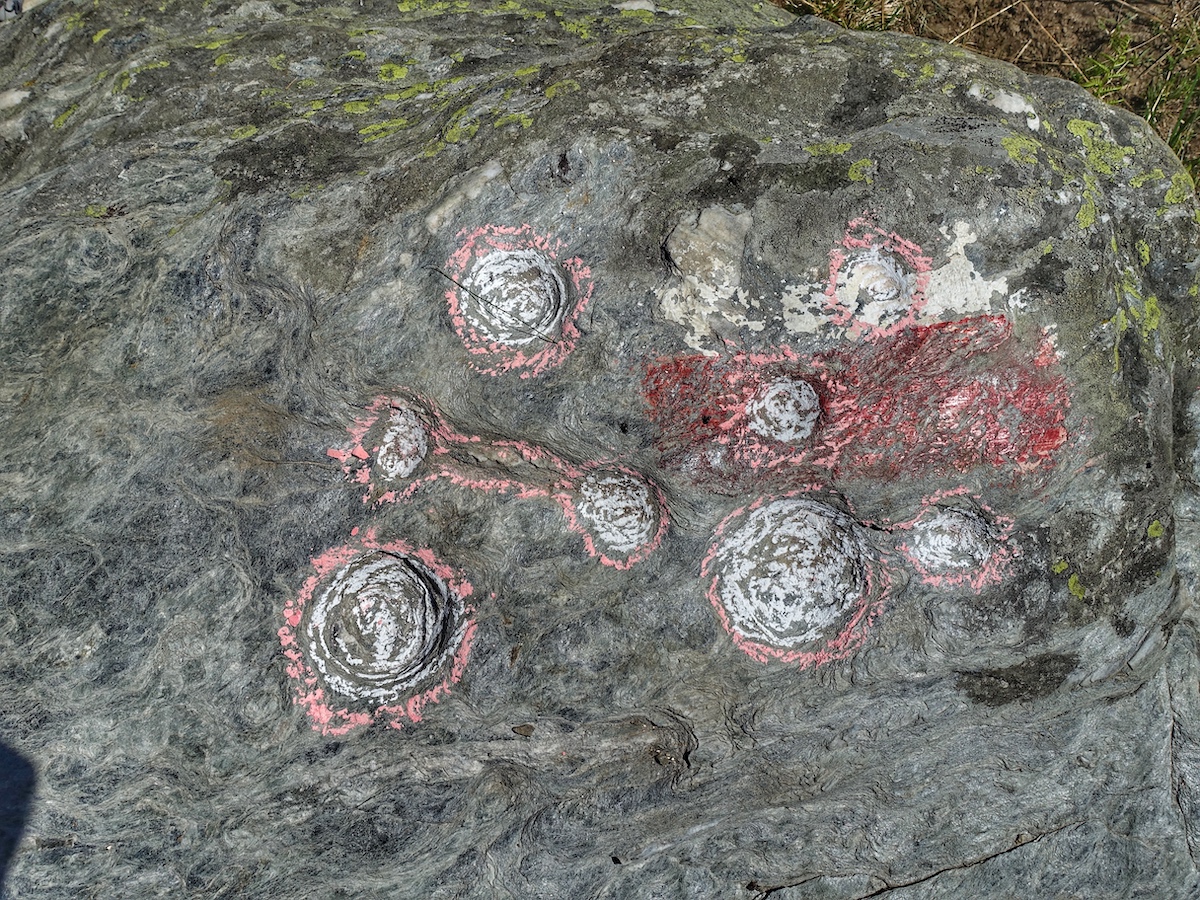
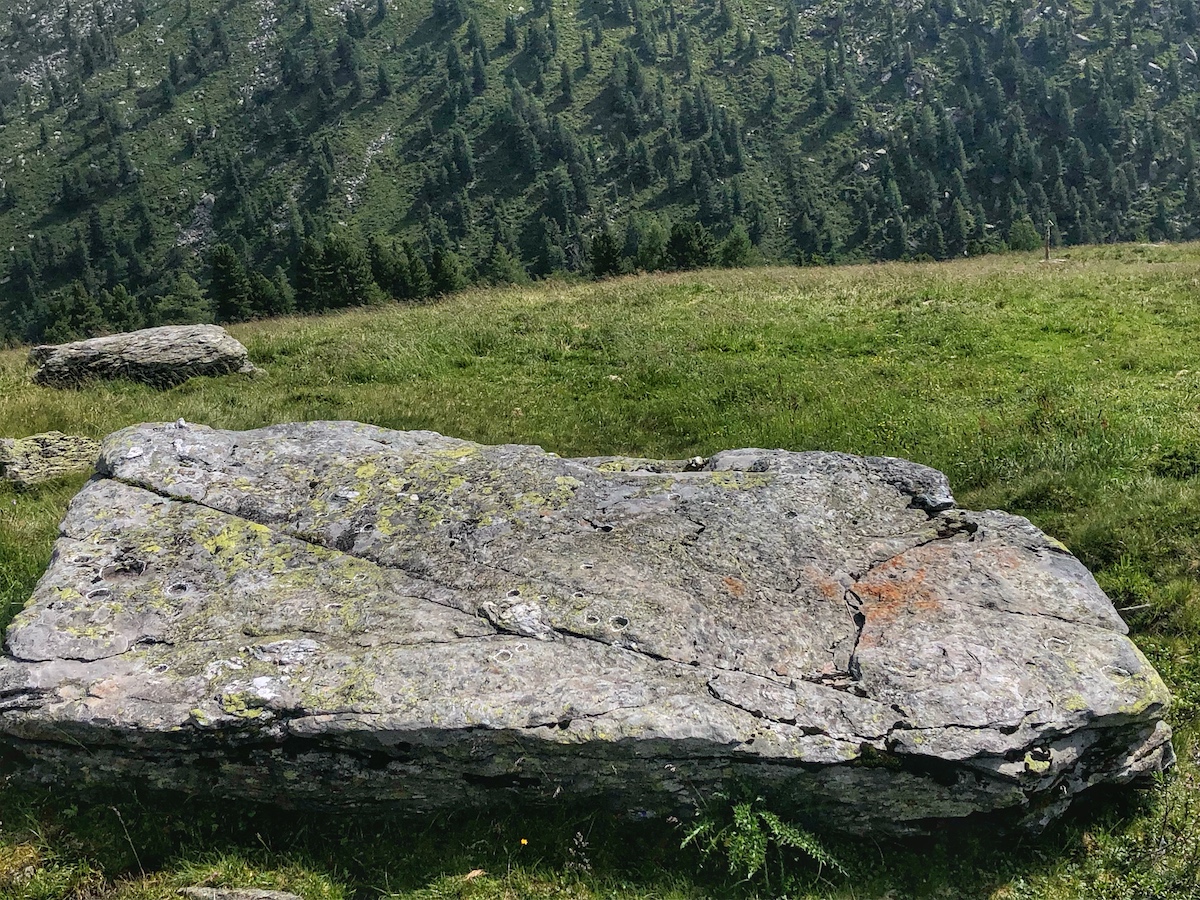
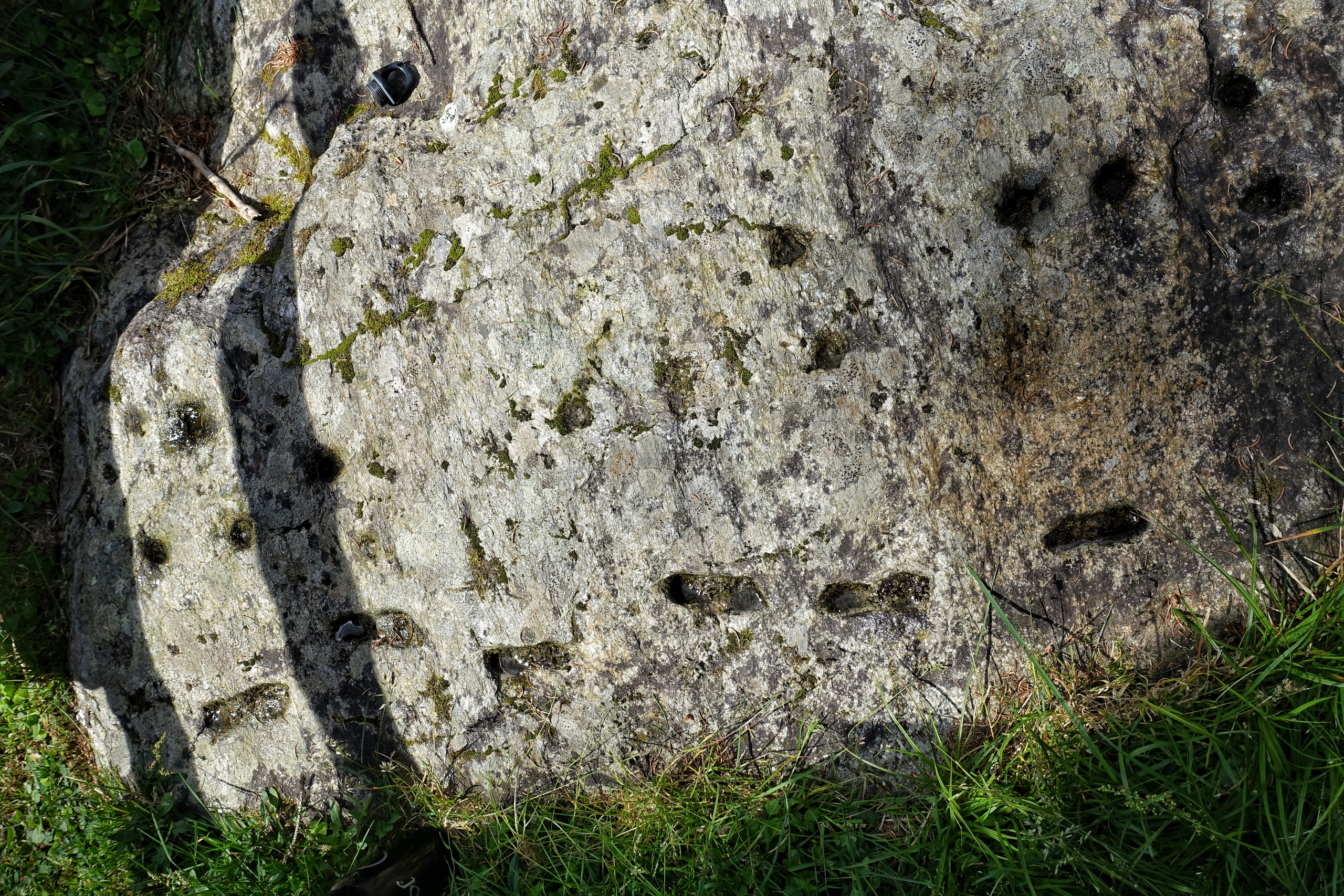
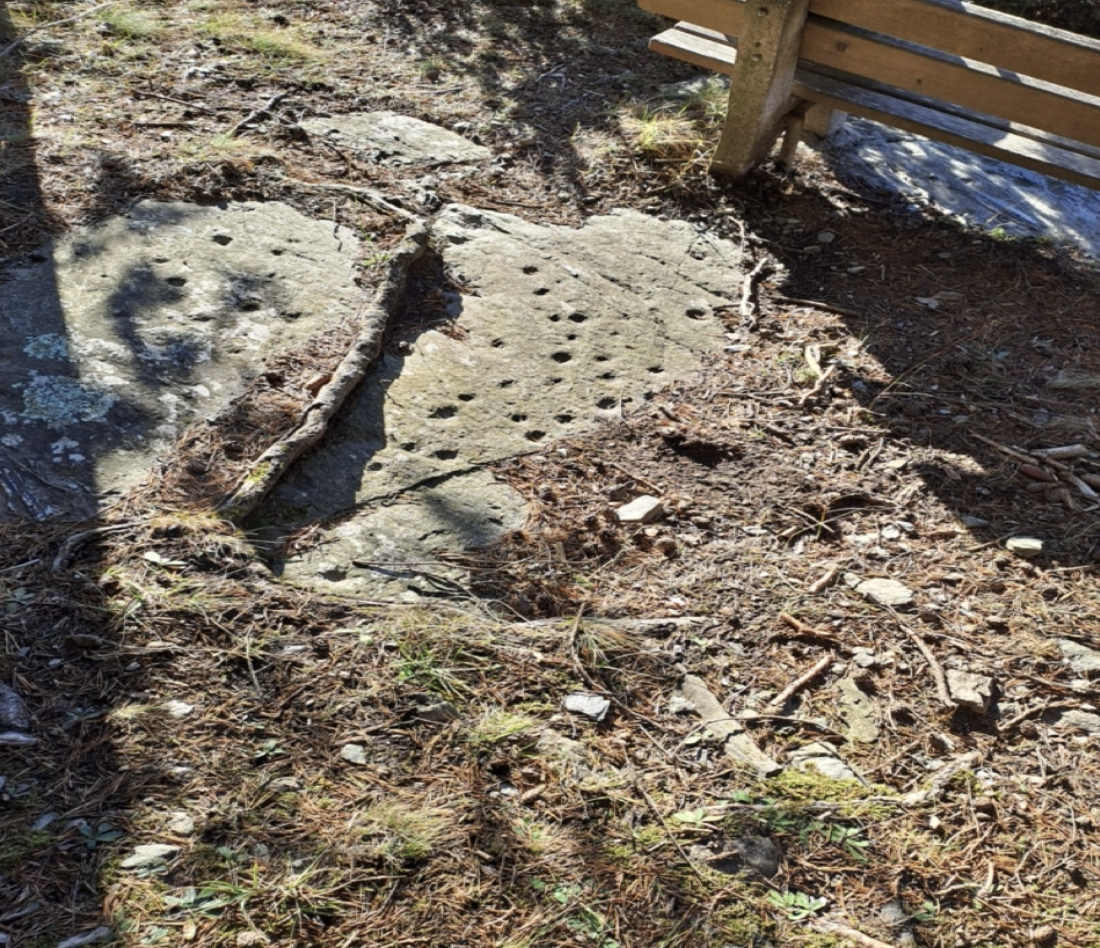
A shell stone on the Iss meadow on the Oberlegerweg in the Viggartal valley. The paint was used by the research group to make the shells recognizable. Picture: Kräutler
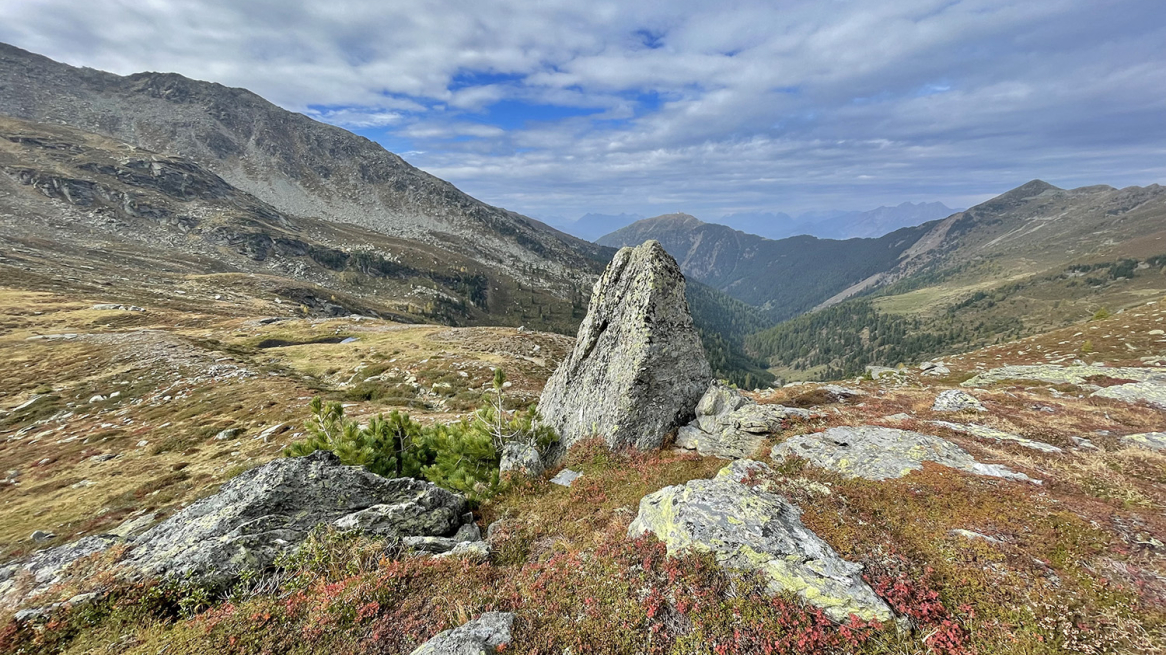
The large Schalenstein stone on the Oberlegerweg trail in the Viggartal valley indicates a lake and a 'Hohle Stein'. Both can be reached after around 2 hours. Picture: Kräutler
The first proof that this is a kind of 'original writing' is the decoding of the large bowl stone in the Viggarvalley. The script basically consists of various combinations of dots or bowls, as described by Herbert Kirnbauer in his book "The Stone Age code - The bowl stone script" has postulated. The author is a member of the research group and 'translates' the messages of the Tyrolean stones.
Back to the large Schalenstein at Oberlegerweg in the Viggarvalley. Its main message, put simply: "If you keep walking, you will come to a lake and a shelter." From the location of the stone, neither the lake nor the shelter can be seen for around four kilometers, including a 300-meter difference in altitude. This solves one of the mysteries that has puzzled me for years: Why did people spend hours drilling holes in rocks in remote areas? I can't imagine that prehistoric hunters did this for fun. They probably didn't do anything that didn't make direct sense. This is the reason why I consider the 'writing hypothesis' to be very obvious. I have explained this in detail on my blog.
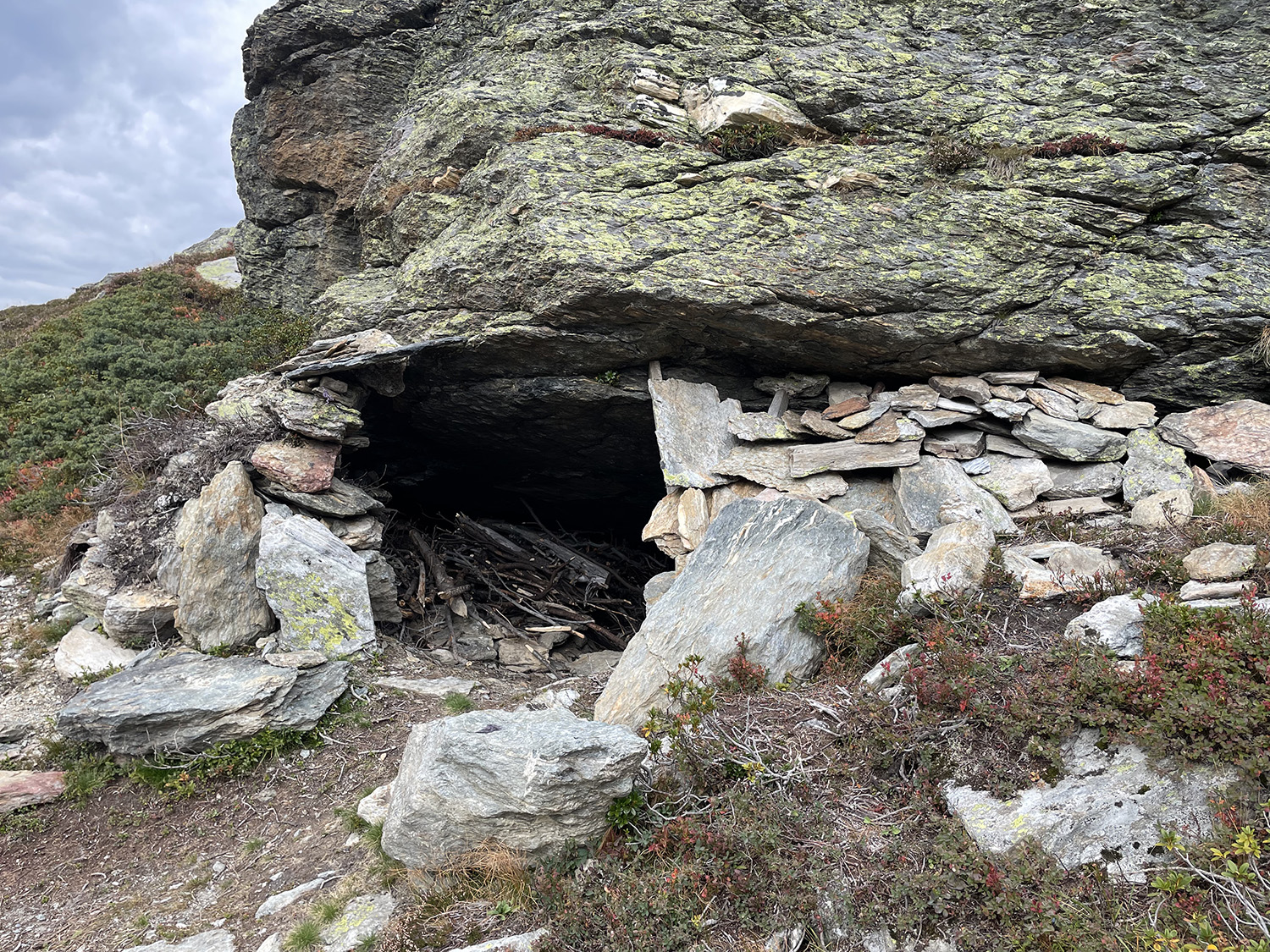
Although the walls are more recent: This 'Hohle Stein' with a view of the b'schriebener Stein was most likely named on the Großer Schalenstein. Picture: Belinda Reinhart
The fact that the newsletter ‚Pleistocene Coalition News‘, published by US professors at Columbia-University, has acknowledged the Tyrolean findings and the theory of writing in several publications shows that the work and the results of the research group to date have met with a great deal of interest in academic and scientific circles.
The newsletter of the Pleistocene Coalition is published by renowned US university professors. It has already devoted several articles to the Tyrolean research group. The links at the end of the text.
Ellbögena prehistoric focal point
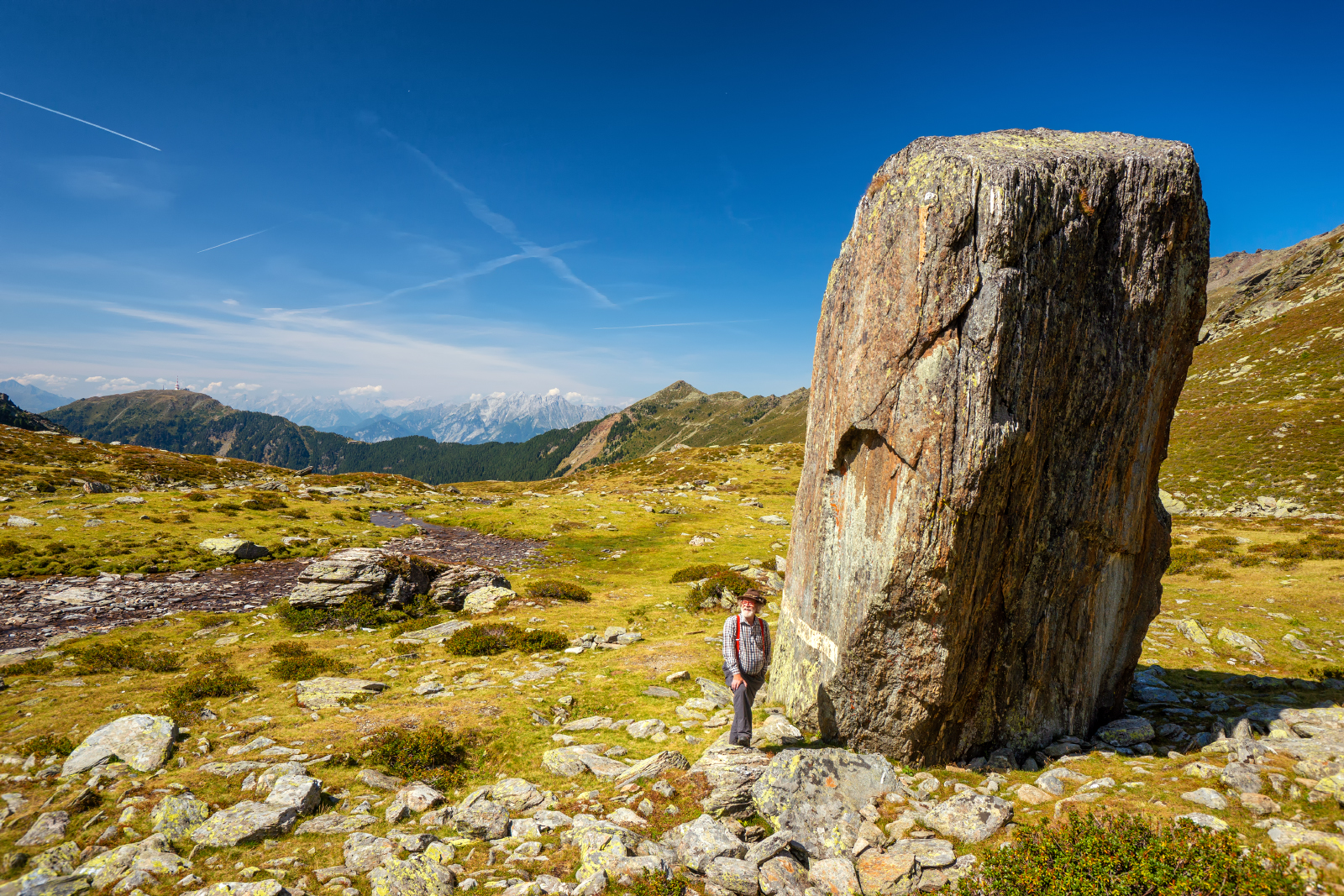
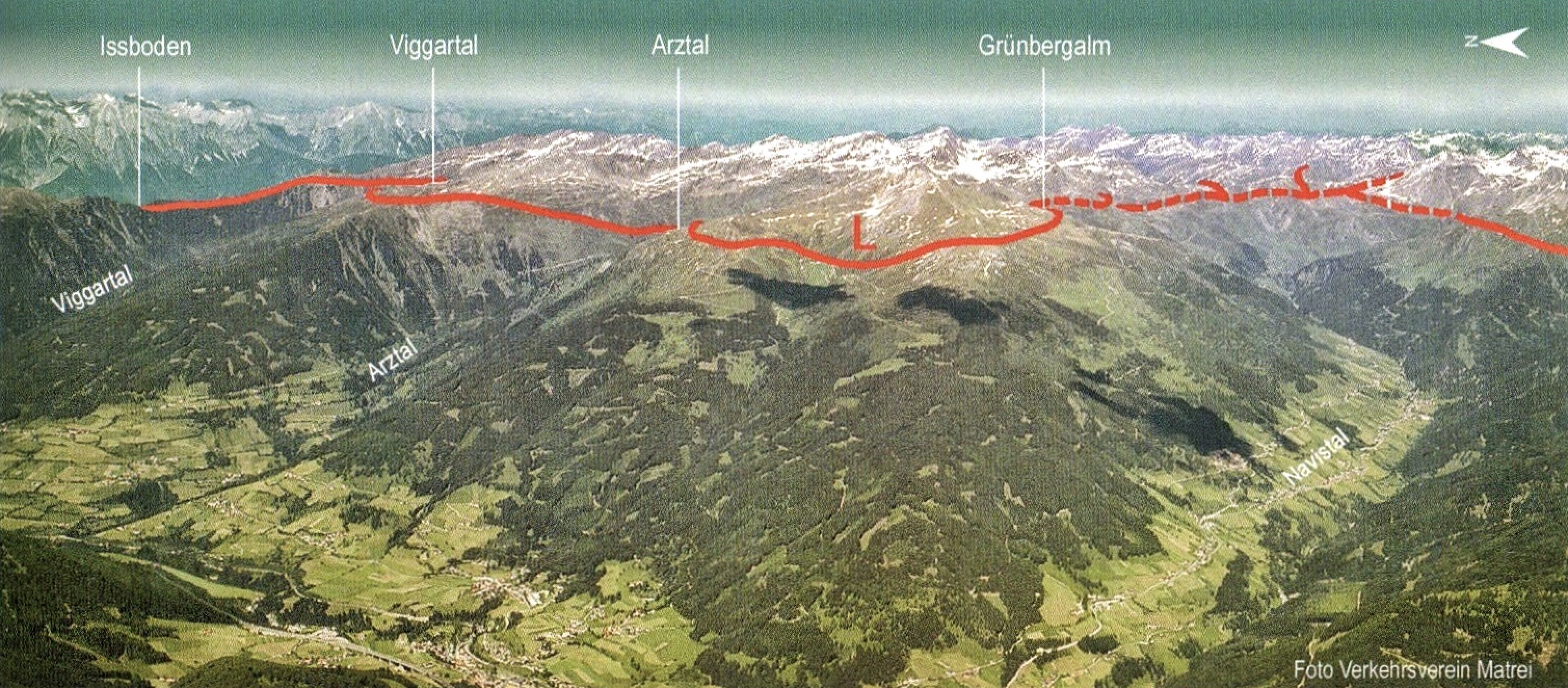
As incredible as it may sound, today's municipality of Ellbögen was clearly a center of megalithic activity in prehistoric times. There is the b'written stone of the Viggarvalley, a colossal monolith, at 10 m high and seven meters wide, twice as large and high as even the large stones in Stonehenge. On the way through the Viggarvalley to the colossal stone, of all places, the research group discovered 20 new stones in recent years. This means that Ellbögen probably has the largest concentration of bowl stones in Austria. Which leads to the next question: why in the Viggarvalley? And: do these stones perhaps have something to do with the b'schriebener Stein?
The monumental 'b'schriebene Stein' in the Viggartal valley was an important cult center in prehistory. Most probably the site of a sun cult. Picture: Danijel Jovanovic
It is no secret why the research group has found so many bowl stones in the Viggarvalley. Thomas Walli-Knofler the 'head' of the group: "We follow Stone Age routes as defined by archaeologists such as Prof. Dr. Dieter Schäfer. One of these routes led through the Viggarvalley first to the b'schriebener Stein and then on to Pfitscherjoch." Whereby the b'schriebene Stein was most likely some kind of prehistoric sanctuary. Fitness and good eyesight plus a dash of intuition were needed to discover the many bowl stones.
Prof. Dr. Dieter Schäfer has defined this prehistoric path in his scientific publication 'Das Mesolithikum-Projekt Ullafelsen'. Picture: D. Schäfer
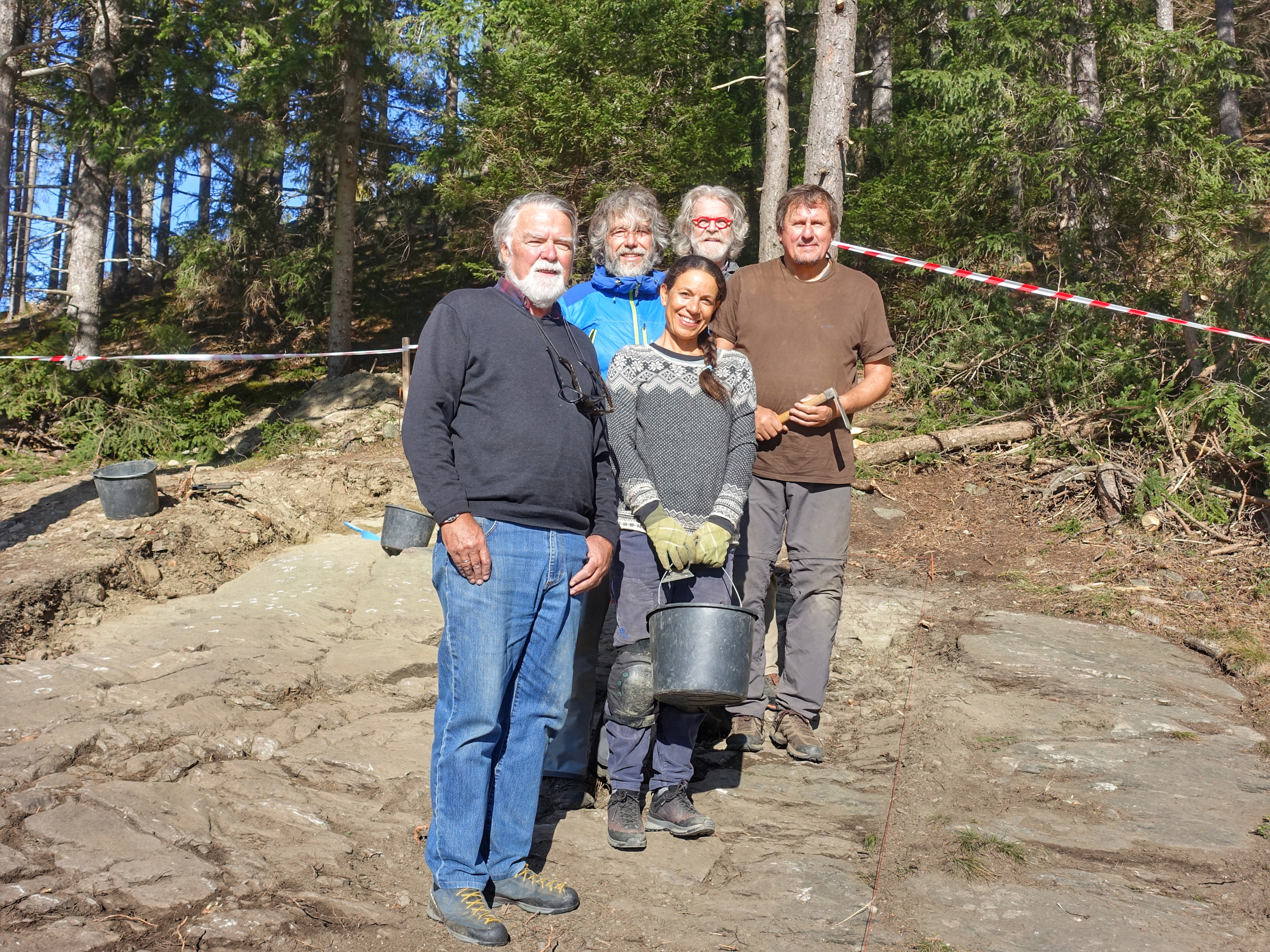
The research group, which works free of charge, also organized and carried out the spectacular excavation in Ellbögen. From left to right: Thomas Walli-Knofler, Josef Öfner, Belinda Reinhart, Werner Kräutler. The excavation manager was Dr. Bert Ilsinger, pictured far right. Picture: Thomas Walli-Knofler
Flint chips point to prehistoric paths
How can prehistoric paths be determined after thousands of years, archaeological laymen are now asking themselves. It is the chips or splinters of flint stones that show the way in the truest sense of the word. Because they can still be found on the surface today. Flint was the stone of the Stone Age. Popularly known as 'flint', prehistoric people used it to make tools and arrowheads, which they produced on site in the mountains. As such stones are not found in this region, they must have been brought here. So bowl stones obviously have something to do with the prehistoric paths.
Orientation in the Alps Outback
"How did people manage to find very specific points in the Alps near the main Alpine ridge shortly after the last ice age?" asked themselves Thomas Walli-Knofler and the research group, consisting of Josef Höfer, Belinda Reinhard, Herbert Kirnbauer and myself. After all, it is scientifically proven that 11,000 years ago there was a hunters' camp in the Fotschertal valley of the Sellrain which was visited over a long period of time - probably annually. How did these hunters find their way in a quasi chaotic, post-glacial landscape, which was forested on the one hand and completely impassable on the other? Even a sophisticated sense of direction was not enough.
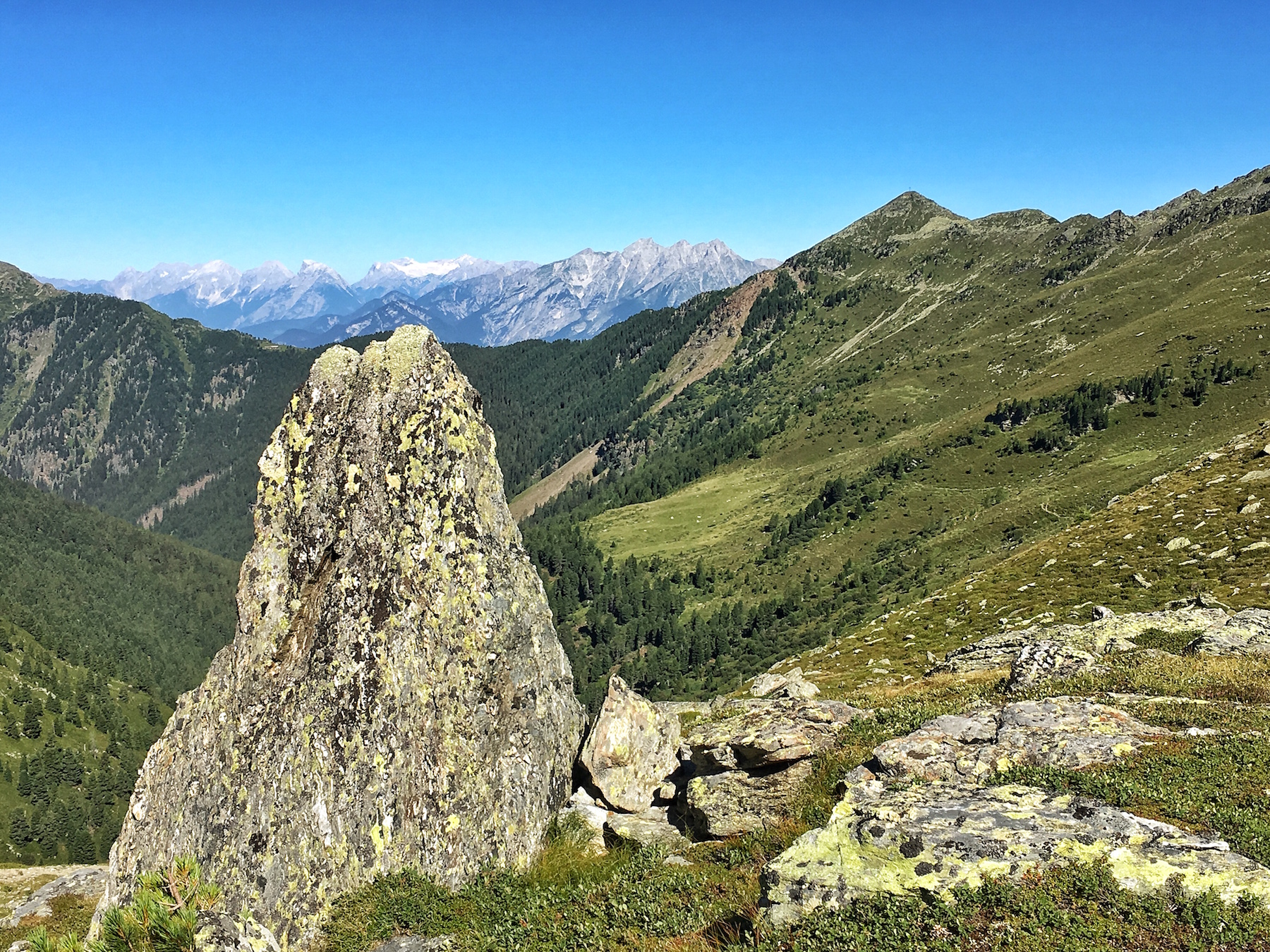
This menhir, visible from afar, flanks the B'schriebene Stoa. Clearly visible from here: the wonderful Viggarspitze, the ruler of the Viggartal valley.
This is exactly where Thomas Walli-Knofler comes in. "In conjunction with Menhiren, which are large standing stones, bowl stones had the function of today's hiking boards". This assumption enabled the group to discover 37 new cup stones between Innsbruck and the Viggarvalley alone. They could now concentrate on searching only to the left and right of the prehistoric trail.
The paths south of Innsbruck
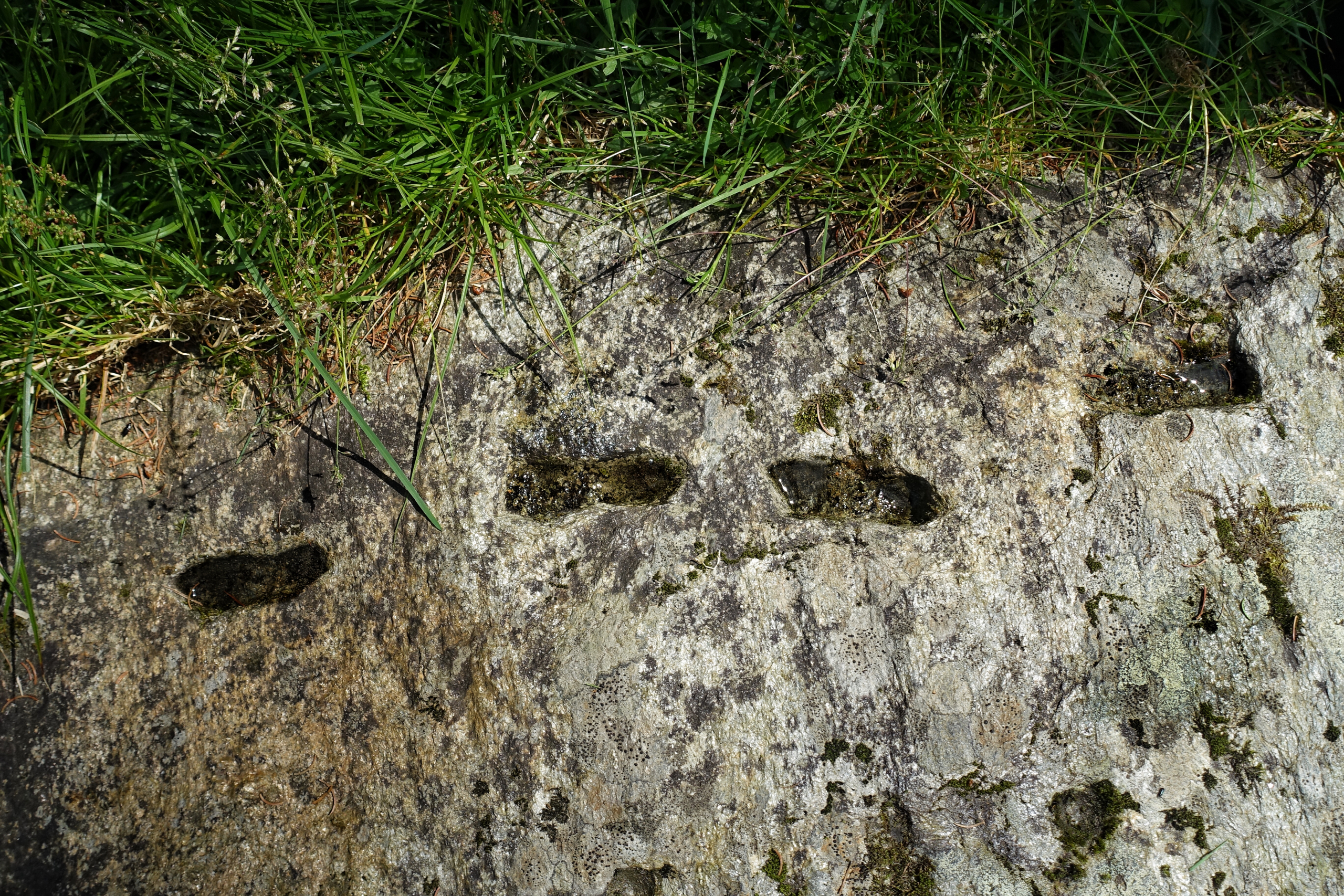
It is certain that one of these paths to the b'schriebener Stein certainly ran from Innsbruck via Igls (Goldbichl) and Patsch to Ellbögen. There it divided. One path led over the Oberellbögner 'Lithagrub' and Profeglalm into the Viggarvalley and to the b'schriebener Stein. Why do we know this? The 'Lithagrub' is the site of what is probably one of the most unusual cup stones in Tyrol, which is surrounded by numerous stone carvings. The stone is popularly known as the 'angel stone'. This expression is derived from the seemingly childlike footprints that cover the stone. The decoding of the shells refers to the written stone.
The 'angel stone' of Ellbögen. The trace of children's soles is impressively visible. Also some shells. Picture: Thomas Walli-Knofler
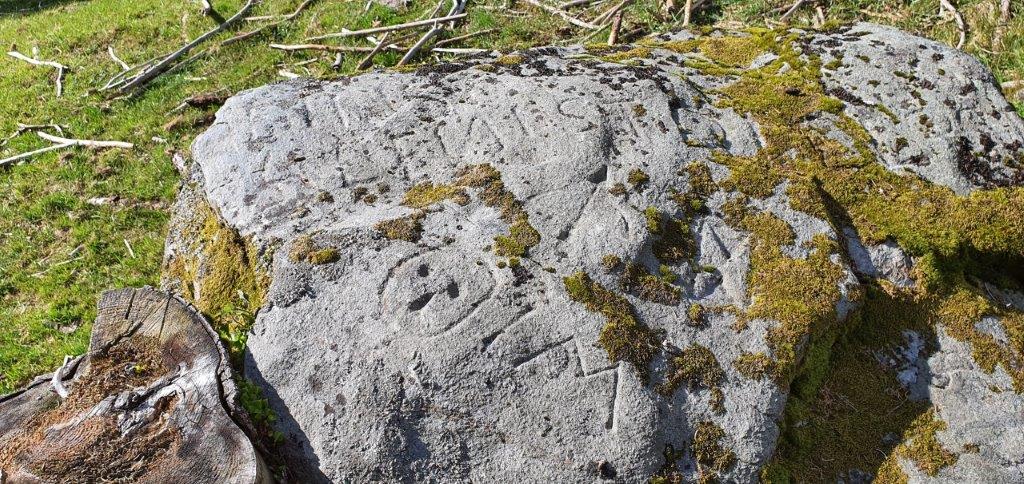
The fact that people have always been artistically active is proven by a stone full of rock drawings and letters, which is located in the immediate vicinity of the Engelsstein in Ellbögen. Picture: Josef Höfer
A second path divided into Ellbögen and continued via Tarzens to the present-day Meissnerhaus and subsequently into the inner Viggarvalley. This is also one of the reasons why there is a monumental cup stone at the start of the ascent via the Innertal Chapel to today's Meissnerhaus.
It was precisely this stone that attracted the attention of the research group early on. Only a scientifically sound archaeological excavation could provide information about the actual function of this bowl stone. The fact that this excavation in Ellbögen was possible at all is due to two fortunate circumstances. On the one hand, Dr. Bert Ilsinger, an archaeologist with a doctorate, agreed to lead the excavation. And on the other hand, the municipality Ellbögen, represented by Mayor Walter Kiechl, immediately agreed to a scientific excavation and assigned municipal workers to carry out important preliminary work. "It is a matter of course for us to do everything we can to research these ancient cultural sites and preserve them for posterity."
This is how the large shell stone of Ellbögen originally appeared. It was almost completely overgrown. Picture: Thomas Walli-Knofler
The Pleiades plate from Ellbögen, a prehistoric observatory
"The cup stones had different functions," explains Thomas Walli-Knofler. "Of the stones we have discovered so far, 53 percent are signpost stones, 30 percent are cult stones, 11 percent are gravestones and 6 percent have an astronomical function."
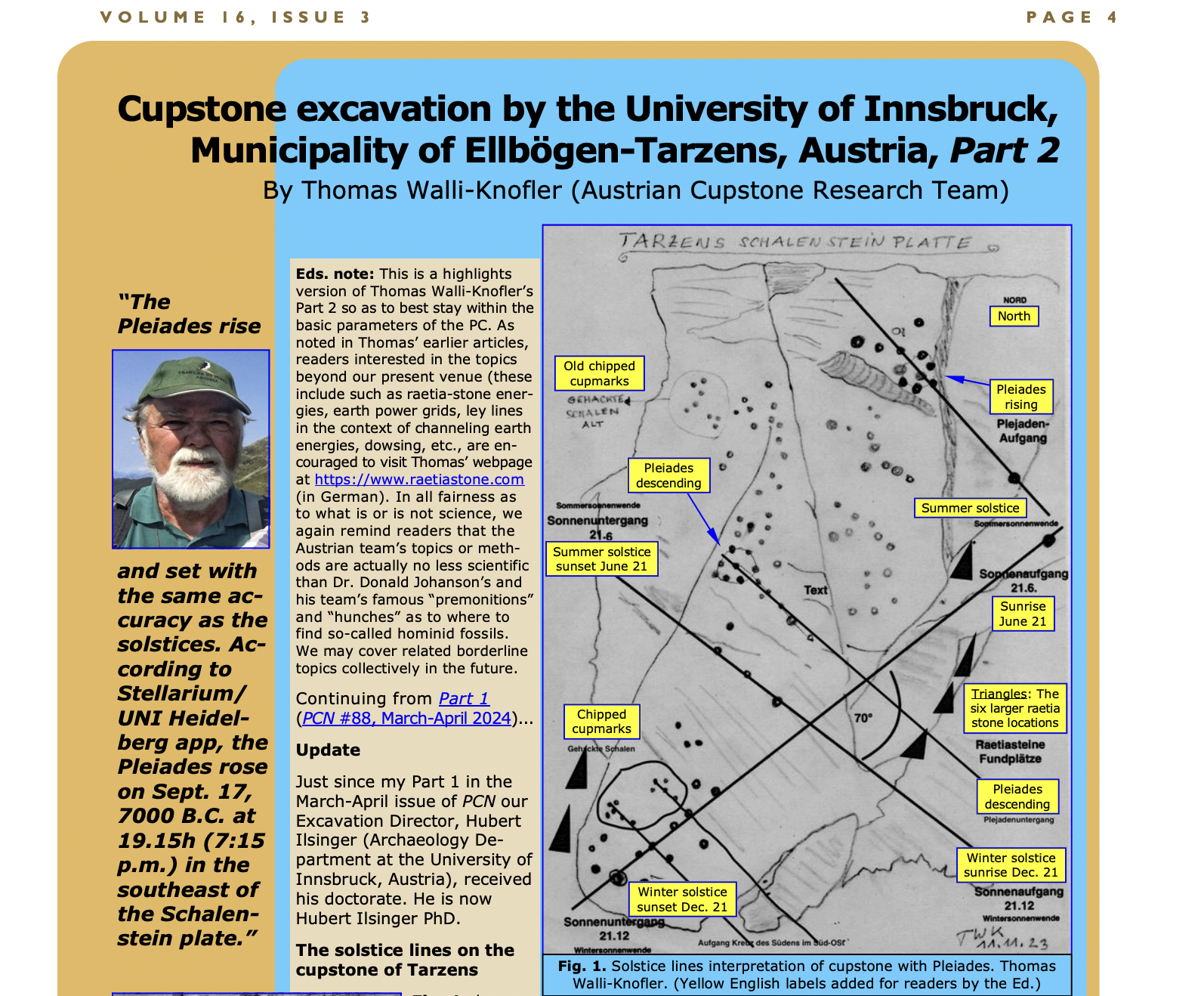
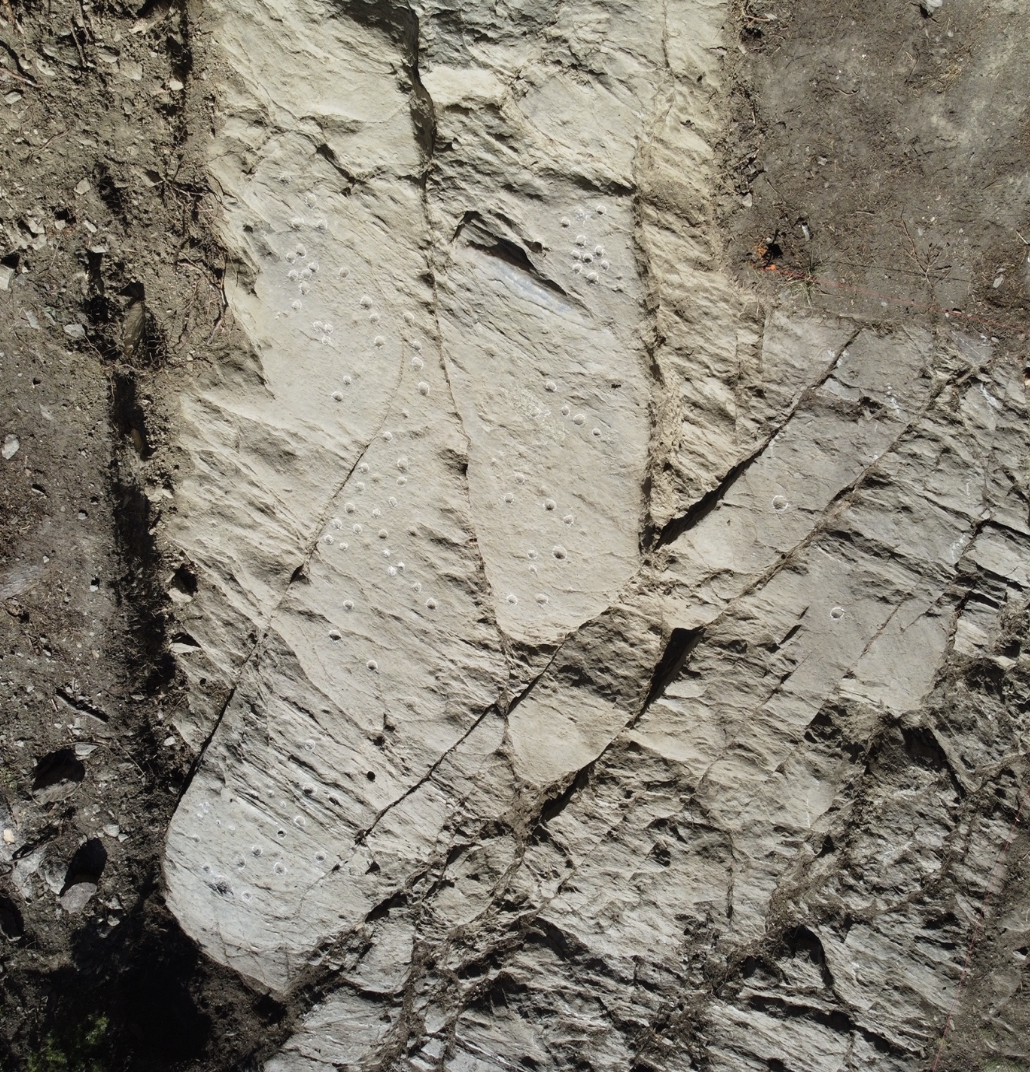
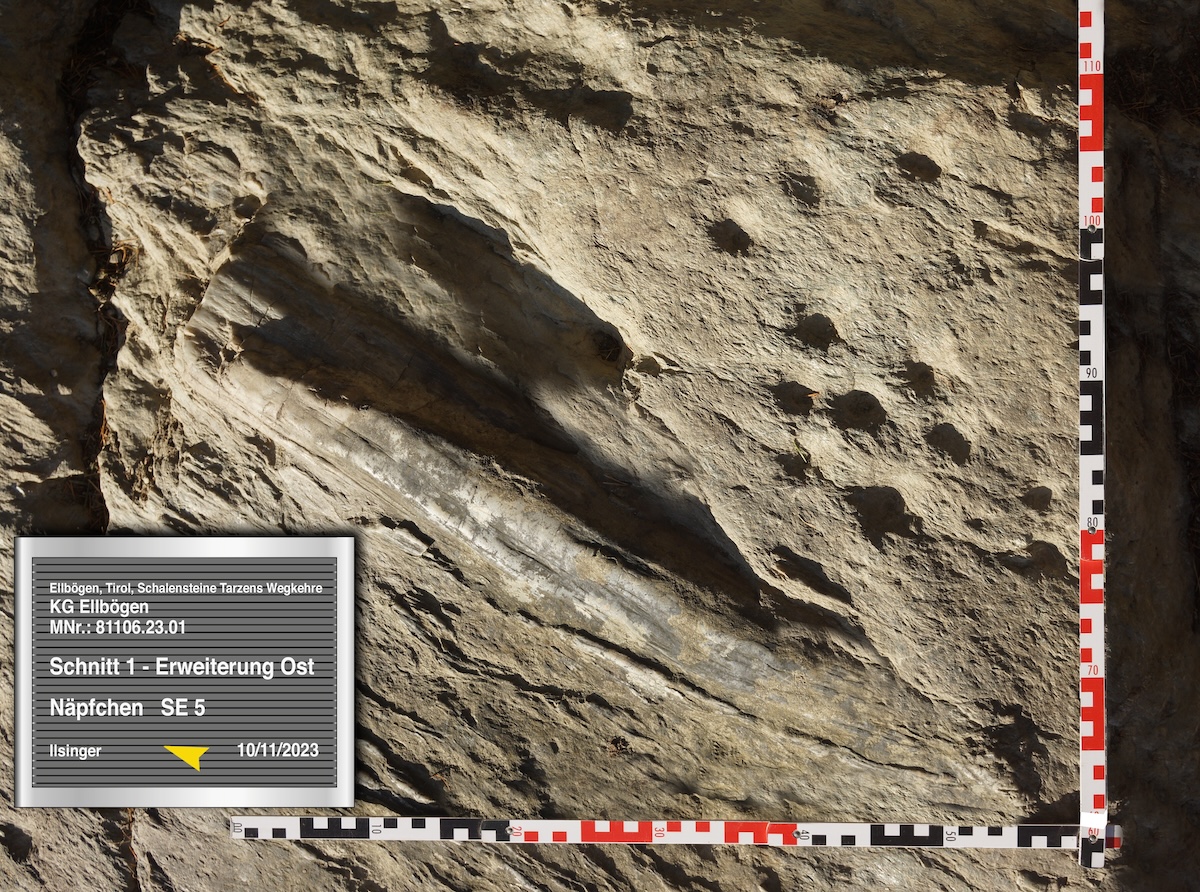
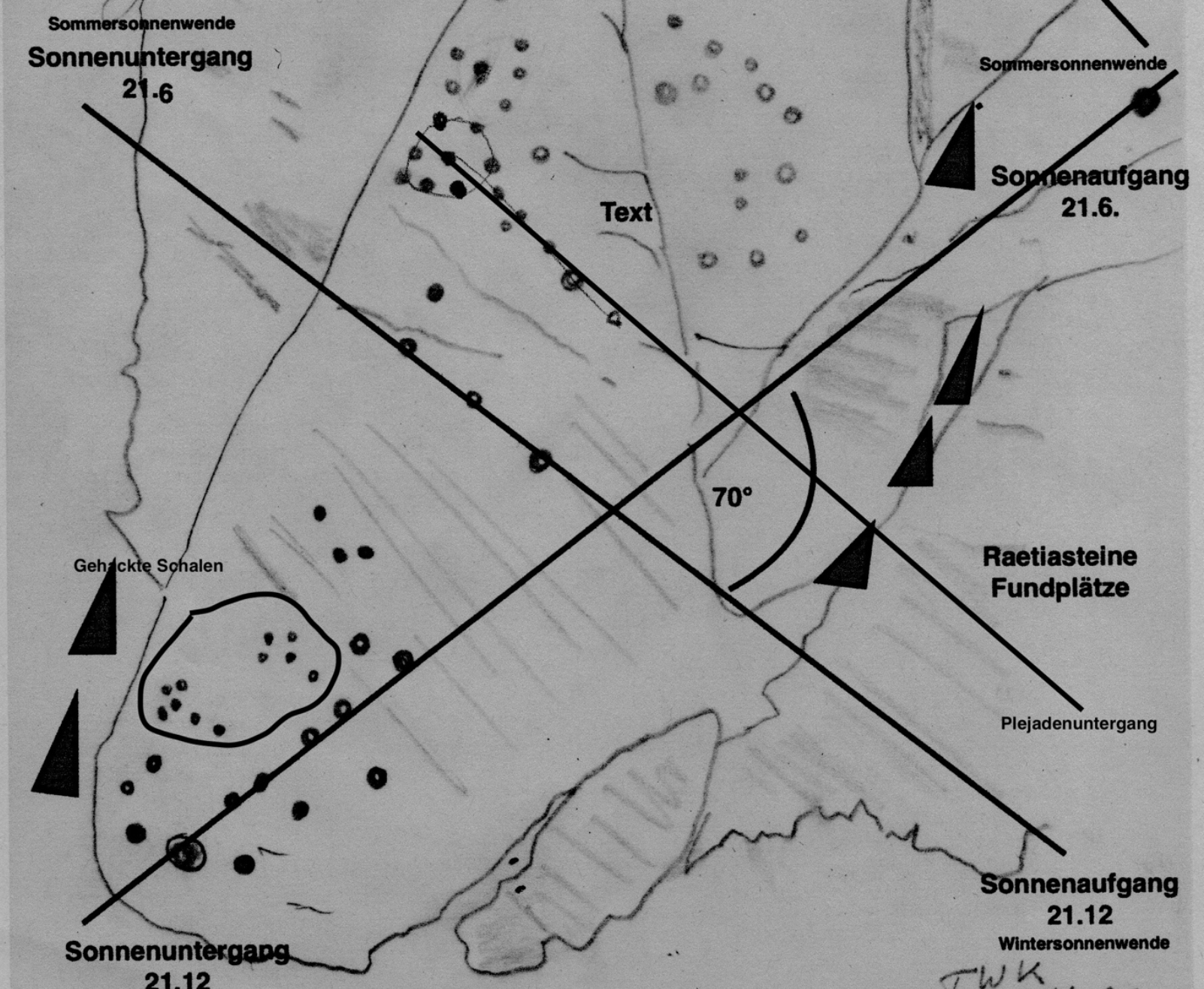
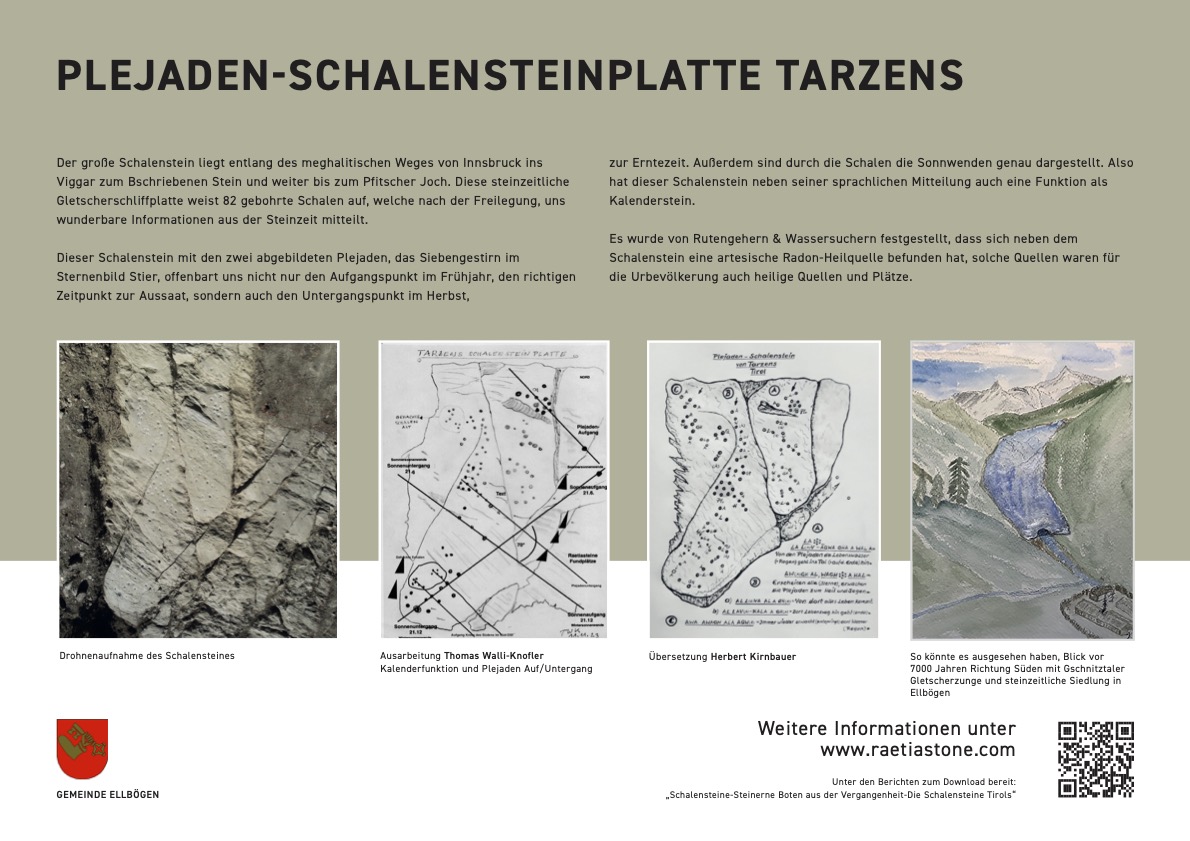
The result of the excavation in one sentence: the Ellbögen bowl stone is clearly a calendar stone, known in specialist circles as a 'Pleiades stone'. Two depictions of the constellation of the Pleiades prove the agricultural significance of this prehistoric observatory. When the Pleiades appeared in the sky in spring, it was time for sowing. When they disappeared in the fall, it was time to finish the harvest. Neolithic farmers were also able to determine the summer and winter solstices by taking bearings. This was not only interesting from an agricultural point of view, but also had a certain ritual significance.
One of the two images of the Pleiades on the Ellbögener Schalenstein. The Pleiades are a constellation consisting of seven stars, or rather a 'star cluster', which appears in spring and disappears again in fall. Picture: B. Ilsinger
The first bowls were probably drilled 9,500 years ago
The astronomical details of the bowl stone are a minor sensation. Thomas Walli-Knofler, an experienced skipper, has learned to 'read' the starry sky on his many years of sailing trips. His intensive study of the arrangement of the shells on the Ellbögener Stein led to a sensational result. Walli-Knofler: "Software from the University of Heidelberg reveals that the Pleiades rose on September 7, 7000 BC at 7.15 p.m. in the south-east of the Schalenstein plate. This is exactly the direction indicated by the sunken directional bowls on the stone." In other words, the bowls are around 9,500 years old.
Click on the photo to see the whole picture! The Schalenstein was a veritable observatory for prehistoric man. Solstices, sowing and harvesting times could be precisely determined. Sketch: Thomas Walli-Knofler
Bearing lines make it possible to define the rising point of the constellation on the horizon in spring and the setting point in fall. Picture: Thomas Walli-Knofler
But that's not all. The prehistoric astronomers also commented on their findings in the form of bowl combinations. "When the Pleiades set in the fall and the harvest season is over, the November rains come." "When the Pleiades are visible, they bring the necessary food." Another comment refers to a nearby Arthesian healing spring. Locals confirm that water still sometimes seeps out from beneath the Schalenstein.
Bowls chipped with copper are almost 5,000 years old
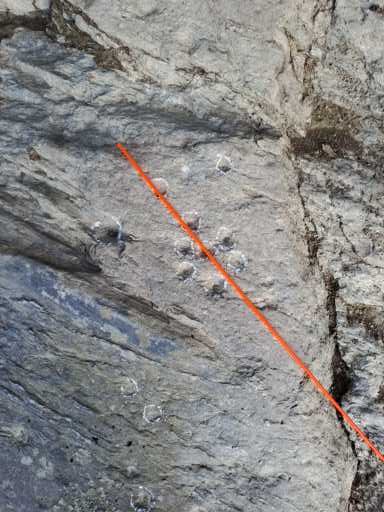
In the lower area of the bowl stone, the research group discovered visibly 'chopped' bowls, presumably of Copper Age origin. They are clearly reminiscent of the constellation of the 'Southern Cross'. A new search using the special software is no less exciting: the Southern Cross appeared - indicated by the bowls - on March 18, 2,400 BC in the south-east on the Ellbögen horizon. In other words, 4,400 years ago.
The municipality has already installed an information board at the Schalenstein Observatory in Ellbögen-Tarzens.
Link tips:
The excavation report is available at raetiastone.com for download.
The book by Thomas Walli-Knofler provides an explanation of how people in prehistoric times oriented themselves over long distances: The Raetia Stone GPS
Herbert Kirnbauer explains the hypothesis of Stone Age writing in his book: "Der Steinzeitcode - Die Schalensteinschrift", Freya Verlag.
The 'Pleistocene Coalition News' has already approved and published two essays by the research group. On the one hand, the research on the Schalensteine in the Ötz and Pitztal valleys (page 4) and on the other hand the Results of the excavation in Ellbögen Tarzens (page 2)
If you want to get a picture of the b'schriebener Stein in the Viggartal, you can read my blog posts about the b'schriebener Stein on this blog: https://www.innsbruck.info/blog2024kunst-kultur/mystisches-innsbruck-das-geheimnis-des-viggartals/ and https://www.innsbruck.info/blog2024kunst-kultur/die-geheimen-zeichen-des-bschriebenen-stoa-im-viggartal/
On my blog Tirol isch toll I have recorded the former function of the b'schriebener Stein but also the mysterious signs: https://tirolischtoll.wordpress.com/2018/10/29/die-raetsel-des-bschriebenen-stoa-sind-teilweise-geloest/
Show me the location on the map

A volunteer at the "Schule der Alm" alpine farming school, cultural pilgrim, Tyrol aficionado and Innsbruck fan.
Similar articles
Mountains are majestic natural formations that tower high above the land and offer breathtaking views. Formed by…
A young Jewish woman survives the Holocaust thanks to the civil courage of a few brave…
The Goaßl Schnöllen is a custom that has its roots high up in the…
My first time? That was rather spontaneous: the bustling poacher took my innocence in a niche in…