
22 December 2025
#
Post originally written in: Deutsch Information An automatic machine translation. Super fast and almost perfect.

Snow is not only a fascinating natural spectacle, but also a complex physical phenomenon. Every snowflake is unique, and the different types of snow can bring both joy and danger. But how does snow actually form? Why do snowflakes look so different? And what risks does it pose?

Snow formation

Formation of a snow crystal

Snow crystals are formed by a fascinating process in the atmosphere. It all starts when water vapor in the air freezes on tiny particles, such as dust or pollen. These particles act as a starting point for the water vapor to accumulate. For this to happen at all, the air must be completely saturated, i.e. it must contain as much moisture as it can absorb at the prevailing temperature. At the same time, the temperature must be below freezing point, otherwise the water vapour would not crystallize into ice but remain liquid.

Hexagonal variety

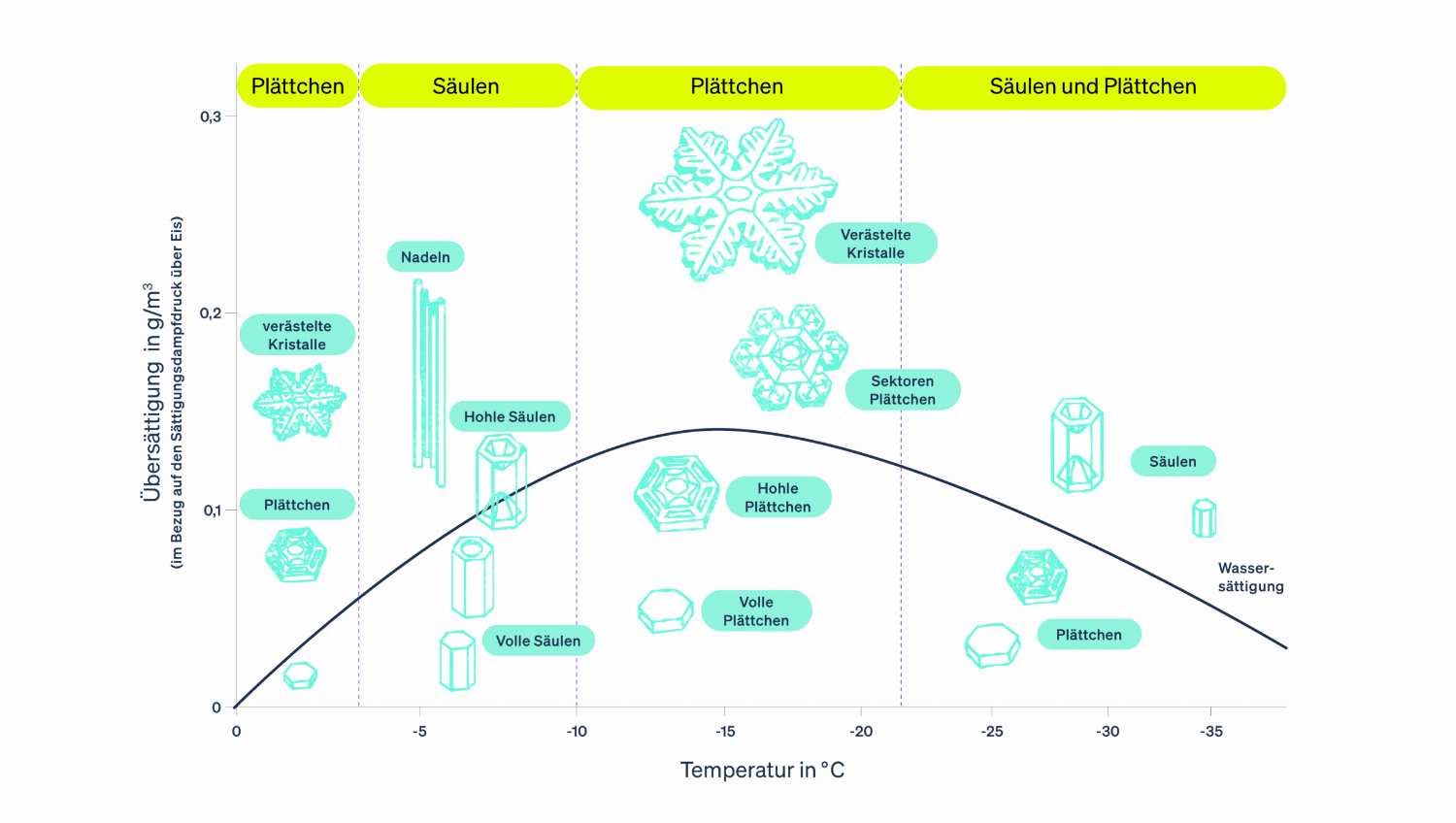
As soon as these conditions are met, tiny ice crystals form. What exactly these crystals look like depends on the temperature and humidity. At low humidity and temperatures just below 0 °C, small, flat platelets often form. However, if the air is more humid, branched arms grow from the platelets and the typical snow stars are formed.
So many variations are possible that there are practically no two identical snow crystals. However, they all have one common feature: they always have six corners, which is due to the special structure of water molecules.

From crystal to flake

The individual snow crystals slowly begin to sink downwards. On their way, they encounter other crystals or supercooled water droplets, which freeze to them or become entangled. As a result, the crystals gradually combine to form larger, delicate snowflakes. The shape of the flakes is strongly influenced by the humidity. At high humidity, particularly branched and large flakes grow, while drier conditions tend to produce compact and smaller structures. The largest snowflake ever documented reached a diameter of 38 centimetres.

Changing snow

Fresh snow is the most original form of snow, freshly fallen and unchanged. Its fine, branched ice crystals are still largely intact and lie loosely on top of each other without being strongly bonded together. This makes it particularly light, airy and has hardly any internal stability. All other types of snow only develop from this initial state through later transformation processes.

Degrading transformation

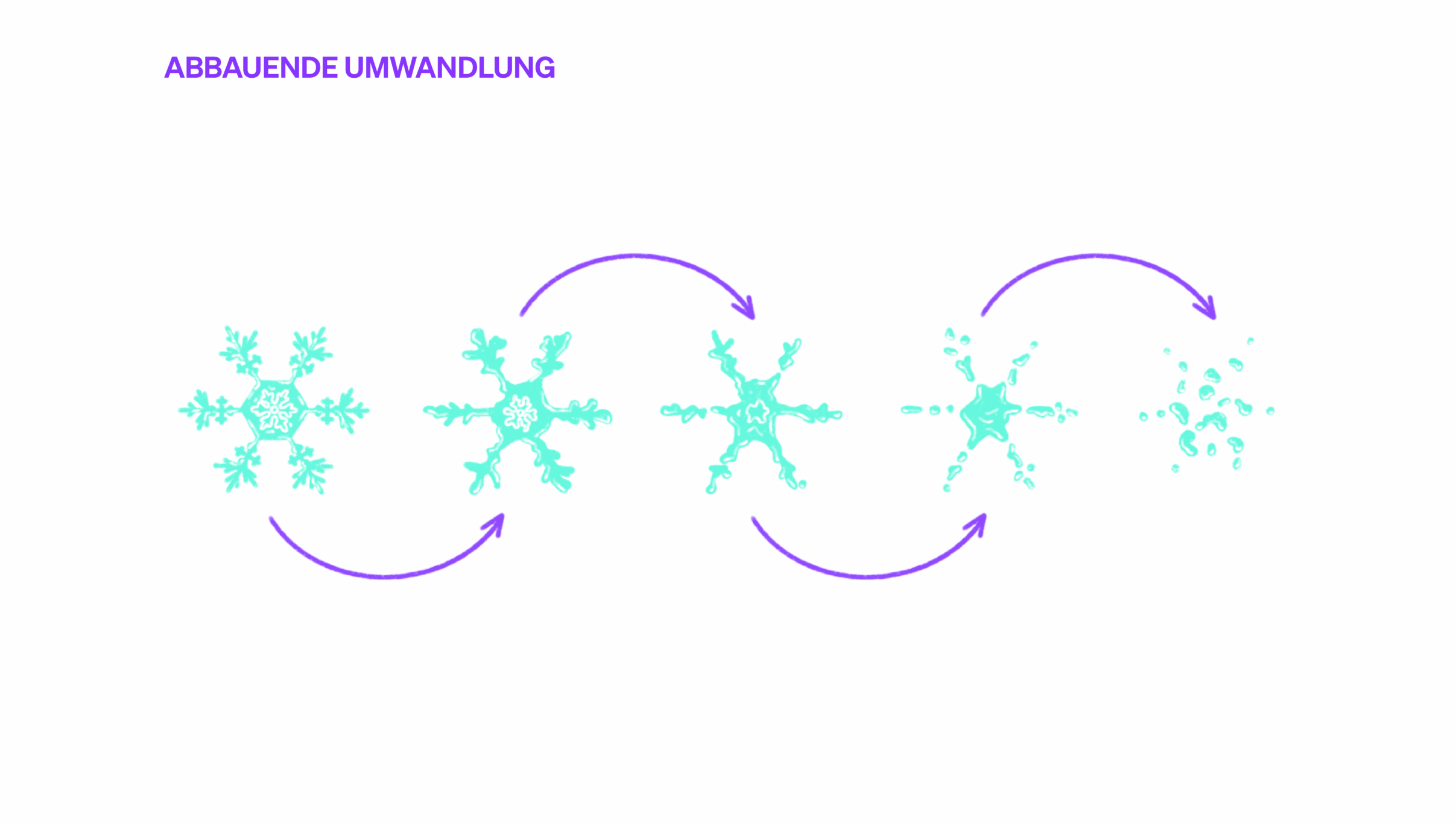
Degradative transformation describes how fresh snow changes over time. The originally fine, branched snow crystals lose their delicate structure due to temperature changes, the weight of the snow cover and the influence of wind. The corners and tips of the crystals are broken down, while the crystals themselves become rounder and more compact. This process creates a denser layer of snow from the loose fresh snow. The individual snow grains become firmer and lie closer together.
This first creates Felt snow and then, as the transformation progresses round-grained snow.

Constructive transformation

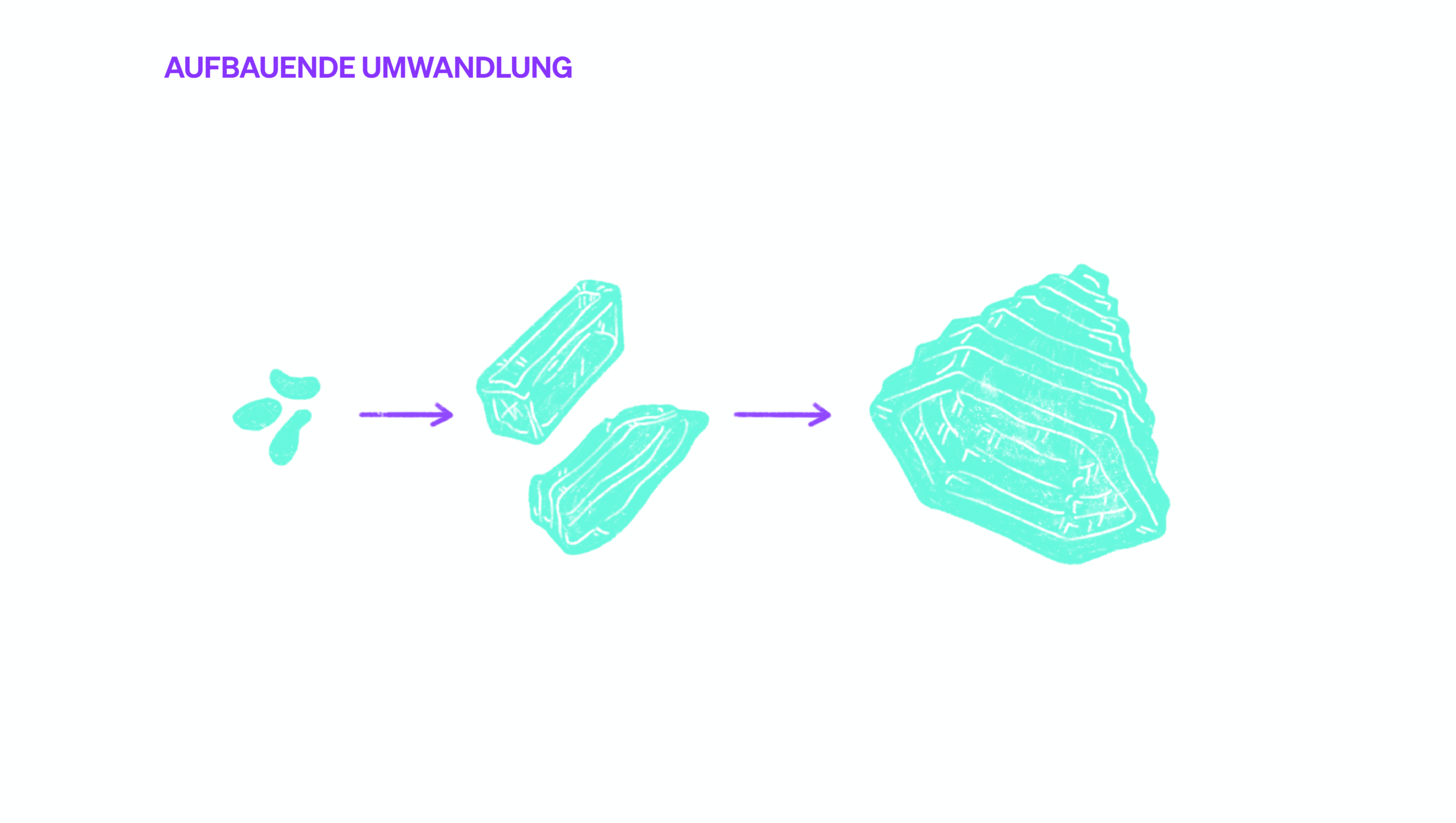
During build-up transformation, snow crystals change due to temperature differences within the snowpack. The decisive factor is the temperature gradient, the difference between the warmer ground layer (close to 0 °C) and the significantly colder surface or between layers within the snowpack.

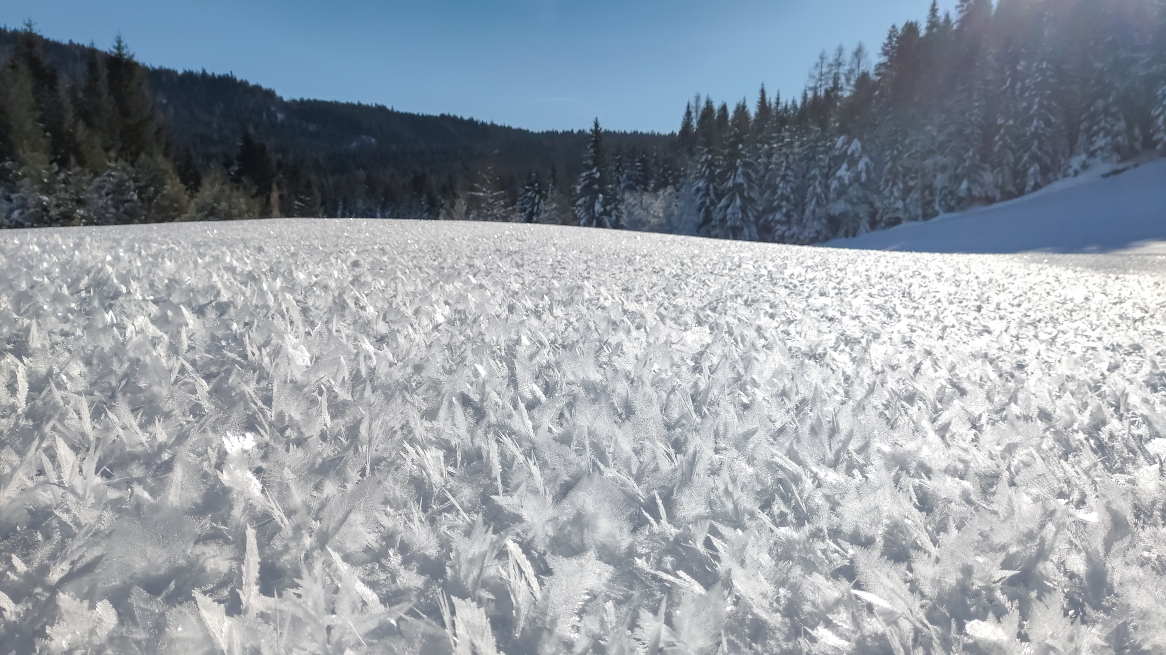
This temperature difference causes water vapor to rise from the warmer layers and refreeze on the underside of the cold crystals. This results in the formation of angular crystalscrystals, which over time develop into cup crystals or deep frost (also known as Floating snow called floating snow). This process is particularly pronounced when large temperature differences occur over a short distance. A particularly beautiful variant is surface frost, which forms when water vapor from the air freezes directly on cold snow surfaces.

Melting transformation

When the snow temperature reaches 0 °C, the ice crystals melt at their corners and edges. They round off, move closer together and form small crystal clusters. The meltwater initially only fills the spaces between the grains and wet snow forms Wet snow. This increases the capillary forces, the snow becomes firmer and is ideal for snowballs or snowmen.

As the snow continues to melt, the pores increasingly fill with water, resulting in Rotten snow. As soon as the crystals are completely covered by a layer of water and separate from each other, the snow suddenly loses its stability.

Snow as a danger: avalanches

From the finest powder snow for skiing and perfect wet snow for snowball fights to glistening surface frost that is simply beautiful to look at, snow has many facets. But as fascinating as it may be, it also harbors dangers that should always be kept in mind.

The combination of different types of snow and other influences can create avalanche hazards.

Slab avalanche

Slab avalanches are the most common and most dangerous type of avalanche. For it to occur, a weak layer is needed in which the crystals have little connection to each other. Layers of angular crystals, deep rime or surface rime are typical. Above this, a layer of bound snow with small crystals with many connections to each other (e.g. small round crystals) is required. If these conditions are met, the snowpack is under tension and an additional load (skier:in, snowfall, rain) can cause a fracture in the weak layer, which then spreads and leads to an avalanche.

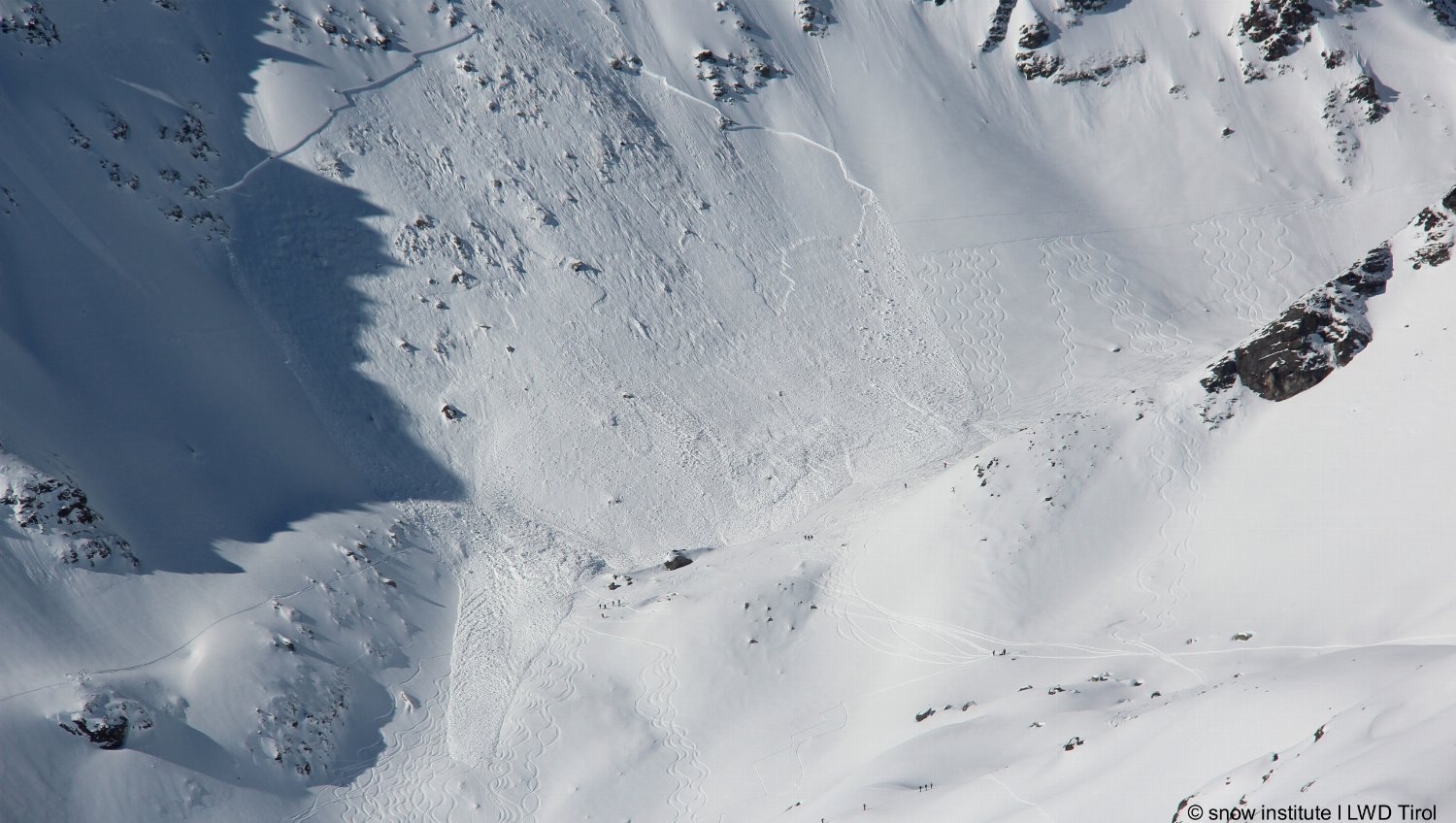
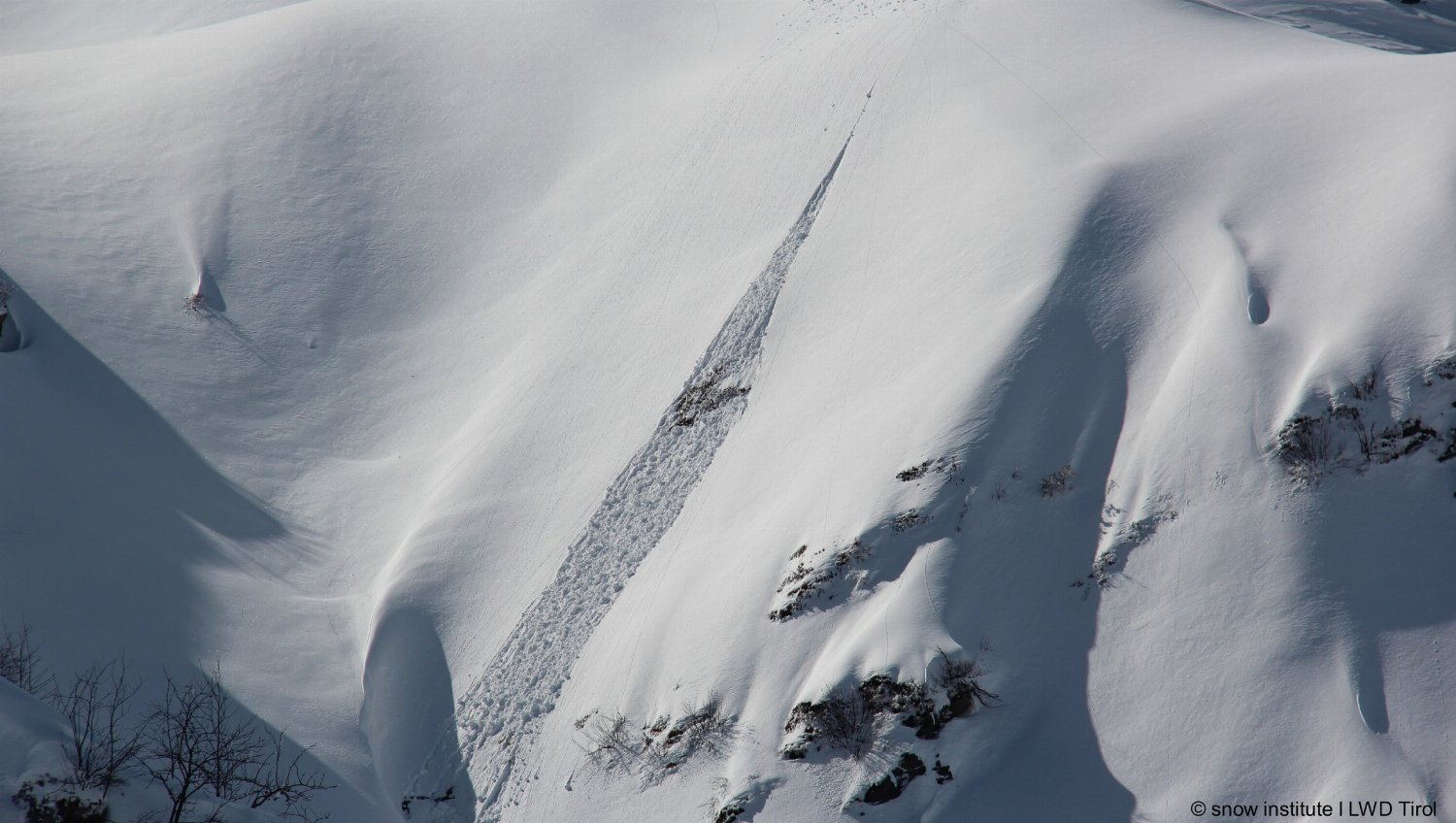
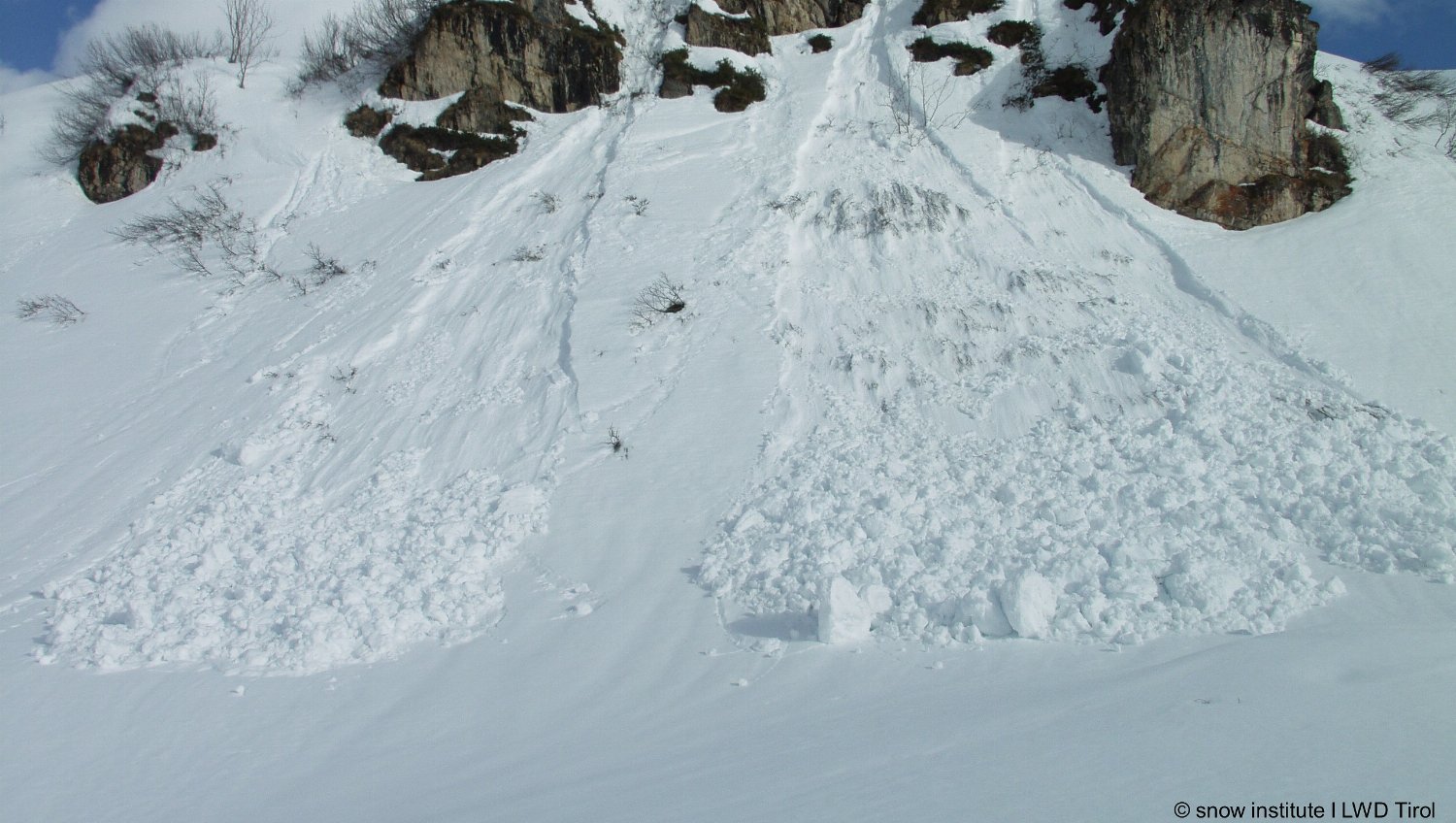
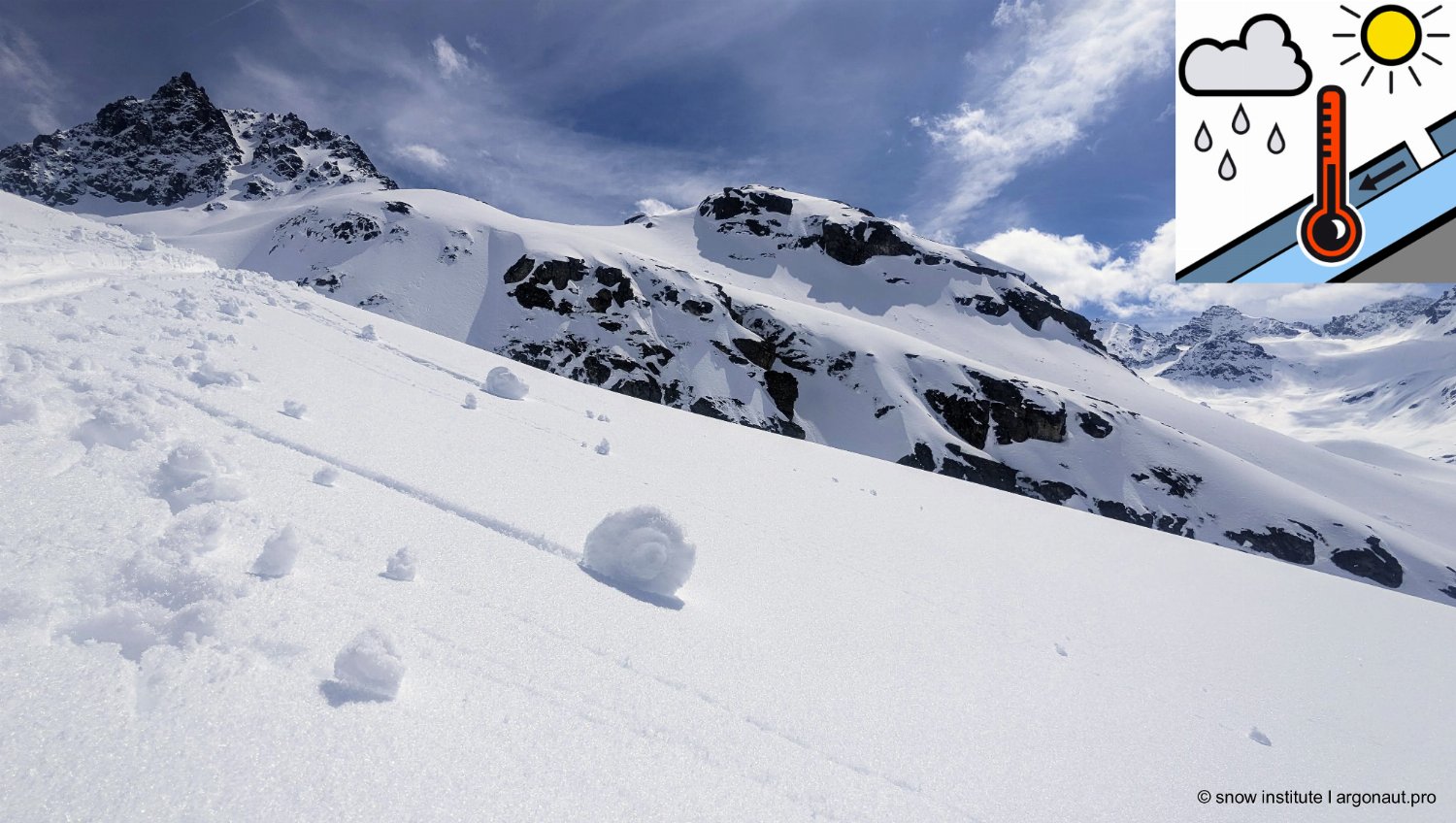
The Loose snow avalanche starts at one point and then spreads downwards in a pear shape. It occurs when loose snow without bindings starts to slide down steep slopes, usually with an inclination of over 40 degrees. They usually come loose spontaneously due to fresh snow, rain or warming by the sun. Even if it is rare to be buried by it, you can be swept away and fall.

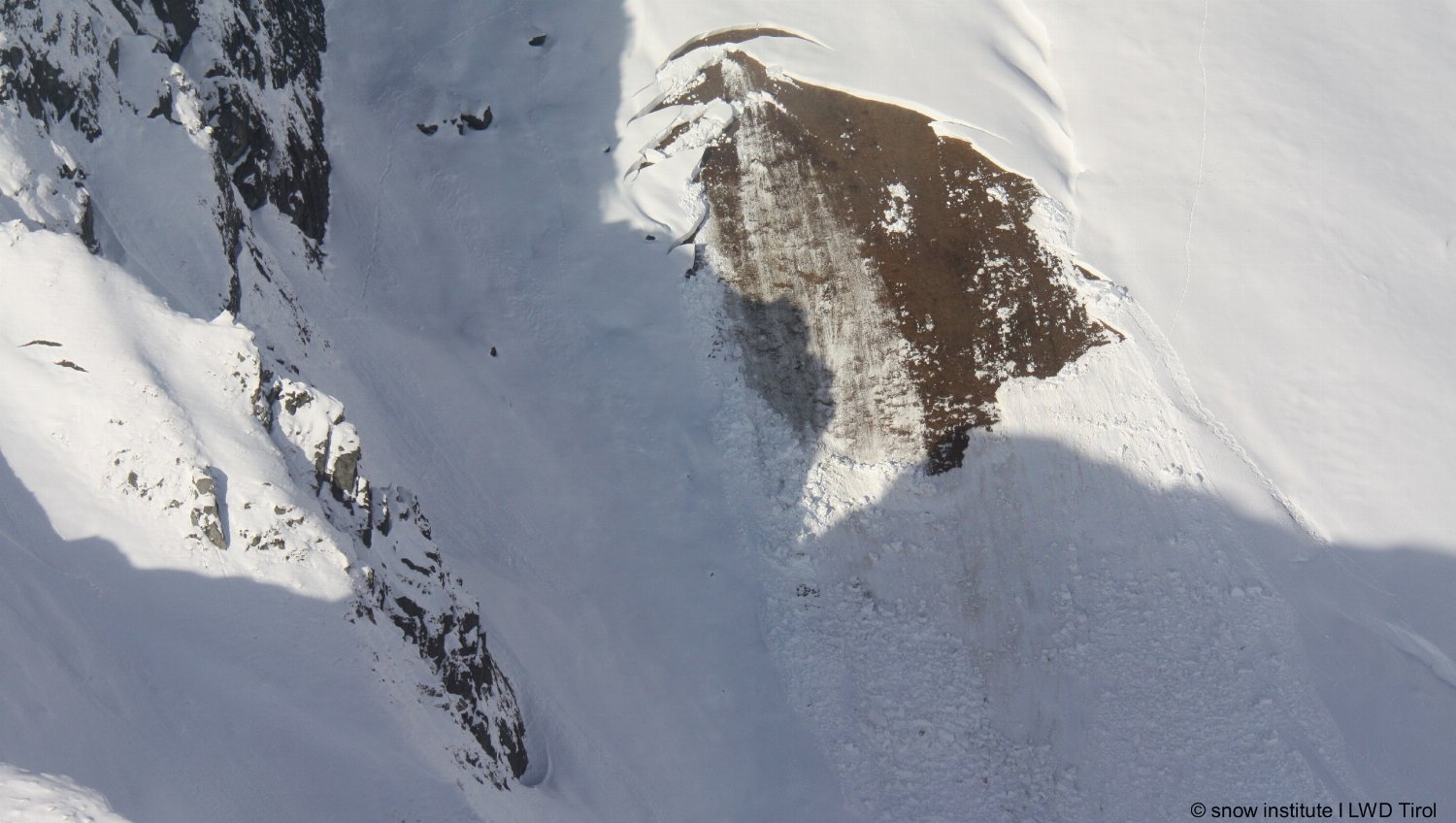
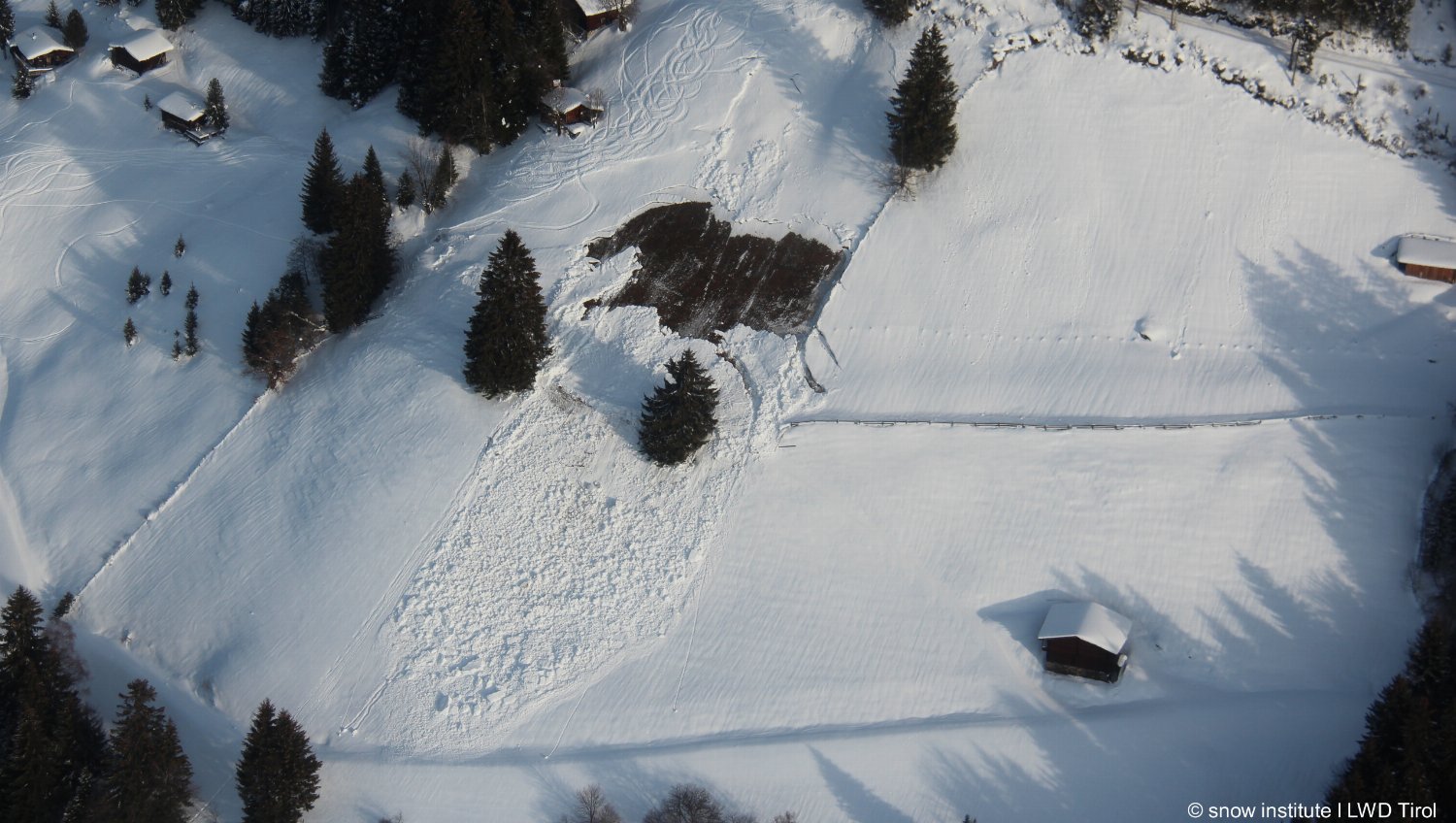
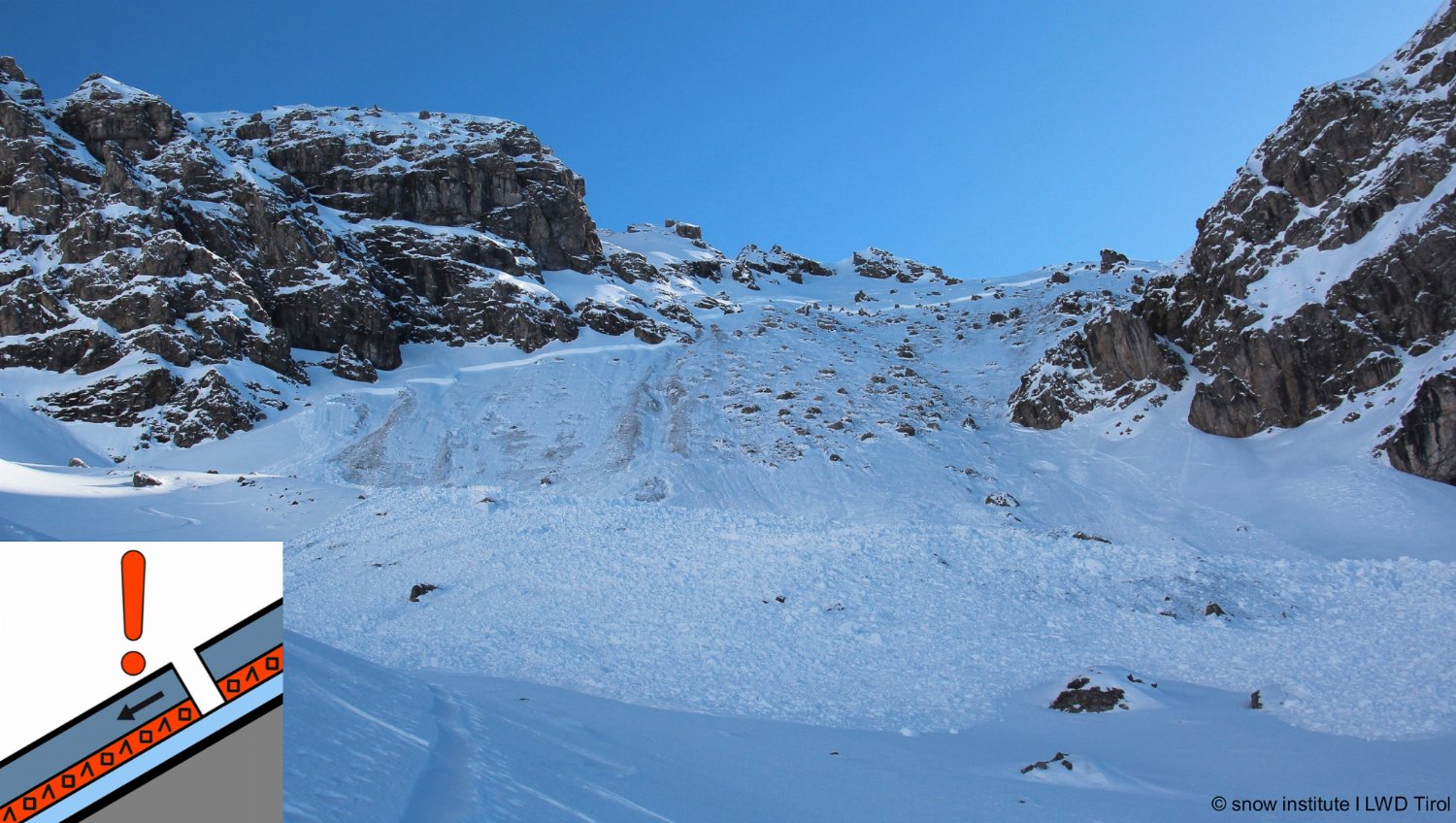
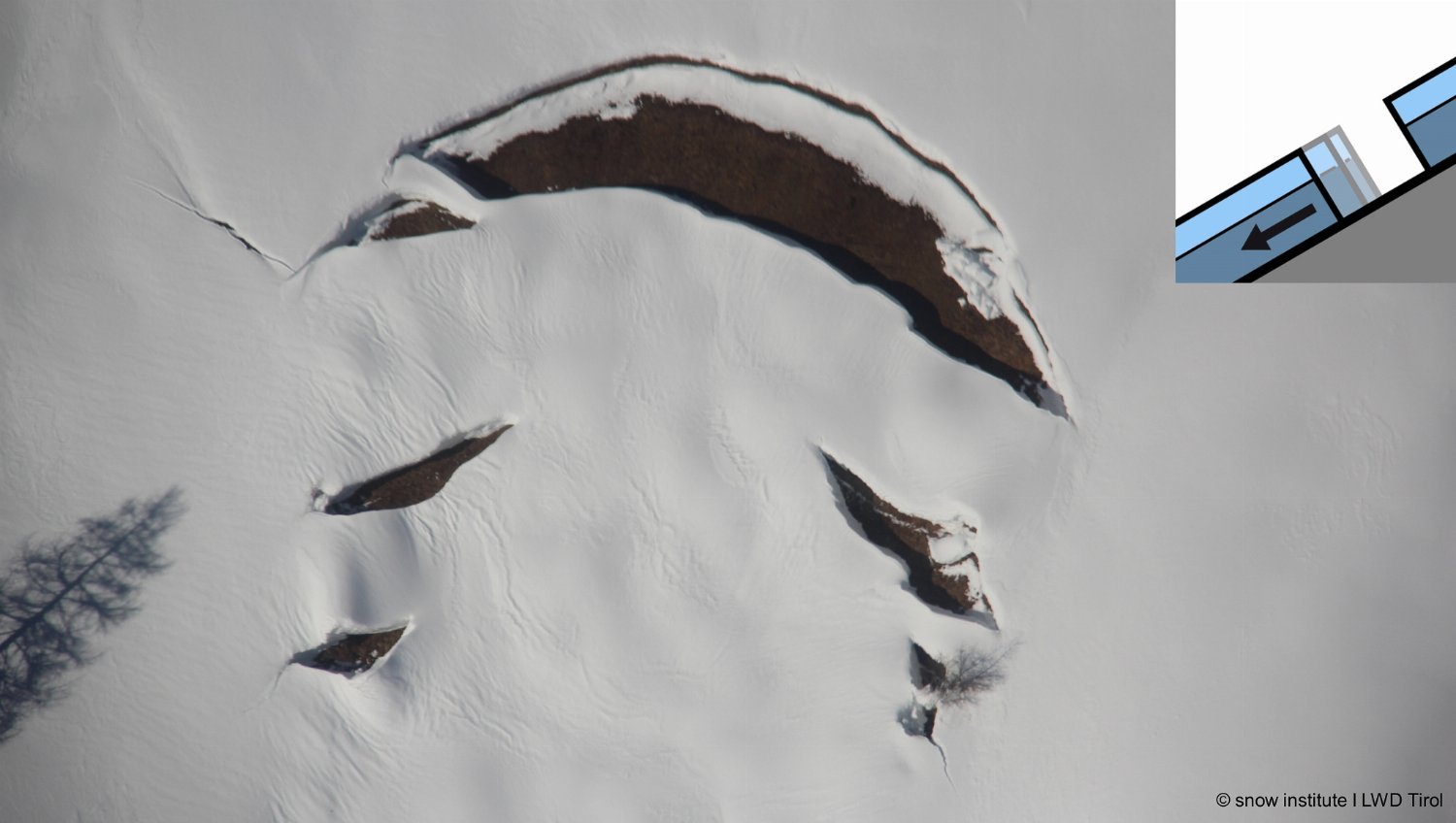
The Sliding snow avalanche forms when the entire snowpack slowly slides down a slippery surface such as grass, rock or ice. The reason for this is often meltwater, which acts as a sliding film and reduces the friction between the snow and the ground. Unlike other types of avalanches, it is not just a single layer that moves, but the entire mass of snow. Sliding snow avalanches are difficult to predict as they always release spontaneously. As there is no tension in the snowpack, we cannot trigger them. Warning signals can be long cracks (sliding snow cracks, fish mouths) in the snow surface or slowly sliding snow fields downhill.

Avalanche problems

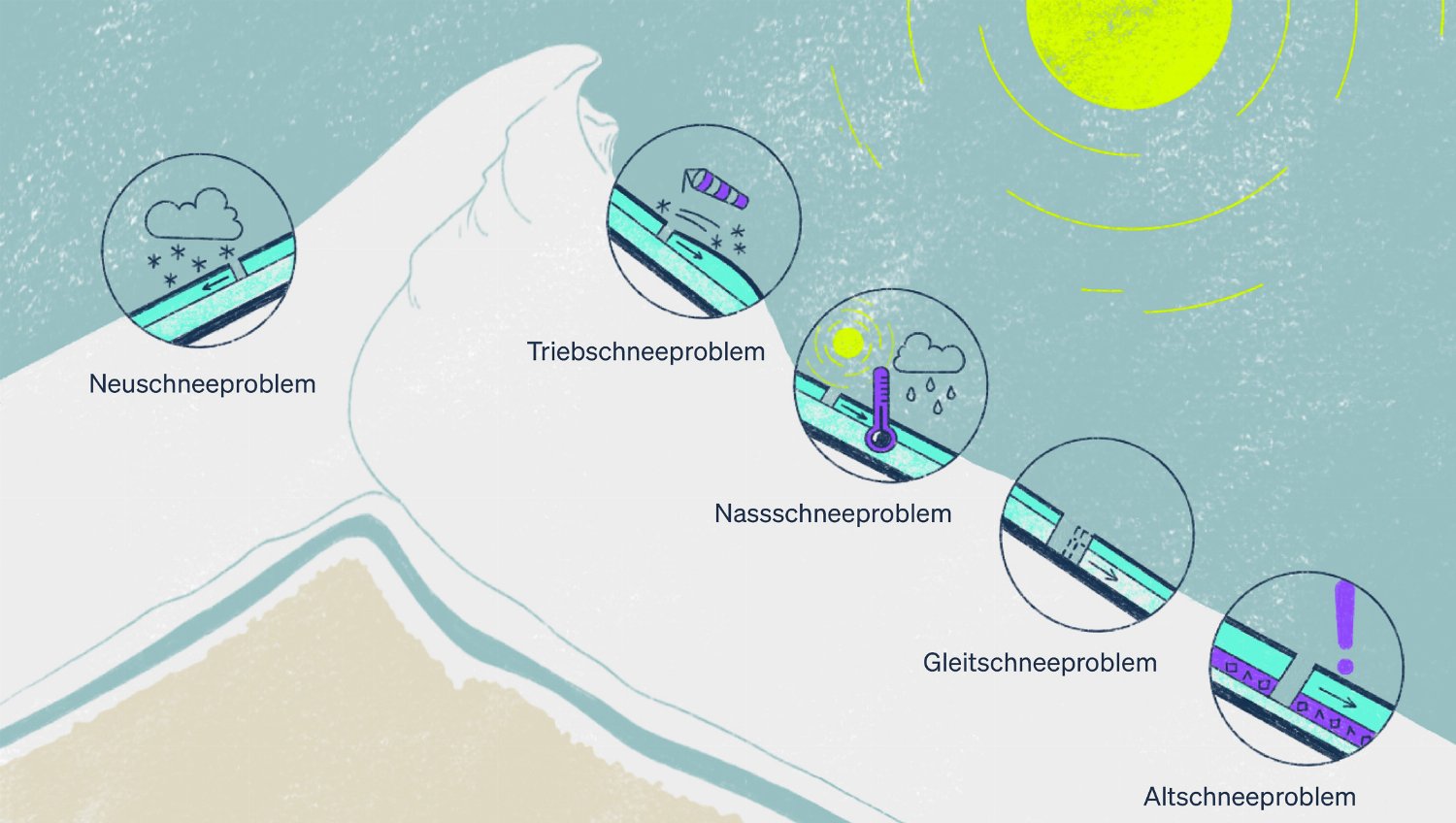
The five avalanche problems are used to recognize and avoid avalanche hazards in the terrain at an early stage. They describe the typical situations and help to better assess risks and act accordingly.

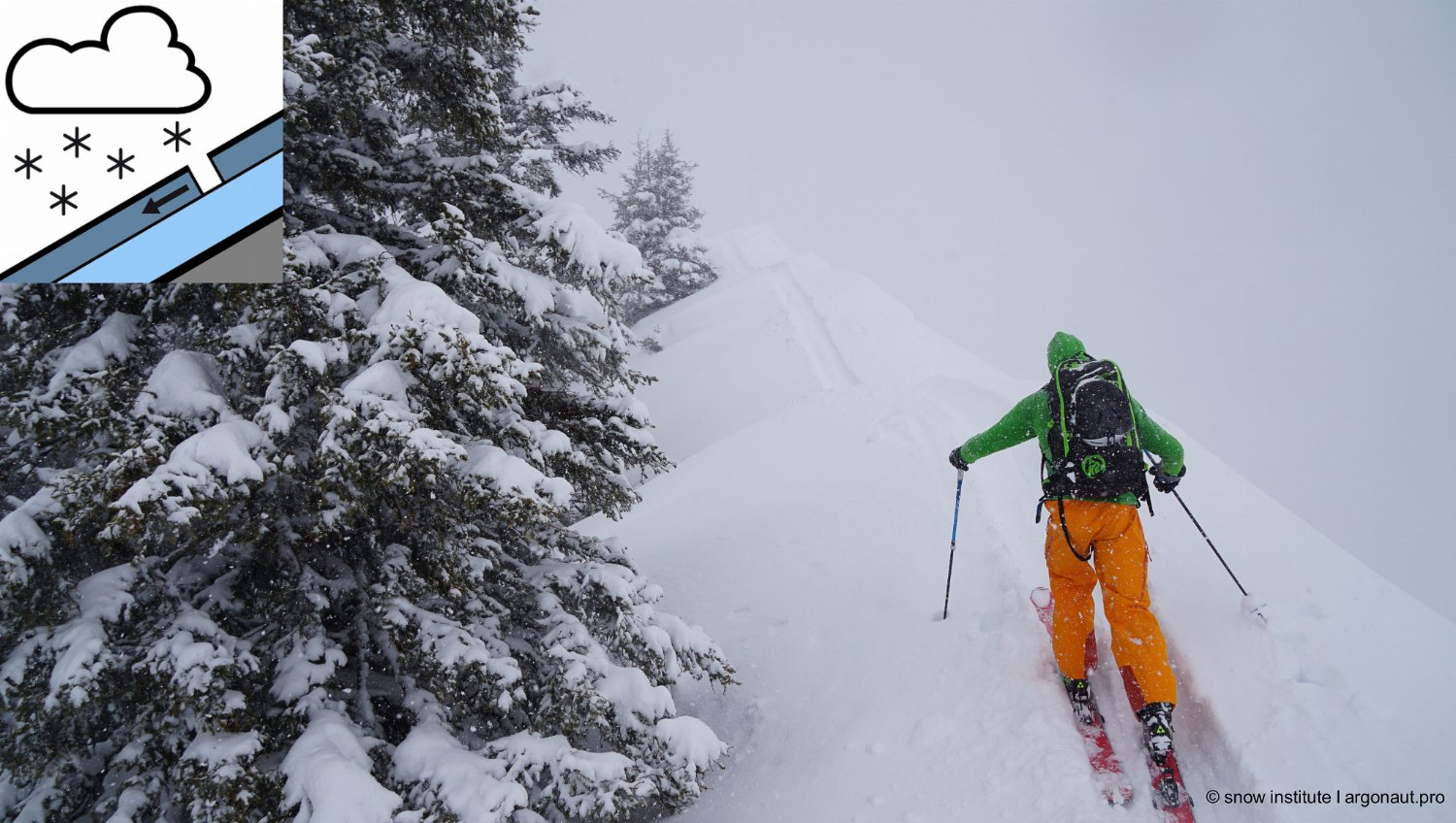
The fresh snow problem occurs when freshly fallen snow falls on top of an older layer of snow and puts additional pressure on it. The decisive factor here is the critical amount of fresh snow required to trigger an avalanche. How much snow becomes dangerous depends on various factors, such as the temperature, the wind or the properties of the old snow surface.

However, this problem is not visible in the short term, so it is important to WAIT, as the situation will improve significantly within a few days.

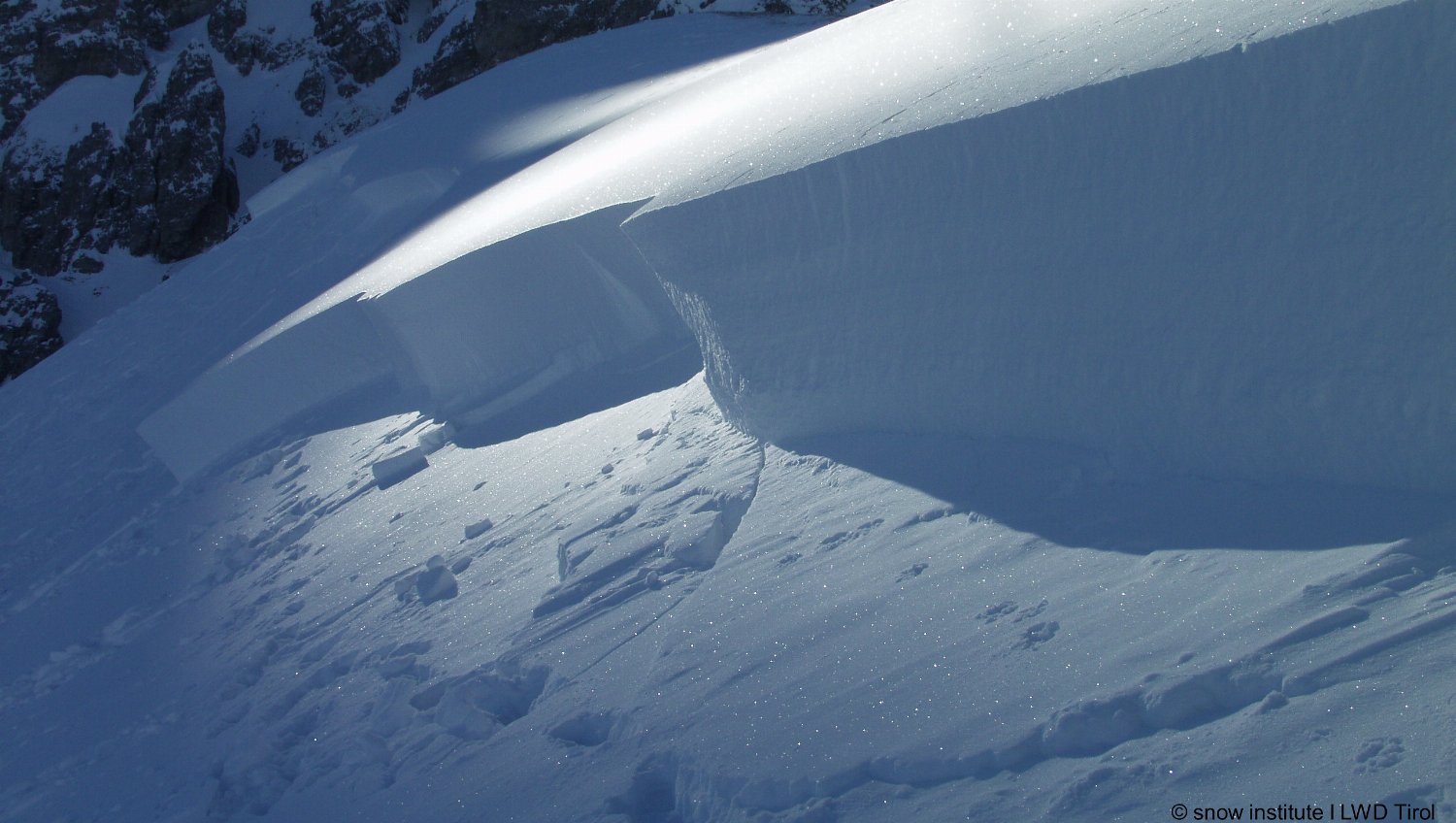
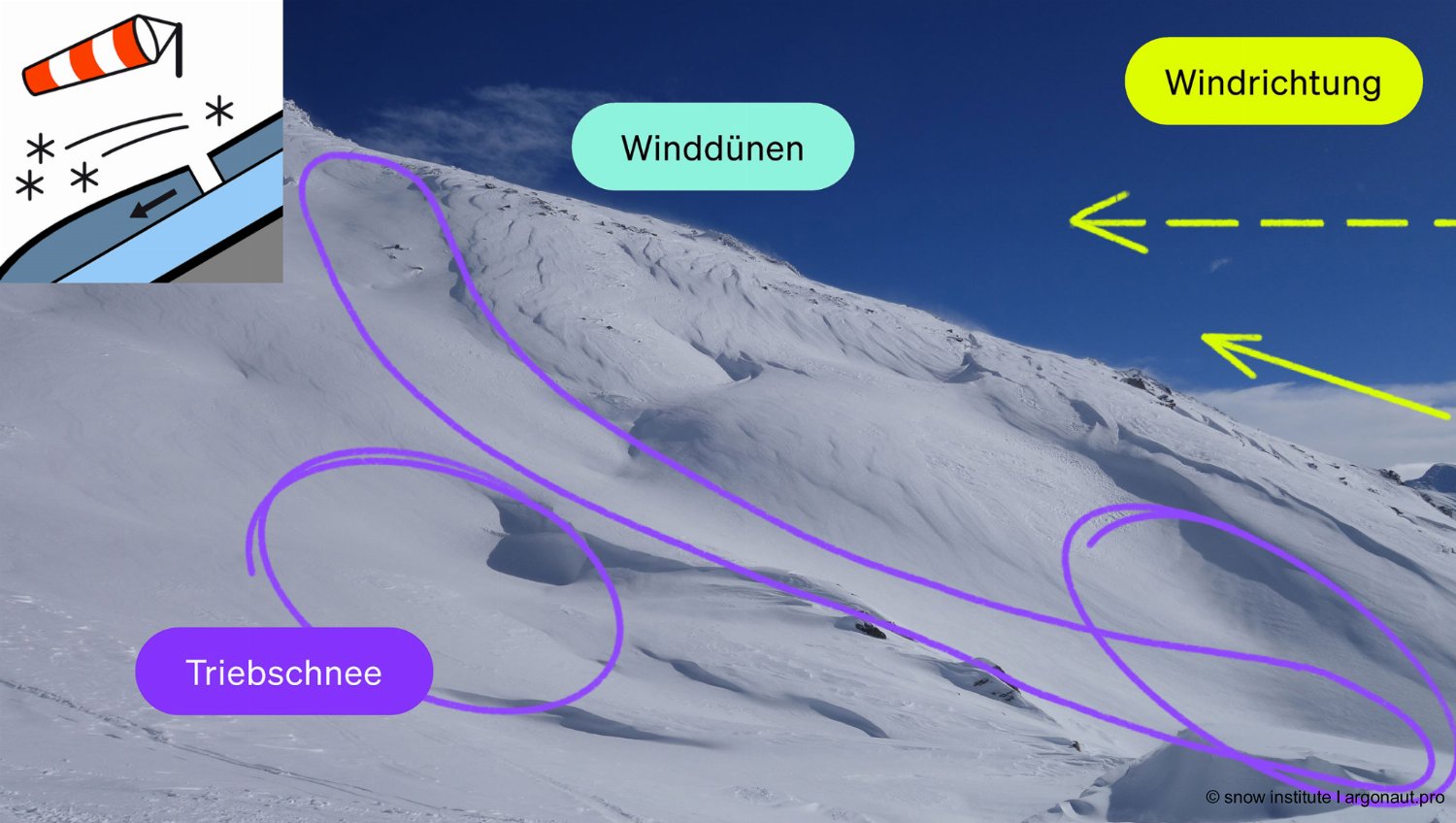
The drift snow problem occurs when wind blows the loose snow on the surface and deposits it on wind-protected slopes as dense slabs. These slabs often lie on weak layers such as deep frost, surface frost or angular crystals. The crystals in the weak layer can suddenly break when exposed to skiers or natural influences such as further snowfall, causing the slabs to spread. Steep leeward slopes, i.e. slopes facing away from the wind, are typical.

This problem can be easily recognized by accumulations of drift snow, here it is important to AVOID.

The old snow problem arises when weak layers form in the snowpack over a long period of time and remain unstable even after days or weeks. These layers often consist of snow-covered surface frost, deep frost or angular crystals that have little connection to their neighboring crystals. If fresh snow or a load from skiers is then added, the entire snow cover can break at this weak point. What is particularly treacherous is that such avalanches often occur over large areas, are difficult to predict and danger spots cannot be identified.

This problem is long-term and unrecognizable, here it is called DEFENSIVE in other words, avoid regional avalanches or avalanches with a height and exposure of less than 30°.

The wet snow problem occurs when the snow cover becomes damp due to warm temperatures, rain or sunlight. The snow then loses its stability because the water weakens the bond between the snow grains. At the same time, the snowpack becomes heavier, which increases the risk of an avalanche. It is particularly dangerous when the meltwater penetrates into deeper layers and soaks weak layers such as angular crystals. Wet snow avalanches often occur spontaneously, especially in spring or when there are sudden changes in temperature. They are sometimes slow but powerful and can sweep entire slopes away.

This problem is easily recognizable and increases with warmth, here it is a matter of TIME.

The sliding snow problem occurs when the entire snow cover slowly slides down the slope on a slippery surface such as grass, rock or ice. The cause is usually meltwater that accumulates between the snow and the ground and acts as a natural lubricating film. As a result, the snow cover loses its grip and begins to move slowly but steadily.

This problem is easily recognizable by cracks, here it is important to AVOID.

If your interest in snow has now been aroused and you would like to find out more about the physical background or avalanche science, you can visit the website of the snow.institute for more information.

Thanks to the Tyrol Avalanche Warning Service

Finally, a big thank you to Norbert Lanzanasto from the Tyrol Avalanche Warning Service for his expert support.

Similar articles