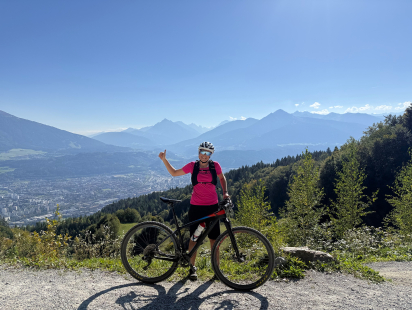
I have it in for mice: while the little rodents are easy to catch with bacon, I can be lured in with cheese. So the knowledge of the excellent grey cheese (= Tyrolean cheese specialty) at Flaurlinger Alm didn't let me rest. The prospect of getting my hands on golden yellow alpine butter only intensified this longing. Because where there's gray cheese, there's butter. So I hopped on my e-bike and cycled to the Flaurlinger Alm, an alpine pasture at 1614 meters above sea level.
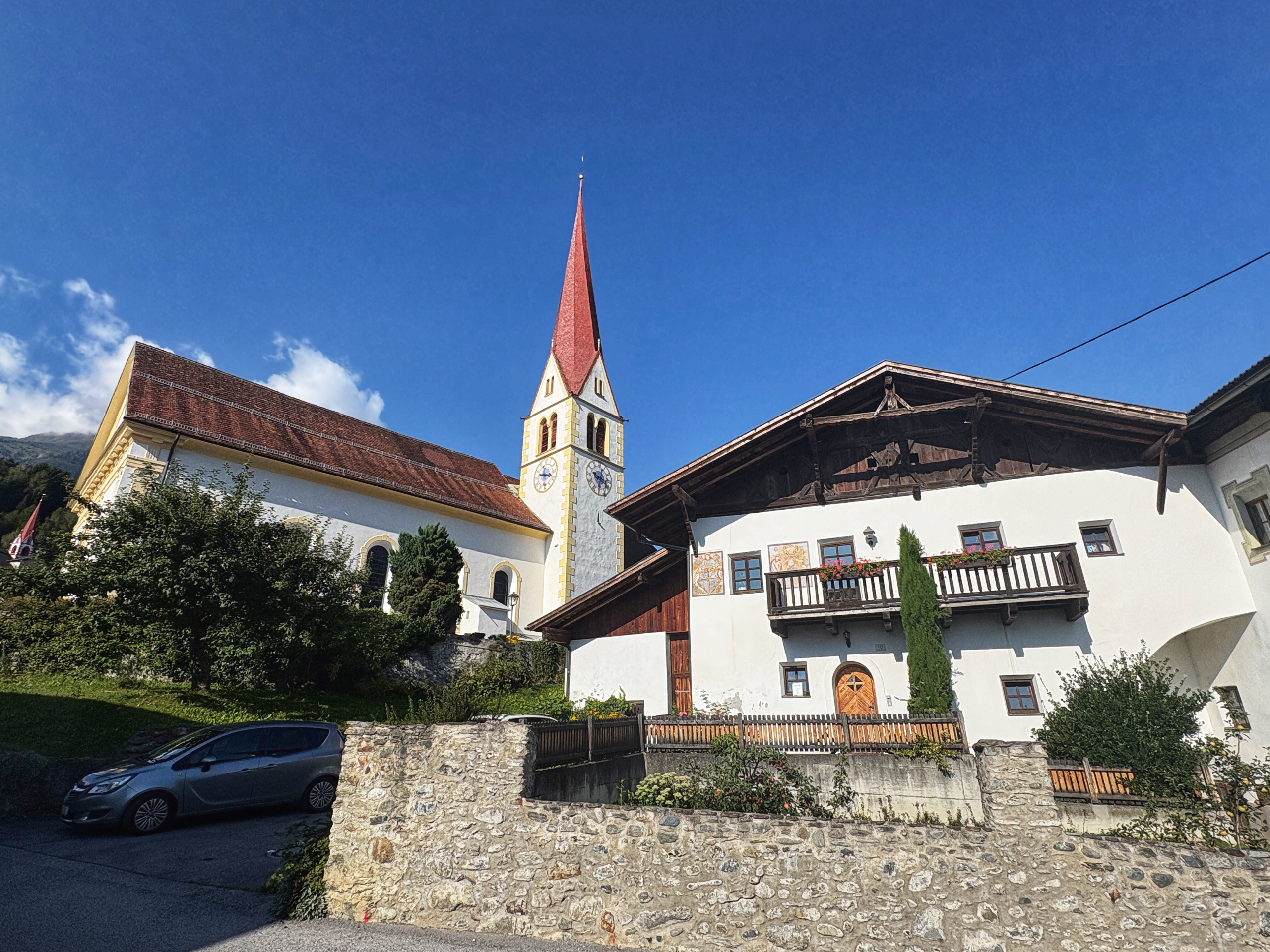
You should take your time to visit the starting point - the village center of Flaurling - to take a look around. For me, the village has one of the most beautiful village centers in Tyrol. Not only the preserved farmhouses and the baroque church are highly remarkable. All this is complemented by a Renaissance jewel, namely the historic Rieß-Schlössl. Its 'castle church' has been restored and will soon be reopened. I have already published a Blog about it.
Steeply uphill to the Flaurlinger Alm
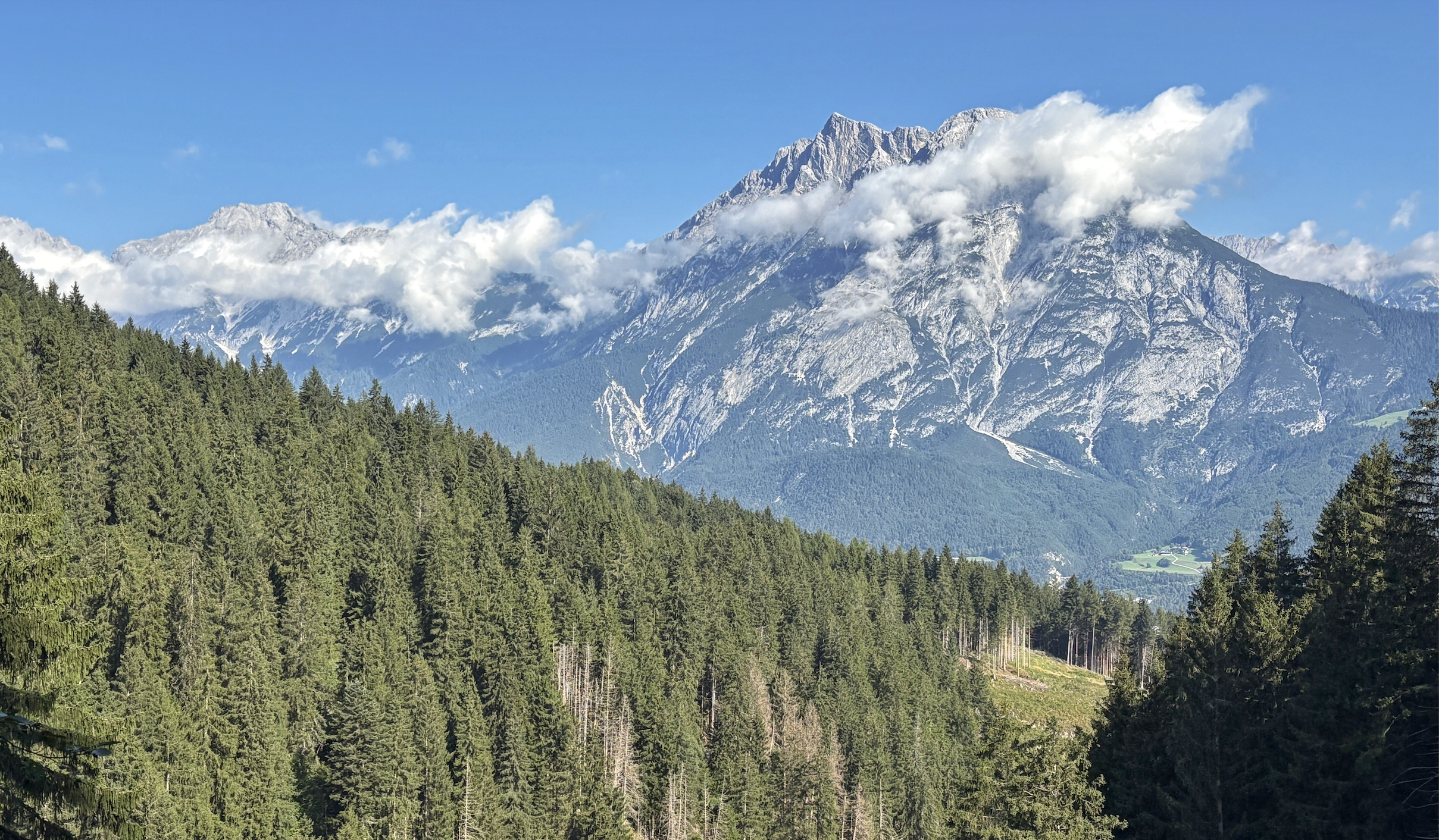
The first stage of the ascent leads to Flaurling-Berg, from where the Mieminger Kette with the Hohen Munde appears like a monumental rock face. The path now leads in serpentines towards Flaurlinger Alm.
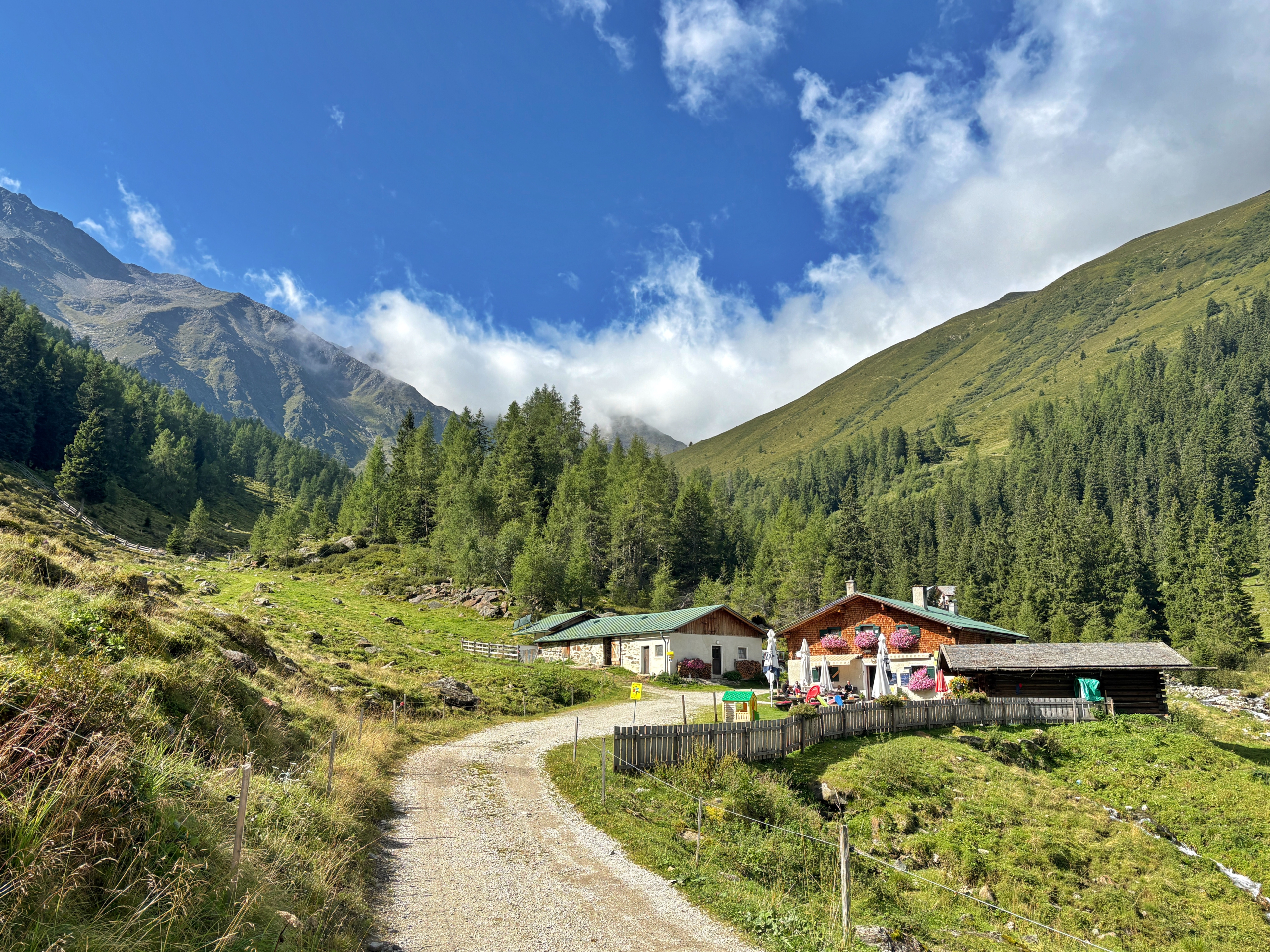
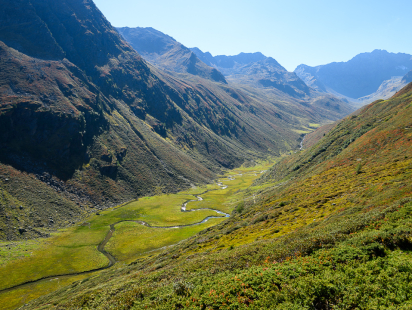
I have to add here that there are 'only' around 8.5 km between the village center of Flaurling and the Alm, but there are 1,000 meters of altitude to overcome. The average gradient of 11.7 percent is by no means ‚Lercherl‘ (= not easy), not even on an e-bike. However, the majority of the forest trail leads through the forest, which eases the sweat on the climb. After around an hour of pedaling, the valley opens up towards the head of the valley and the Flaurlinger Alm comes into view of the puffing cyclists.
An alpine pasture as I love it
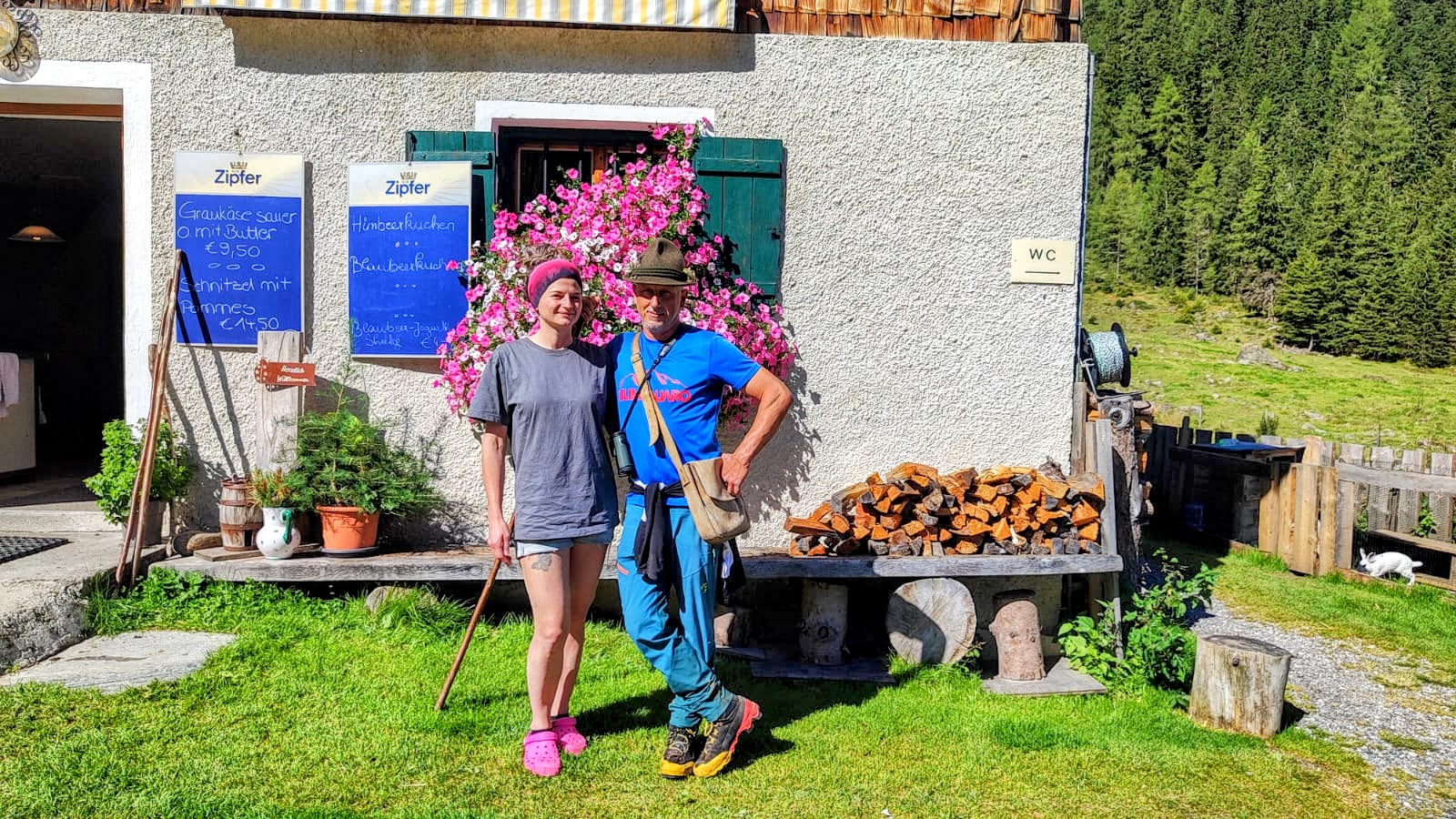
Markus Reich and Bernadette Neuner have been running the alpine pasture, which is owned by the municipality of Flaurling, since 2020. While Markus looks after the 200 or so Galt and young cattle and the six dairy cows of the 14 or so communal alpine farmers, enthusiastically making cheese and butter by hand, Bernadette is responsible for the 'inner workings' of the alp. She cooks for the day and alpine guests and keeps the guest rooms in good condition.
A little-known fact: the Flaurlinger Alm offers overnight accommodation for a total of ten hikers. As it lies exactly on the route of the ‚Peter-Anich high trail, it is a popular rest stop on the way between the Peter-Anich hut and Rosskogelhut. Incidentally, the Flaurlinger Alm is famous for its sumptuous breakfast for overnight guests, who often stay here for more than one day. There are interesting hikes to the Taxer lake, the Peiderspitze (2,808 m), the Rietzer Grießkogel (2,884 m), Hocheder (2,796 m) or Sonnkarköpfl (2,270 m), for example.

Here you make your own cheese and butter
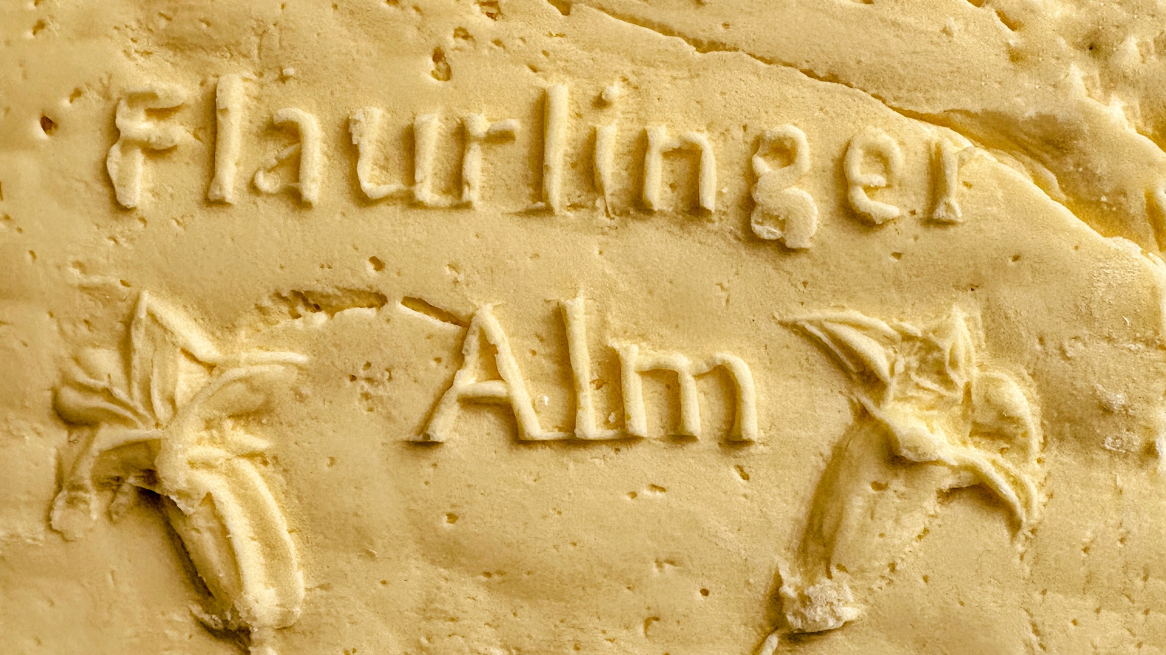
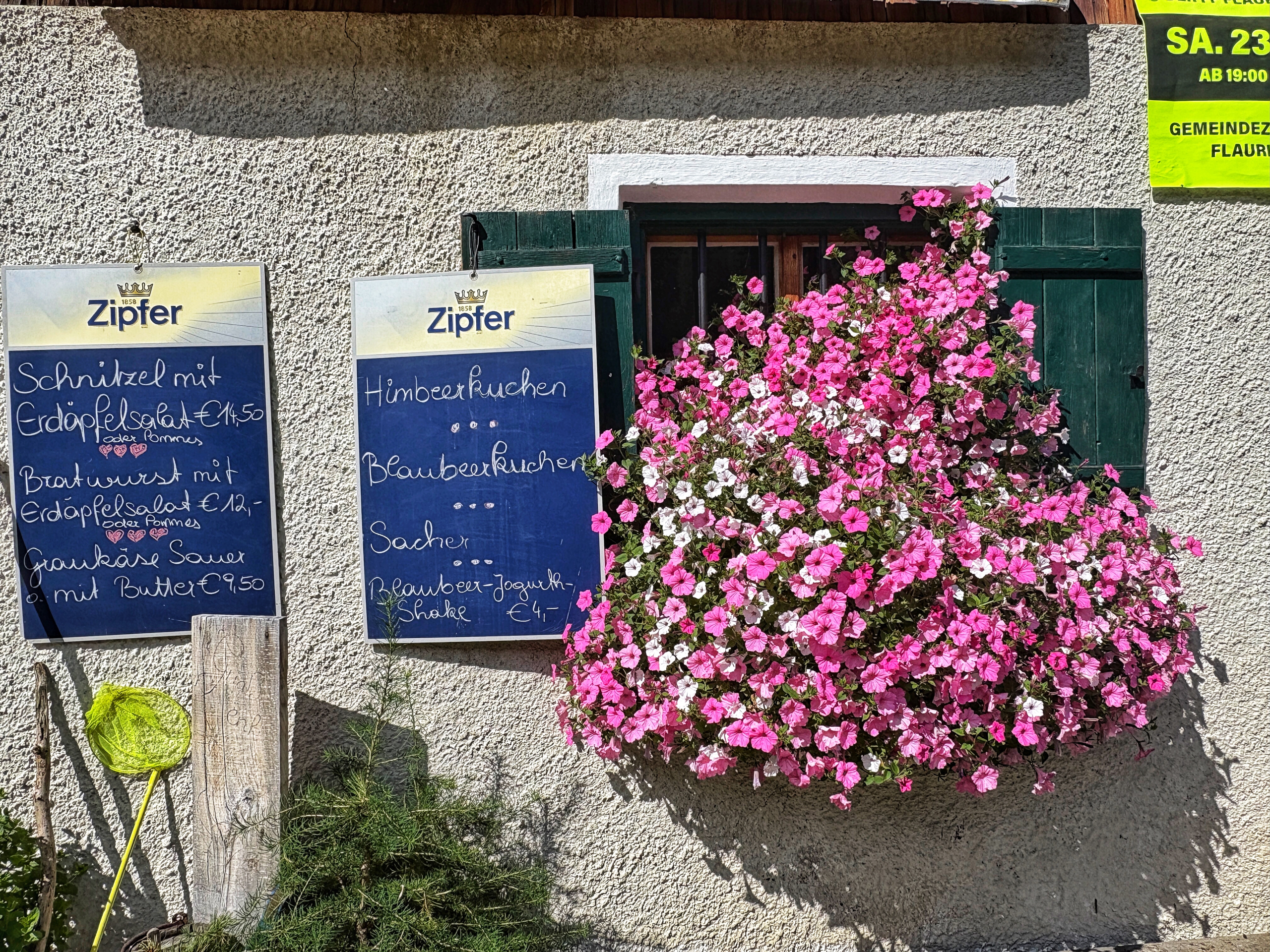
As a visitor, you will be pleased to note that the Alm is not a run-of-the-mill snack station at lofty heights. The fact that cheese is still produced here sets it apart from many mountain huts in Tyrol. While elsewhere cheese has to be bought in, Markus Reich ensures its own supply with passion and experience. Anyone who eats this truly 'original Tyrolean cheese' here immediately understands why it is so highly valued. Its ripeness and hearty, slightly sour taste are incomparable. It harmonizes perfectly with the golden yellow alpine butter, which also comes from our own production and is still formed in a 'wooden model' according to old custom. Here, you feel like you've been transported back to the days when mountain pastures were still regarded as places of production for unmistakable cheese and butter specialties.
The 'hit parade' of the offer also includes homemade gray cheese and excellent alpine butter. ©W. Kräutler
And this is how milk becomes cheese
The question of why gray cheese and butter are produced on many Tyrolean alpine pastures goes back deep into the history of the region. At the end of the Middle Ages, many alpine pastures were owned by monasteries such as Wilten or Stams. And they demanded fat for their monks in the form of butter. With the defatted milk, the so-called skimmed milk, only a lean cheese could be produced. In other words: gray cheese is a 'child' of this restriction.
The day starts at 05:30
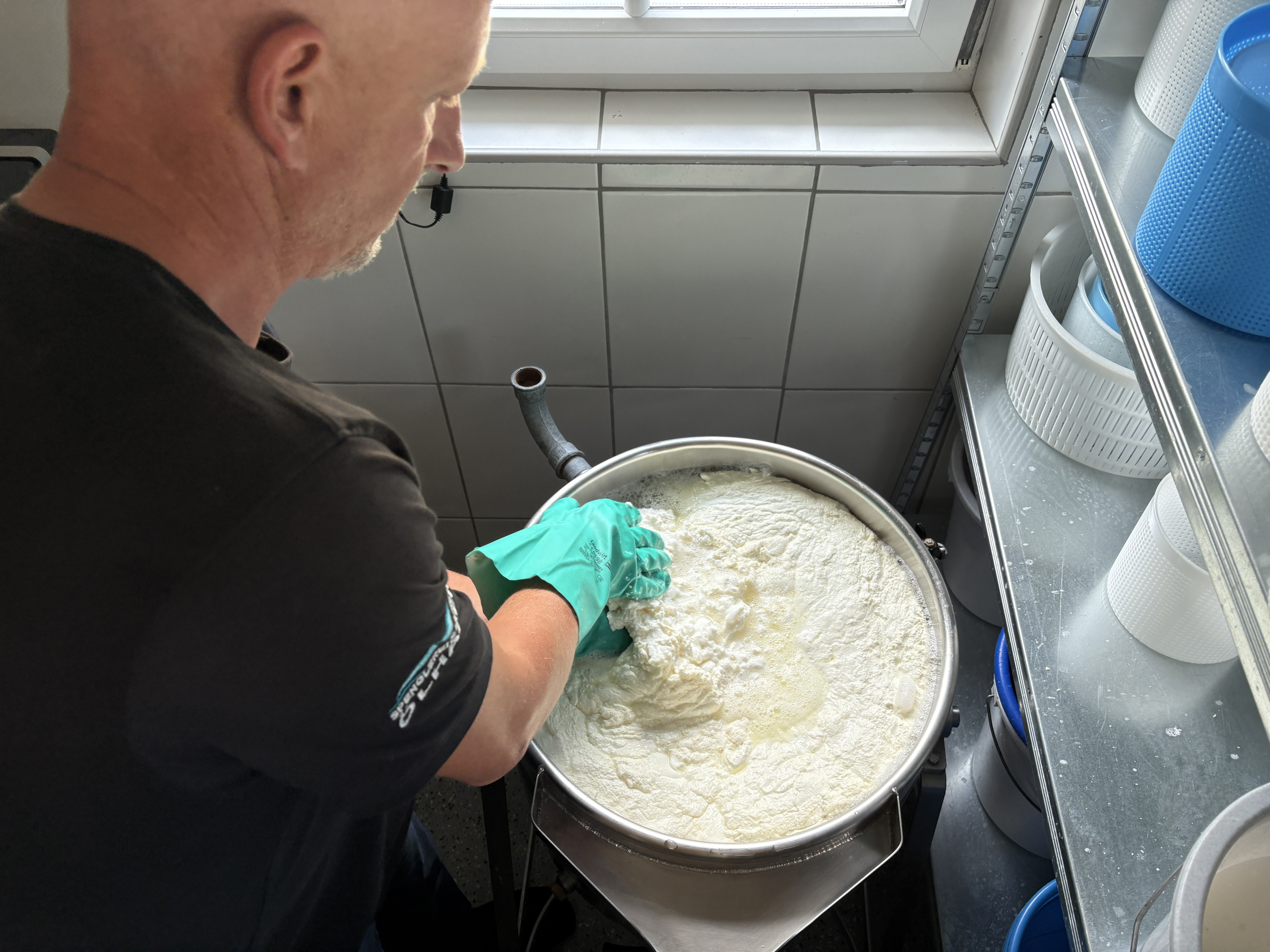
One of the reasons I came to the Flaurlinger Alm was to follow the process of making gray cheese. I was therefore grateful that I was able to look over Markus' shoulder in the small but very fine dairy room. His daily routine begins at 05:30, when the cows are milked. Immediately afterwards, the milk is skimmed and the remaining skimmed milk is 'set': a special gray cheese culture is added for acidification. The milk then 'incubates' for around 20 hours.
Cheese in dry cloths
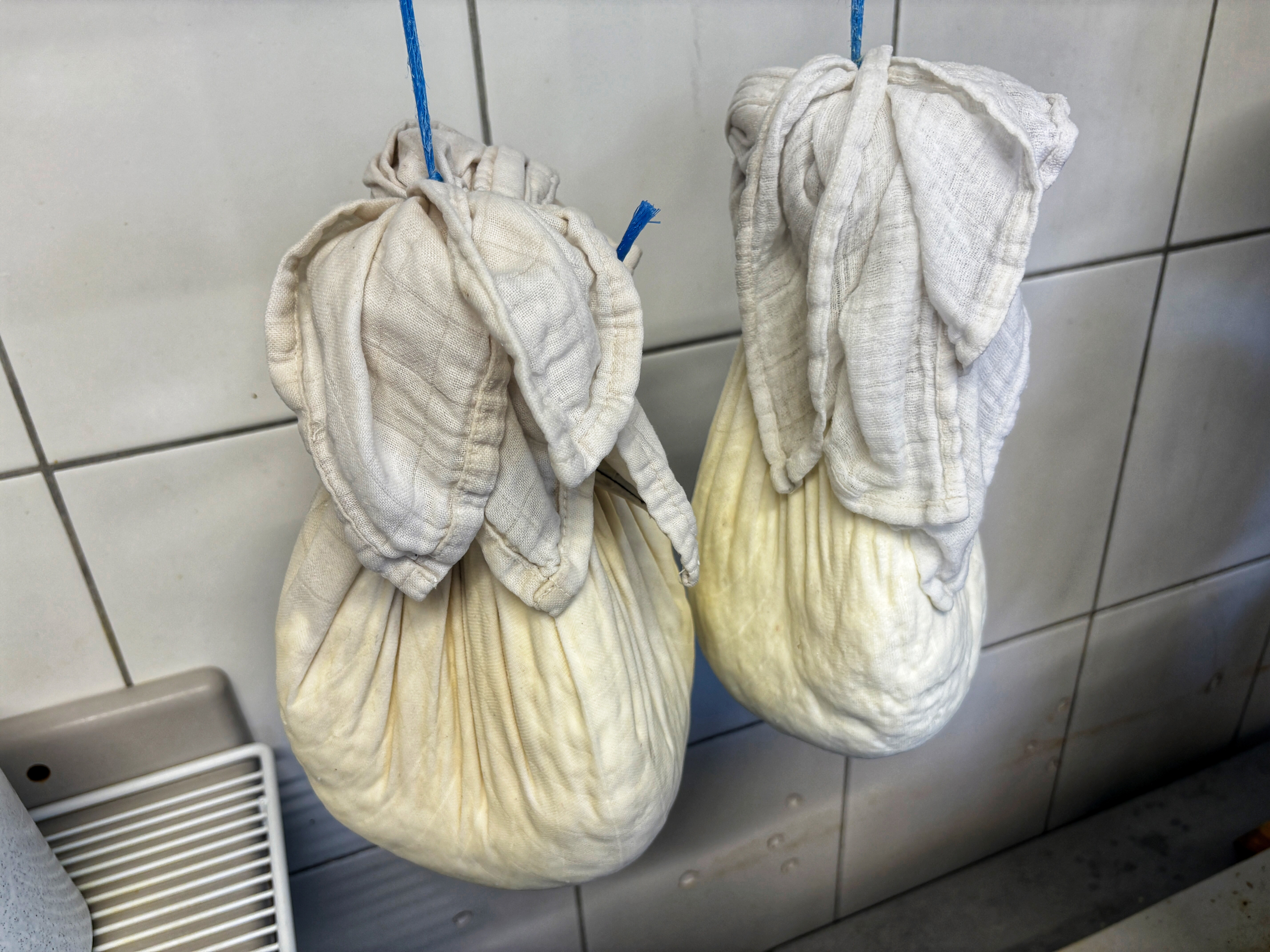
Once the milk has been optimally 'broken' and 'soured', it is scooped up again to evenly sour all parts of the now curd-like curd. The curd is then heated to 50 degrees for 1.5 hours, turned again and then placed in cheesecloth to separate it from the whey. The cloths and their contents are then hung up to 'dry'.
Last but not least: the 'secret recipe' of Markus Reich
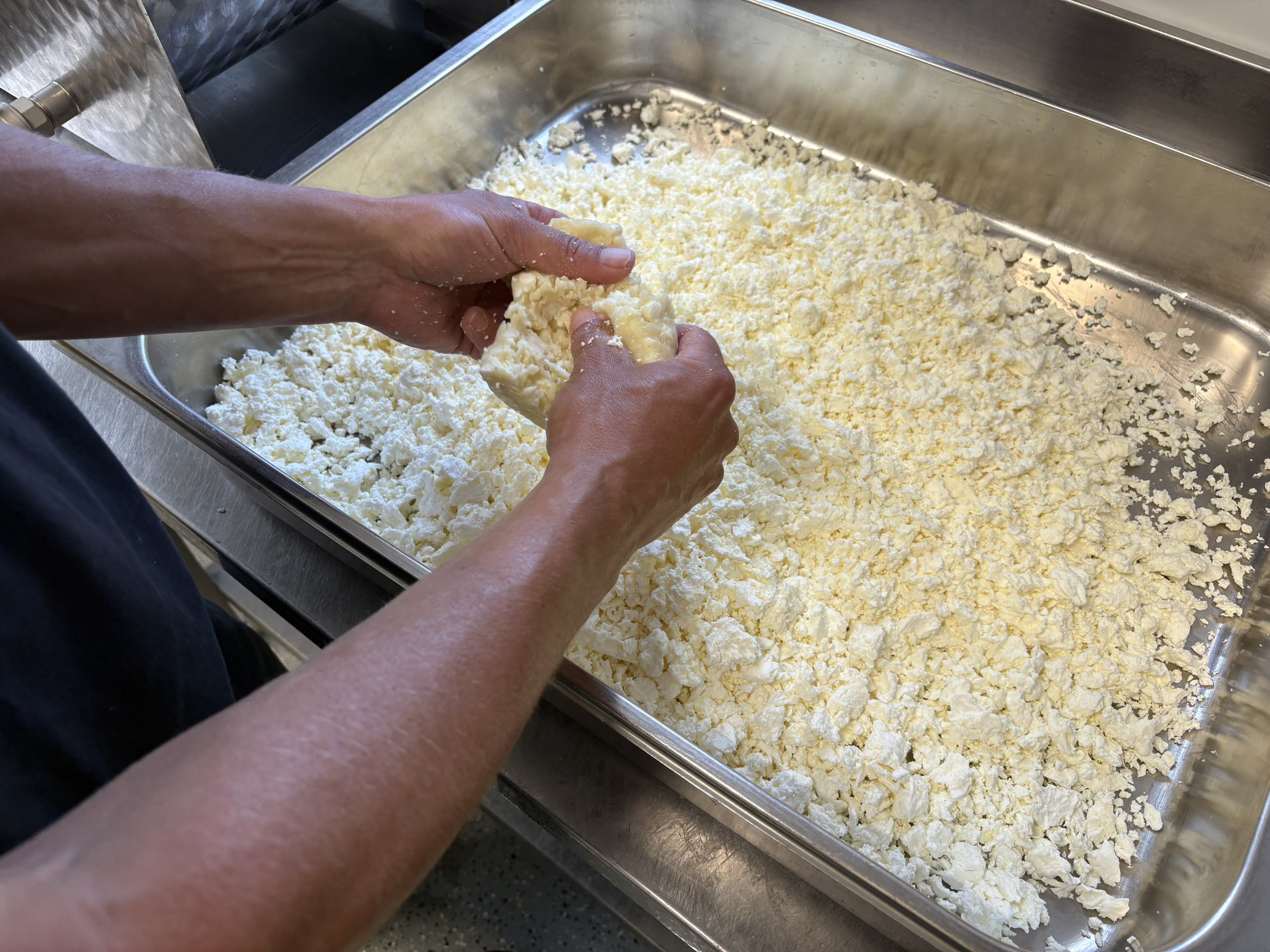
The grand finale is when the cheese is removed from the cloths and 'crumbled' by hand. Now the craftsmanship of Markus Reich deviates from the usual 'scheme'. Instead of adding another pre-prepared 'maturing culture', he sprinkles crumbled, already mature gray cheese over the now finely chopped, crumbly fresh mixture and adds salt and pepper. "This shortens the maturing time considerably," he tells me, "my cheese is ripe within 4-5 days."
When the cheese mass comes out of the drying cloths, it is carefully crumbled in the truest sense of the word. Markus now adds 'old cheese' to the new cheese to make the maturing process more intensive and faster. ©W. Kräutler
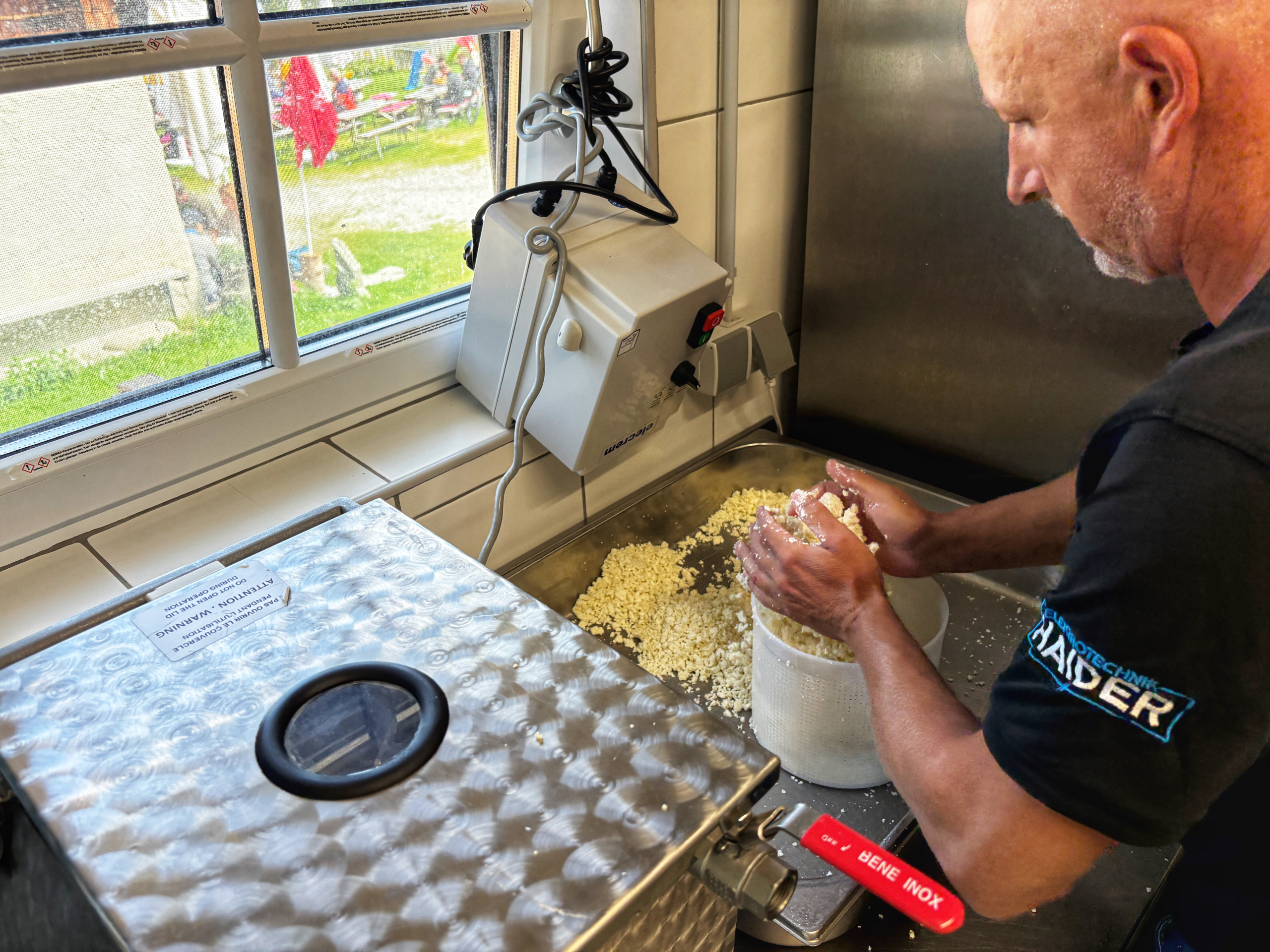
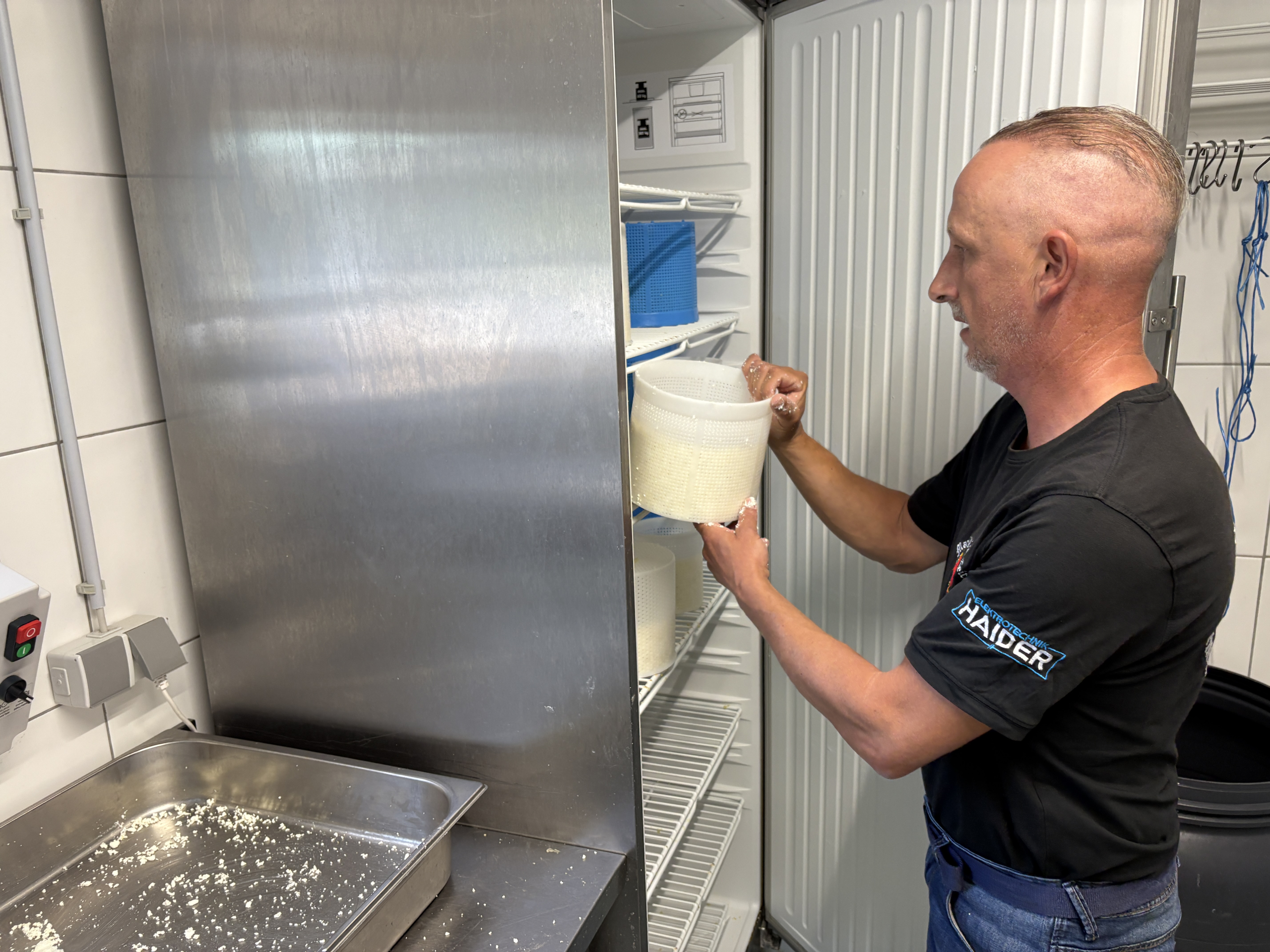
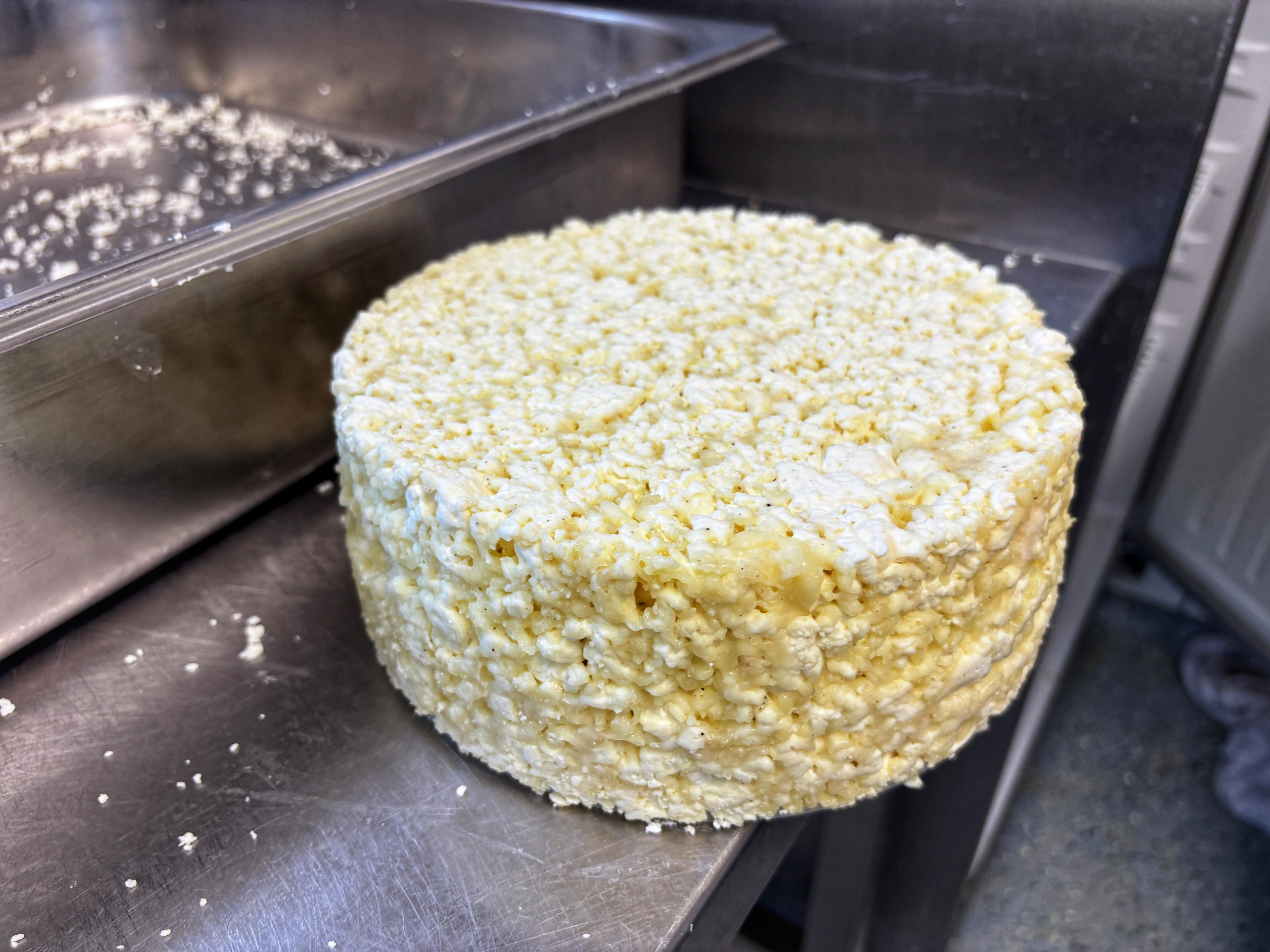
Markus then fills the crumbly mass into round plastic containers and stores them in a resting cabinet. The cheese, now in a round shape, is then stored in a maturing cabinet to develop its incomparable taste and aroma.
Markus Reich in this way, the cheesemaker processes between 120 and 140 liters of milk every day, which yields between 8 and 10 kg of grey cheese and 9-10 kg of butter.
The 'cheese crumbs' are placed in a round container and a small cheese wheel is formed. ©W. Kräutler
Grey cheese and butter are like 'milk and honey' for me
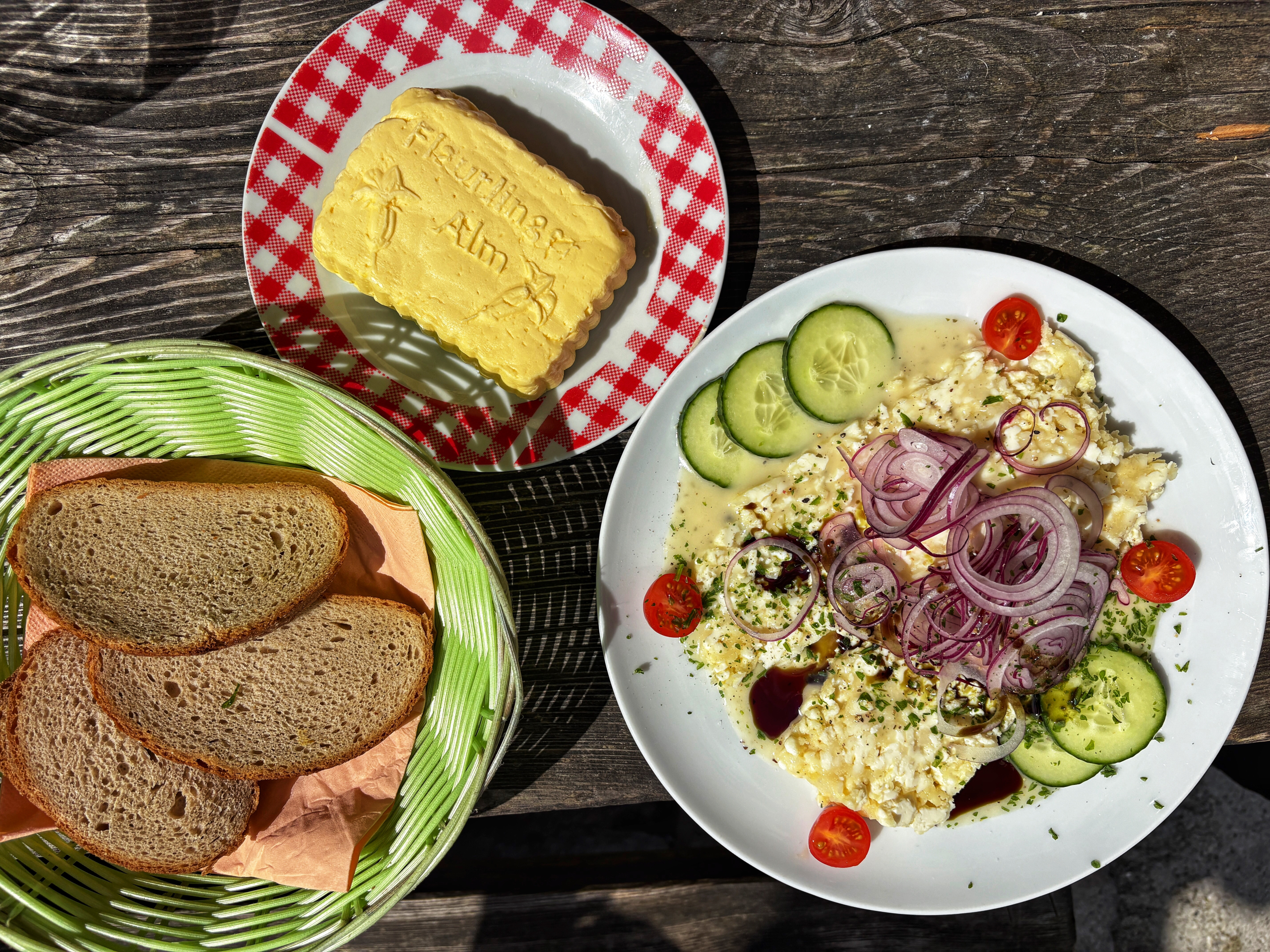
I still consider it a privilege to be able to taste alpine products on the spot. Naturally, I ordered gray cheese and butter and can say with conviction that I tasted a very fine cheese that I can highly recommend. A number of restaurants in the region have also recognized this and include the cheese on their menus.
Of course, I stocked up on the shiny golden alpine butter and a wheel of gray cheese before I left. After all, there aren't many mountain pastures left where you can indulge in gourmet luxury so unabashedly. For me, this is 'milk and honey', so to speak.
The dream of good food on the alpine pasture: gray cheese and alpine butter with brown bread. Truly epicurean! ©W. Kräutler
A small power station provides the energy
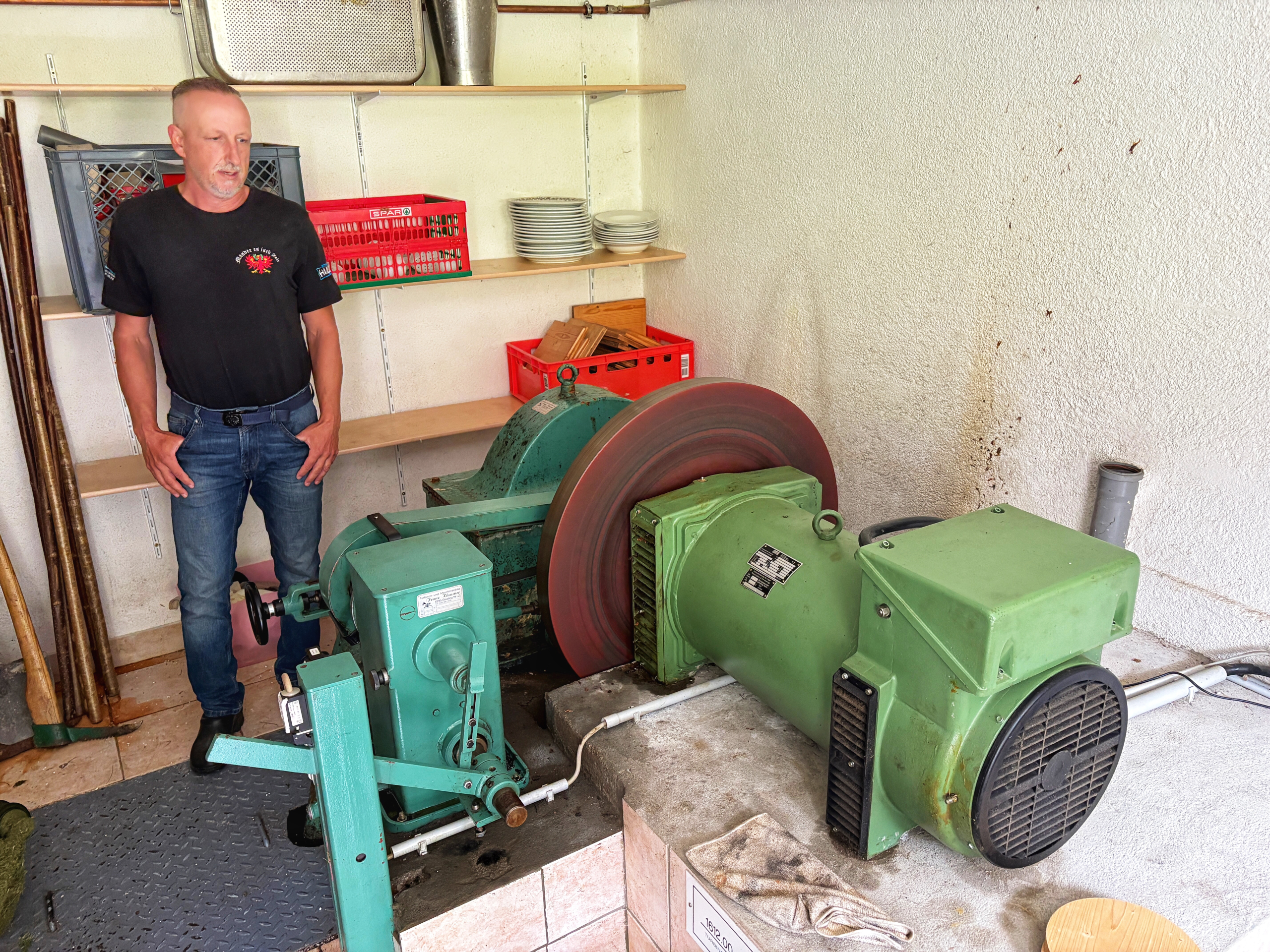
It should be added that the electrical energy for this alpine pasture ensemble is generated by its own 'small power plant'. This not only saves the municipality, as the owner of the alpine pasture, from having to run a kilometer-long power line through the forest. The wires also do not interfere with the wonderful view of the Hohe Mut and the Karwendel mountains.
The small power station on the Flaurlinger Alm saves the great view from being obstructed by wires and masts. ©W. Kräutler
In the end, the alpine excursion turns into a round trip
For the descent, I chose the path to Oberhofen, which branches off below the Flaurlinger Alm. Now you need good brakes, because the path to Oberhofen is also not from bad parents.
Data on the Flaurlinger Alm:
- Open 2025 until September 13th
- Price for accommodation, bed and breakfast for 1 person: € 40 (sleeping bag not required)
- Hikes starting from Flaurlinger Alm: to Taxer See, Peiderspitze (2,808 m), Rietzer Grießkogel (2,884 m), Hocheder (2,796 m) or Sonnkarköpfl (2,270 m).
Telephone: +43 664 2062953
Distances:
Distance from the center of Flaurling around 6.5 km
Difference in altitude: around 1,000 m
Difficulty level: Round trip from Flaurling via Alm to Oberhofen: moderately difficult. A good level of fitness is required.
Show me the location on the map
A volunteer at the "Schule der Alm" alpine farming school, cultural pilgrim, Tyrol aficionado and Innsbruck fan.
Similar articles
From Mountains to Beach Never underestimate Innsbruck’s ability to turn an ordinary weekend into something…
Fresh, crisp, and “guat ” (= good, delicious)—that’s how I like the food that ends up on…
Which restaurants in Innsbruck are open on Sundays? The fact that it is not easy…
A relaxed brunch and breakfast with children? Sometimes it sounds like a dream - but it's not…