In mid-May, the time had come: they gathered (once again) for the 28th Alpine Region Meeting. Over 12,000 proud marksmen, along with canteens and musicians, answered the call of camaraderie and made their way to Innsbruck. To the highly historic Bergisel, where some of the mountain region battalions actually faced off against each other back in 1809. Their sons and daughters, however, have become friends and today prefer to march together rather than against one another. And so the 28th Regional Gathering culminated in a magnificent parade through the city—for peace, friendship, and the ancestors. But also for countless curious festival guests, of whom I was just one. For all those who were unable to attend, here is a photo-rich recap below.
The kickoff: Kaiser Maxl’s Landlibell
Things used to be a little different back then. As is well known, Tyrol takes great pride in its traditions. Anyone who wants to gain a better understanding of this year’s “Alpine Regional Meeting” of the Tyrolean Schützen in Innsbruck would do well to take a brief historical tour. For example, through the Tyrolean Kaiserjäger Museum and the Tirol Panorama (aka the giant panoramic painting) on the Bergisel, where the undeniably legendary history of the Tyrolean marksmen is retold.
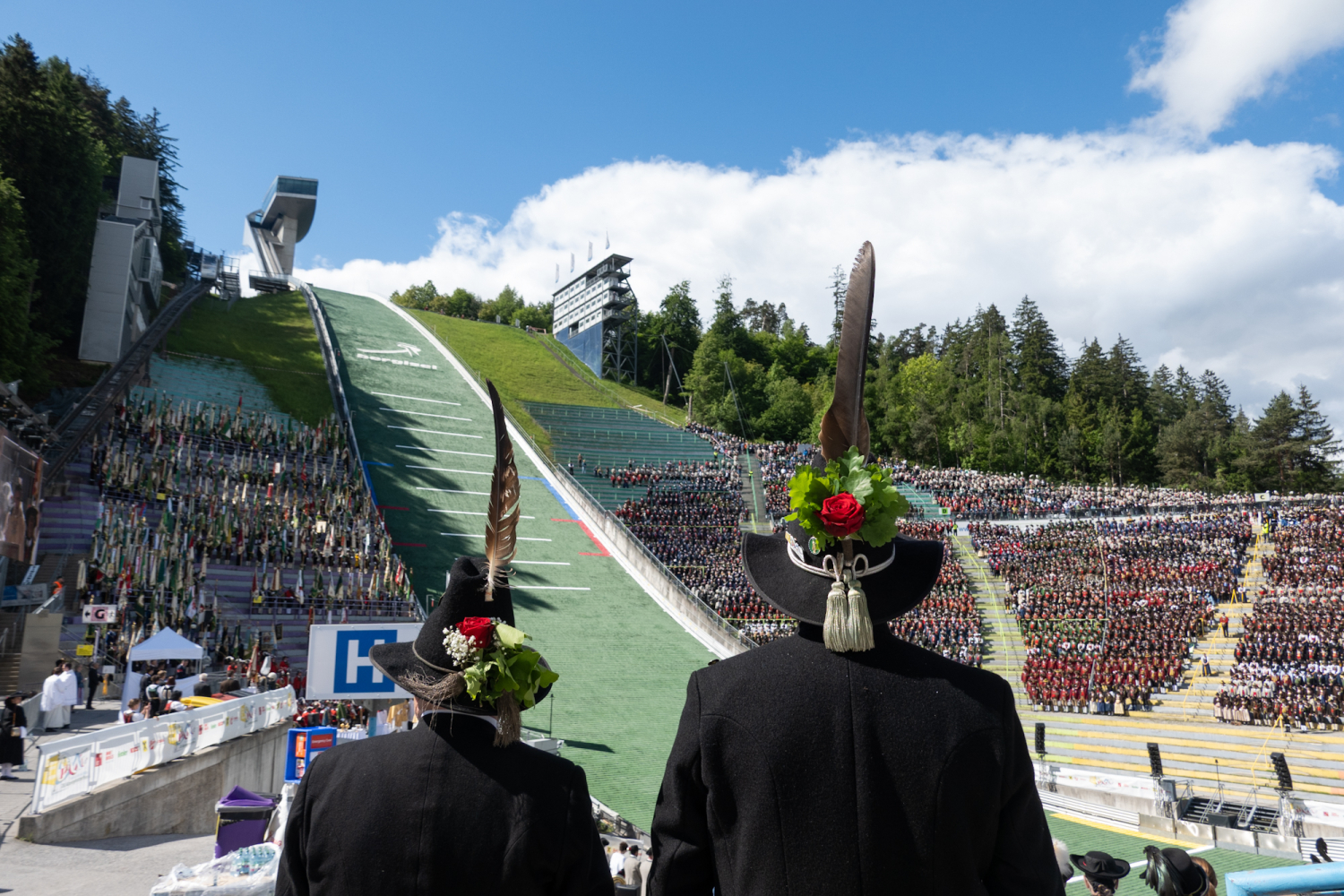
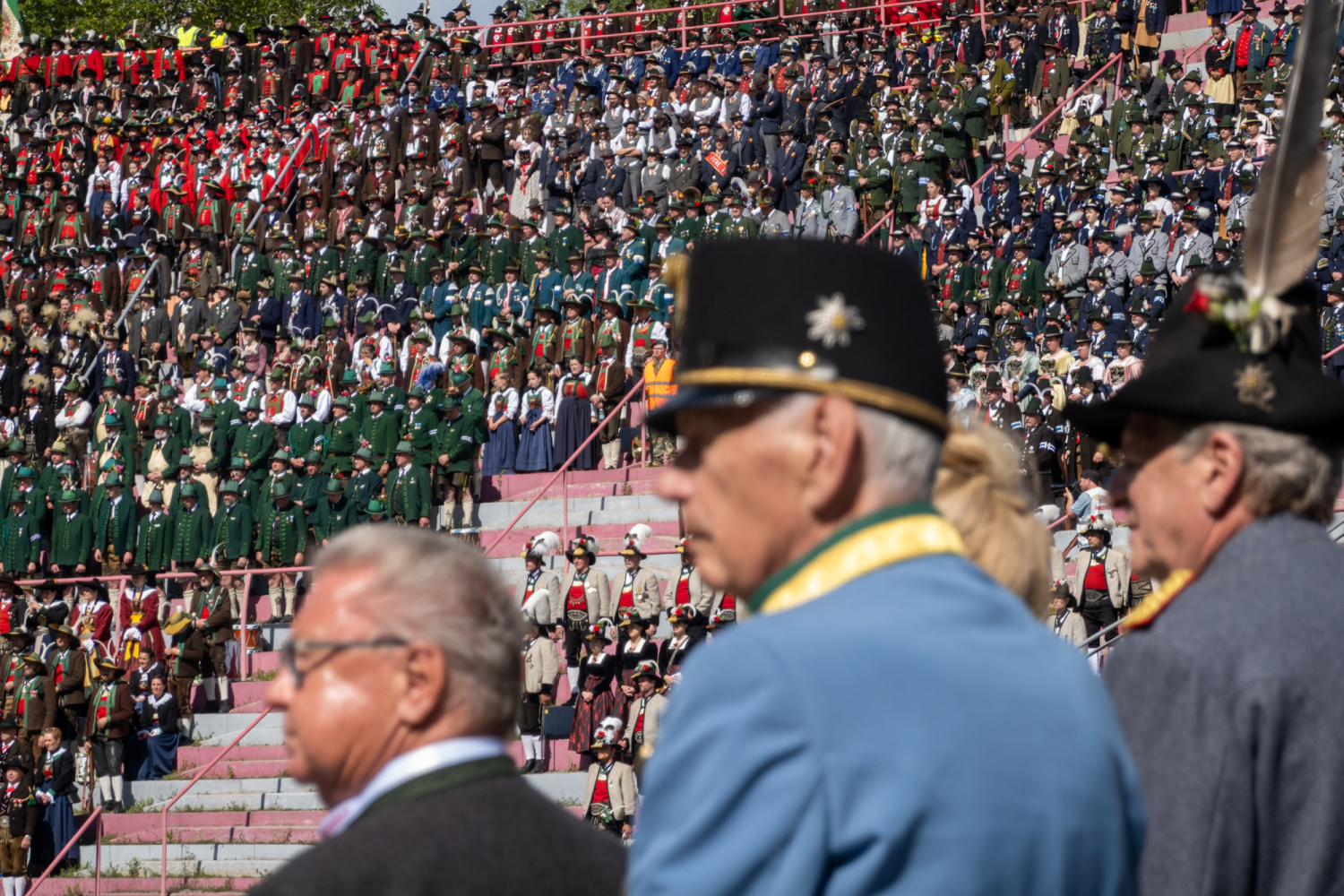
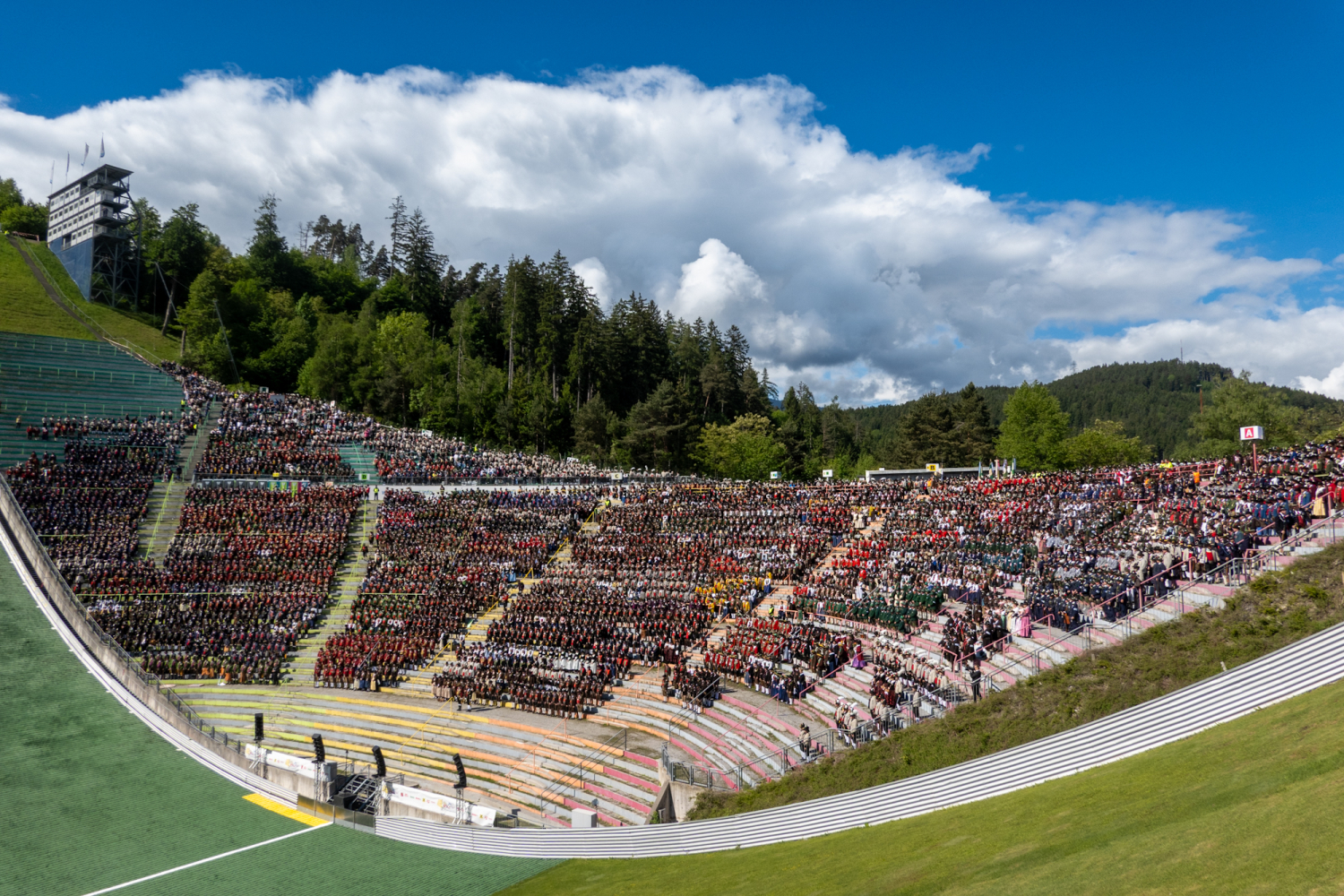
It’s a rare sight at Bergisel Stadium—thousands of magnificent Tyrolean parade uniforms.
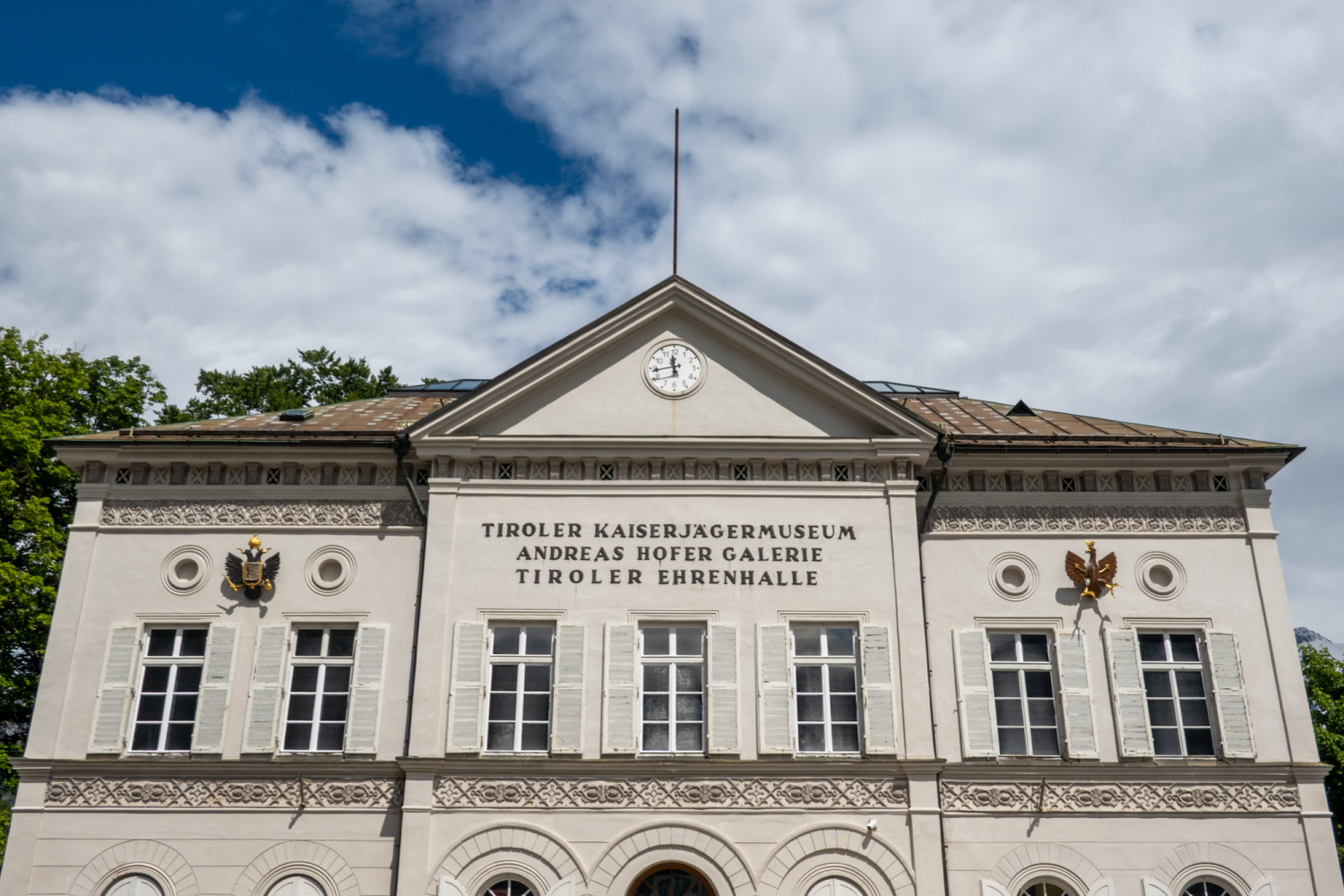
The Tyrolean Kaiserjäger Museum recounts the eventful history of the Tyrolean riflemen.
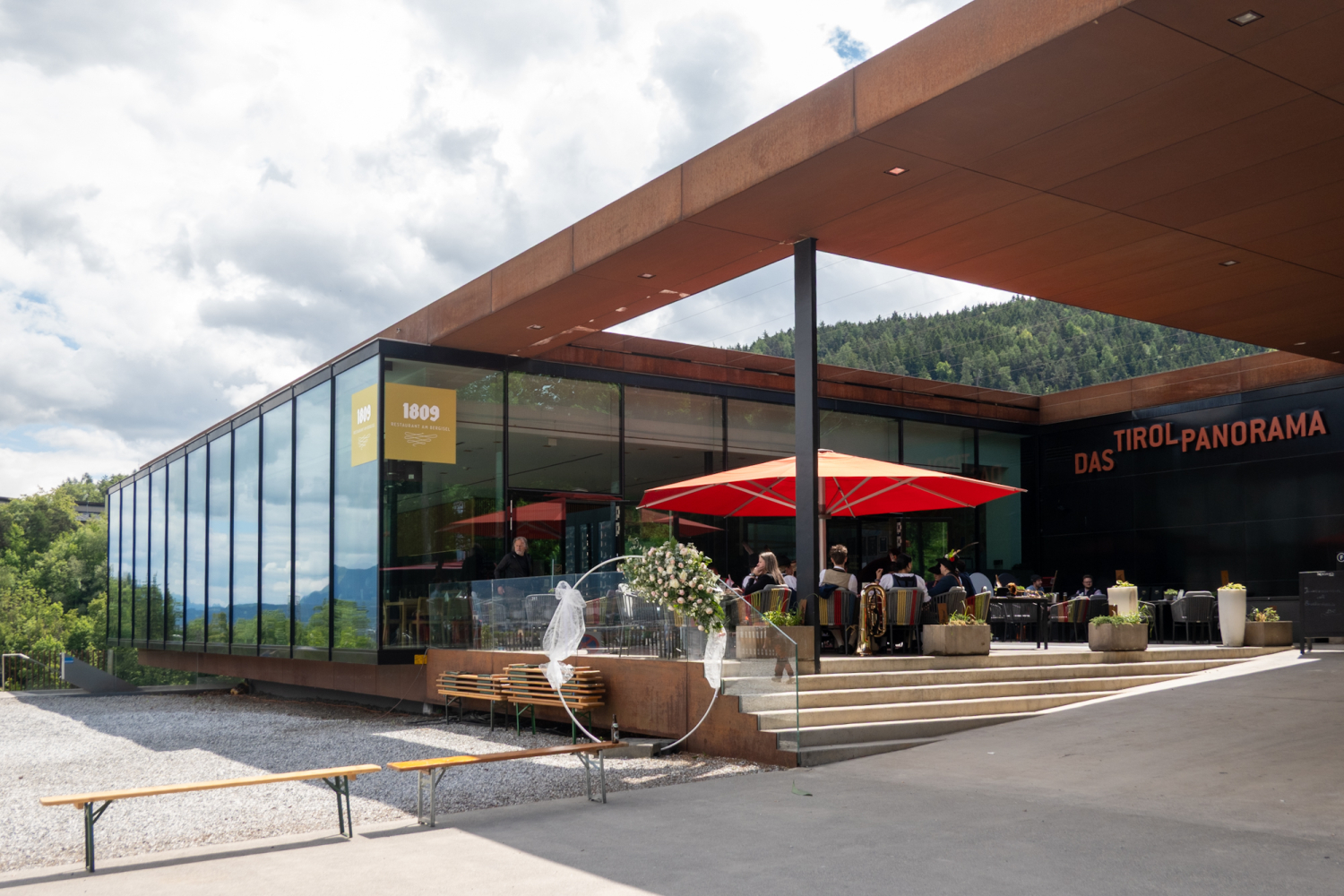
The Tirol Panorama is also known as the Giant Panorama—here, you can immerse yourself in the Tyrolean struggle for freedom.
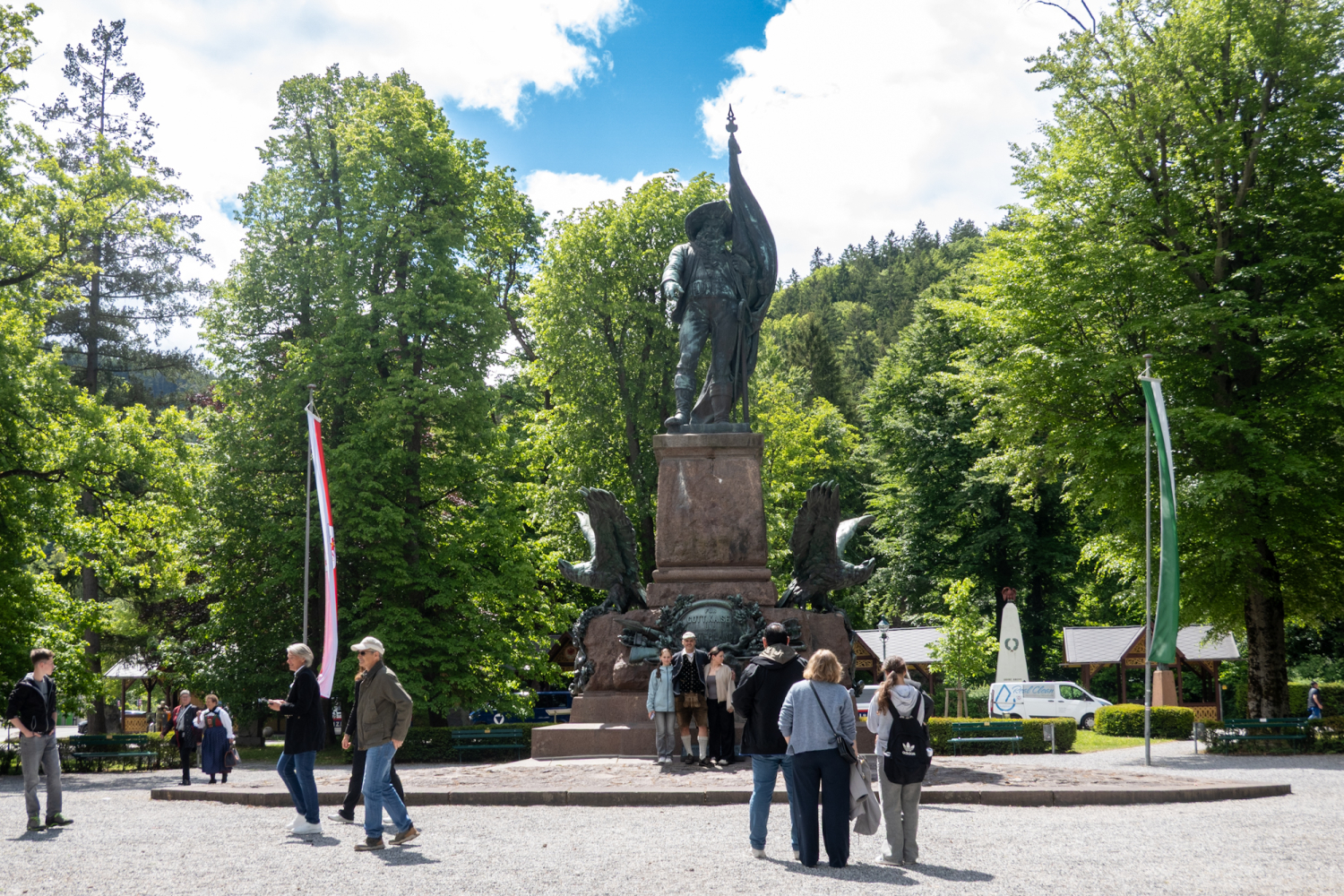
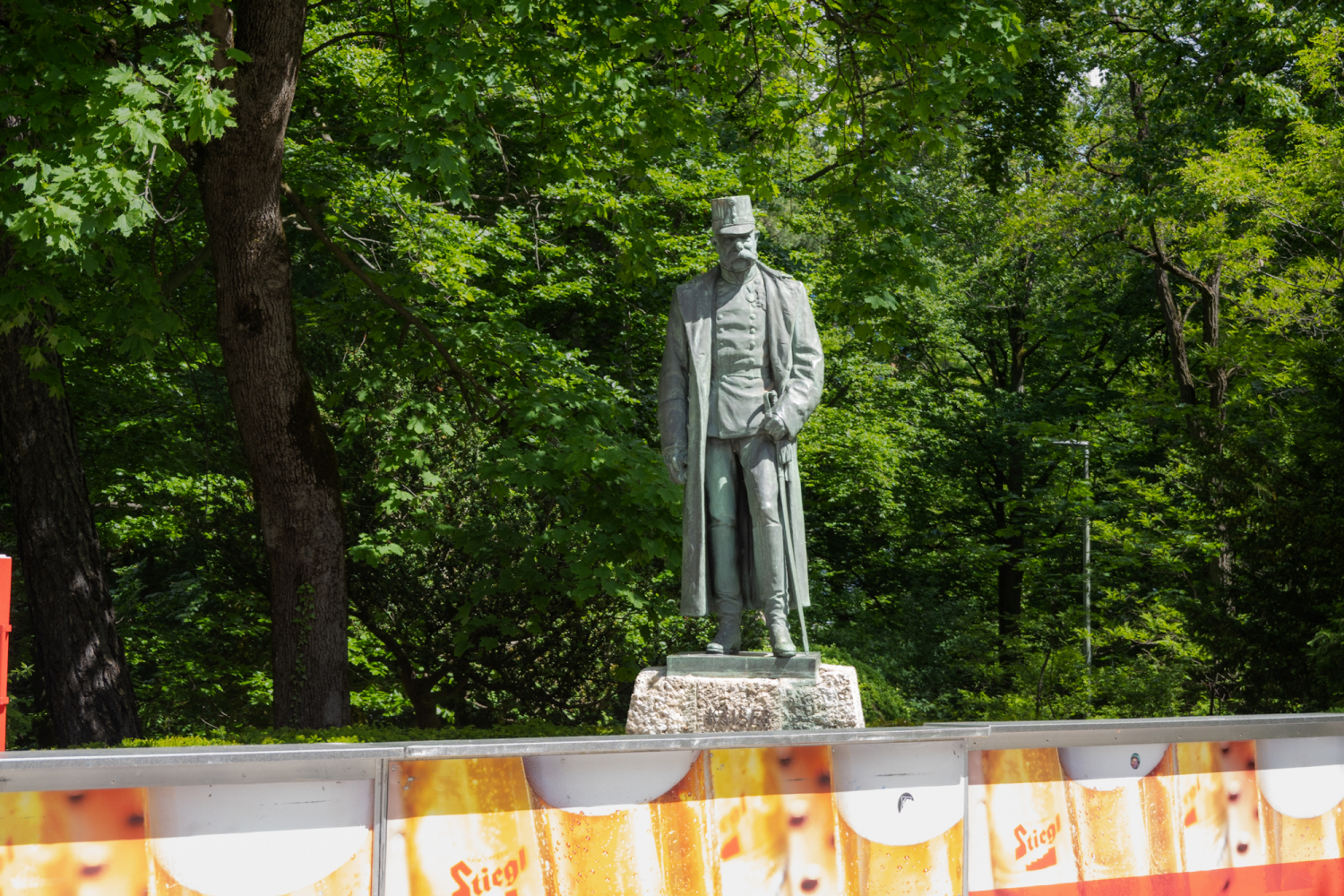
If you're in Innsbruck: Take a souvenir photo with the statue of Andreas Hofer.
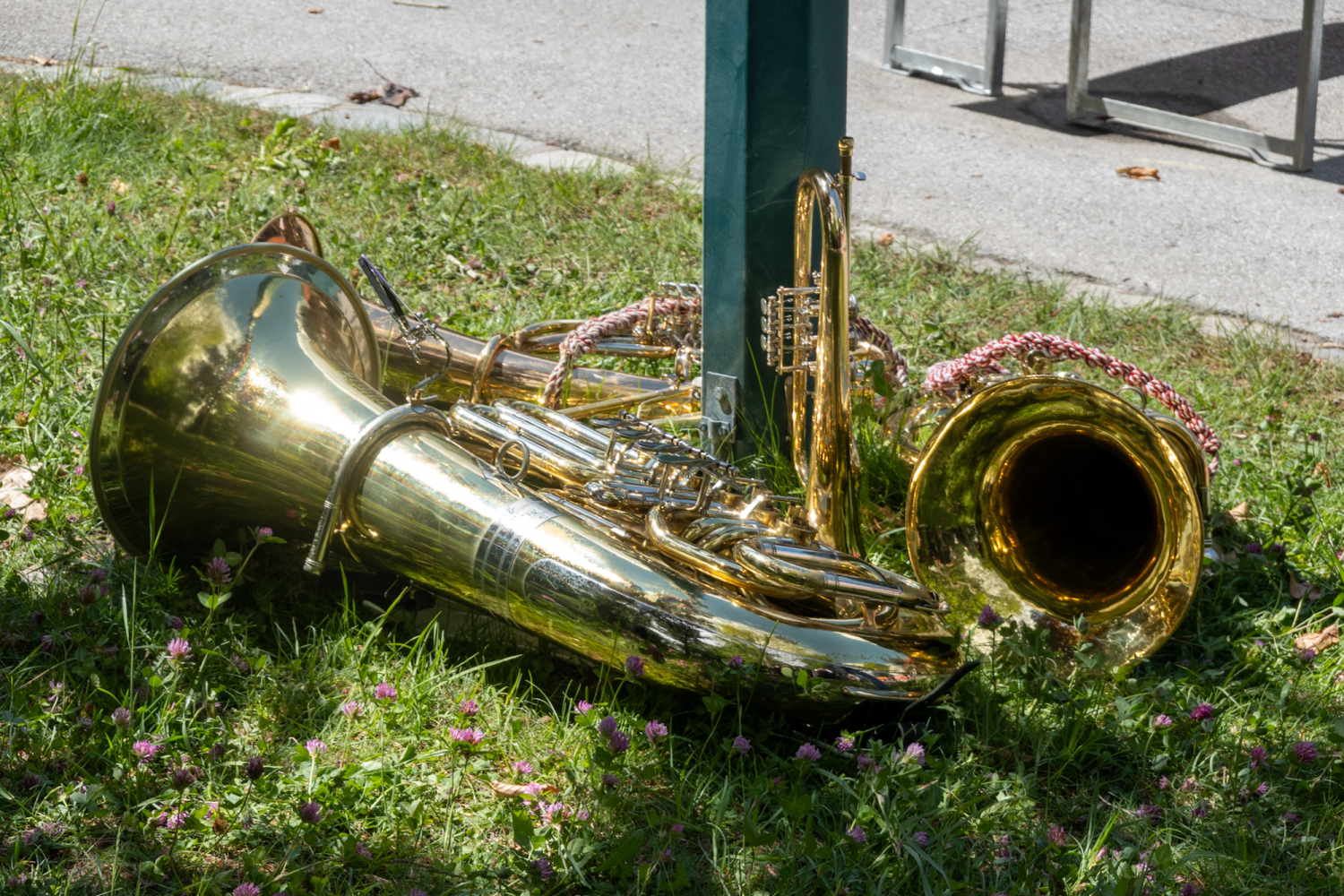
Rather than resorting to weapons, we let the instruments do the talking.
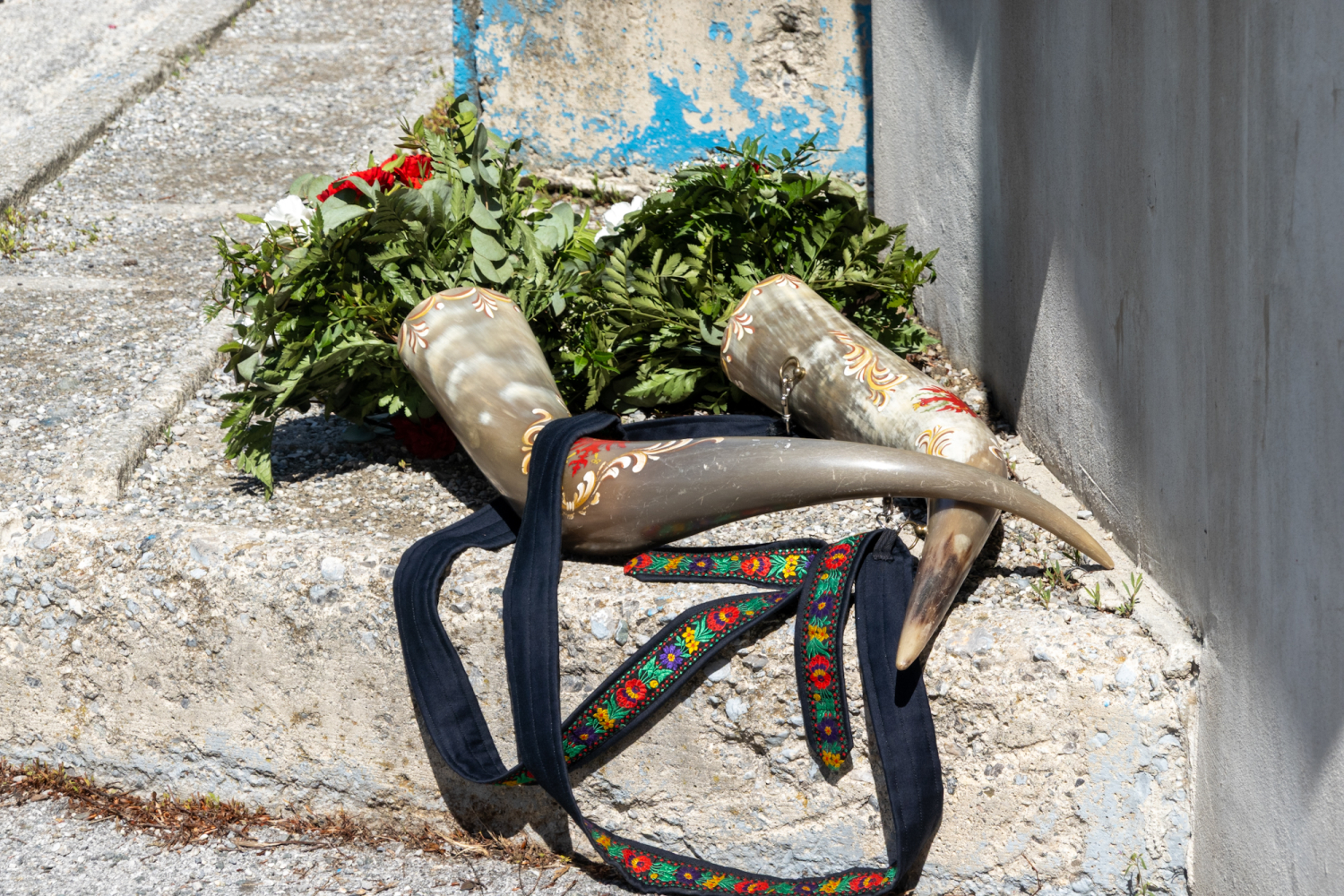
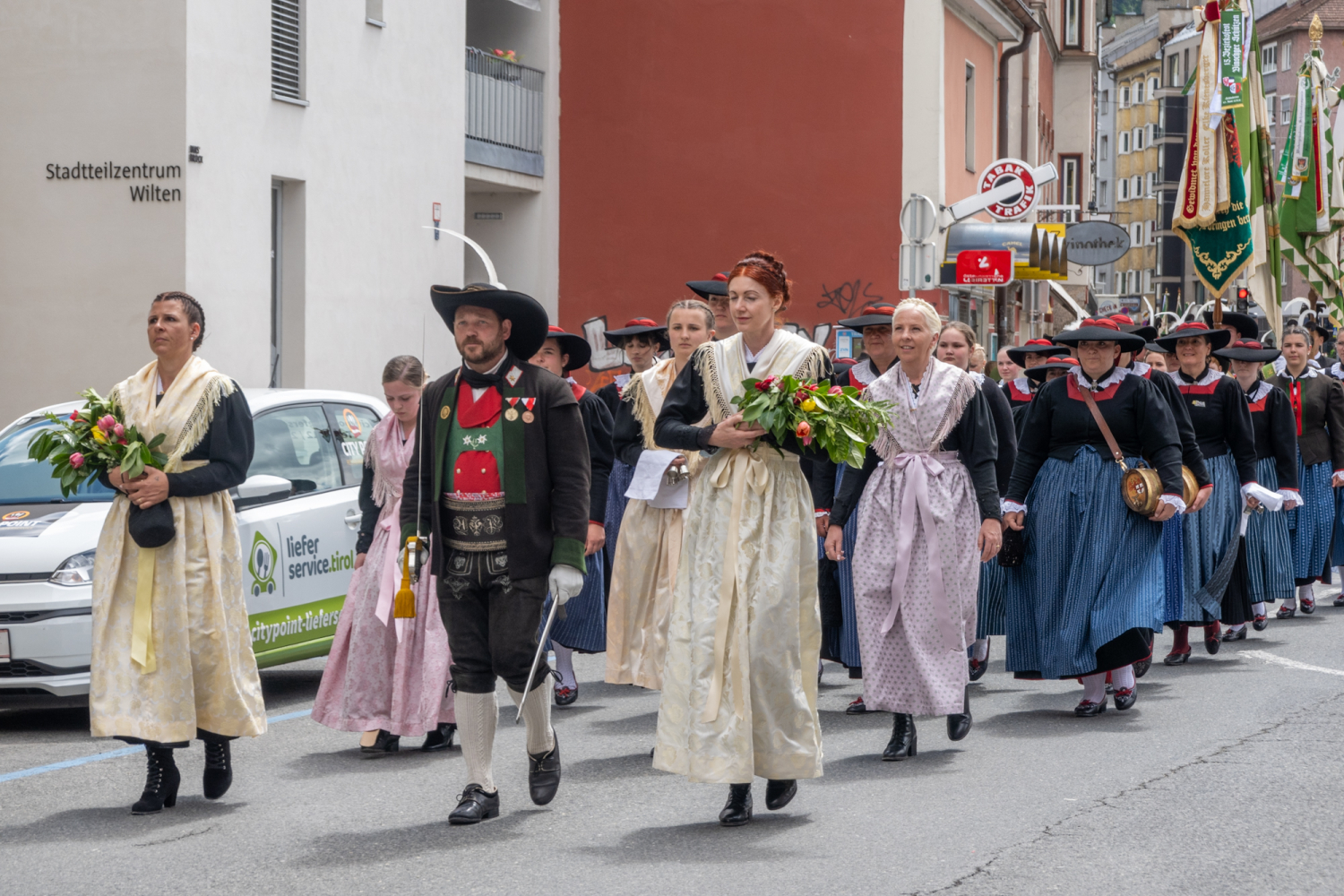
The camp followers carry flowers, in memory of the fallen and in the hope of peace.
As early as the early Middle Ages, loose militias began organizing to defend their lands. With the so-called“Landlibell of 1511,” Emperor Maximilian I (the one associated with the Golden Roof) finally issued the official decree for “independent Tyrolean defense.” One could say this marked the grand beginning of the proud Tyrolean rifle regiments. The story ultimately culminated in the four Tyrolean struggles for freedom against the Bavarian and French occupying forces on Innsbruck’s Bergisel in 1809–10. Led by none other than the South Tyrolean “Sandwirt” Andreas Hofer, who watches over the city from a larger-than-life statue just a few meters from the museum.
After the brutal end of the popular uprising and Hofer’s execution, the riflemen were disarmed, and two horrific world wars followed. Beginning in 1950, the Tyrolean riflemen reestablished themselves as a cultural association(e) (Federation of Tyrolean Riflemen’s Companies, BTSK; today comprising over 200 regional groups with more than 17,000 members) and have since been dedicated to the peaceful preservation of traditions and festive parade marches.
Men who stare at hats
May 17, just 217 years later, and here we are again: At exactly 10 a.m., the church bells of Wilten Basilica ring out to signal the start of the festive mass at Bergisel Stadium. From above, a cannon salute thunders through the valley. A good 12,000 comrades from Tyrol, South Tyrol & Italian-speaking Tyrol/Trentino (both now part of northern Italy) as well as Bavaria have marched in, looking sharp in their parade uniforms; I almost arrived too late. Had it not been for a friendly group of South Tyrolean senior marksmen and their “coachman” who picked me up along the way and dropped me off at the press wing after a brief gallop. As soon as I take my seat, I envy the assembled battalions for their wide-brimmed feathered hats, for even the sky has dressed itself in imperial blue and is flexing its muscles in the shadowless stadium. On the other hand: How much can one actually see when there are only hats and feathers all around? Perhaps that’s precisely why at least the flag bearers have been grouped in their own corner. Above us, the distant hum of a drone accompanies the sermon, and if it weren’t for all this tech stuff, one might really think they’d stepped out of time. (Here’s the official video of the drone.)
It is said to have begun in Axams and ended at Bergisel. The Sandwirt still stands watch there today.
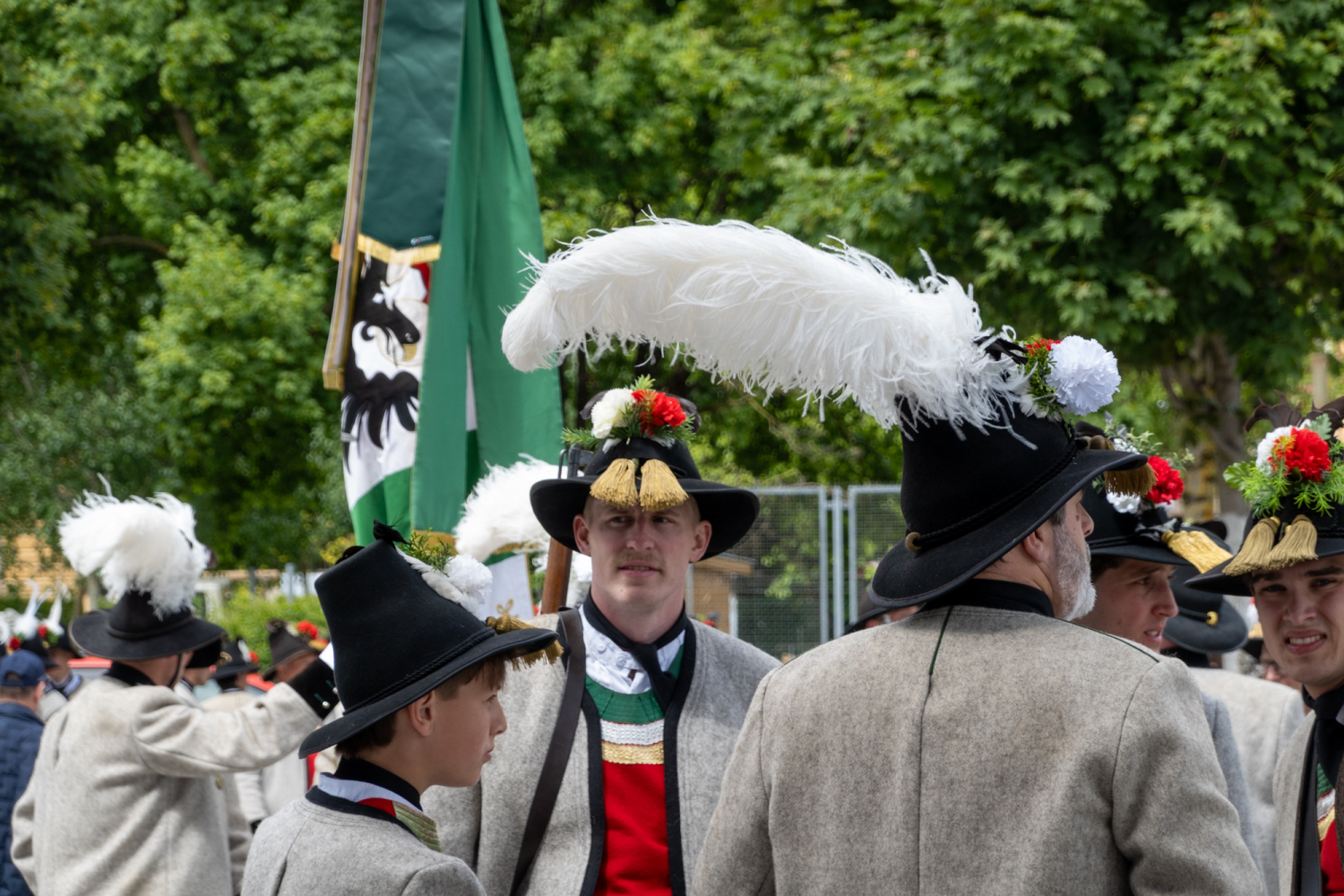
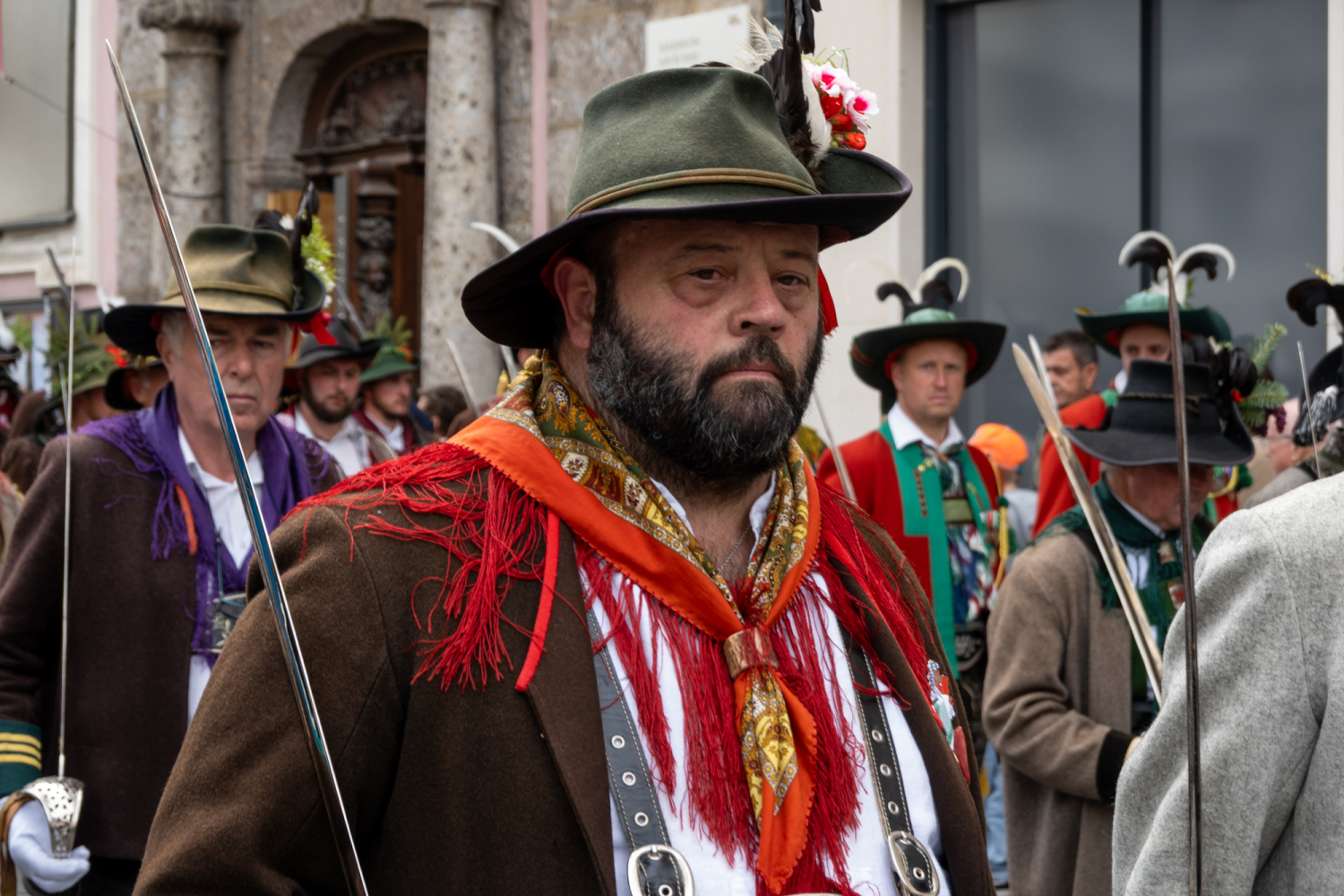
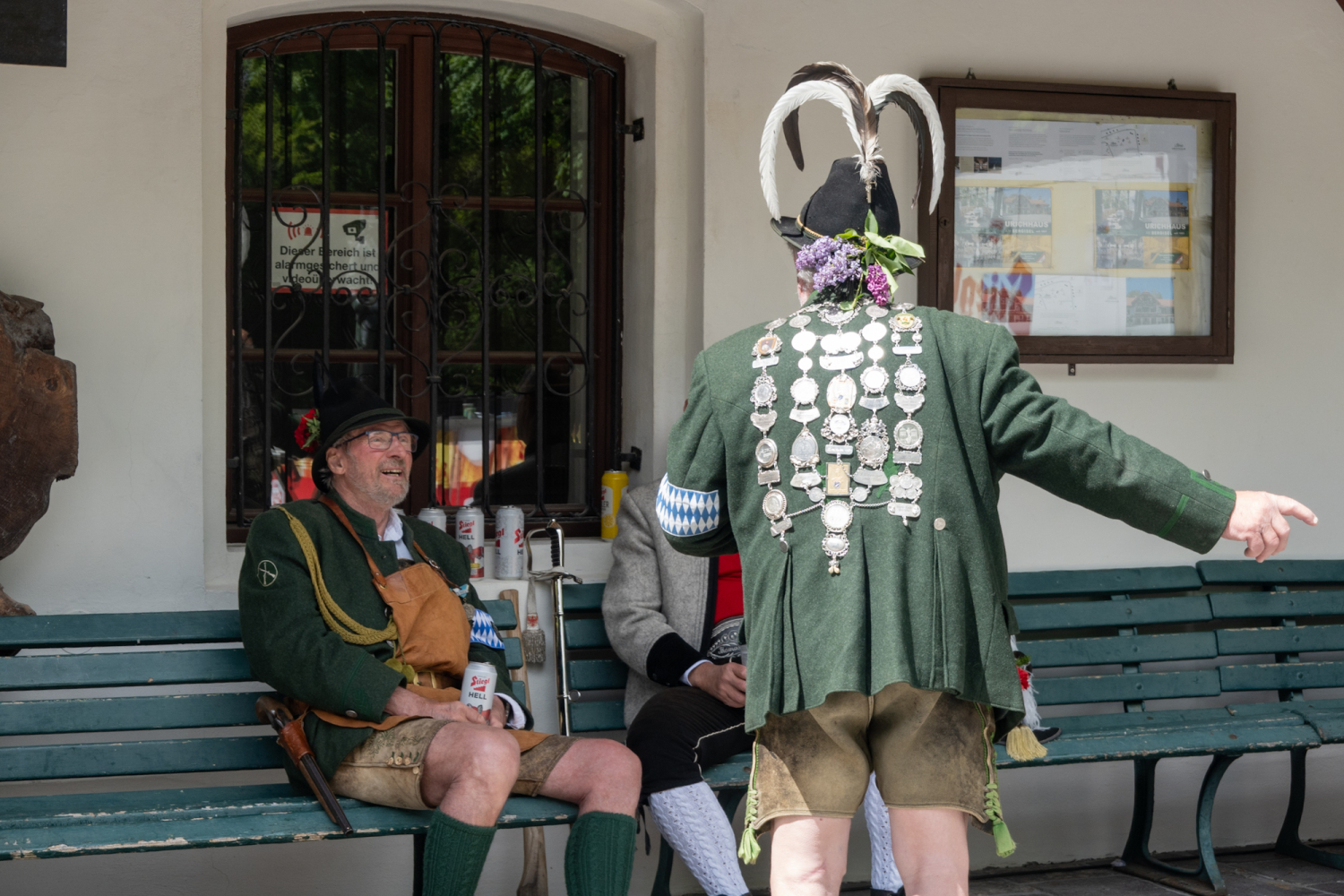
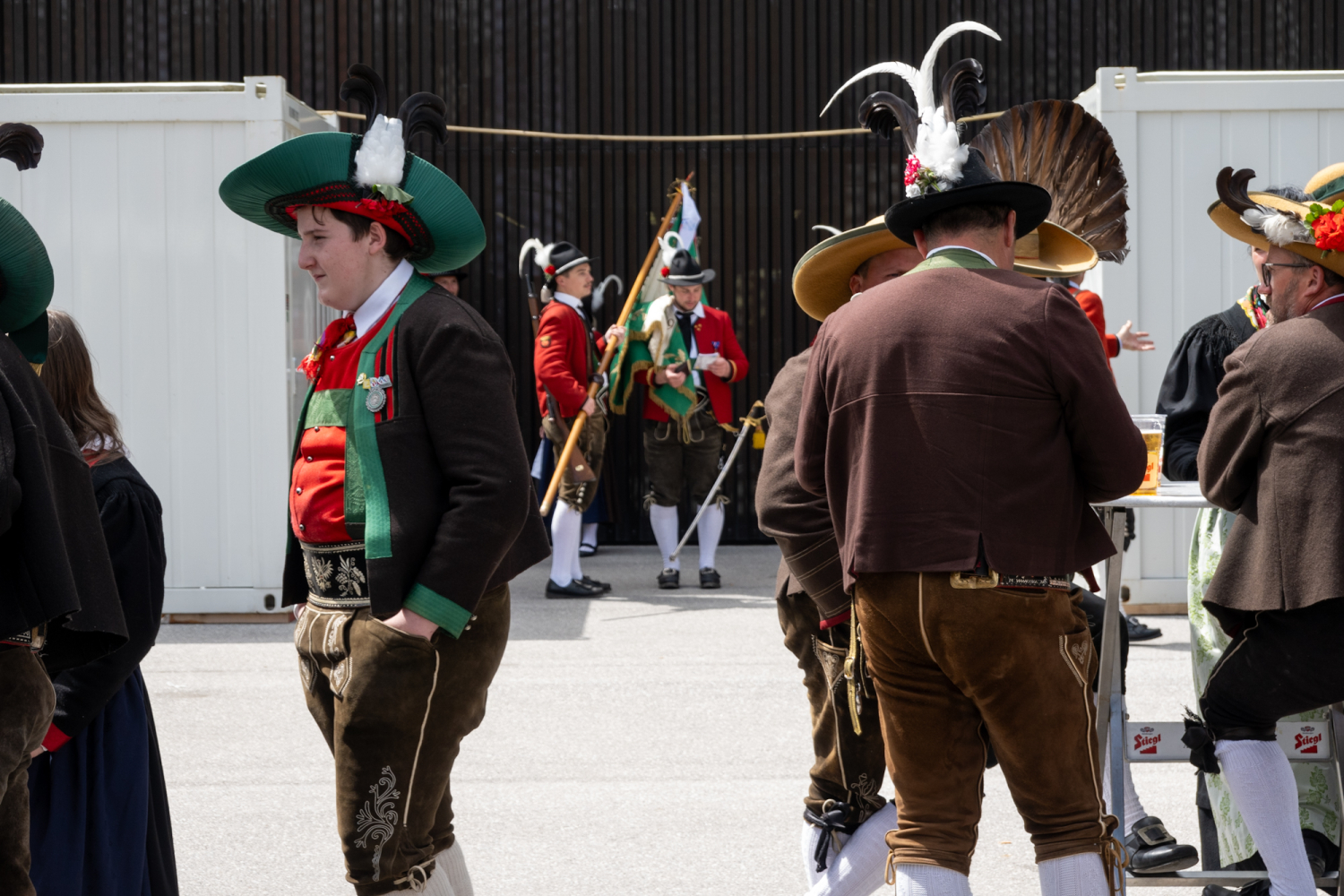
One hat is more beautiful than the next—who has the longest feather?
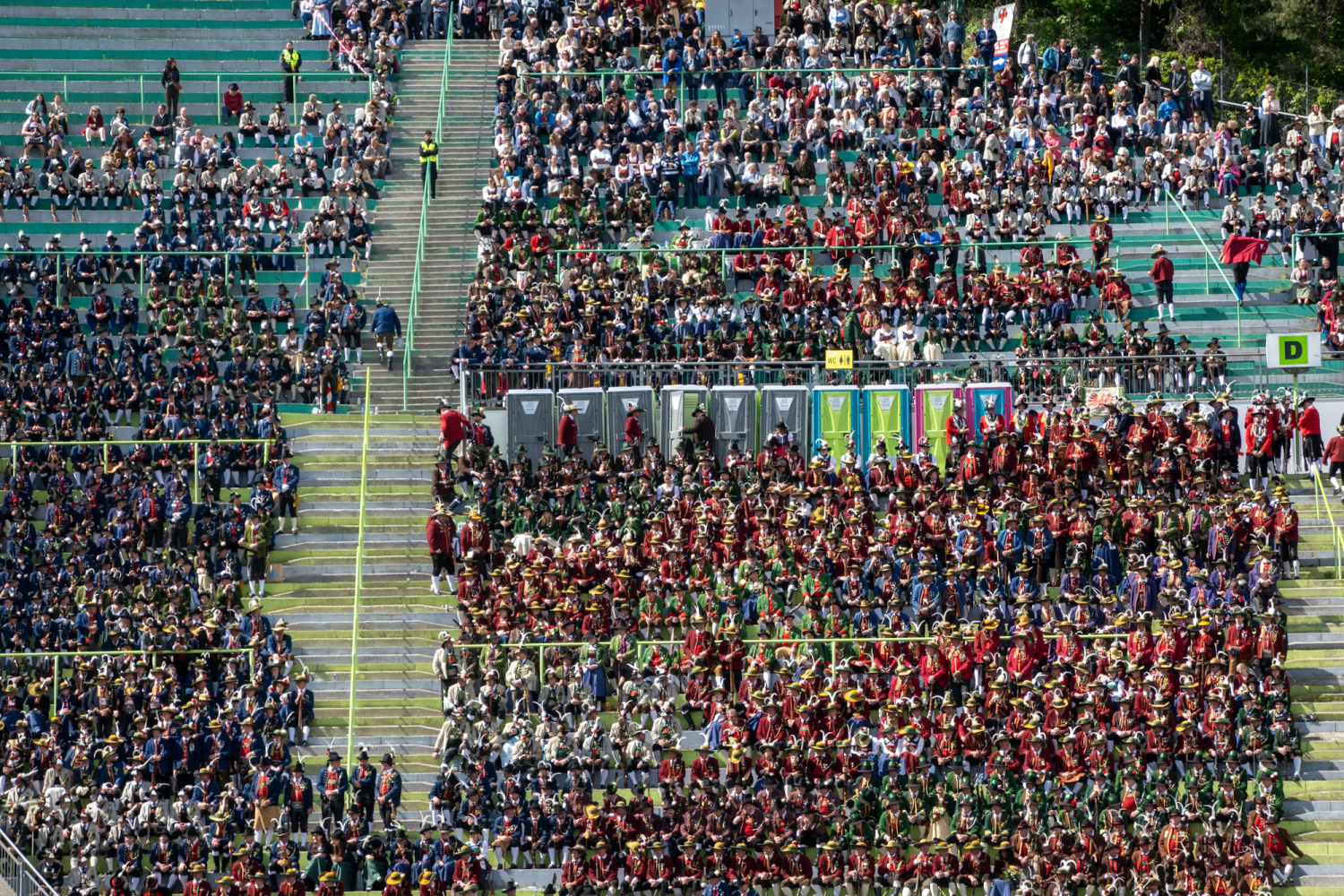
The stadium is ablaze with the colors of the Schützen-Regenbogen. All the hats and uniforms are intricately handmade—and very warm in the sun.
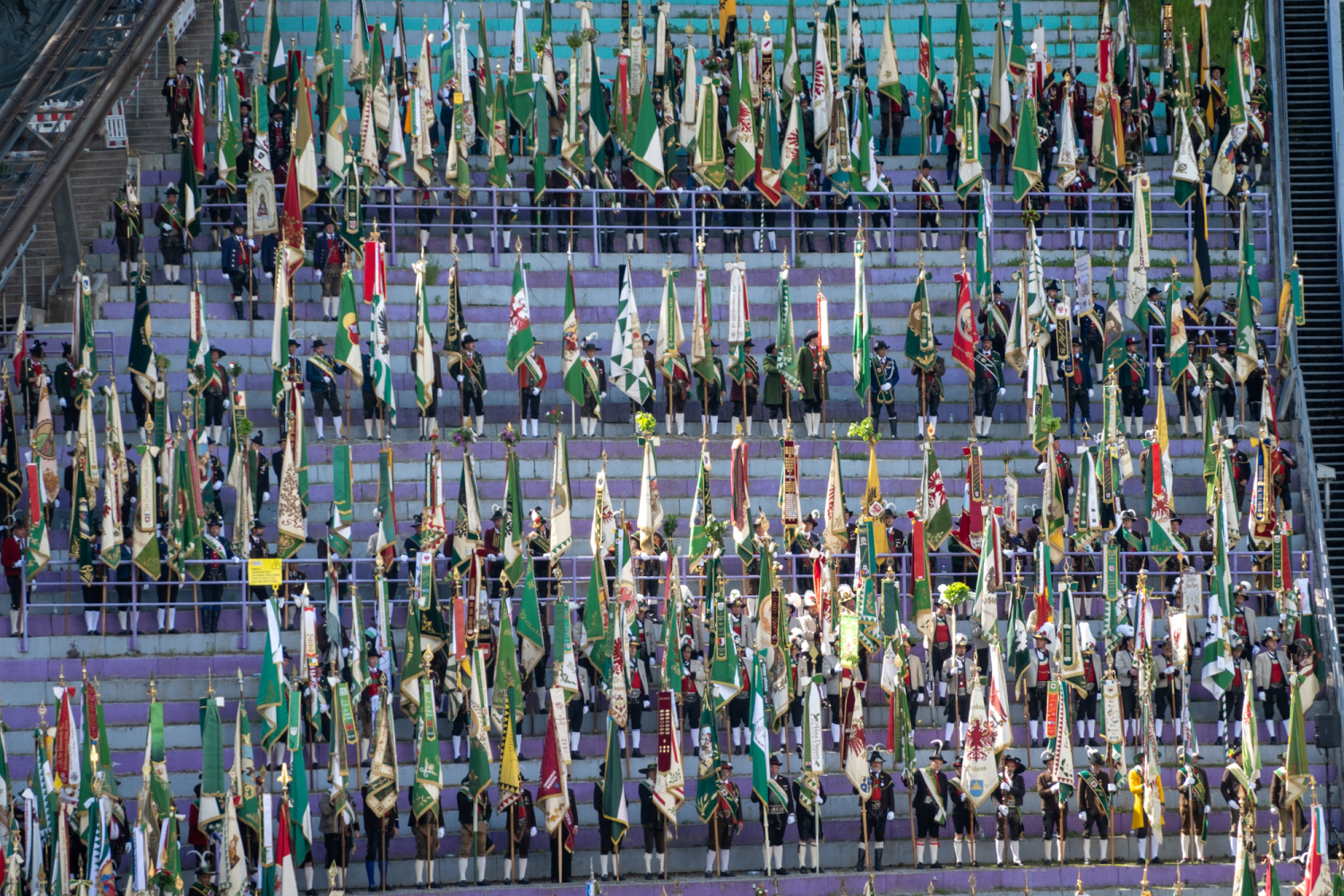
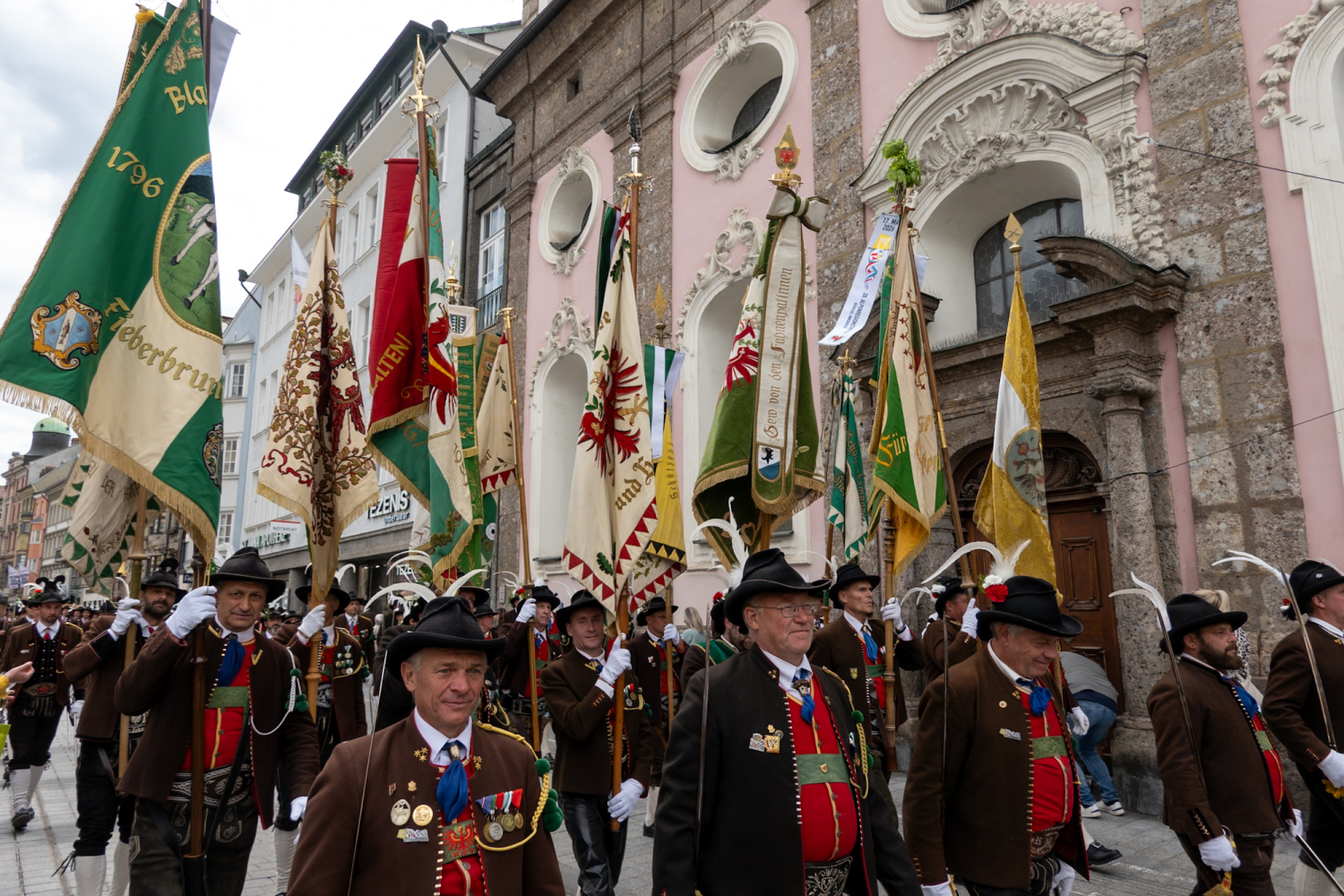
The flag bearers hold their ground during the sermon—at least there's a little shade there.
Since then, the marksmen have actually refined their stylish look even further—after all, a dress uniform isn't meant for combat.
Not everyone could have fit inside the Wilten Basilica—and the weather is holding out as well.
Perfectly organized and executed—they certainly have experience with this here.
With so many hats in the theater, can you even see anything?
The Blue Market Vendor
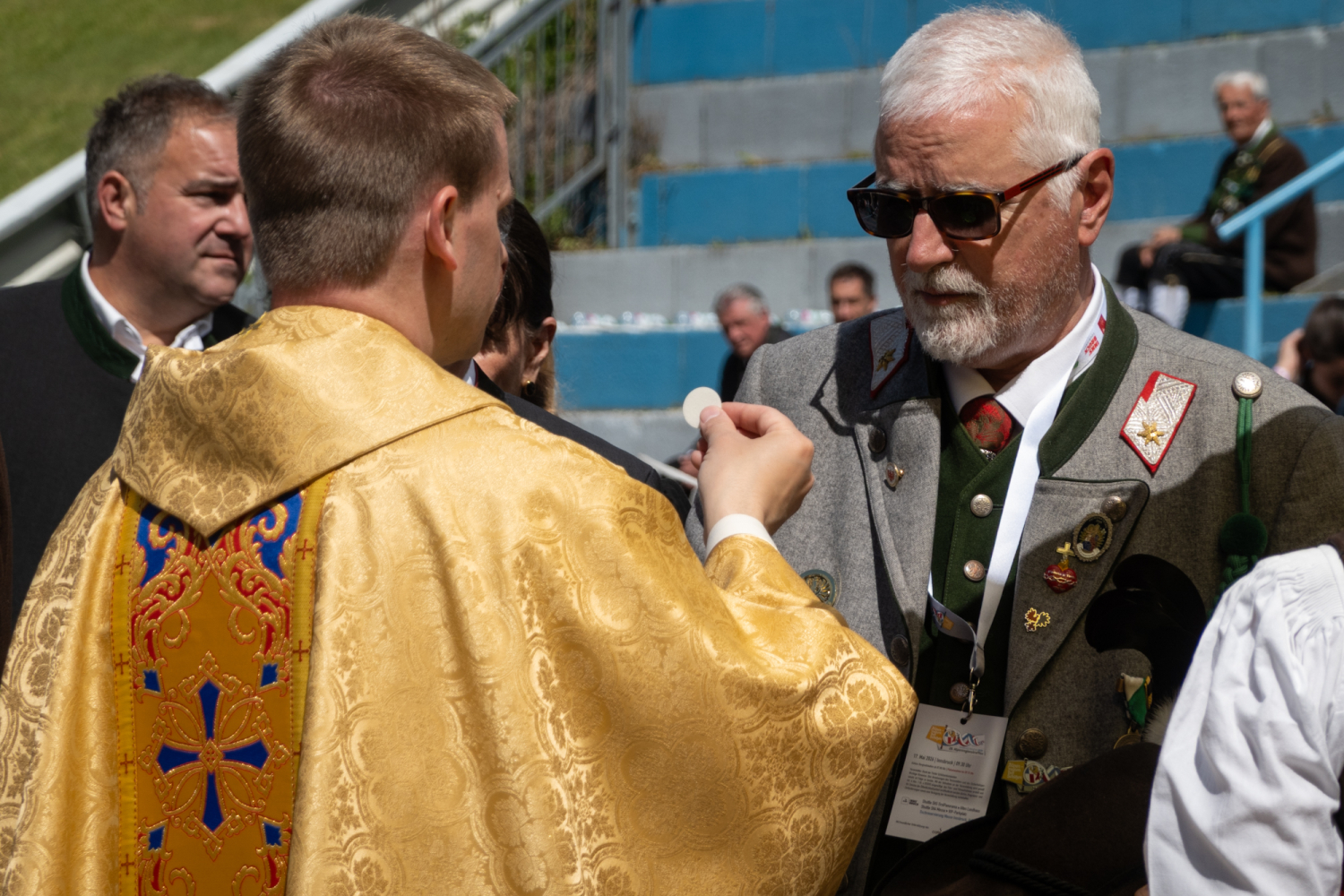
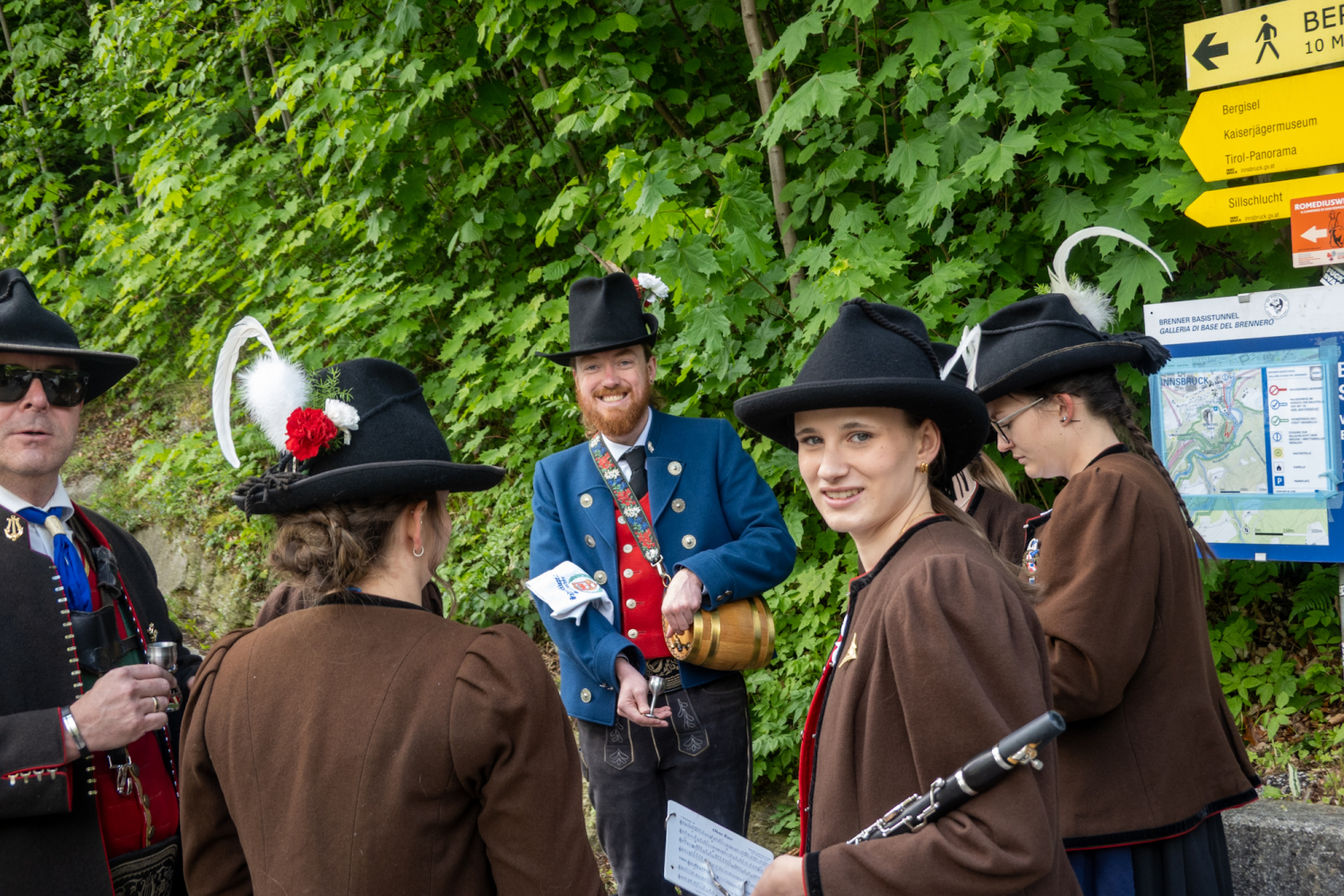
After Mass comes the march, and the canteens have their hands full trying to wash down the dry wafers with a shot of schnapps. At this point, a brief historical digression is in order: Because, according to the Landlibell of 1511, Tyrolean marksmen were not entitled to military provisions, the female market vendors traveling with them (from the Italian mercantante, meaning “merchant”) had to take over all food service, trade, and medical care. And while, for example, marching bands have long since selected their members based on talent rather than gender, the marksmen recently voted in a secret ballot against allowing women to carry rifles. Officially, this was to remain true to the old tradition of gender roles. But it is also rumored that women have long since been better shots and that the men are perhaps simply embarrassed by this fact. The dapper canteen attendant of an imperial-blue Tyrolean marching band pours me a shot of schnapps at the foot of the Bergisel, shaking his head; I slip him two euros and drink to common sense. But now, quickly—you can already hear the drums!
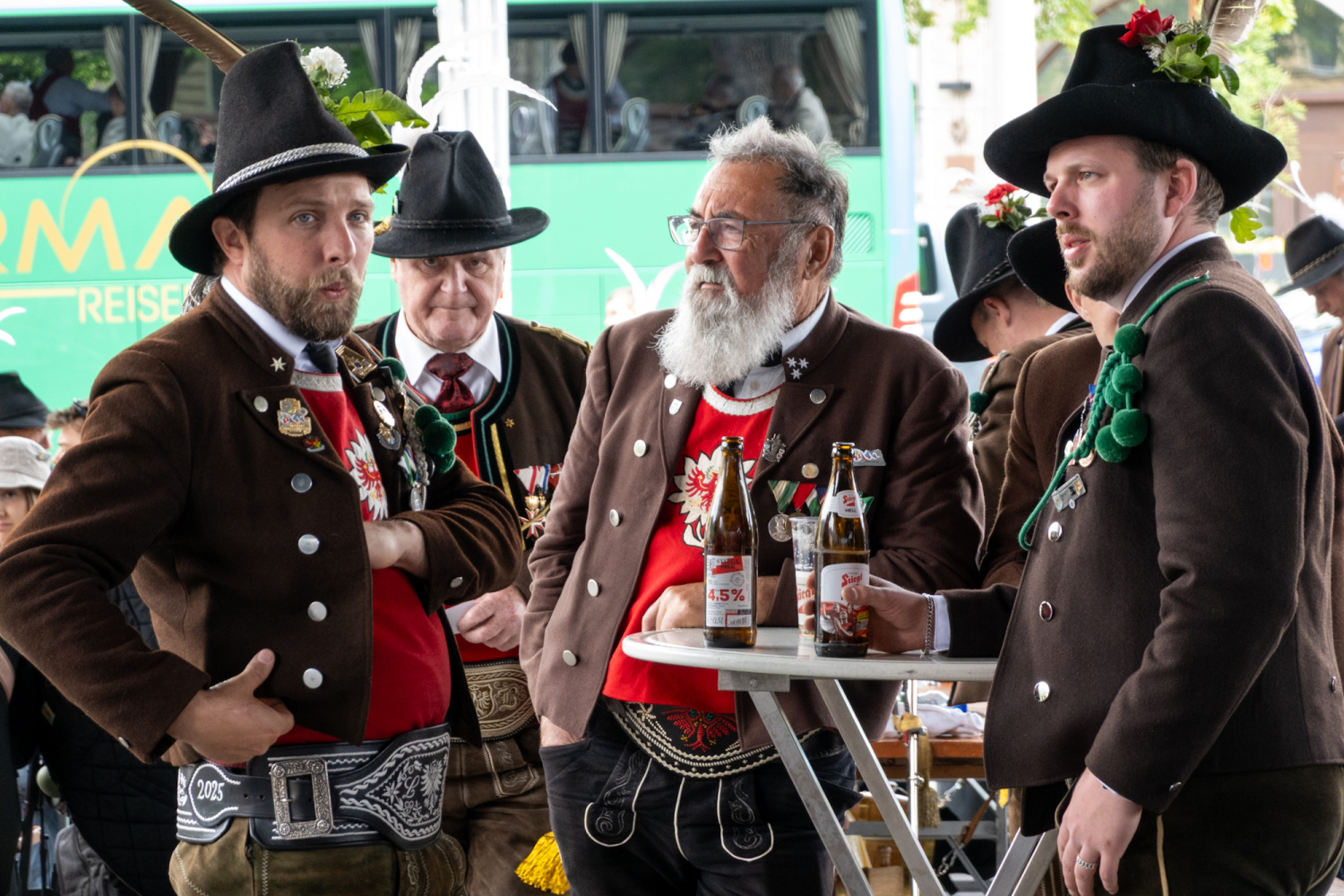
Toasting to camaraderie on historic ground—Andi from Hof would surely have been delighted
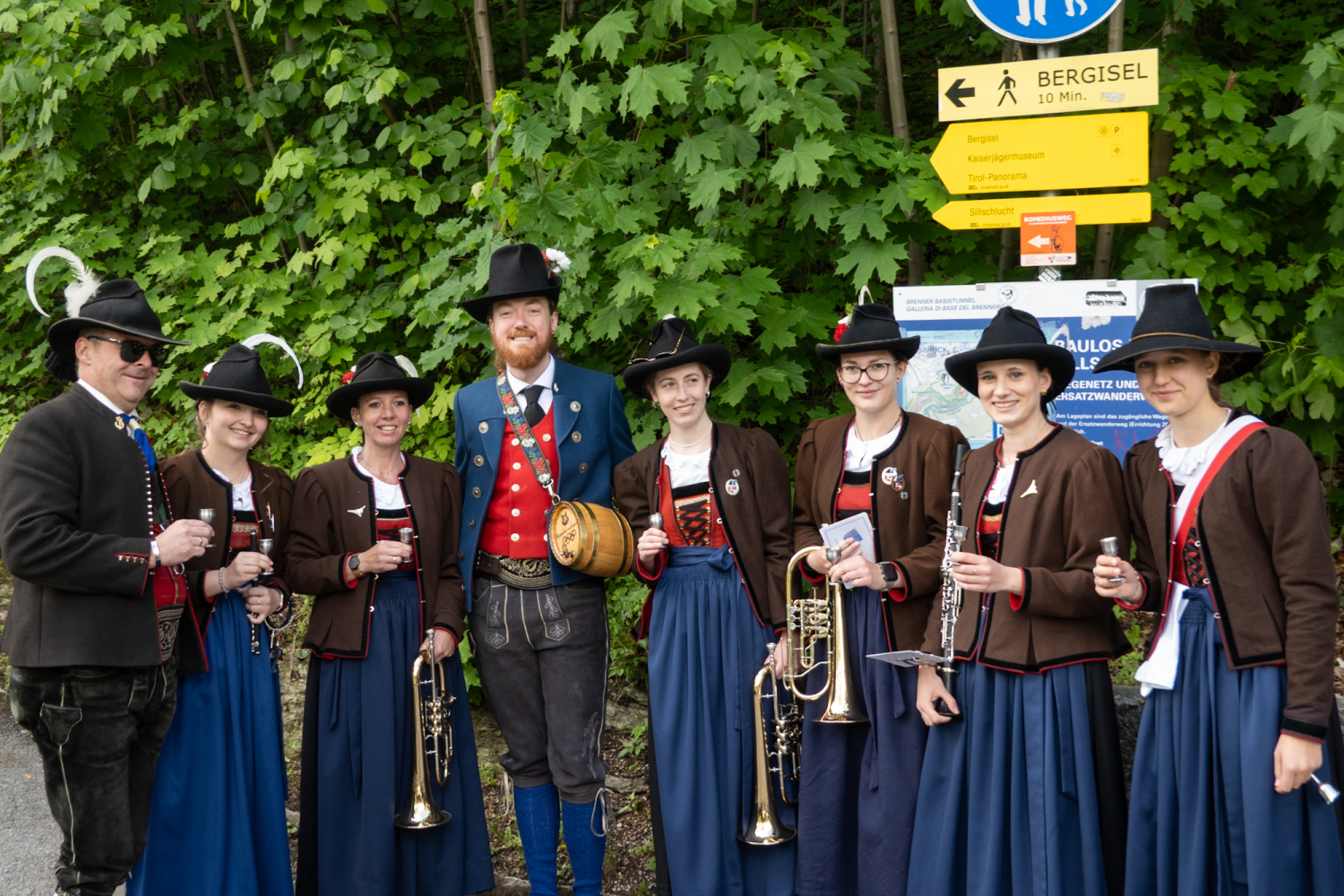
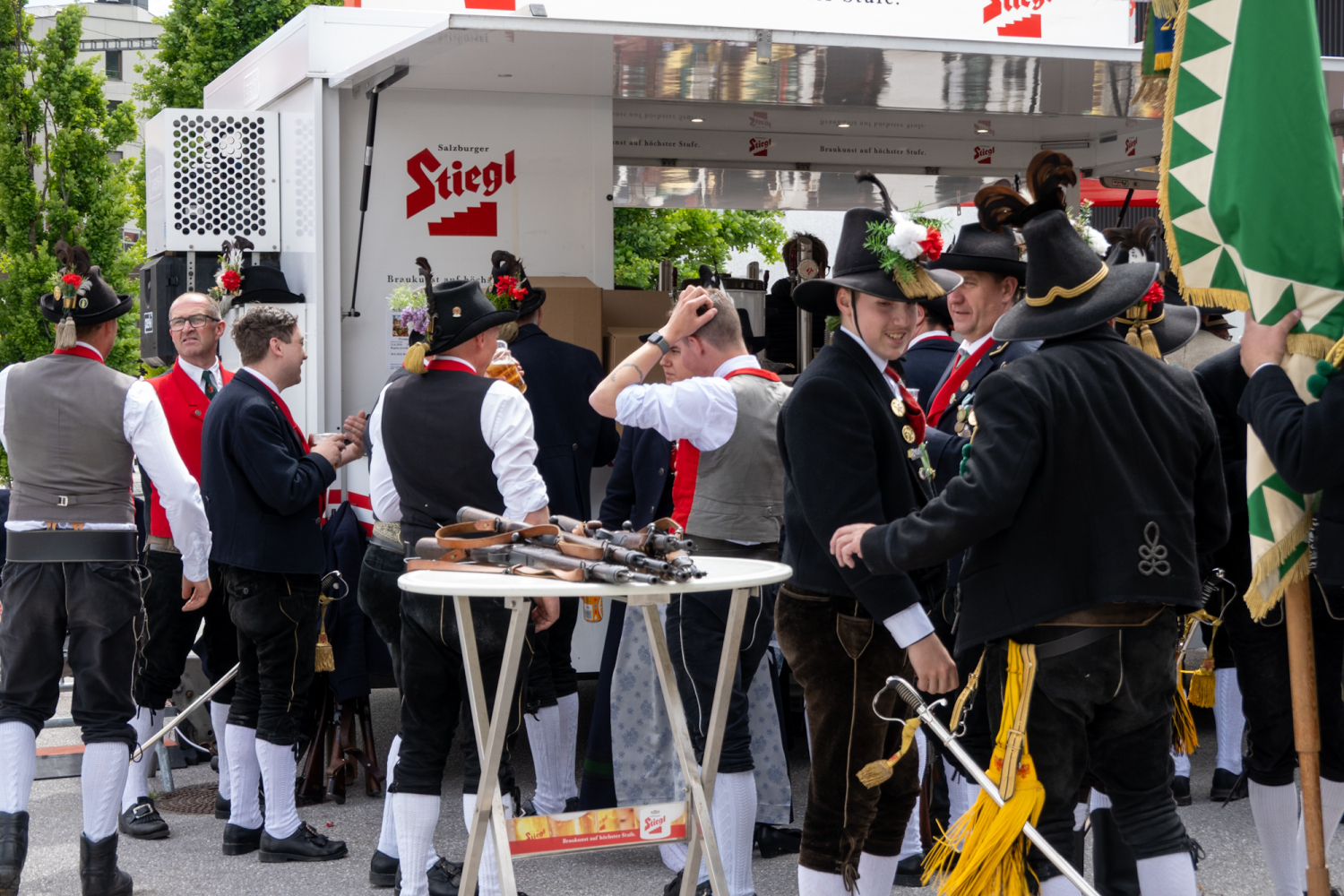
The canteen workers keep the team's spirits up—small donations help the club's finances.
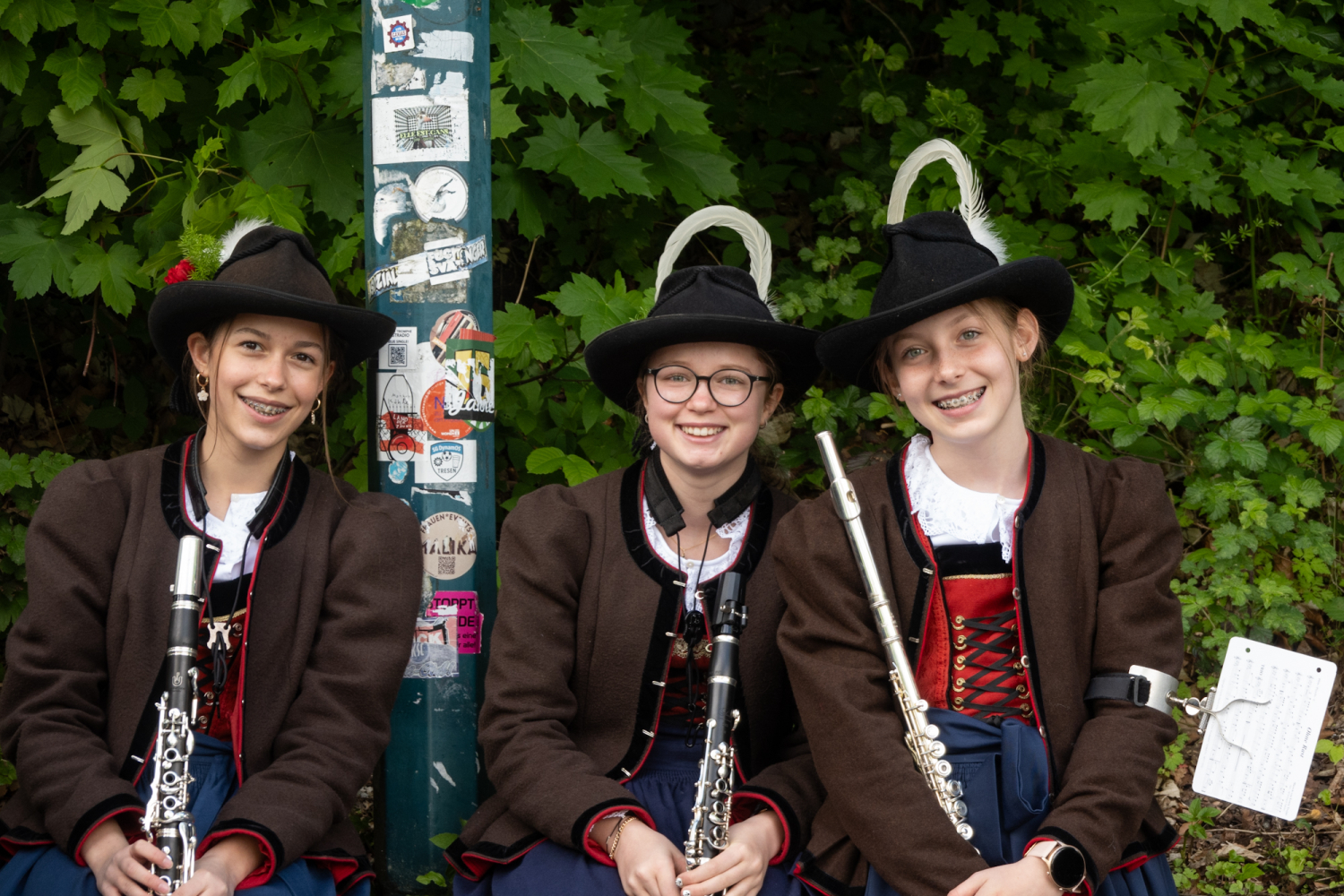
Small hat, big legacy—even the next generation takes it seriously.
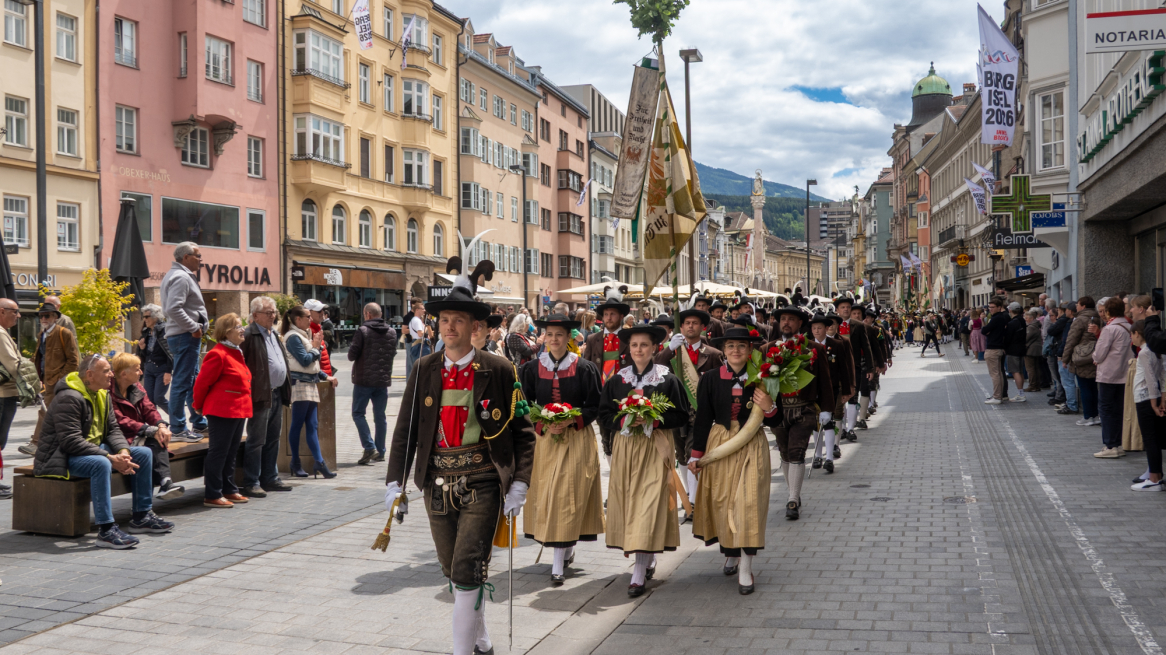
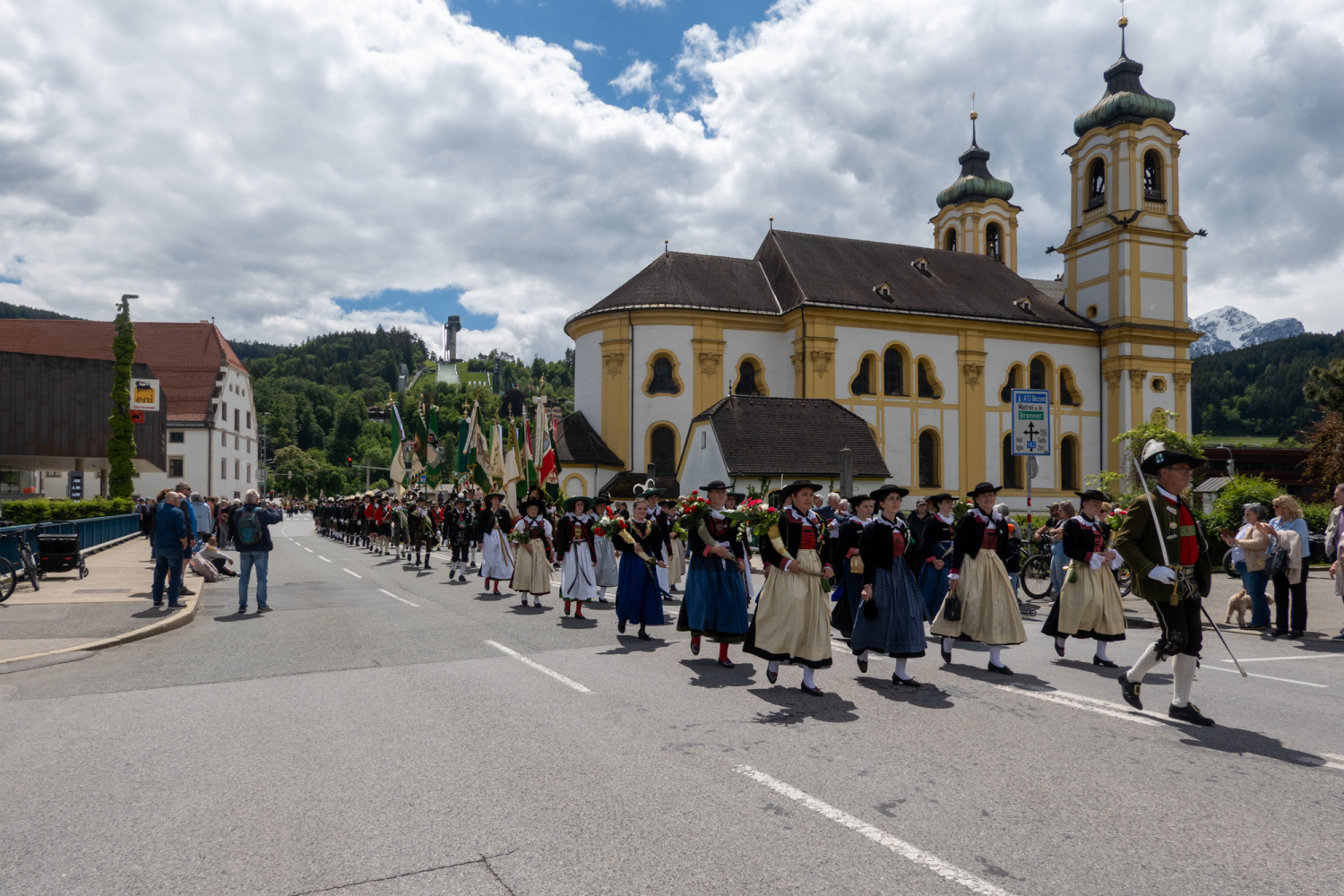
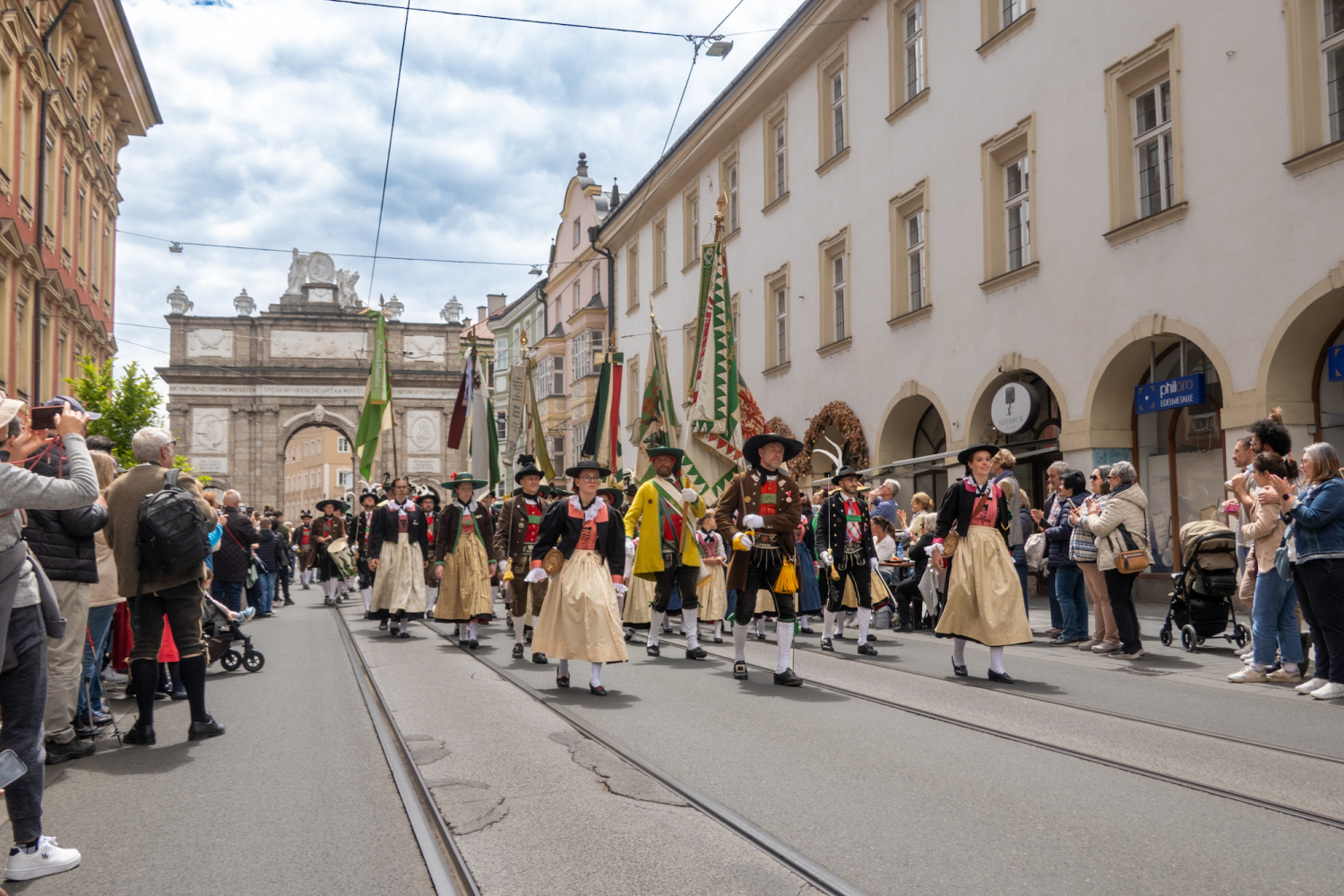
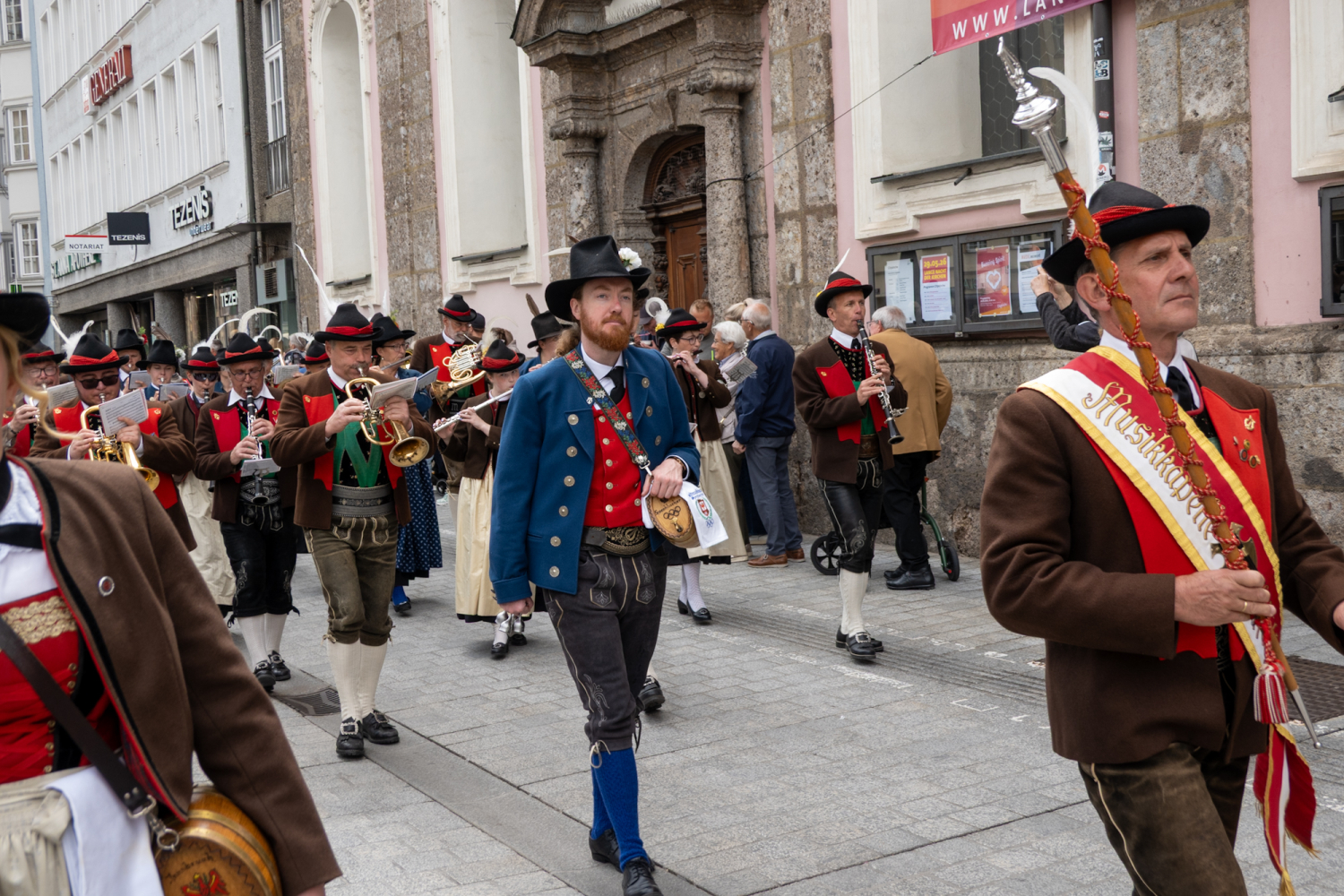
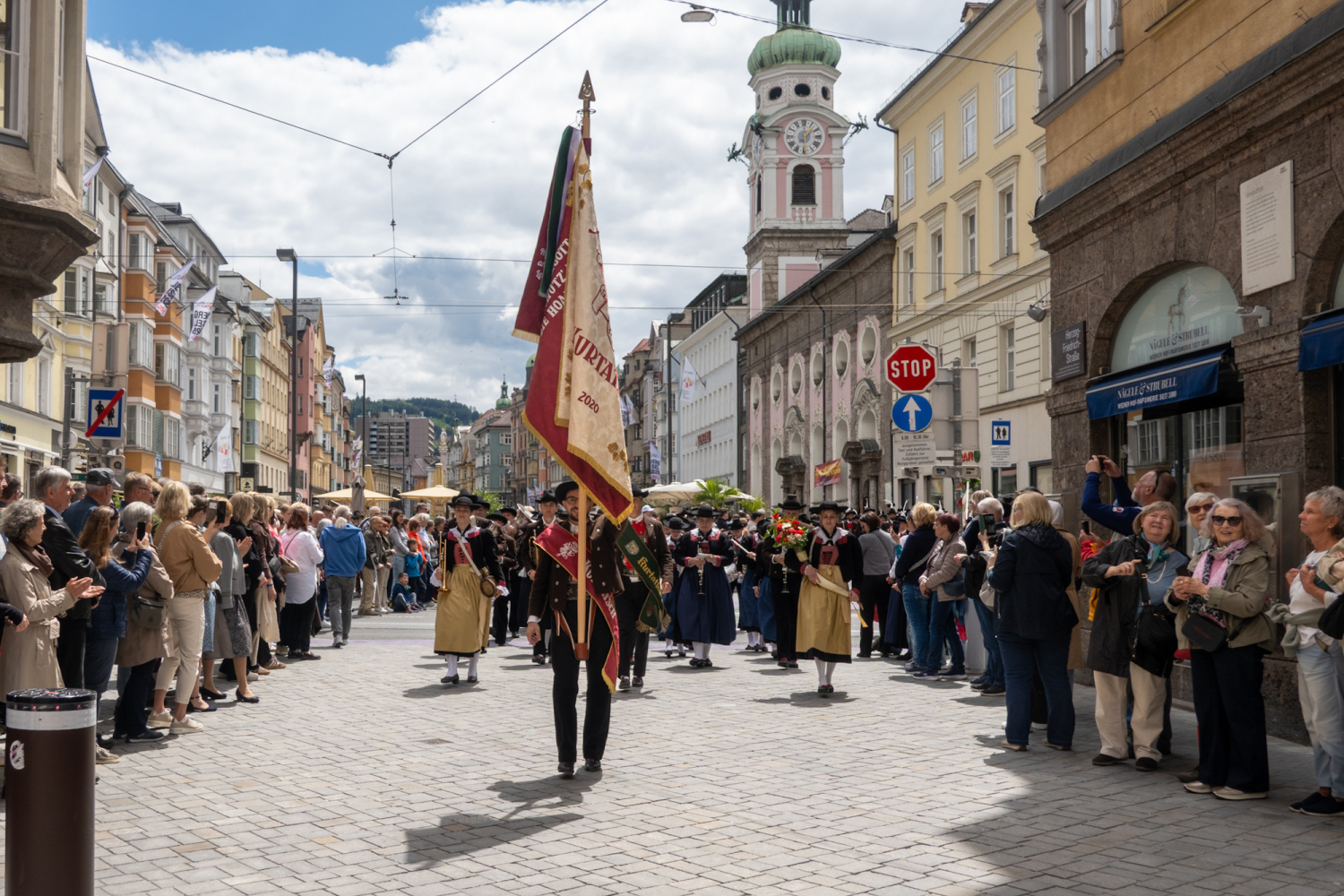
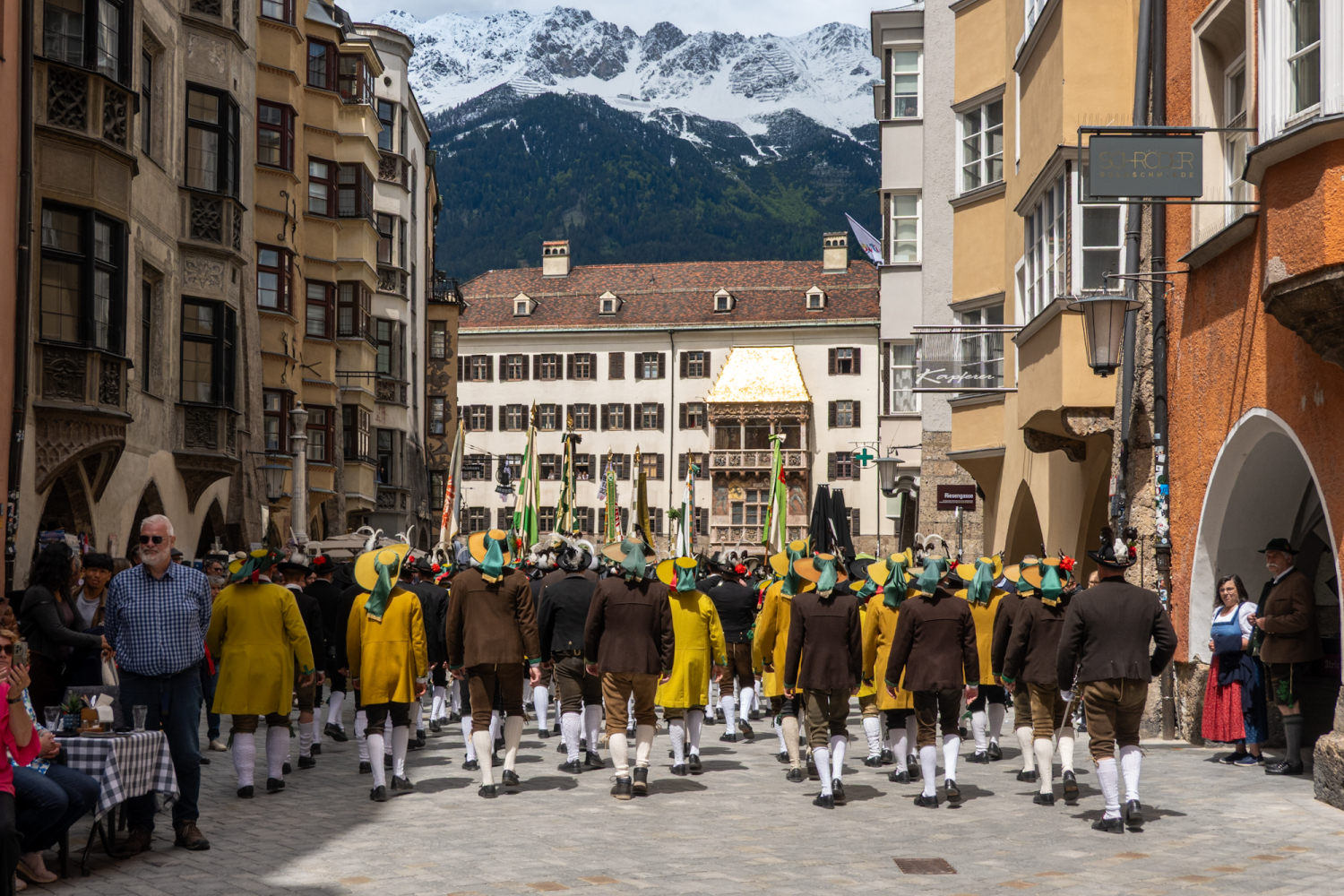
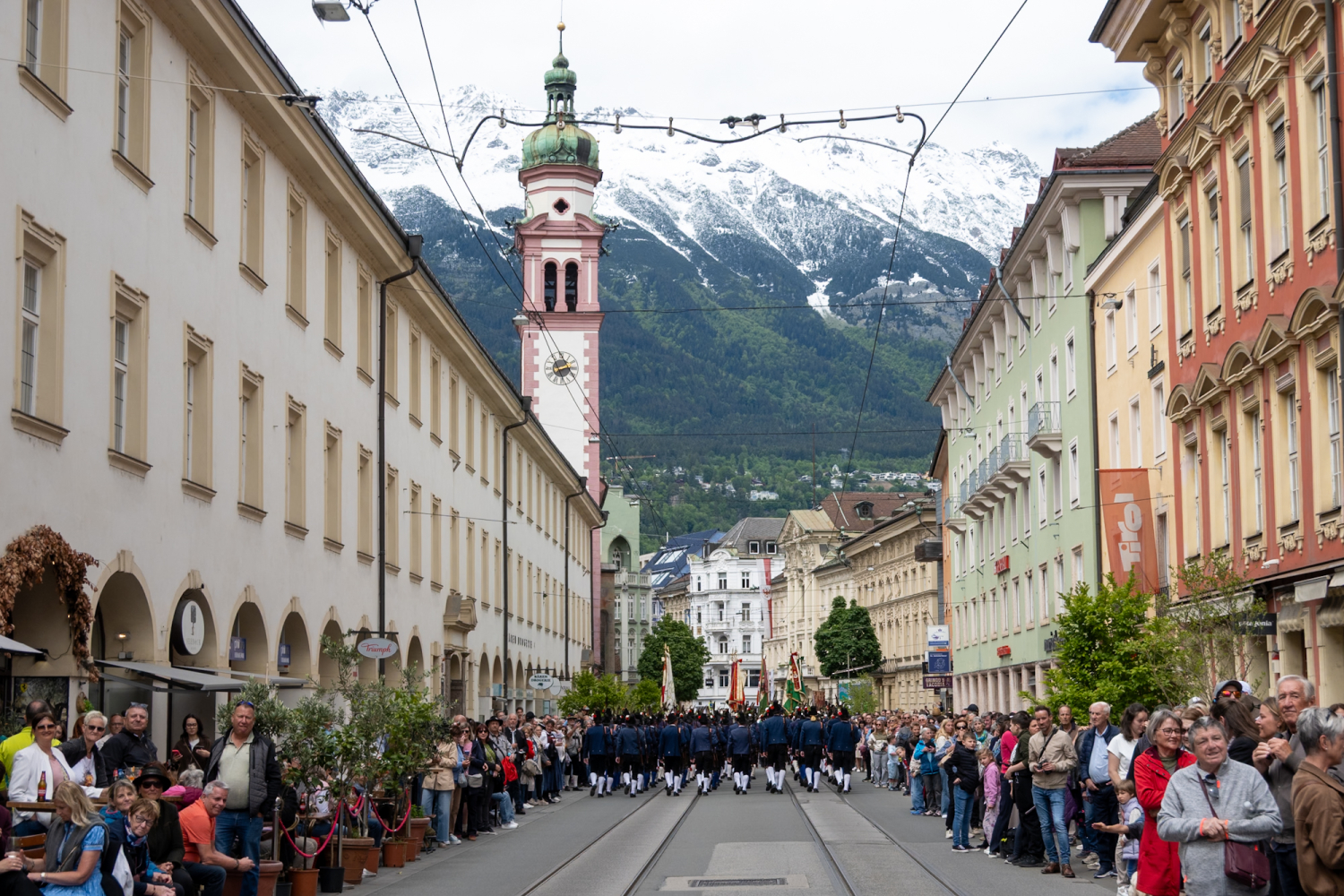
The impressive march of the rifle companies from Bergisel to the Old Town—just like in the old days.
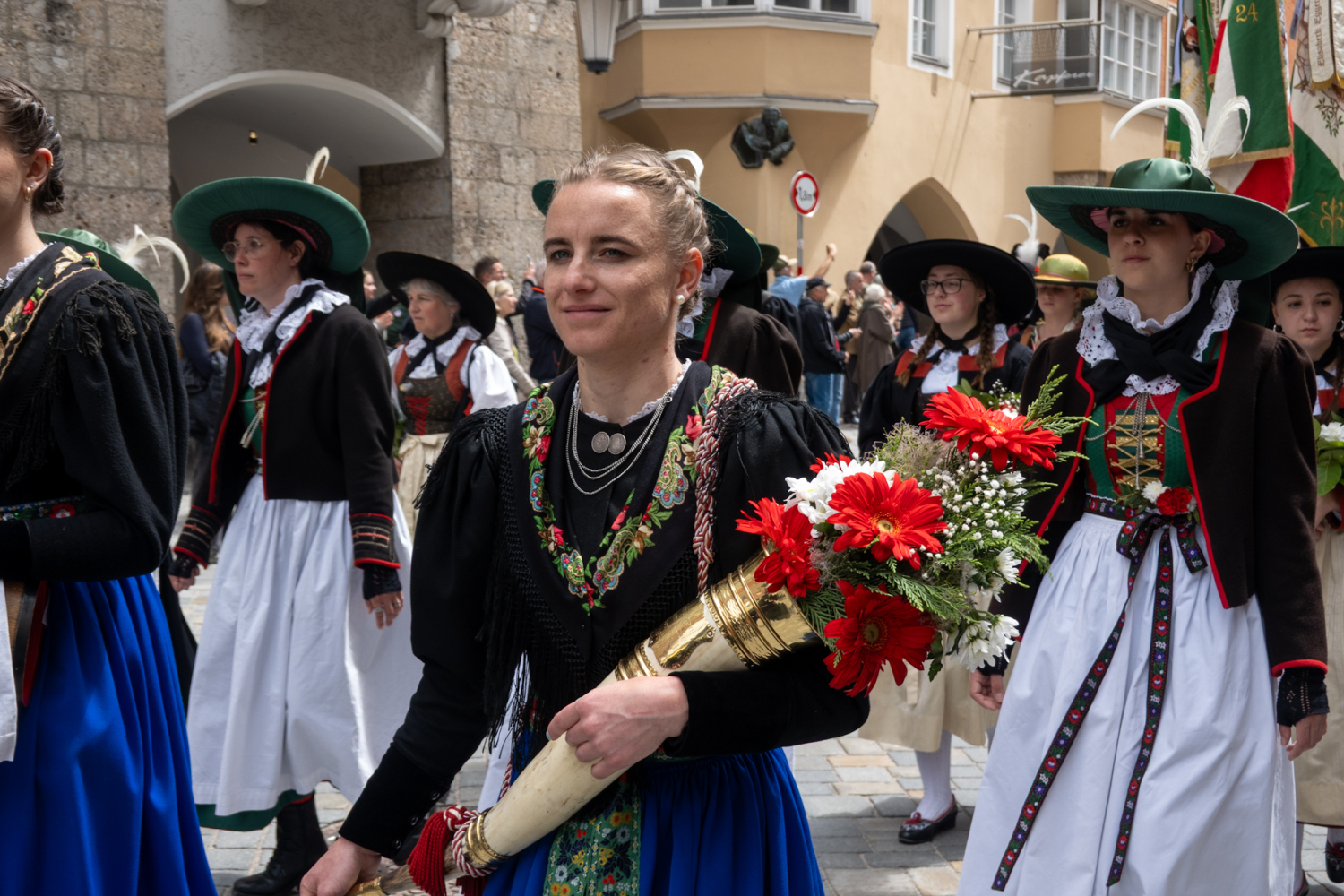
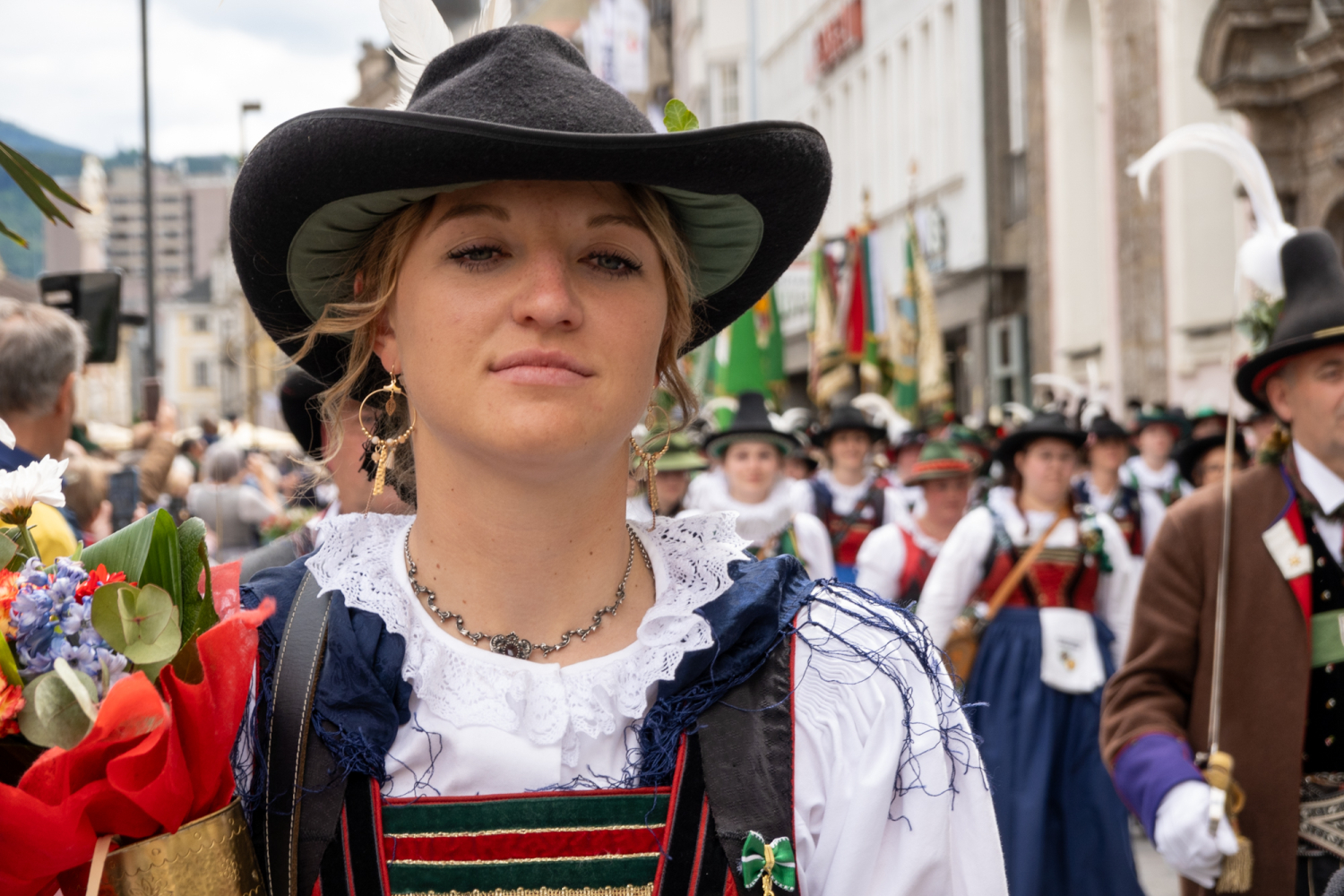
The women always lead the way—arguably the most precious treasure of the marksmen.
How picturesque: Only spring in Tyrol can usually boast such a wealth of sounds and colors.
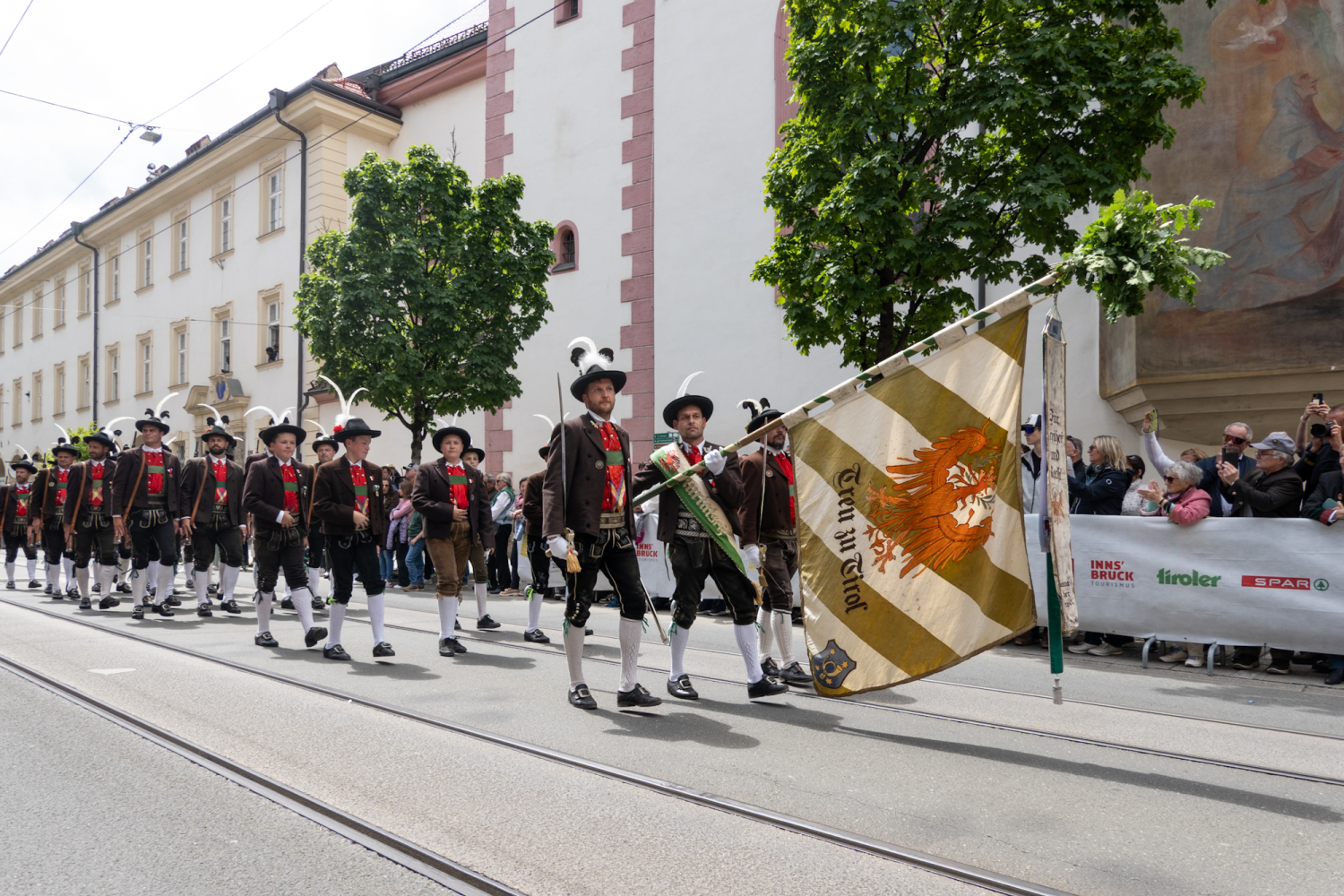
Loyalty to Tyrol is beyond question here—and that’s exactly why it’s featured on the flag once again.
Every parade uniform is tailor-made, every hat crafted by a master hatmaker. A great shopping tip: Held Hat Shop!
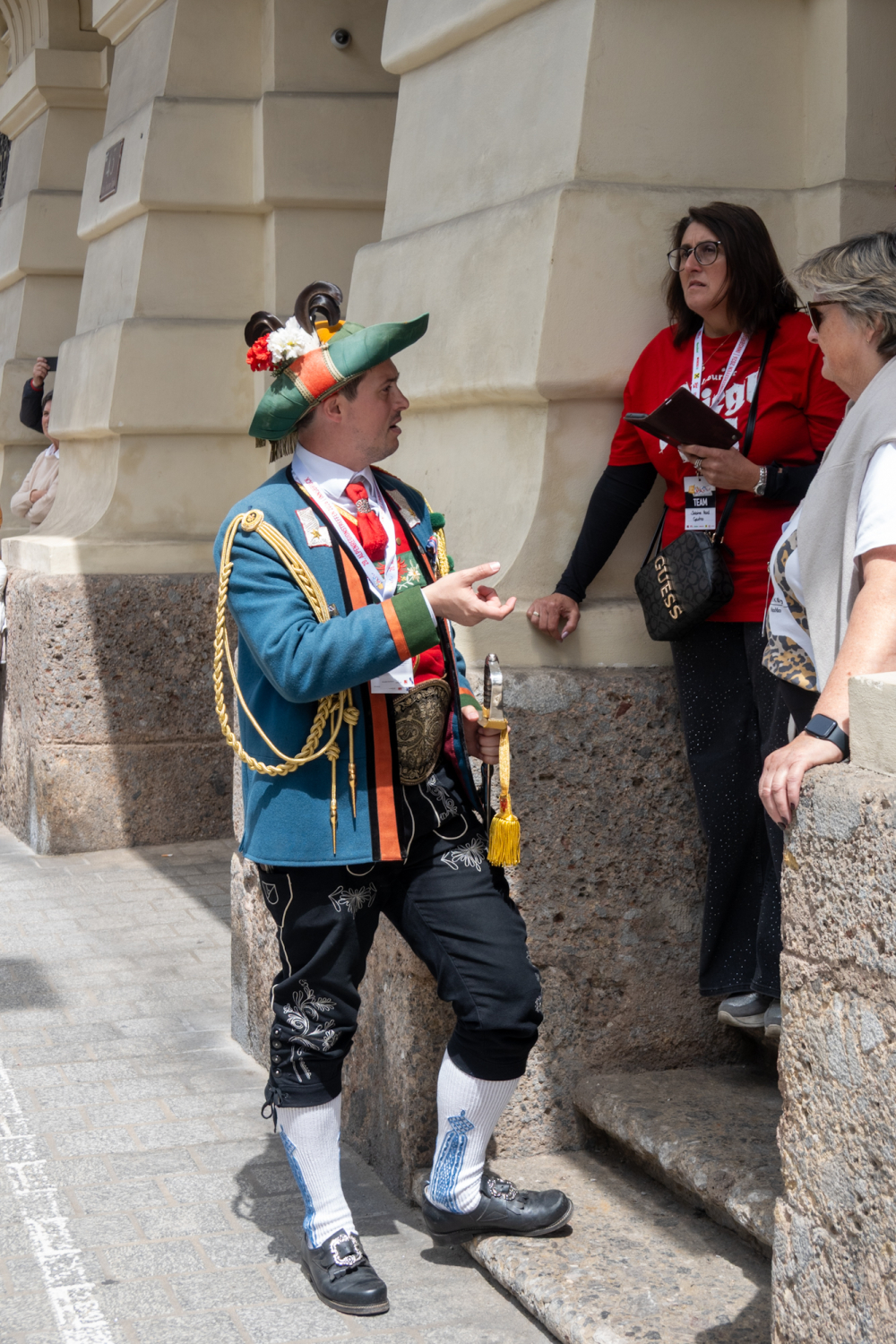
Mom, there he is, marching along: the imperial blue market vendor.
A Museum Where You Can Clap Along: A Parade March to the Golden Roof
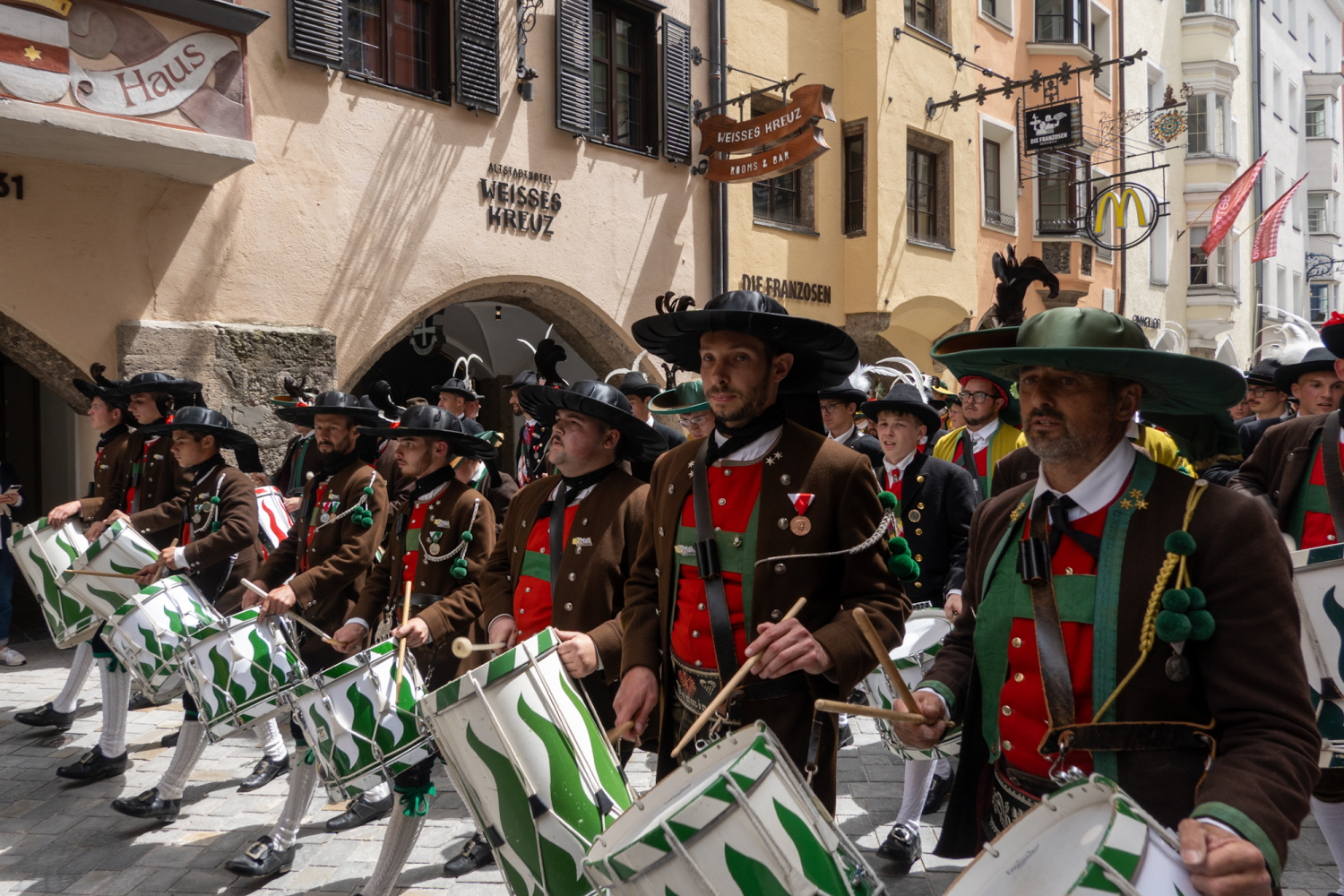
And indeed: a seemingly endless procession of hats and feathers, flags, wind instruments and marching drums, rifles, gleaming sabers, axes, pitchforks, spears, and shot glasses passes by Innsbruck’s landmarks. Wilten Basilica, the Triumphal Arch, St. Anne’s Column, the Old Town, and the Golden Roof—once again, the journey through time is in full swing. It’s as if a living museum has come to life! The onlookers clap in euphoric applause, and the entire city sparkles, decked out in festive finery. Probably just like back then, when the victorious marksmen marched the same route to the Hofburg. You can feel how important their homeland, their culture, and their traditions are to the Tyroleans—and how frustrating it is that politics sometimes dictates life in certain matters. But: “Tirol isch lei oans” has long since come to mean European camaraderie across national and regional borders. Brass band music, too, bridges any dialect barrier. And if necessary, a shot of schnapps does the rest. One might well ask why, with so much culture, we even need weapons for international understanding. By the time everyone heads to the exhibition hall to quench their thirst, those clunky small-caliber guns are more of a hindrance than anything else.

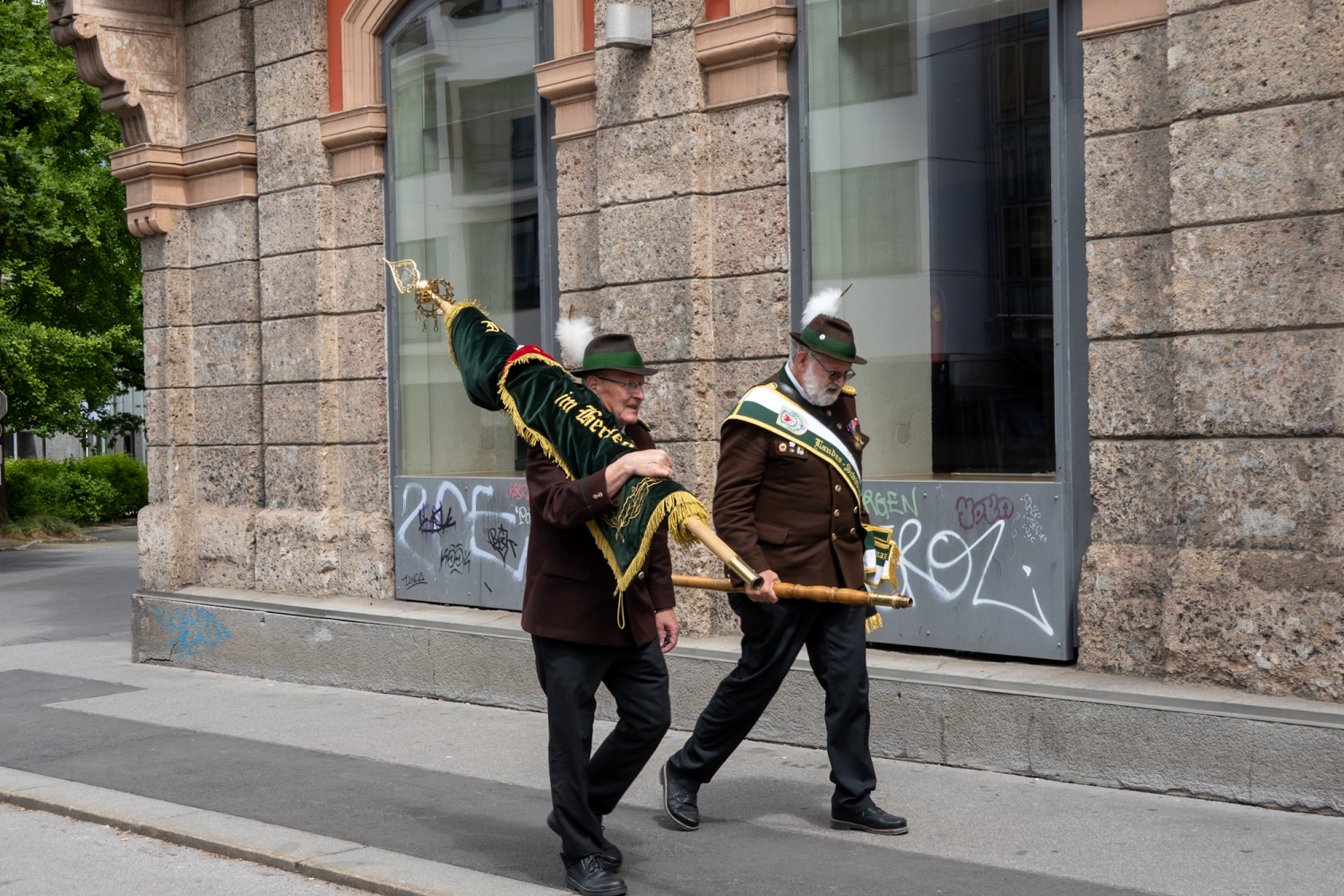
The massive ceremonial flags are heavy—and are carried by a single man.
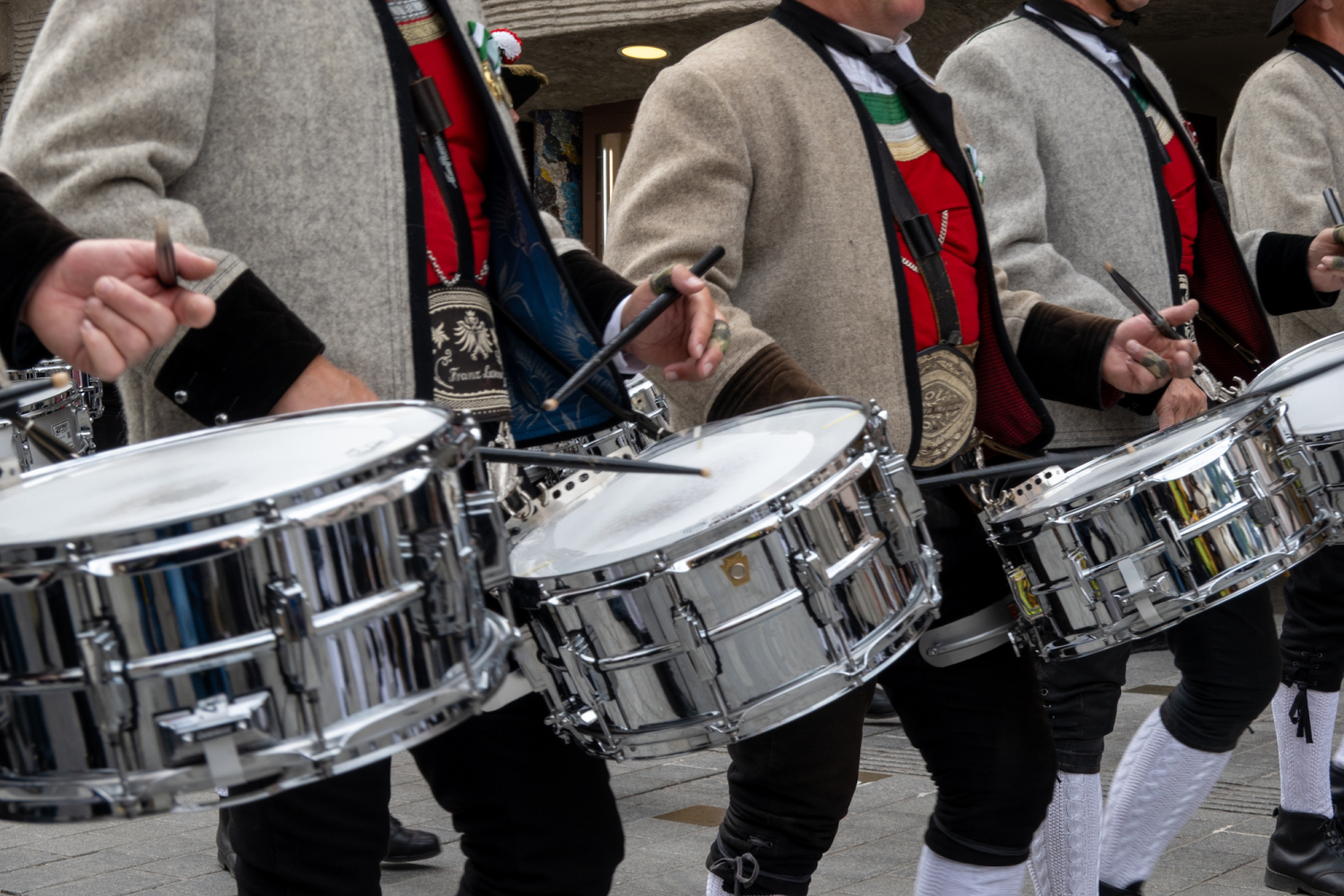
Each group marches to the beat of its own drum. Roughly speaking, the Zillertal brought the largest number of drummers.
That's hard on your back: A sturdy leather belt shifts the weight of the flag onto your back. But watch out for a gust of wind.
These prized flags represent the countless regiments and companies from all over Tyrol—just like their uniforms.
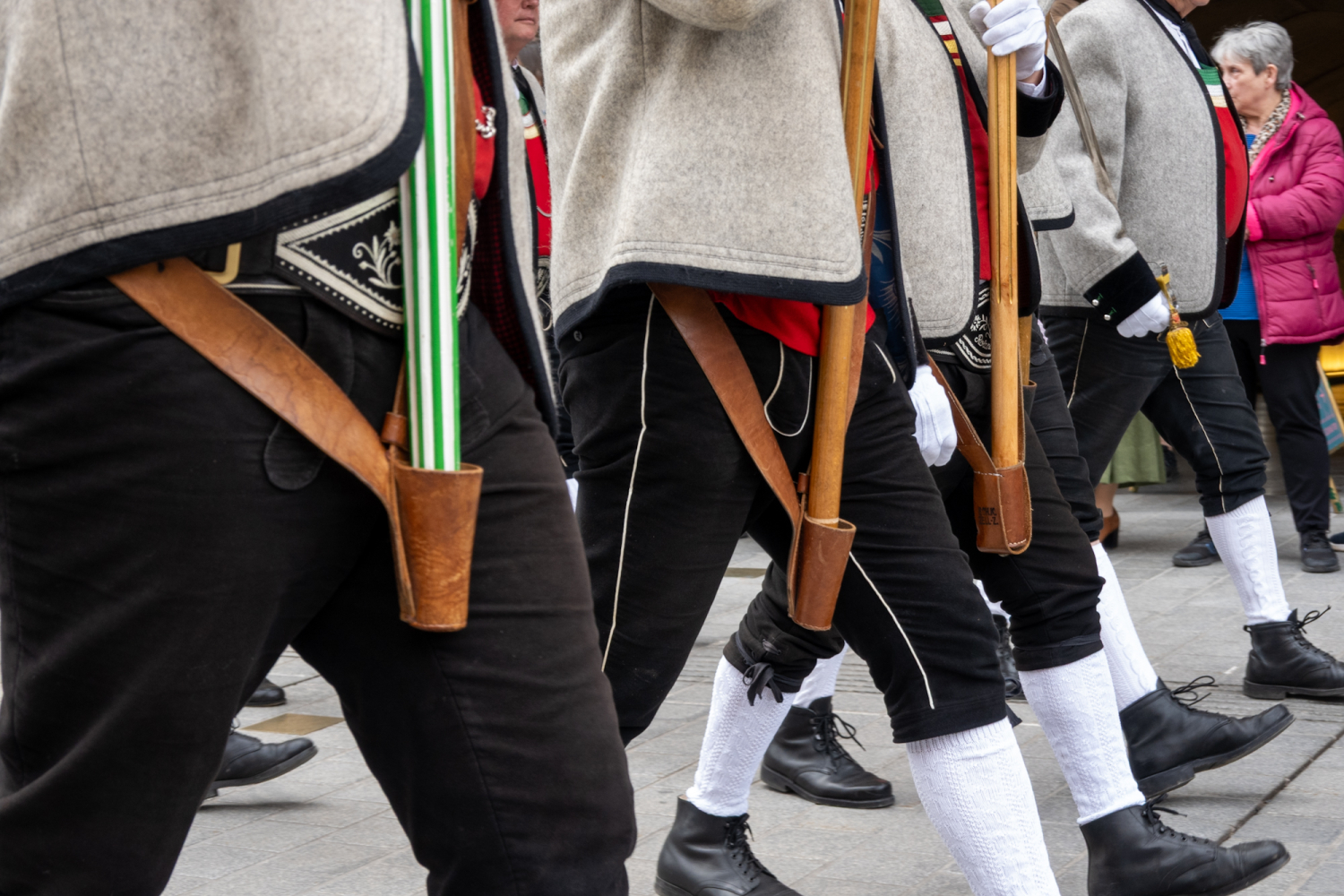
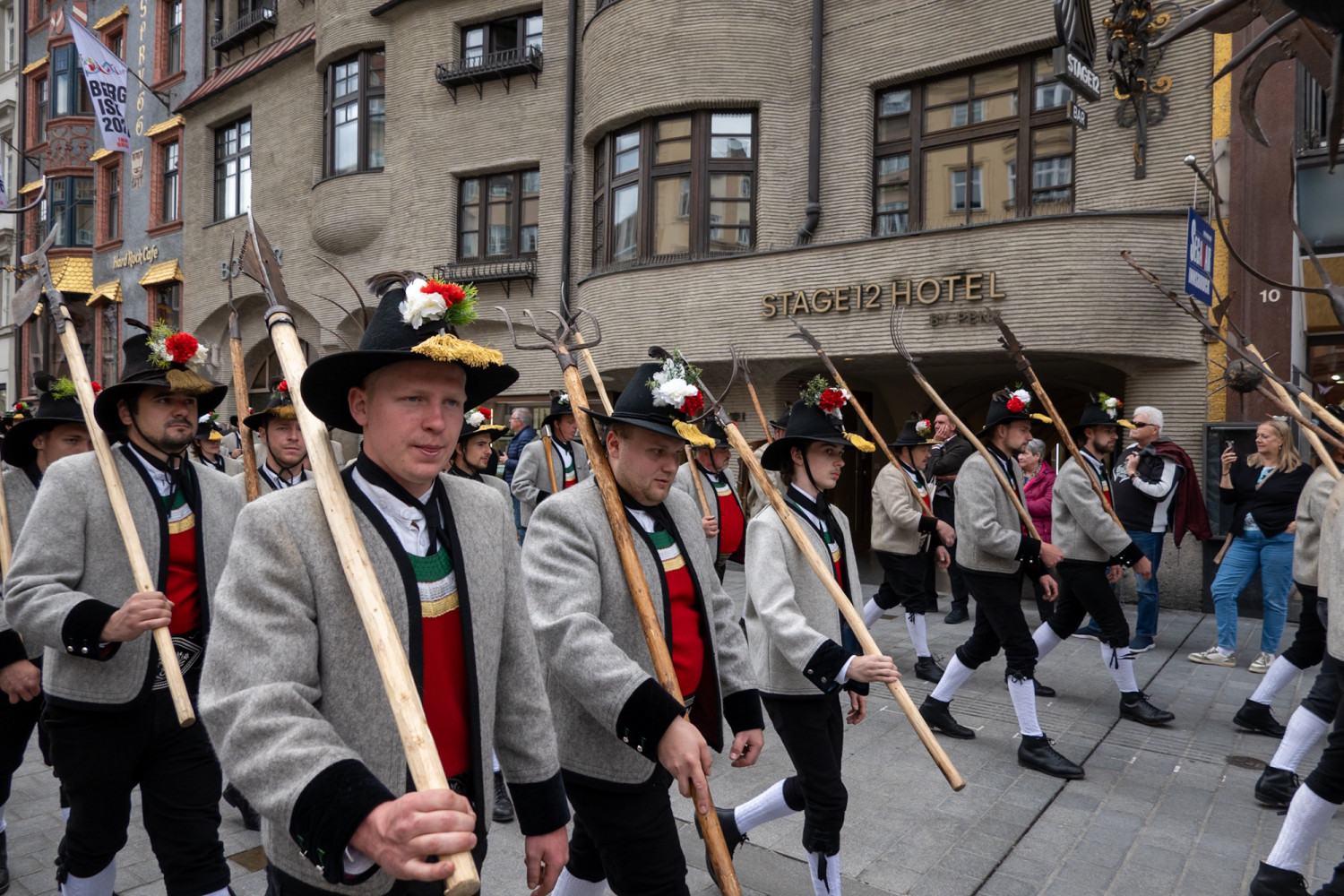
In addition to sabers and firearms, the marksmen also bring all sorts of polearms.
The flower horns are decorated with fresh flowers early in the morning.
A hand on a flower instead of a weapon—the better choice for peace.
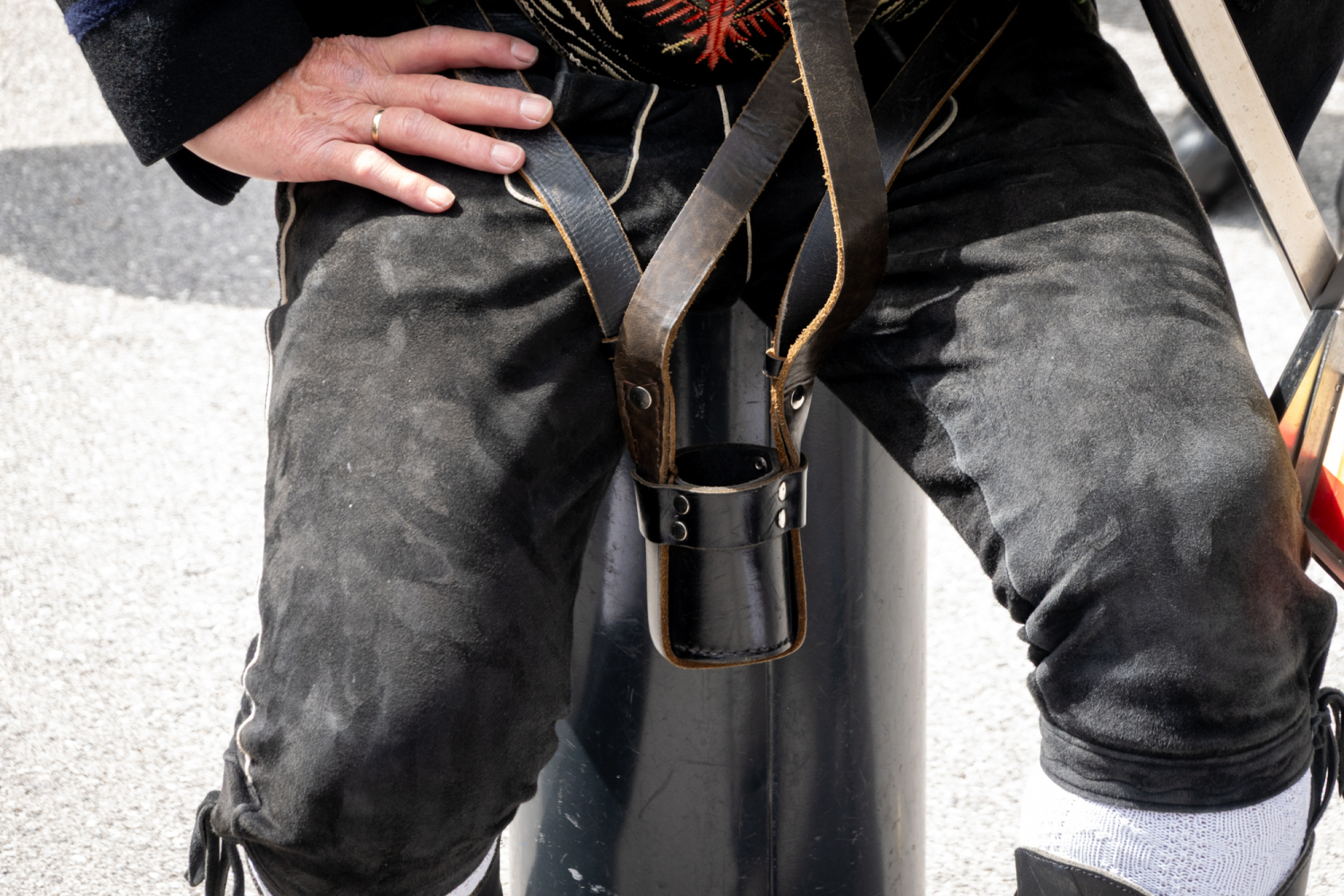
The marksmen probably still shoot—and do so diligently and well—but fencing is truly a thing of the past.
The heat is unbearable, and neither hats nor uniforms may be removed during the parade. The only thing that helps is drinking plenty of fluids!
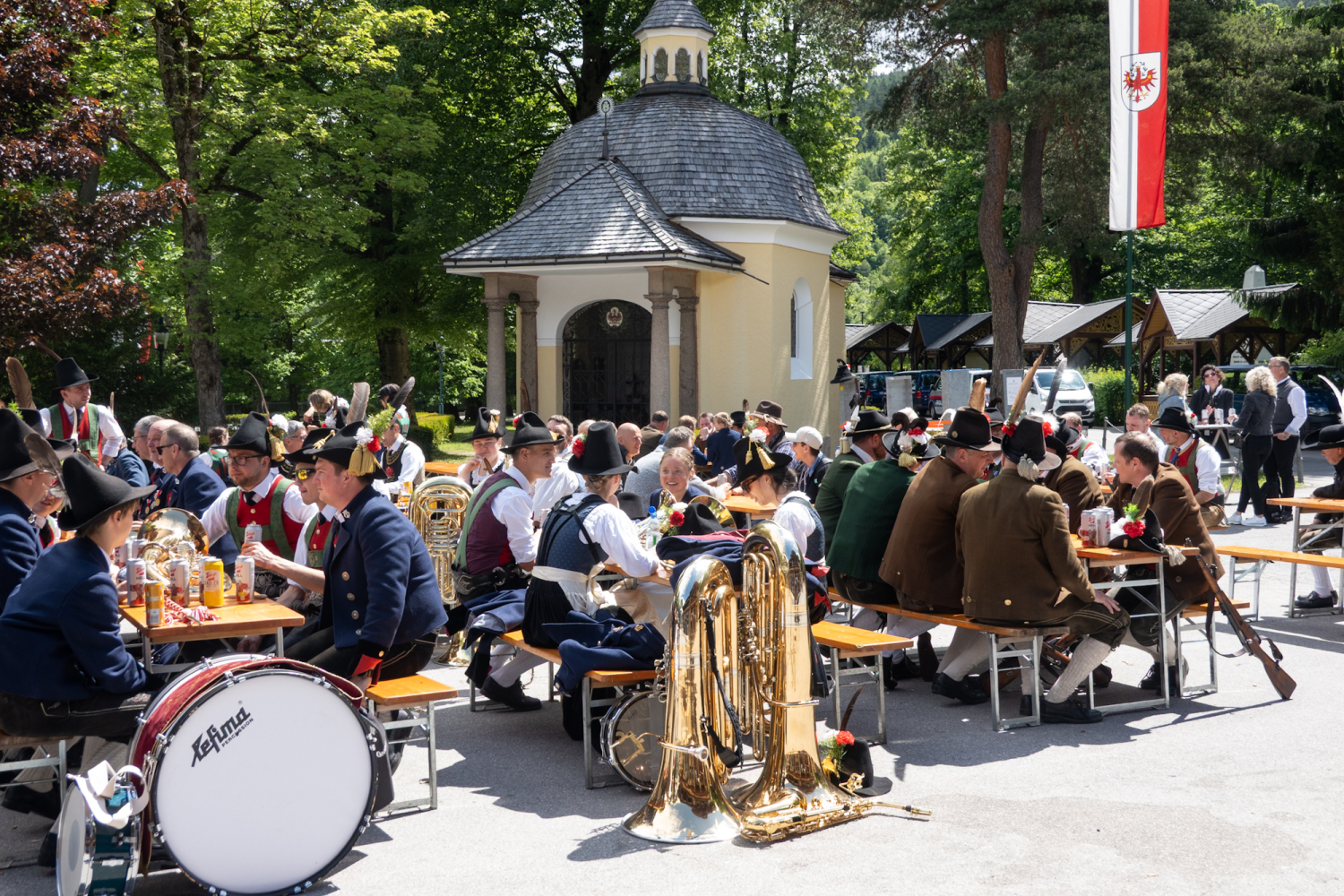
From one fair to the next: Finally some shade and a welcome place to rest!
A must-see: Where else would you find marksmen?
As guardians of tradition and experts in festivities, Tyrolean marksmen, marching bands, and their market vendors can be found at the vast majority of traditional Tyrolean events—and can be heard from afar with their ceremonial gun salutes: For instance, at major church festivals and village fairs, weddings and funerals, on certain holidays, for important housewarming celebrations, or during festive parades, sporting events, openings, major ceremonies, and—of course—at marksmen’s festivals. Here is the event calendar to mark on your calendar.
Speaking of honors and shooting festivals: Since the 28th Alpine Region Meeting, the many decorations on the parade uniforms have included one more sparkling commemorative badge (6 euros for members). Incidentally, the Maximilian Cross is the highest honor awarded by the Tyrolean Riflemen and is bestowed for particularly outstanding contributions to cross-regional encounters and cooperation. Since the festival at Bergisel, it has also adorned the host and three-time Tyrolean Provincial Commander, Major Thomas Sauerer. And let’s be honest: A shared celebration is much nicer than a battle.
Onlookers clap along to the beat, children's eyes widen—a free cultural program.
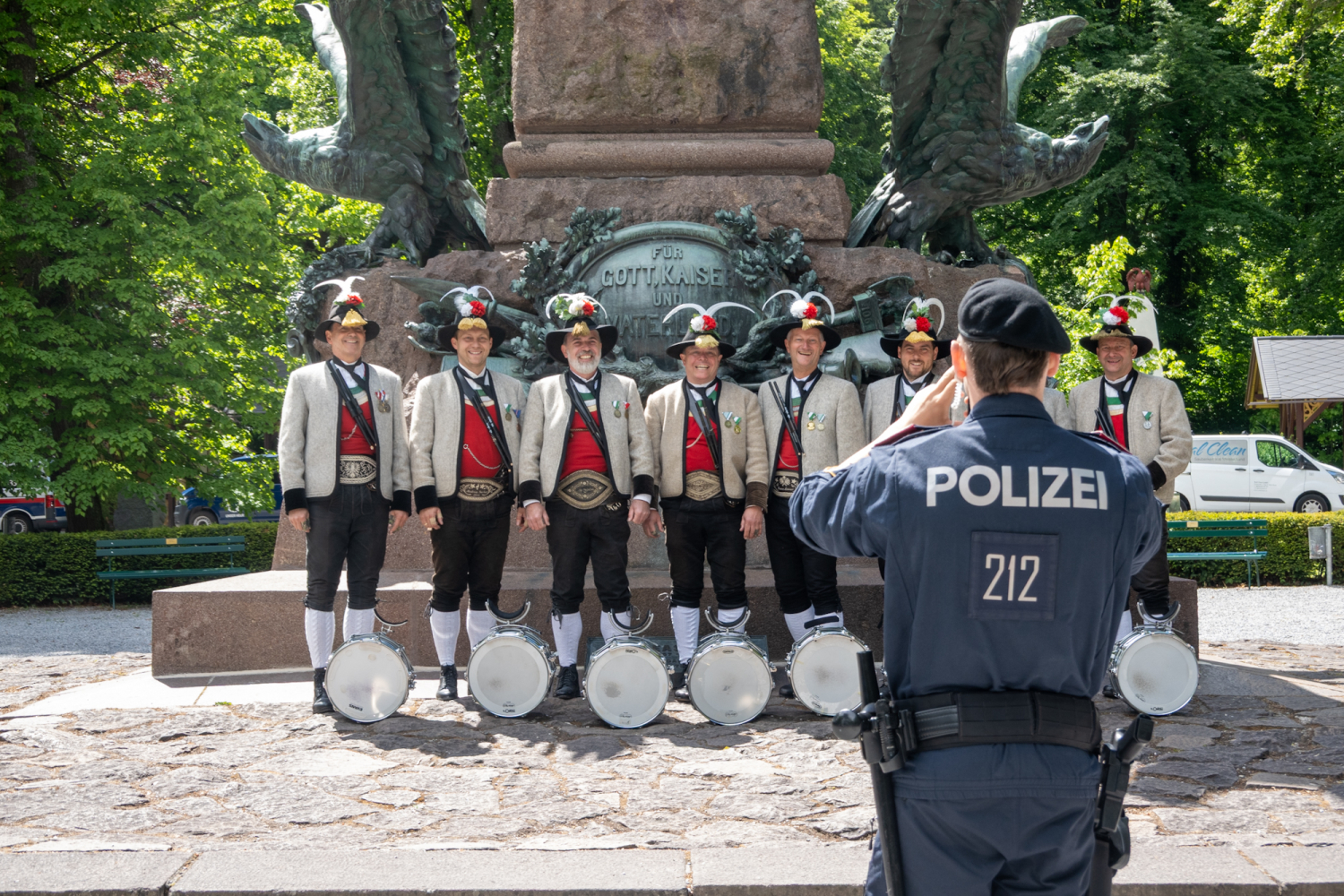
The drummers are on fire, the outfit is on fleek. It's just that "Schützen" is a tricky word in English.
The marksmen pause only briefly in front of the Golden Roof. In silence. Then they move on.
When there's no more room in the front, the medals just go in the back. Each one has a story behind it. At least.
Taking a break: After marching for several hours, our legs can finally get some rest.
On the way home, they share the heavy flag—true comrades, after all.
Something for bird lovers, too: identifying feathers. A capercaillie, a hawk, or maybe a falcon?
Show me the location on the map
A small "scribbler" with huge passions. Born, raised and refined in Tyrol. Loves to read and can cook almost as well as his grandma. At his happiest when out and about and searching for new horizons.
Similar articles
The gateway to Innsbruck's city center is open again: Anyone walking from the main train station towards…
Six years ago, a website went online that is now one of the absolute stars of…
This is the romantic story of a little girl who grows up at 1,905 meters above…
While the 25th Winter Olympics will open in Milan in February 2026 and…