© Damiano Levati
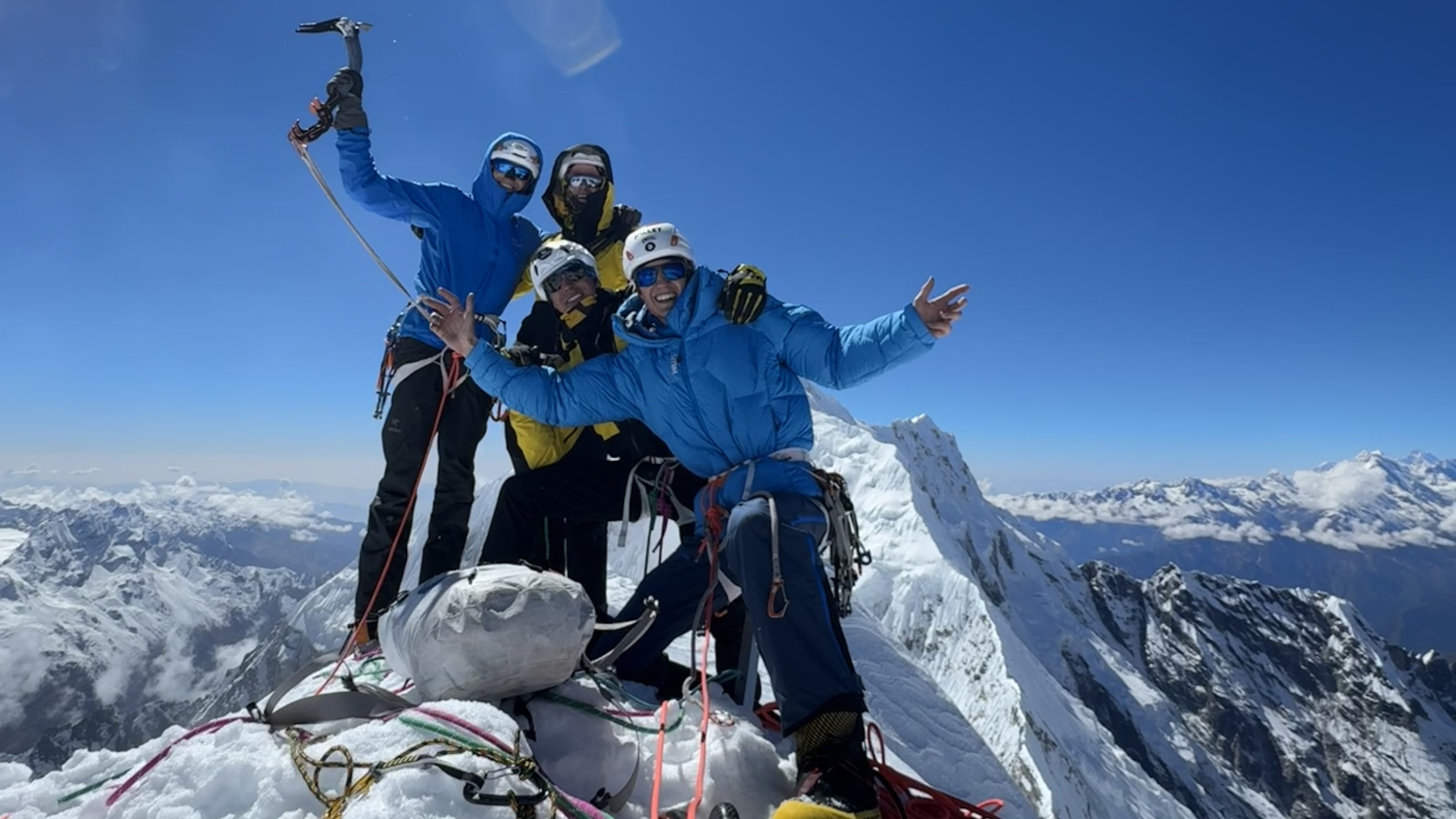
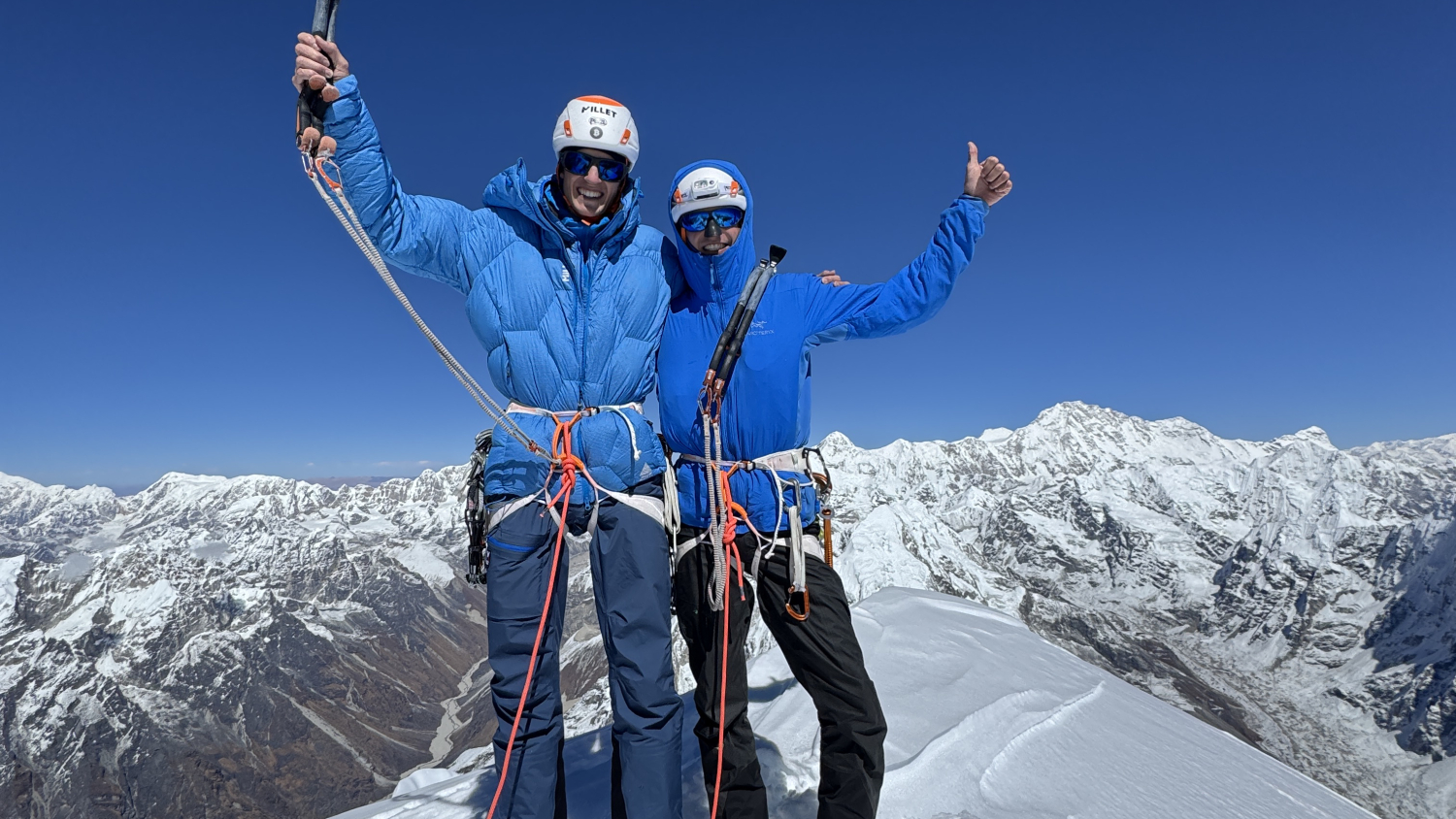
The two young Tyrolean mountaineers Benjamin Zörer and Lukas Waldner, together with the Italians , François Cazzanelli and Giuseppe Vidoni caused a sensation in October 2025 when they succeeded in making the first ascent of the 6,781-meter-high Kimshung in the Himalayas. In doing so, they dispelled the myth of the mountain’s invincibility in theLangtang Himalayas: In recent years, six expeditions had attempted to reach the summit. The seventh attempt was now successful!
Comfort Zones
So far, I’ve mostly written about cultural or historical topics for this blog, and occasionally reported on events. I’ve always been happy to leave sports coverage to my colleagues, simply because I’m not particularly athletic myself. However, my respect and admiration for athletic achievements are immeasurable and hard to put into words. That’s why I find it all the more exciting to write about this kind of topic now.
Benjamin will be on an expedition in Pakistan in the summer of 2026. So I meet Lukas alone in Innsbruck and ask him to tell me about Kimshung. He starts gushing, talking fast and a lot, and I’m delighted, because it’s immediately clear: This is a special story about people who live their passion, consistently pursue their goals, and make their dreams come true. For both—the story and the people behind it—only one word comes to mind: inspiring.
The young representatives of classical alpinism
In response to my naive question,“How does one actually become a mountaineer?” Lukas answers both patiently and confidently. Of course, there’s no formal training for it; for him and Benjamin, at any rate, it’s all about“learning by doing”—and that ’s been the case since they were little. Both (born in 2001) practically grew up in the mountains with their fathers, who are mountain guides. Not only is mountaineering in their blood, but they’ve also continuously learned to assess their own bodies, as well as the mountains, rock, snow, ice, and weather. You quickly realize that Lukas is a true professional, yet very down-to-earth and realistic—especially when it comes to risks. His respect for the mountains and nature is always evident.
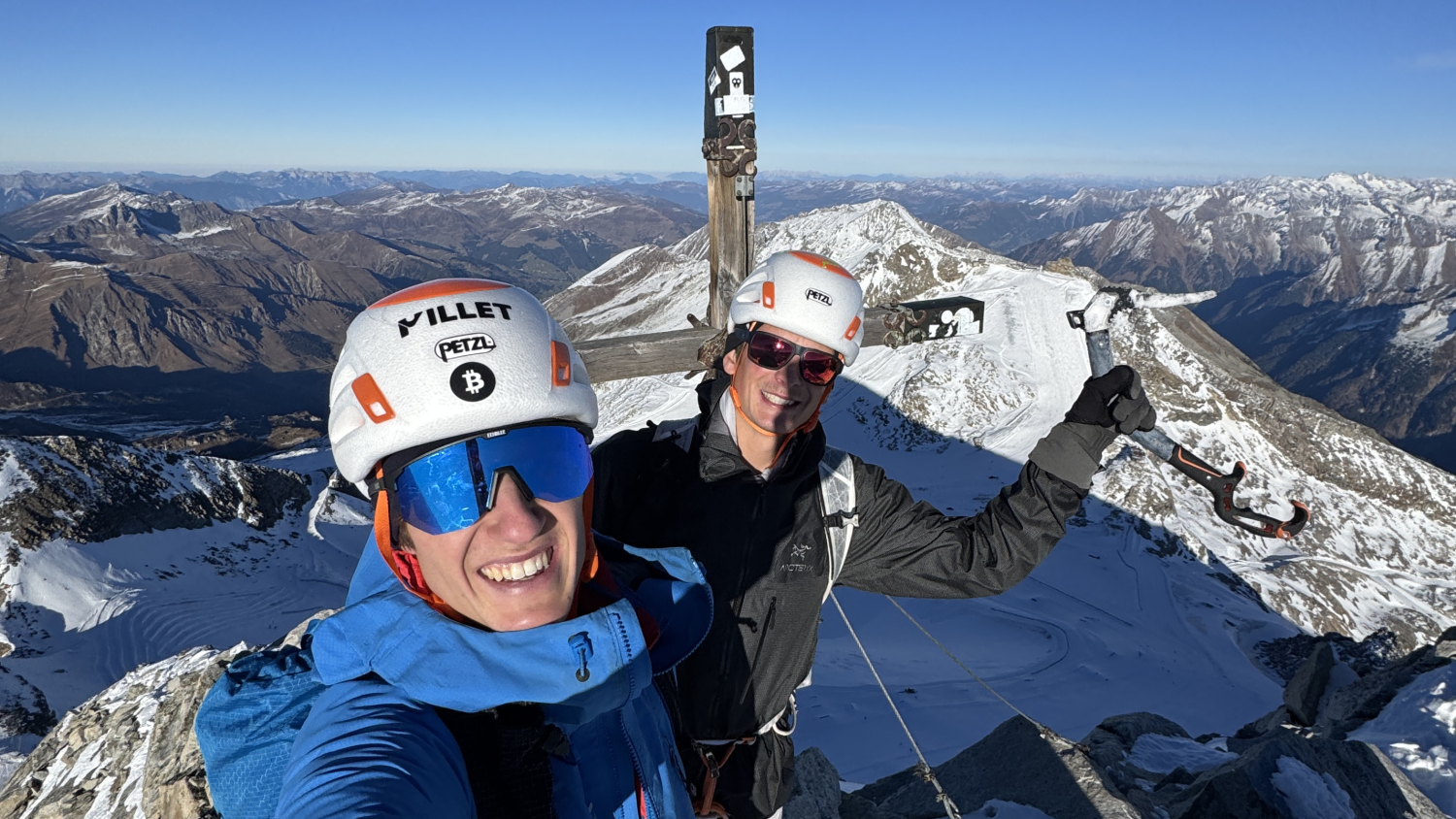
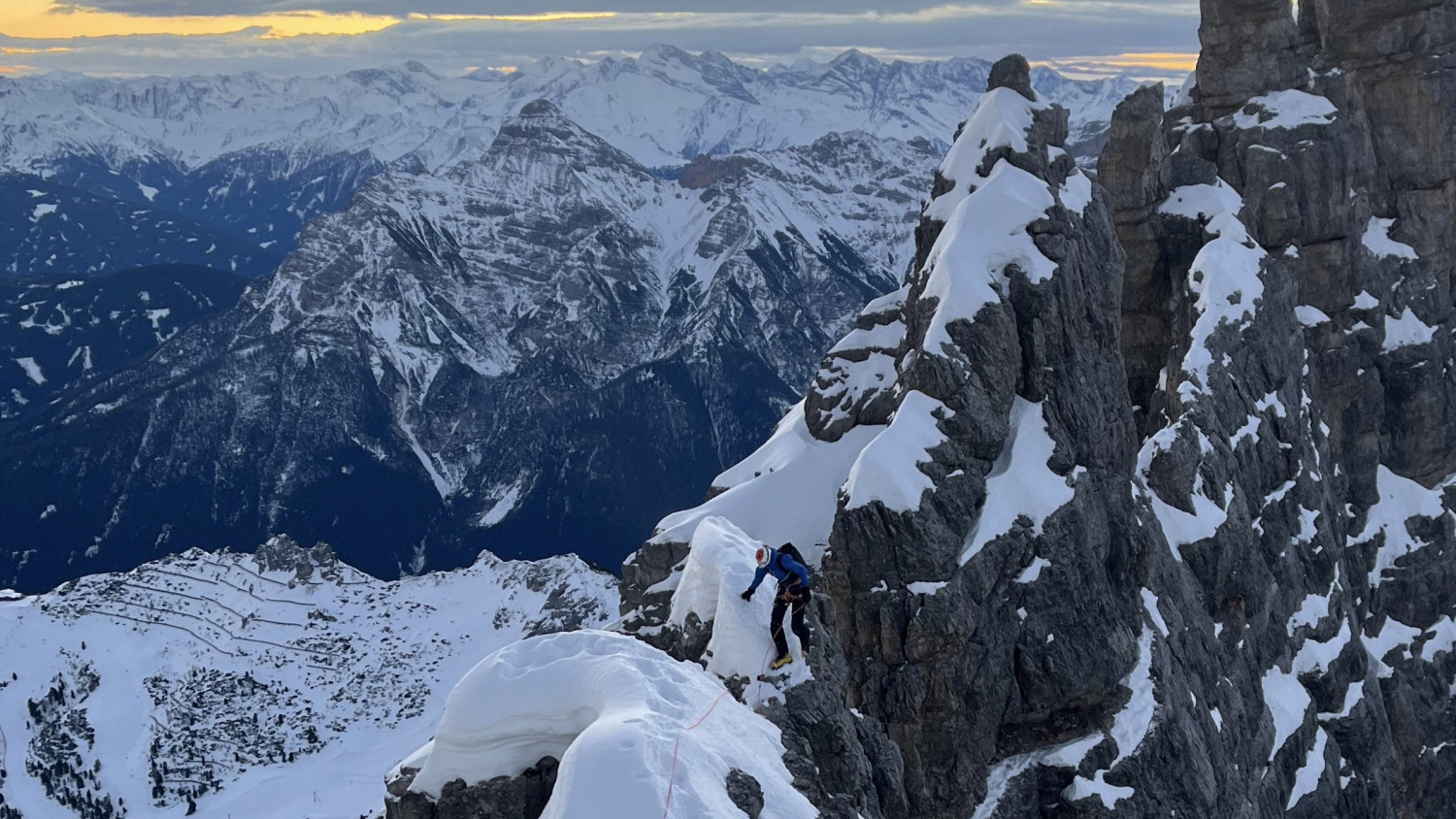
Lukas and Benjamin at the summit of the Olperer (Zillertal Alps) after a winter “training run” along the Fußstein North Ridge.
He goes on to say that there’s a lot going on in mountain sports and that certain disciplines, such as trail running or ski touring, are currently experiencing strong growth. In classic alpinism, however, the situation is different; it remains a relatively small community. For him and his mountain companions—who, besides Benjamin, include above all Philipp Brugger and Martin Sieberer, , alpine mountaineering holds the greatest appeal. For them, it will always be more exciting than commercial expeditions: people on the mountain, without fixed ropes, with few tools and little information. They also take this alpine style with them to apply it, for example, in the Himalayas.
Chances of success ranging from 10 to 50 percent
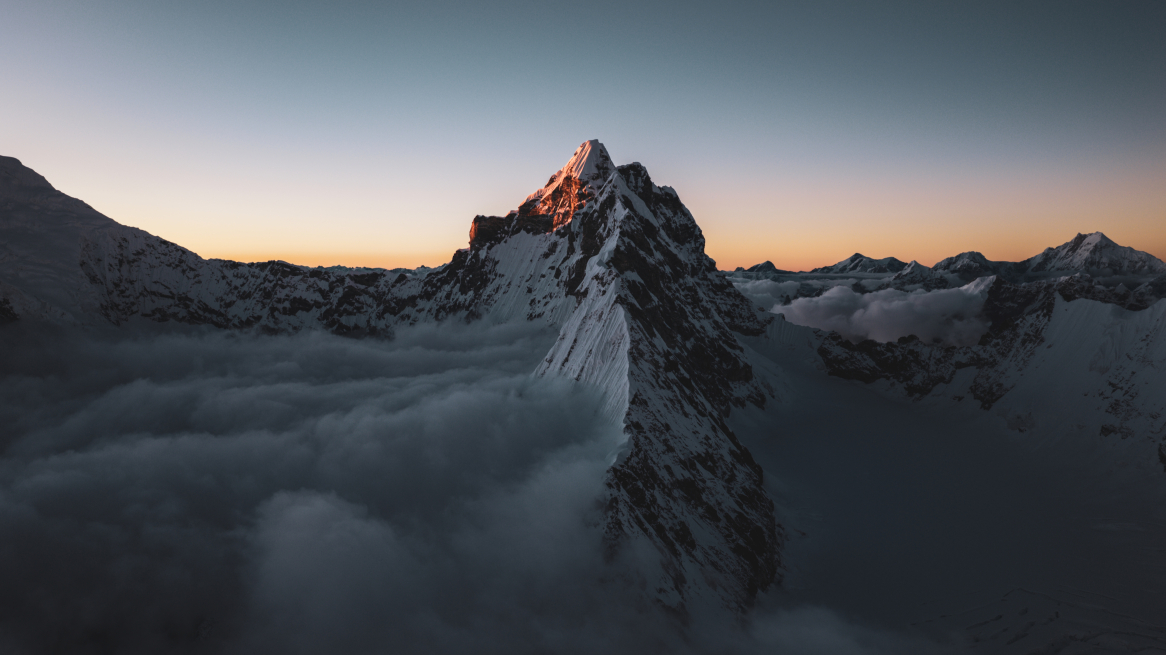
Benjamin and Lukas have tackled many mountaineering projects together over the past five years. In 2024, they were already in Pakistan together. For October 2025, they planned an expedition to Nepal, which is more accessible. Generally more stable fall weather there could increase their chances of success. During their preparations, they took a close look at what had been accomplished in mountaineering there in recent years, and that’s how they ultimately settled on Kimshung, a“graceful, freestanding mountain”(Lukas’s words) and one of the most interesting unclimbed six-thousanders.
Thanks to the expeditions of previous years, the Tyrolean adventurers had access to a relatively large amount of information as well as photos. Despite these unusually good preparation opportunities, Lukas estimated their chances of reaching the summit at a maximum of 50 percent.
Collaboration on the Roof of the World
The name François Cazzanelli was already inextricably linked to the “ Kimshung ”: The Italian professional mountaineer had already attempted to climb this peak several times but had failed for various reasons.
“Climb first, talk later”is Benni and Lukas’s strict motto. Nevertheless, it eventually became clear within the climbing community that the two would make another attempt on the Kimshung, and so it happened that an Italian expedition led by François set up camp in the Langtang Himal at the same time as the Tyroleans.
Lukas emphasizes that there was never any competition between the two teams. I particularly like how he puts it:“The mountains are there for everyone.” So the Tyroleans coordinated with the Italians while they acclimatized separately and prepared for the climb in stable weather. From the very beginning, the atmosphere among the mountaineers was very open and friendly.
Ultimately, the weather experts from both teams predicted perfect conditions for the summit push on Monday, October 20, 2025. After that, the weather was expected to deteriorate. Although Benjamin and Lukas would have liked at least one more rest day after acclimatization, it was clear: Monday would be THE day.
The two had already set up their tent and gear at the base of the glacier, so they ascended to that camp on Sunday. It was clear that it would be only a short night.

Showdown
It was decided to ascend to the summit in two separate rope teams on the northeast face. The teams planned to set out at approximately 2:30 a.m. Since such a tour requires a lot of water and the snow takes a long time to melt in the cold, the Tyroleans’ start was delayed by about a quarter of an hour, even though they had already lit the stove shortly after 1:00 a.m. The Italian team had a similar experience.
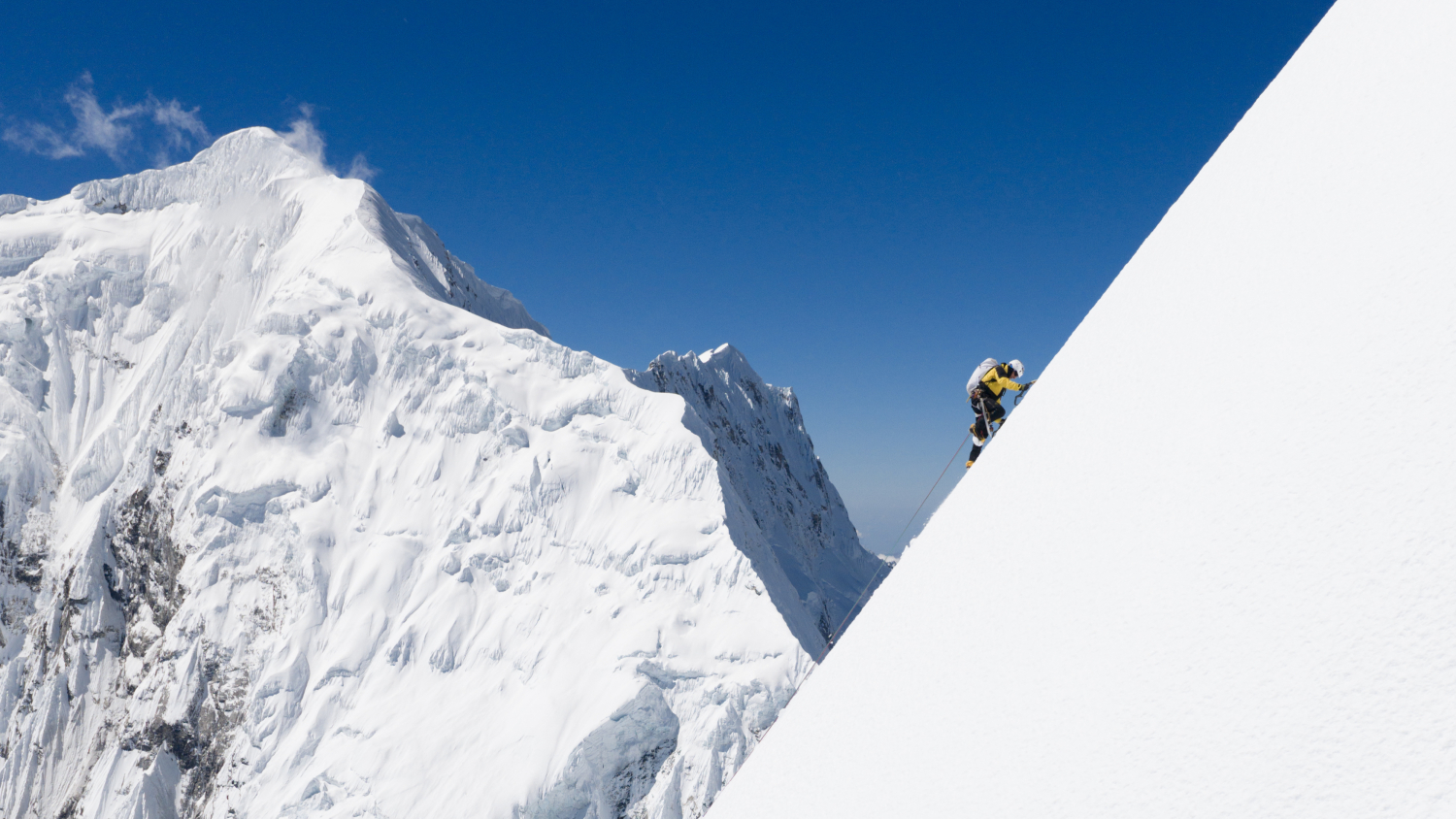
After about two hours, the mountaineers reached the approach to the face, where the climb over ice, snow, and rock began. The advantage of northeast faces is that the sun shines on them early. The climbers had perfect conditions: sunshine and no wind —a stroke of luck on a mountain as exposed to the elements as Kimshung.
As Lukas recounts the story, I’m impressed by the many details he has in his head—presumably for all his routes: The face on Kimshung was up to 70 degrees steep, and he knows exactly how the challenging mixed terrain changed at different altitudes, where breaking trail through the snow was particularly strenuous, and which (portable) protection devices or ice screws were used. You can tell: these are professionals at work, perfectly prepared.
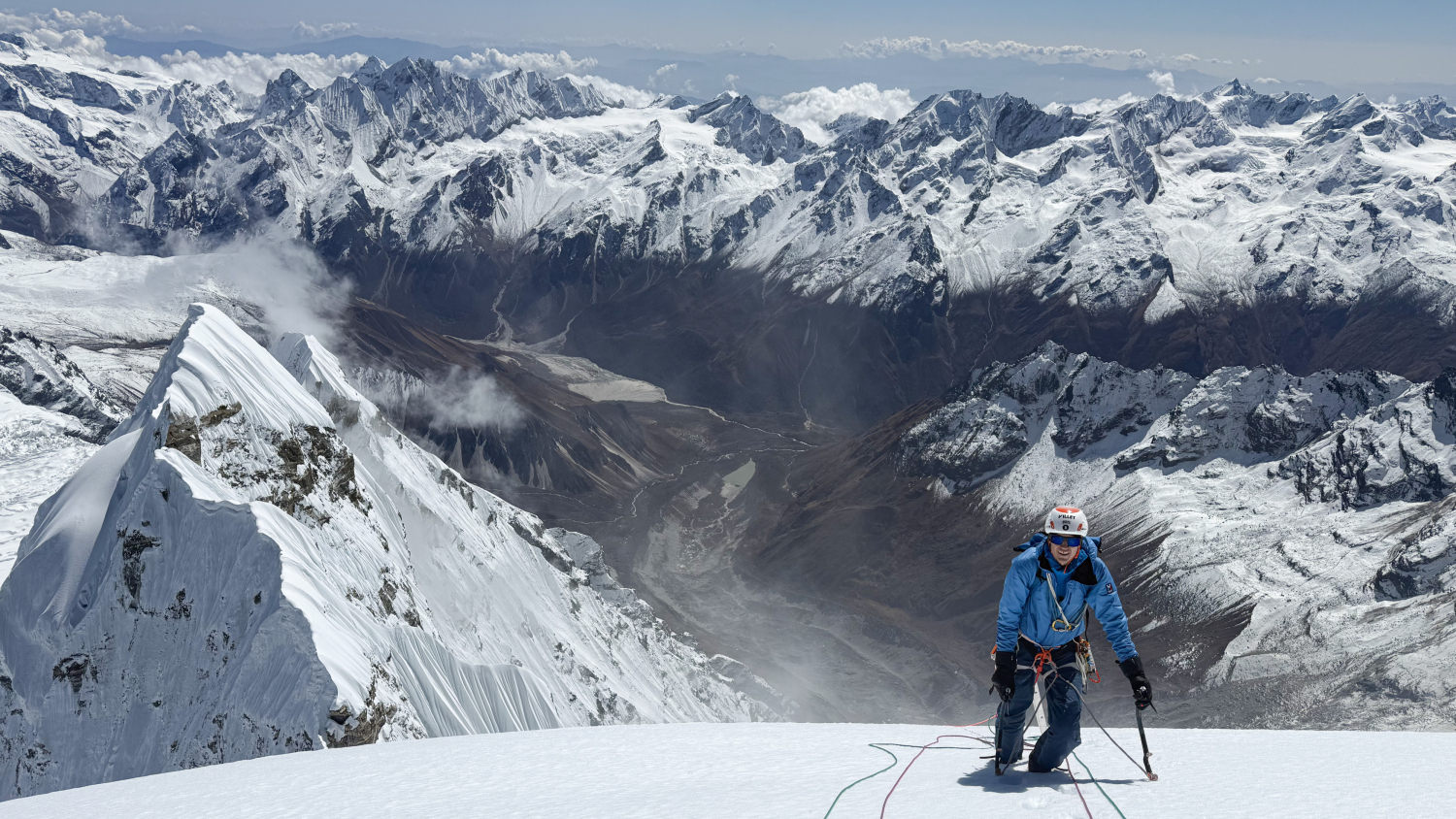
On the Kimshung, both rope teams made good progress and reached a saddle; as they gained altitude, the climb became increasingly challenging. The final 300 meters of elevation gain took us up a steep snow slope—we had reached the summit snowfield. Lukas refers to this as“Styrofoam snow”—and I learn one of a hundred words for snow. According to the mountaineer, while this snow is good for climbing, it’s difficult to secure yourself on it. That’s why the climbers had to keep digging into the rock here to place proper anchors.
12:30 p.m.: “DESTINY” completed, summit reached
Finally, they had done it: On October 20, 2025, at approximately 12:30 p.m., Franz, Bepi, Benni, and Lukas stood on the summit of Kimshung at 6,781 m—the first people ever to do so. The route of their first ascent was named“DESTINY,” 1,300 m, 60°, AI4, M5.
Lukas describes this moment at the summit asthe “absolute highlight”after persistent, continuous training and months of meticulous preparation. After all, they had succeeded in overcoming a“major and previously unsolved problem.”But he goes on to say: “We hadn’t really realized that yet at the summit.” He adds: “Of course, we also knew that we still had a descent of about 3,000 meters in elevation ahead of us.”
Working as a team, the four climbers who conquered Kimshung rappelled down 15 times and completed the long descent. At around 7:00 p.m., the climbers reached Advanced Base Camp (ABC), and by 9:00 p.m., they were back at their lodge. Word of their triumph had already spread, and the climbers were celebrated as heroes by the locals. Slowly but surely, the realization began to sink in that they had achieved something truly great.
Success Factors: Fast & Light
Lukas is known for climbing mountains with as little gear as possible. When I look at his achievements, the times he’s posted, and his speed records , it quickly becomes clear to me that every gram counts here. In conversation, he emphasizes how important good, lightweight gear is, because for him, it’s clearly one of the key factors in a successful first ascent.
For the Kimshung expedition, titanium“Peckers”weighing only about 40 g each were even specially developed—making them significantly lighter than conventional rock pitons for belaying. All in all, this saved a considerable amount of weight, and Lukas’s backpack weighed between four and six kilograms on summit day.
The“fast & light”strategy plays a role in the vast majority of Lukas’s projects, such as (selection):
- First ascent of Shauè Sar (Pakistan), 6,653 m, north face (2,000 m, 85°), in a single push from ABC, together with Philipp Brugger and Tomas Franchini (2022)
- First ascent of Didur Sar (Pakistan), 5,600 m, in a single push from the valley (Shimshal), together with Philipp Brugger (2022)
- Mont Blanc, “Freney via Peuterey” in 34 hours (combination of the Peuterey Integral Traverse and the Freney Pillar), together with Benjamin Zörer (2024)
- Eiger North Face, Heckmair Route in 4 hours 50 minutes (and as a day trip from Innsbruck), together with Benjamin Zörer (2025)
- First winter trilogy of the three north pillars of Piz Palü in a single day (8 hours 59 minutes), together with Philipp Brugger (2026)
- North Face of the Matterhorn, “Bonatti Route” in winter in 8 hours 15 minutes (fastest winter time), together with Philipp Brugger
- First trilogy of the north faces of the Valsertal (north faces of Fußstein, Schrammacher, and Sagwand) in under 12 hours, together with Philipp Brugger (2025)
- First winter ascent of the north face of the Sagwand, “Schutzengelweg” (800 m, VI+/M7+) – first repeat in 34 years, together with Martin Sieberer (2026)
- First complete winter traverse of the Kalkkögel in a single day, together with Martin Sieberer
- First complete winter traverse of the Valsertal in a single day
Innsbruck: The Perfect Home Base
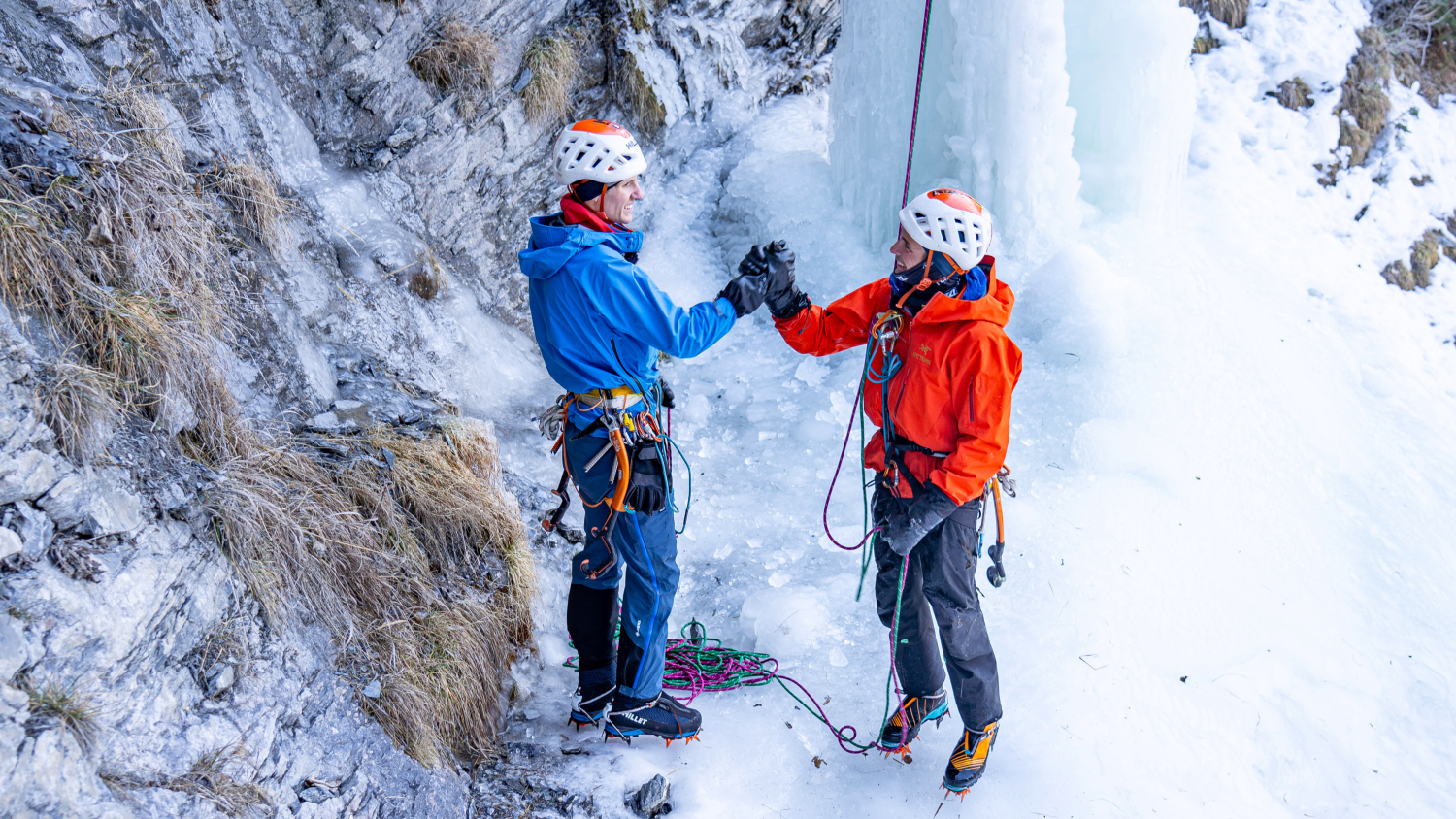
Benni and Lukas live in Innsbruck. They grew up here or nearby; Lukas also works in the city, and Benjamin, like his father, has become a mountain guide. The two of them train a lot—and Innsbruck offers the ideal conditions for that: According to Lukas, the Innsbruck Climbing Center is one of the most modern and best-equipped indoor climbing gyms in Europe. For endurance training, he relies on running: a quick trip up to the Seegrube —he’s racked up plenty of elevation gain on that route alone.
All around, there are plenty of interesting options and challenges for mountaineering, such as winter crossings of the nearby Kalkkögel or the Valsertal. Benni and Lukas’s“day trips”can sometimes look like this: They climbed the Eiger North Face (Heckmair Route) in April 2025 in under five hours and were back in Innsbruck late that evening.
Of course, both already have more ideas for alpine mountaineering in mind. Lukas will be heading back to Nepal in the fall of 2026 to climb at altitudes of around 6,500 to 7,000 meters. He won’t reveal any more details, because, as he says:“First climb, then talk.”
Tyrolean Snack for Mountain Climbing
Once again, he’ll be spreading the word about mountaineering from Innsbruck to the rest of the world—and here’s another way he’ll do it: On high-altitude expeditions, it’s common to rely on freeze-dried food and make up for calorie deficits with carbohydrate powder mixed into water or tea. Benjamin and Lukas aren’t fans of the former and prefer to eat Schüttelbrot, bacon, Kaminwurzen, and instant mashed potatoes. (Charming.)
I’m convinced we’ll be hearing about more “high-altitude adventures” from Benjamin Zörer and Lukas Waldner very soon, and I wish them all the best and a safe return home every time. I’m sure there will be more particularly exciting stories to come, and I’d like to sincerely thank Lukas for telling me one of them in detail and for providing me with so many photos. Thank you.
Cover photo above: Evening atmosphere at Kimshung, © Damiano Levati
More Information
- Blog post by Benjamin Zörer on the first ascent of Kimshung
- Report in *Der STANDARD * on the first ascent of Kimshung
Show me the location on the map
A Tyrolean girl, graphic designer, blogger and tour guide with a variety of interests and a weakness for nice people, culture, starry night skies, one more beer and the mountains.
Similar articles
Padel—an insider’s tip? The secret is becoming a trend! This dynamic blend of tennis and squash is…
Every day, flocks of a small bird flit back and forth between the Nordkette and Innsbruck, capturing…
View from the dam, Ehnbachklamm…
For me, summertime is yoga time. Of course, you can practice yoga all year round, but especially…