22 July 2026
#
Post originally written in: Deutsch Information An automatic machine translation. Super fast and almost perfect.

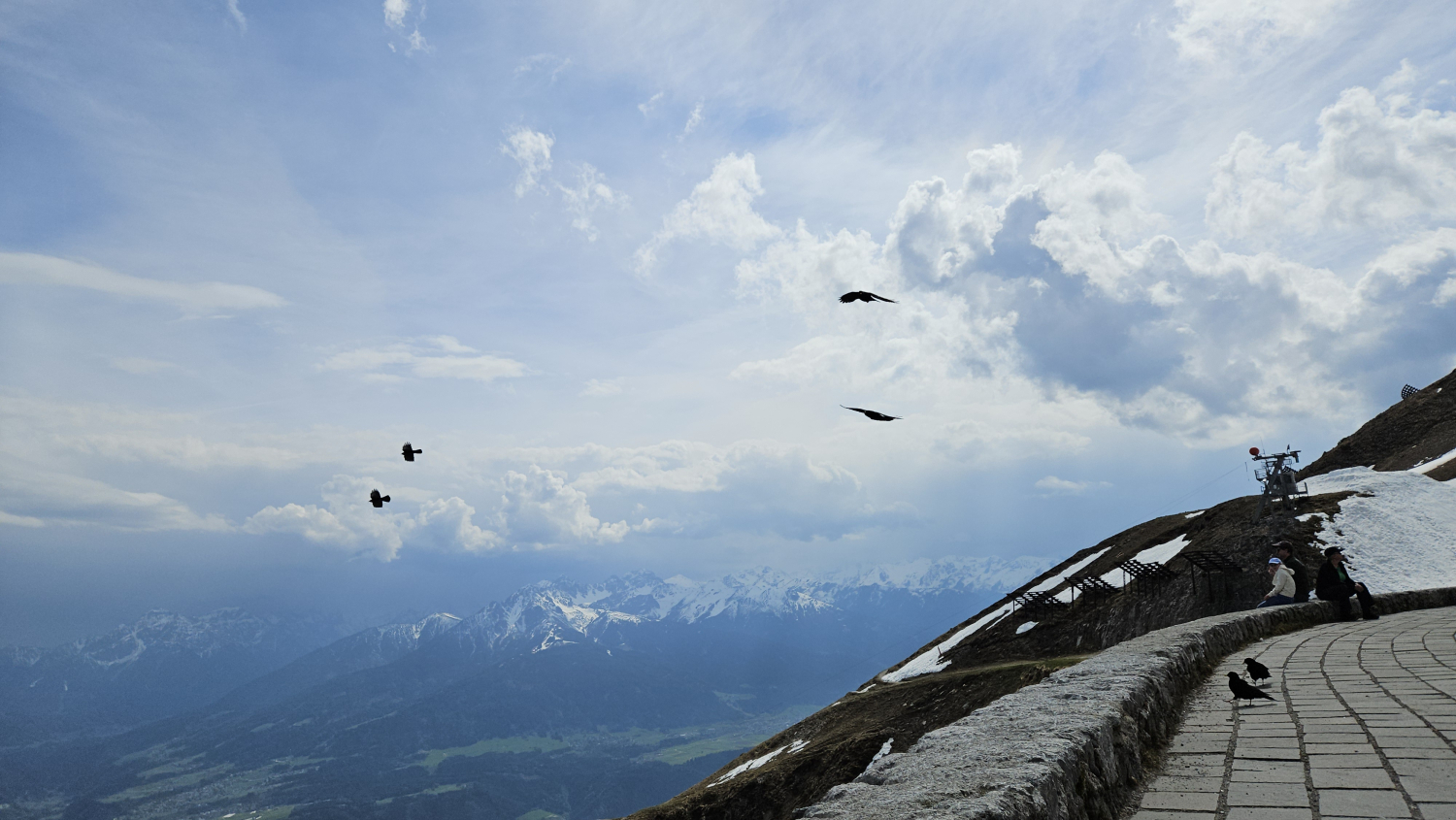
Every day, flocks of a small bird flit back and forth between the Nordkette and Innsbruck, capturing our attention with their flying skills and curiosity. We’re talking about the Alpine chough, arguably the most mischievous mountain dweller that visitors to Innsbruck might come across.

From the city center to the Nordkette

When you think of Tyrol, the image that often comes to mind is the majestic golden eagle soaring majestically in circles. I’d like to point out: Eagles are cool, but have you ever seen jackdaws in flight? Pyrrhocorax graculus — commonly known as the Alpine jackdaw—inevitably brings a smile to my face. Not only is it more agile than the esteemed eagle, but it’s also much easier to spot. “Best in the morning or late afternoon,” clarifies Juliane Pokorny, curator of birds and research at the Alpenzoo. The birds can be found quite reliably, especially in the area of Seegrube and beneath Hafelekarspitze, but their lively chirping can also be heard regularly in the city center, in the Hofgarten, or near the university. The flocks often move back and forth between the city and the mountains several times a day, depending on which need takes priority at the moment. Safe nesting sites and tranquility beckon in the steep rock faces of the Nordkette, while an abundance of food awaits in the valley.

“When a flock picks out a fruit tree in a courtyard, it’s bare afterward,” says Thomas Klestil, the city of Innsbruck’s wildlife officer. For the past three years, he has been working to promote peaceful coexistence between humans and animals. The cheeky jackdaws’ appetite and the marks they can leave on building facades occasionally create a need for mediation.  

Hungry Beaks

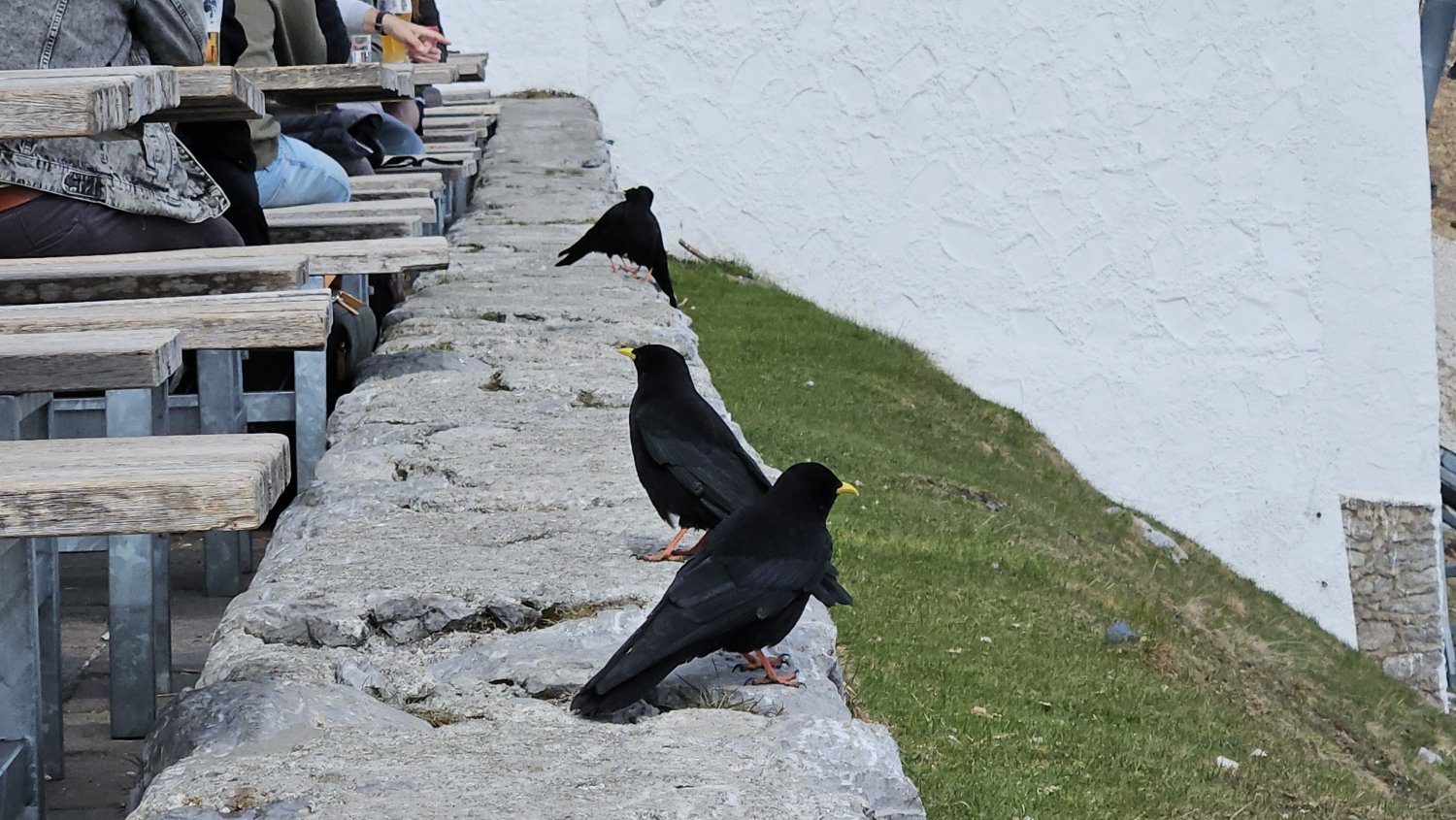
There are between 5,000 and 7,000 breeding pairs throughout Tyrol. The Alpine Chough population is considered stable, and the birds are protected both in Tyrol and at the European level. Their trustfulness and curiosity are only of limited benefit to the birds, as the human temptation to feed them can potentially backfire. Our food—such as bread, french fries, or snacks—can cause health problems for these little flying acrobats. Instead of deliberately luring them, Pokorny recommends restraint: “It would be best to keep your distance and quietly observe them.” Wildlife officer Klestil echoes this sentiment: “You should feed wild animals as little as possible—they can take care of themselves.” Although the bird may be happy to receive food at first, each time you do so, you’re taking away a little bit of its wildness, until it eventually becomes overwhelmed by its natural habitat. So when a jackdaw hops over, it’s better to pull out your cell phone than your snack.

Pleased to meet you, Dohle

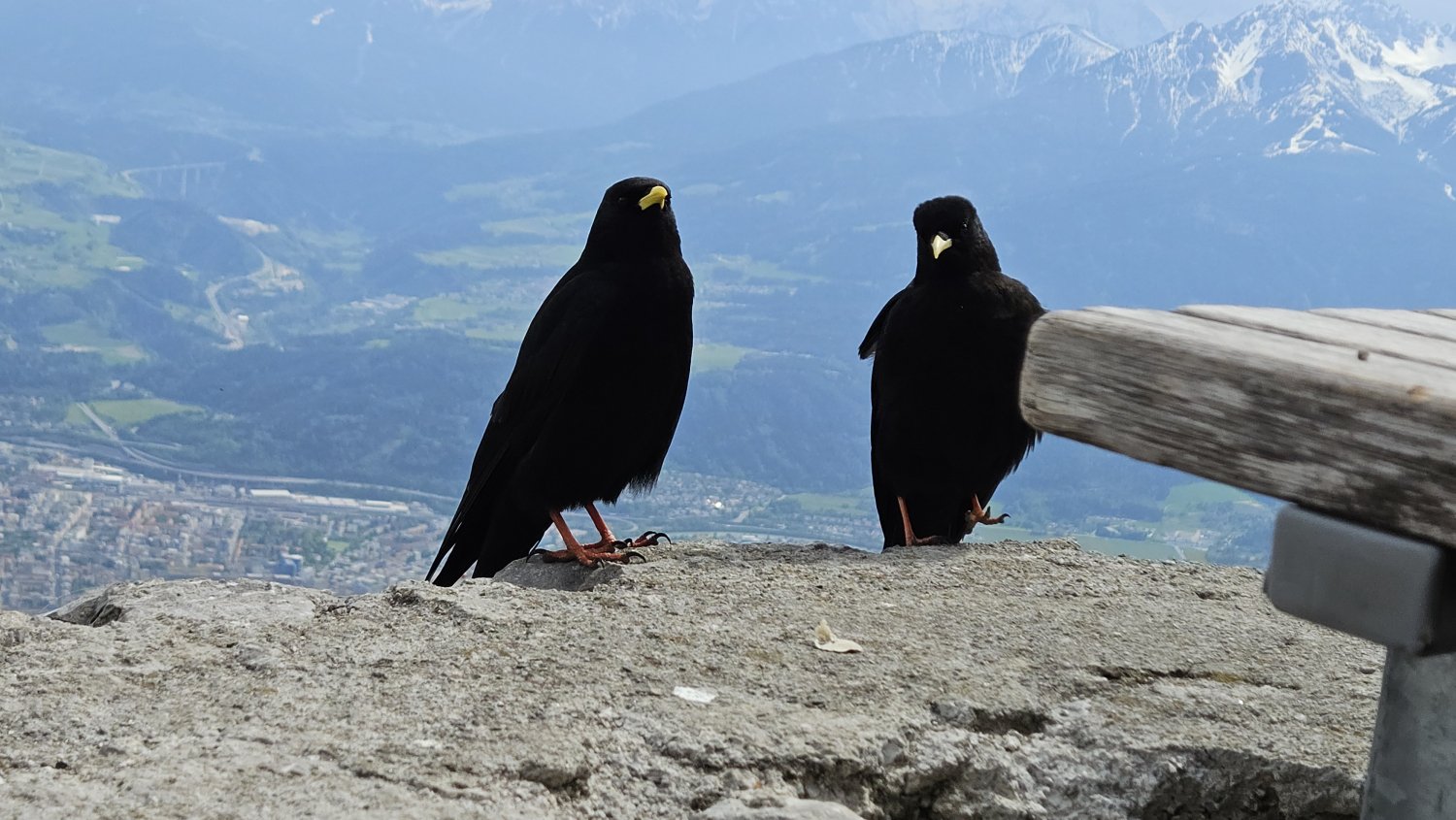
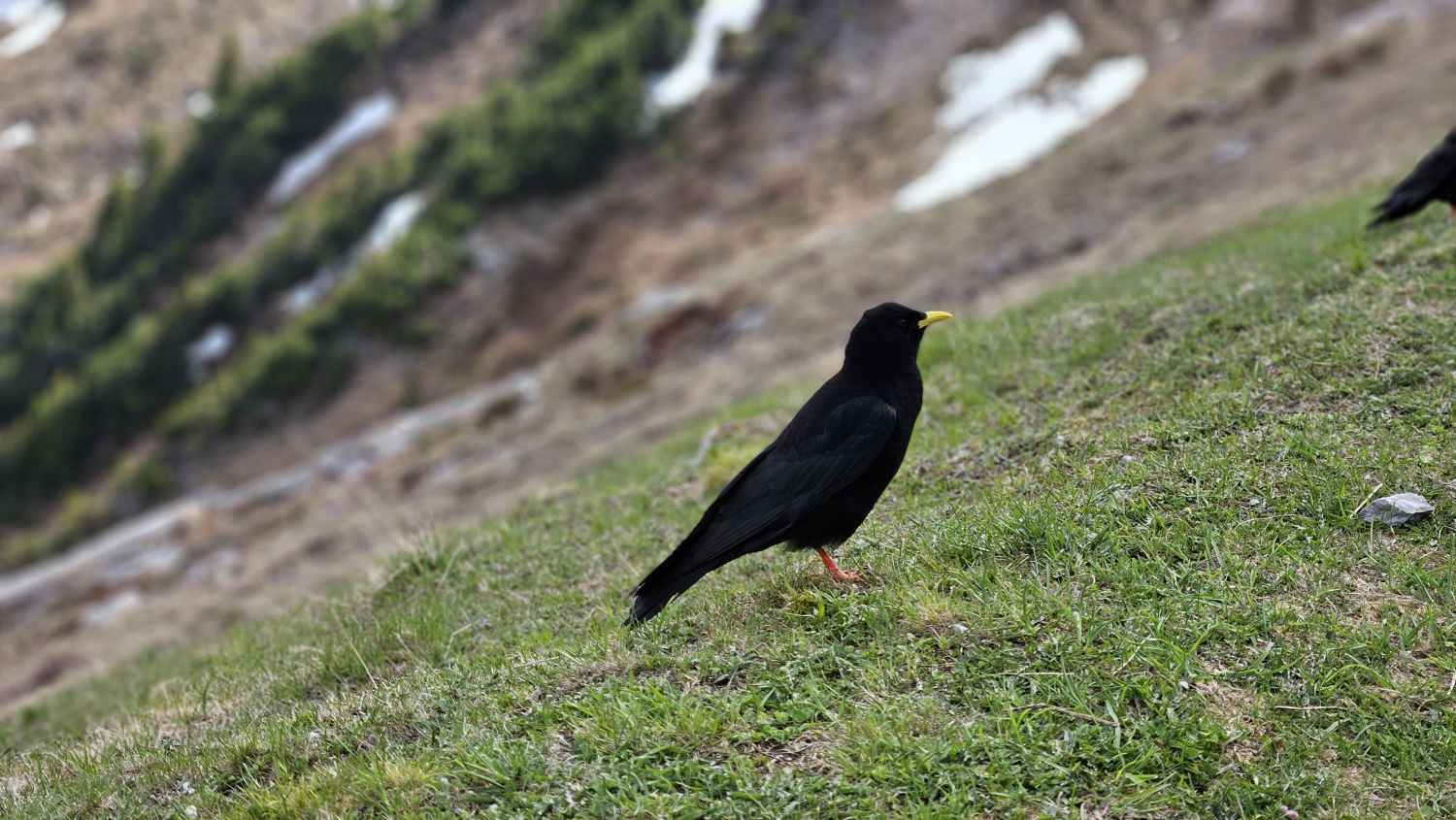
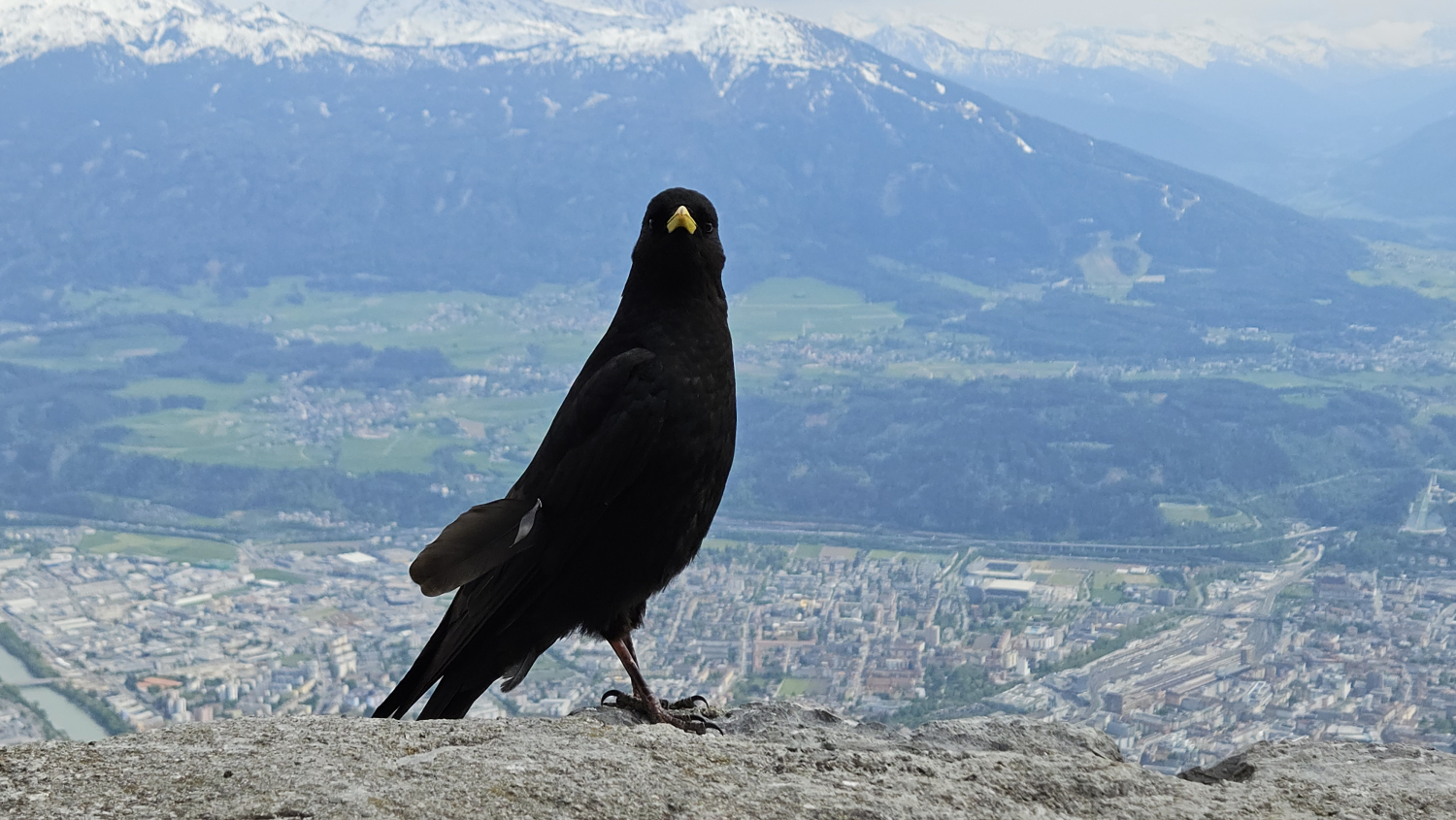
There’s a lot of excitement in the sky, especially in the spring. Starting in early May, these jet-black birds with yellow beaks and red legs begin to breed. When, after about 30 to 35 days, the young birds are also ready to take to the skies, large flocks form, from which the jackdaws’ characteristic whistling and rolling calls can be heard. According to Pokorny, this is particularly lovely to watch: “Jackdaws usually form long-term, often lifelong pair bonds and stay close together even within the flock.” Try it yourself: Watch a single bird in the flock for a while and try to spot its mate. Chances are good you’ll get to see a little aerial ballet.

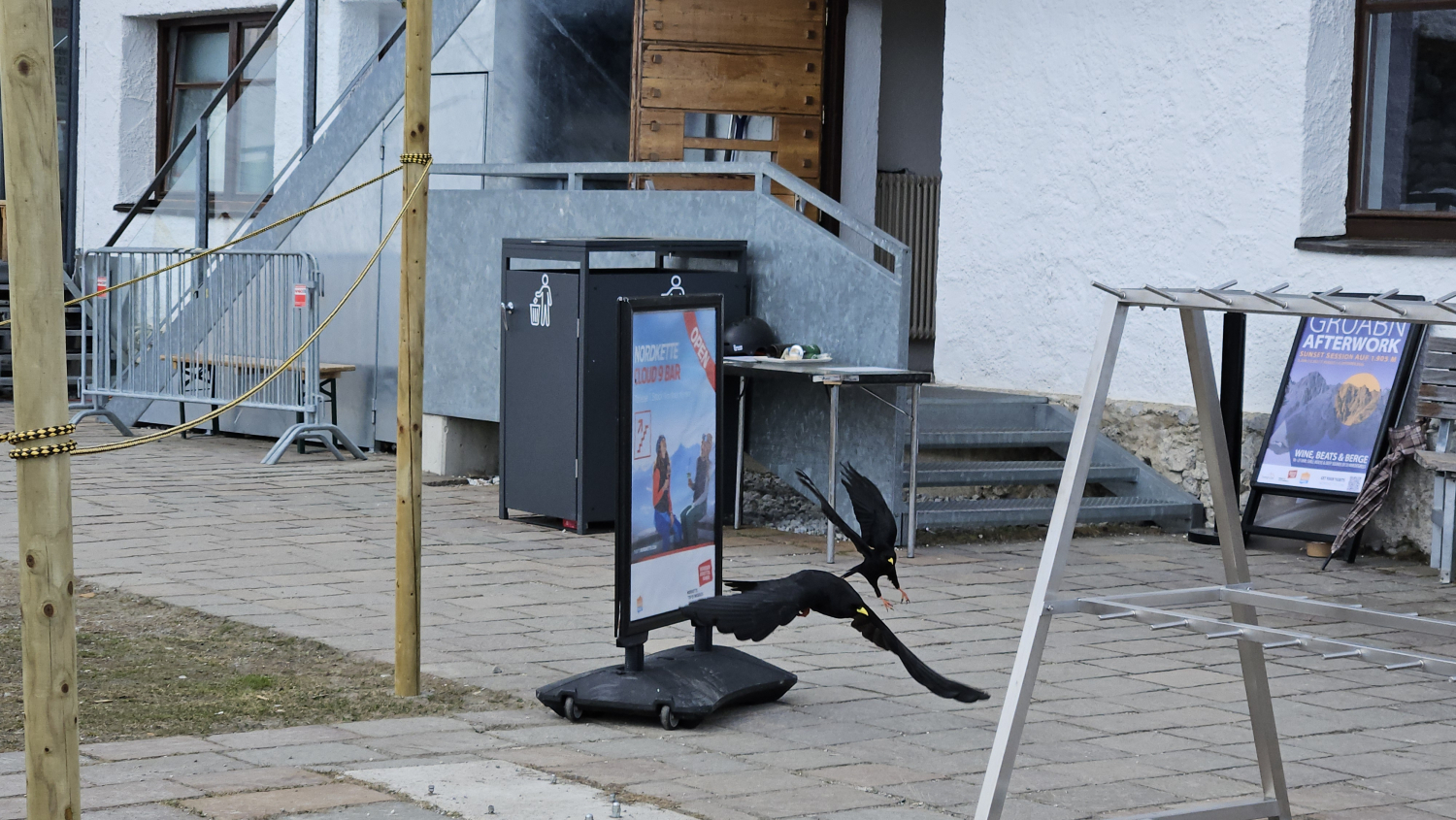
As relatives of crows, jackdaws are intelligent and highly social animals that communicate through calls, body language, and eye contact. They not only recognize individual members of their own species but sometimes even humans—another good reason to be friendly toward them. Especially near tourist attractions like the mountain railway, there’s a high likelihood of encountering these birds. While they primarily forage for insects on the alpine meadows during the warmer months, in winter they specifically target people and their food scraps. Anyone who leaves their plate unattended for too long on the “ Nordkette ” might well lose a bite or two to these adaptable birds.

In the blink of an eye

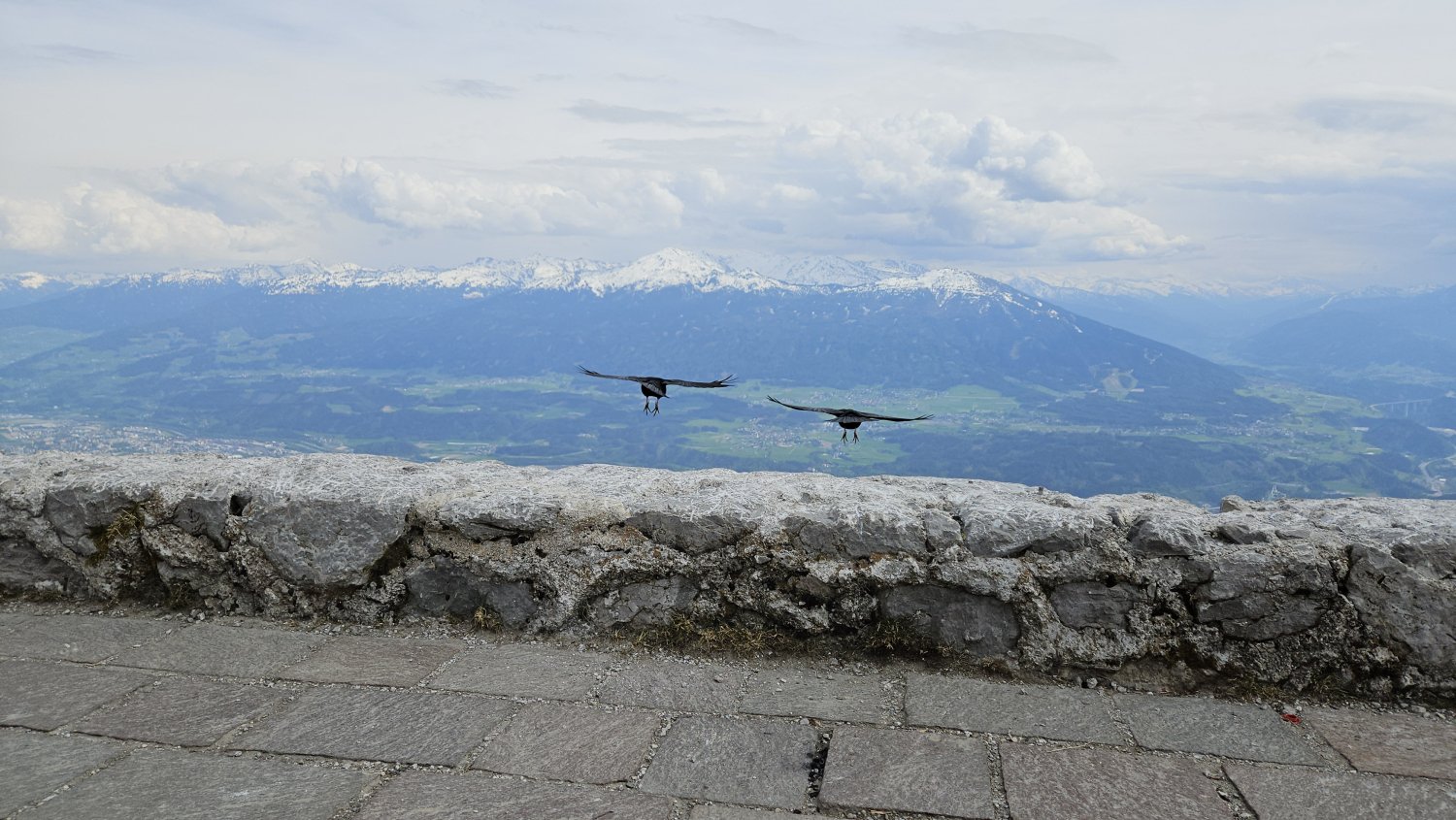
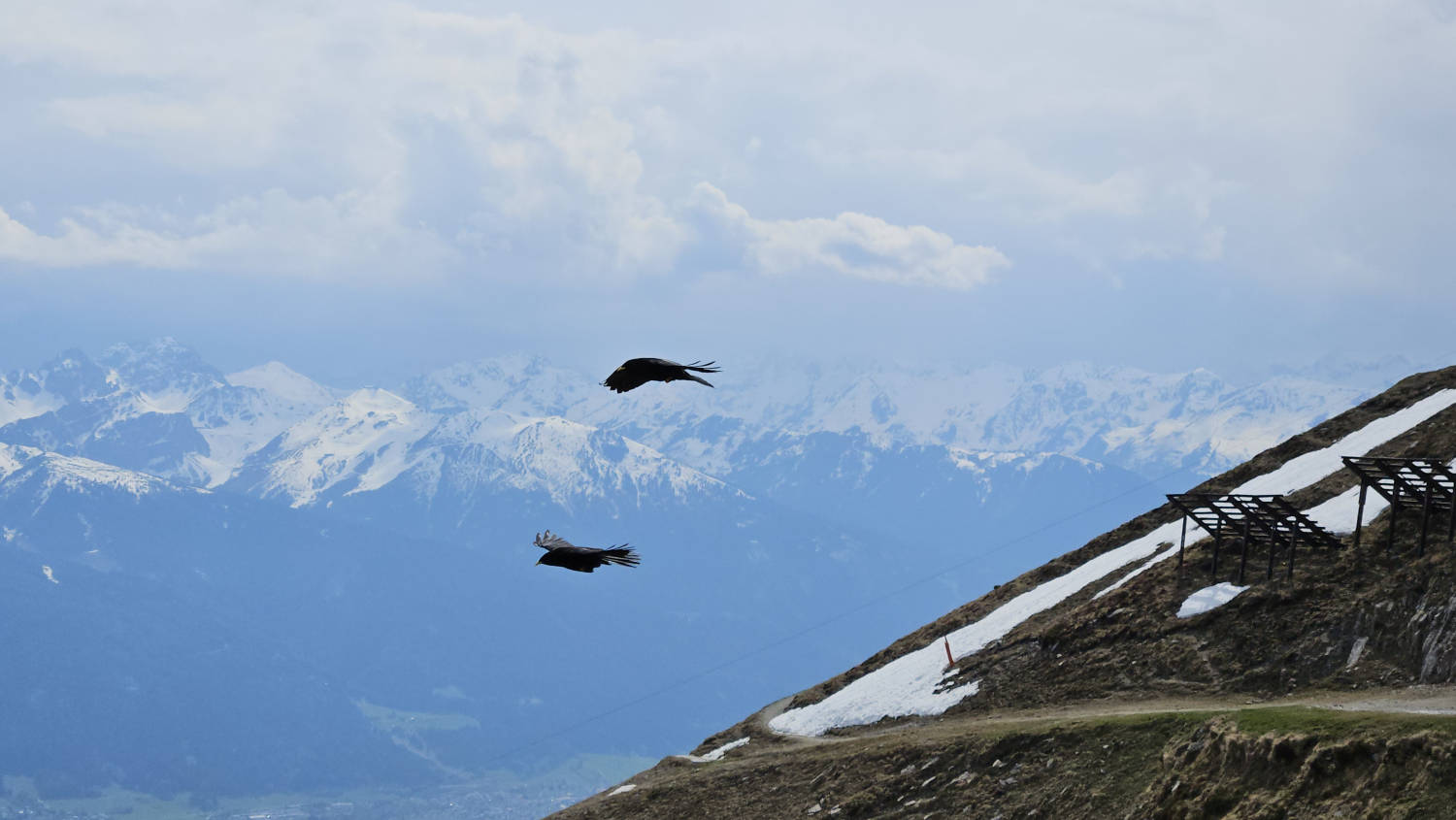
Of course, Alpine choughs can also be found outside the Innsbruck area, up to an altitude of 3,000 meters. They skillfully use the mountain thermals to fly efficiently while conserving energy, and at the same time perform stunts such as playful nosedives. They maneuver effortlessly between rocks, buildings, and trees, and use their group flight to navigate, spot predators, and search for food.
Their agility makes them a popular photo subject. The urge to toss them food or even feed them by hand is well documented in numerous posts from the Seegrube. “That’s exactly what you shouldn’t do,” says Klestil, who considers this a case of misguided love for animals. In my experience, it’s perfectly sufficient to find a comfortable spot, be patient, and let the birds decide for themselves whether they want to come closer. The odds are good.

Photos, unless otherwise noted: Theresa Kirchmair

Similar articles