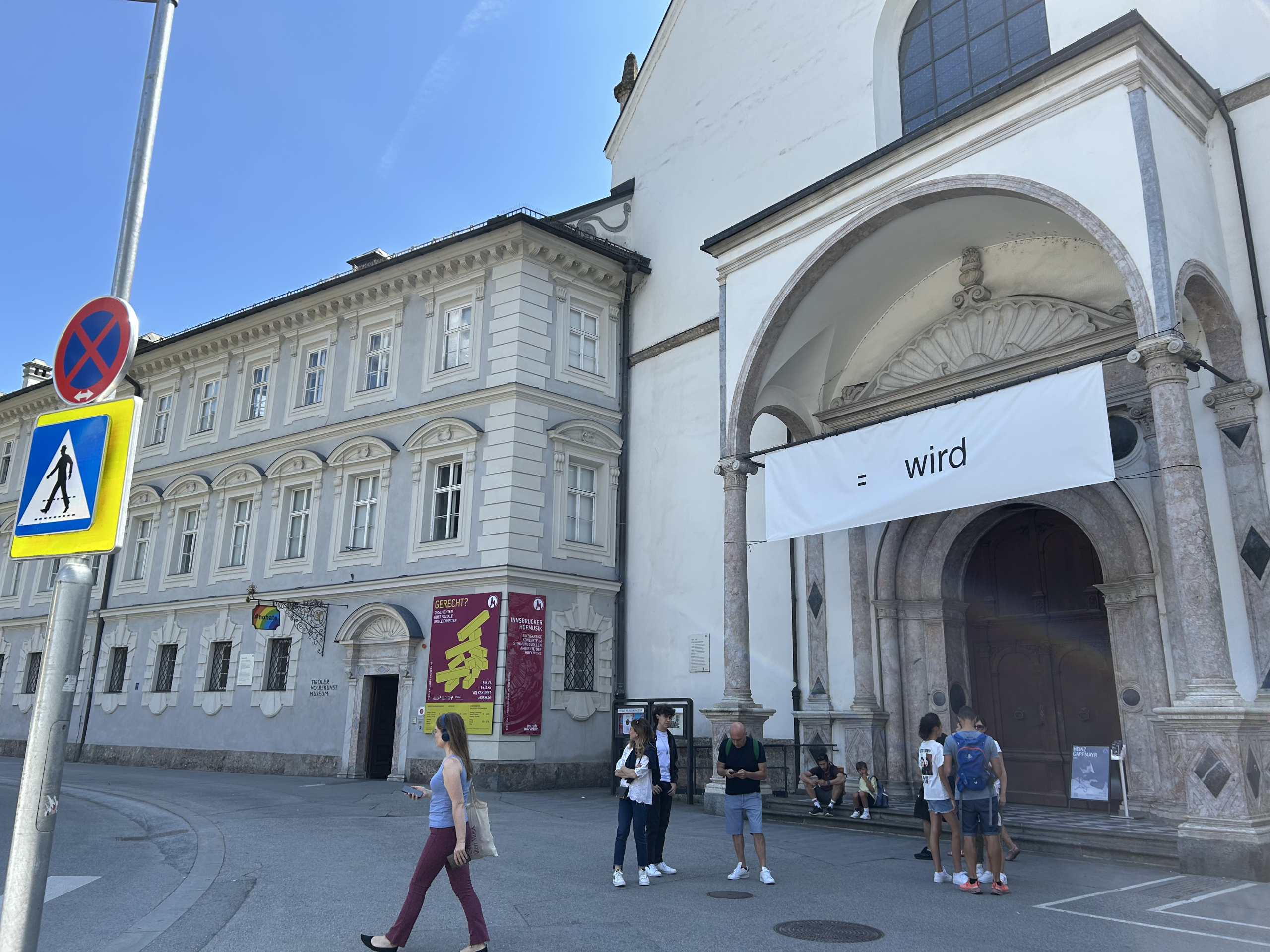
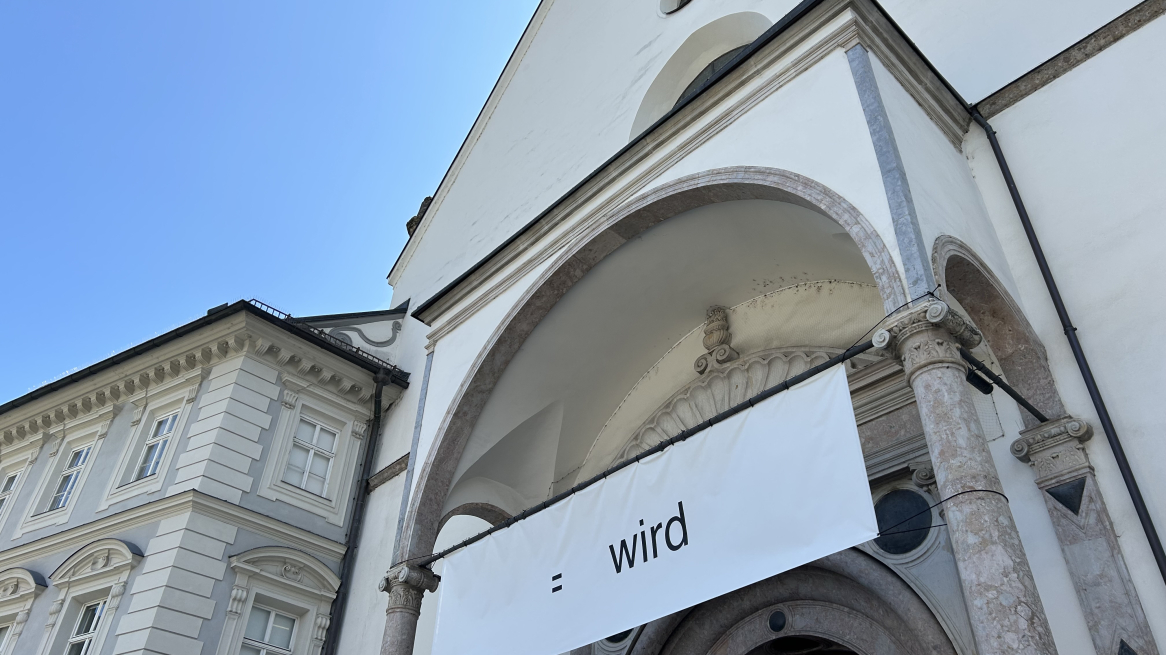
L’opera "Ist wird" di Heinz Gappmayr davanti alla Chiesa di Corte di Innsbruck. Foto © Laura Manfredi.
01 September 2025
#
Post originally written in: Italiano Information An automatic machine translation. Super fast and almost perfect.

Walking around the city, you may have noticed some writing or graphic signs appearing on walls and building facades. Maybe you have noticed them, maybe not. They are works by Austrian artist Heinz Gappmayr. Linear and light, they blend with the surrounding space with which they are able to interact, without imposing themselves. They have at the same time the discreet elegance and strength of thought.
In 2025 Heinz Gappmayr would have turned 100 years old. The Tiroler Landesmuseen takes the occasion of this anniversary to pay tribute to one of the most important artists of Austrian visual poetry with the exhibition "Heinz Gappmayr. 100" in Innsbruck's public spaces. From July 4 to September 28, 2025, ten different locations in the city will feature as many works by the Tyrolean artist. Let's take a walk and see them together.

Stage One: Museum im Zeughaus

There is no set beginning to this tour. I decided to start at Zeughausgasse 1 in front of the Museum im Zeughaus, but you of course can decide to take another tour...
Heinz Gappmayr worked with words and signs, reducing them to a minimum. What he achieves are works that leave the viewer plenty of room to think. Fundamental to fully enjoying his works is to look and then let your thoughts go, without getting blocked by a priori aesthetic judgments. Ready? Let's get going!
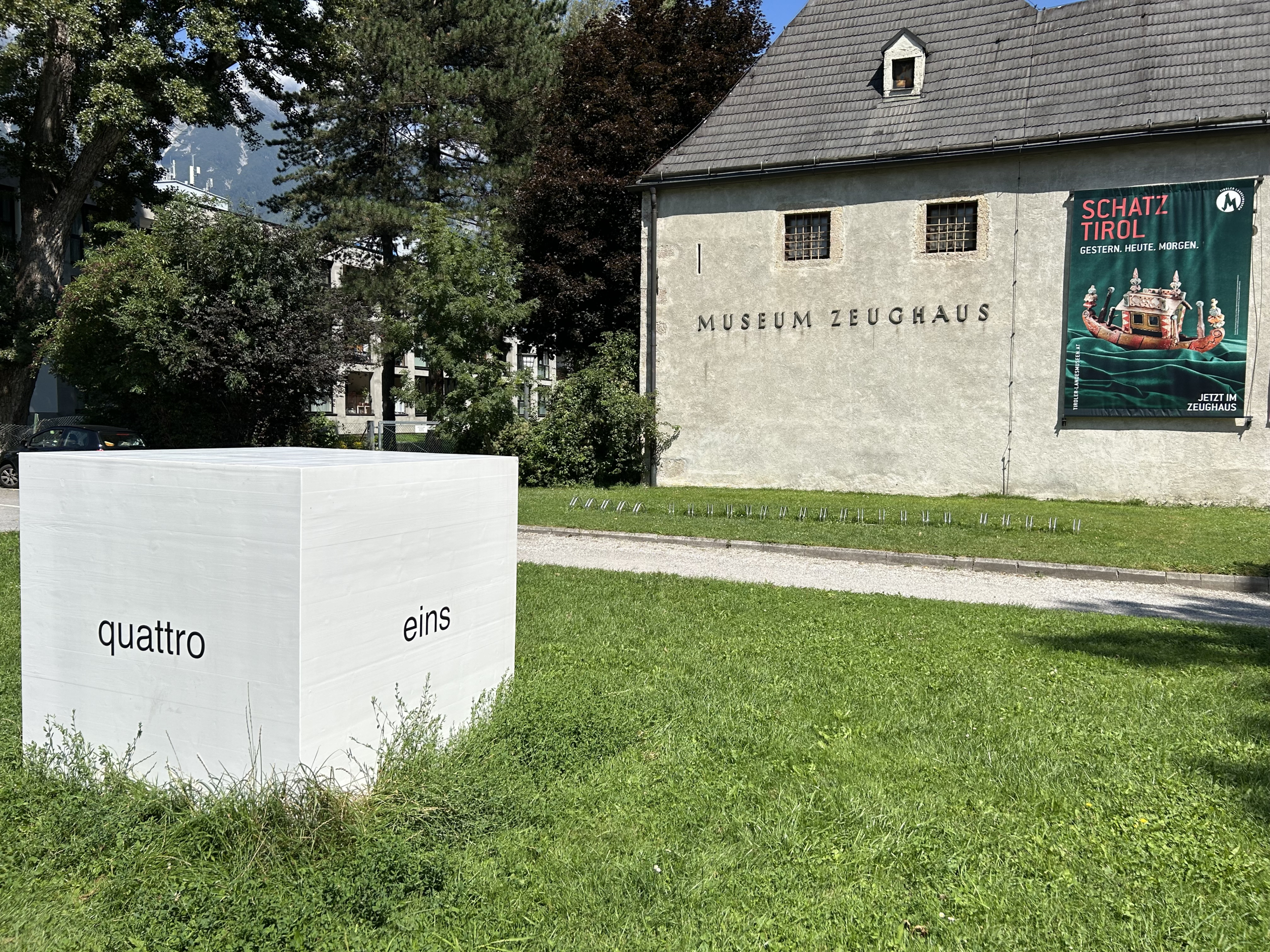
On the lawn in front of the Museum im Zeughaus is a white cube; on the faces of this cube is written the sequence of the first four numbers, which we all know by heart: one, two, three, four. The numbers, however, are not written in digits, but in words. And words in four different languages. We read: eins, deux, three, four. What happens when, by changing some elements, the "spiel" of a sequence we know by heart changes? Perhaps the words in the sequence take on a different meaning?

Stage two: the historic center

From Zeughausgasse we proceed to the historic center and stop at Universitätstrasse 1, in front of the Court Church. Above the portal of the church we read on a banner "= wird."
Wird is the third person singular of the verb werden, which in German means to become, but is also used to construct the future simple. An interesting verb because
é conveys the idea of transforming and becoming and at the same time is projected into the future. Here there is a combination of the mathematical equal sign and a verb that, while in its present form, somehow hints at the future. This work evokes time, the present and the future by assembling different languages together.

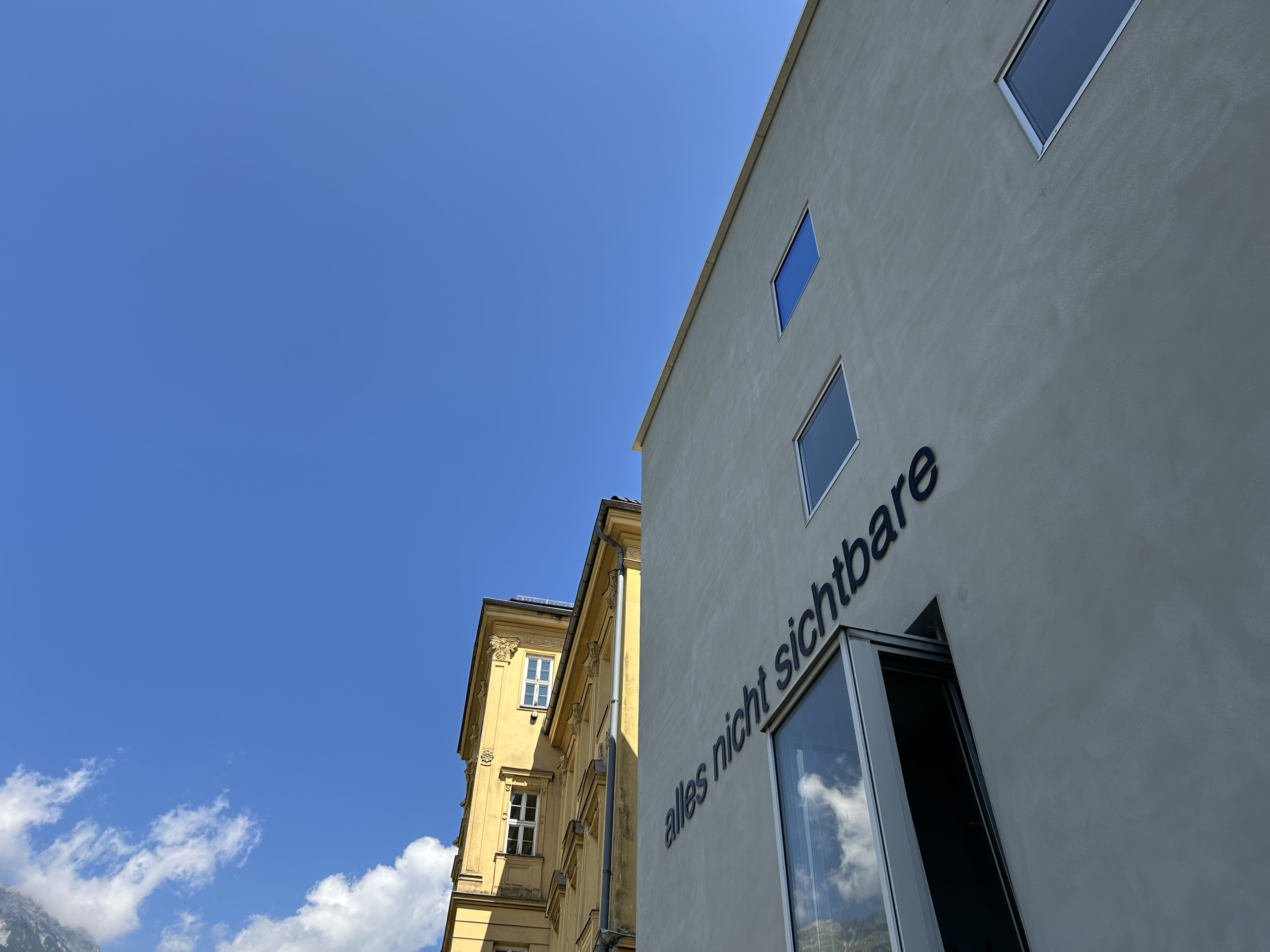
We cross the old town, passing the Golden Roof, in the direction of the Inn River, but stay on this side of the river, without crossing it. Turning right we reach number 8 Herzog-Otto-Strasse. On the facade of a building appears the inscription "Alles nicht sichtbare," which we could translate as "Everything that is not visible." This work makes us think of sight, our privileged organ. Outside our field of vision, but also outside what we are able to perceive with our eyes, how much "not visible" is there? And what is the difference between the visible and the non-visible?

Stage Three: Along Maria-Theresien-Straße

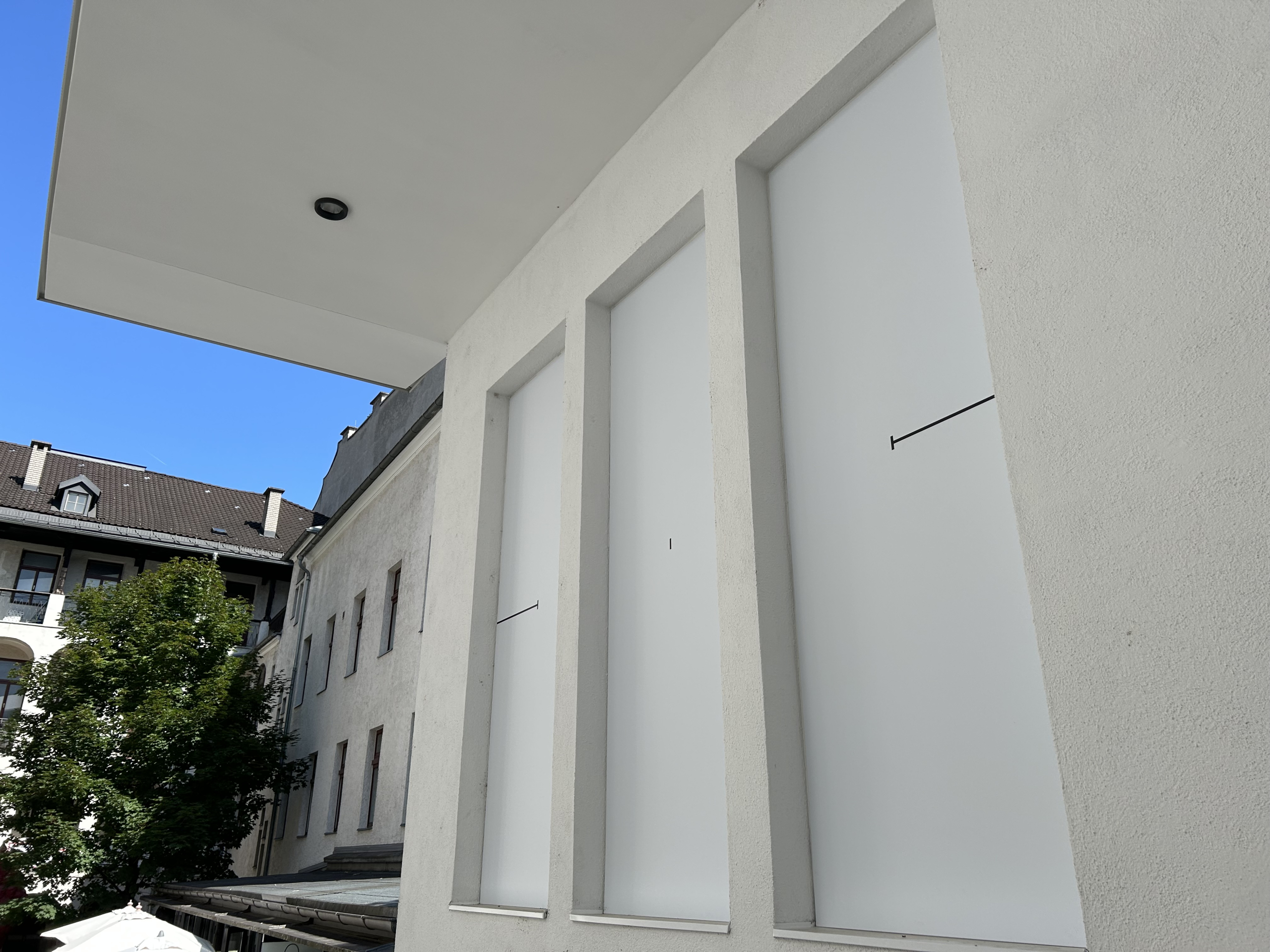
You can now change direction, walk along Marktgraben until you enter Maria-Theresien-Straße. Proceed to number 34 and enter the courtyard. On the stairs leading to the Kunstraum you will find another work by Gappmayr. This time there is no text, but "only" signs. On three side-by-side panels you see a line, a vertical dash and again a line. This work, titled "Vergangenheit Gegenwart Zukunft"(past present future) plays with simple graphic signs in which we tend to imagine a temporal space.

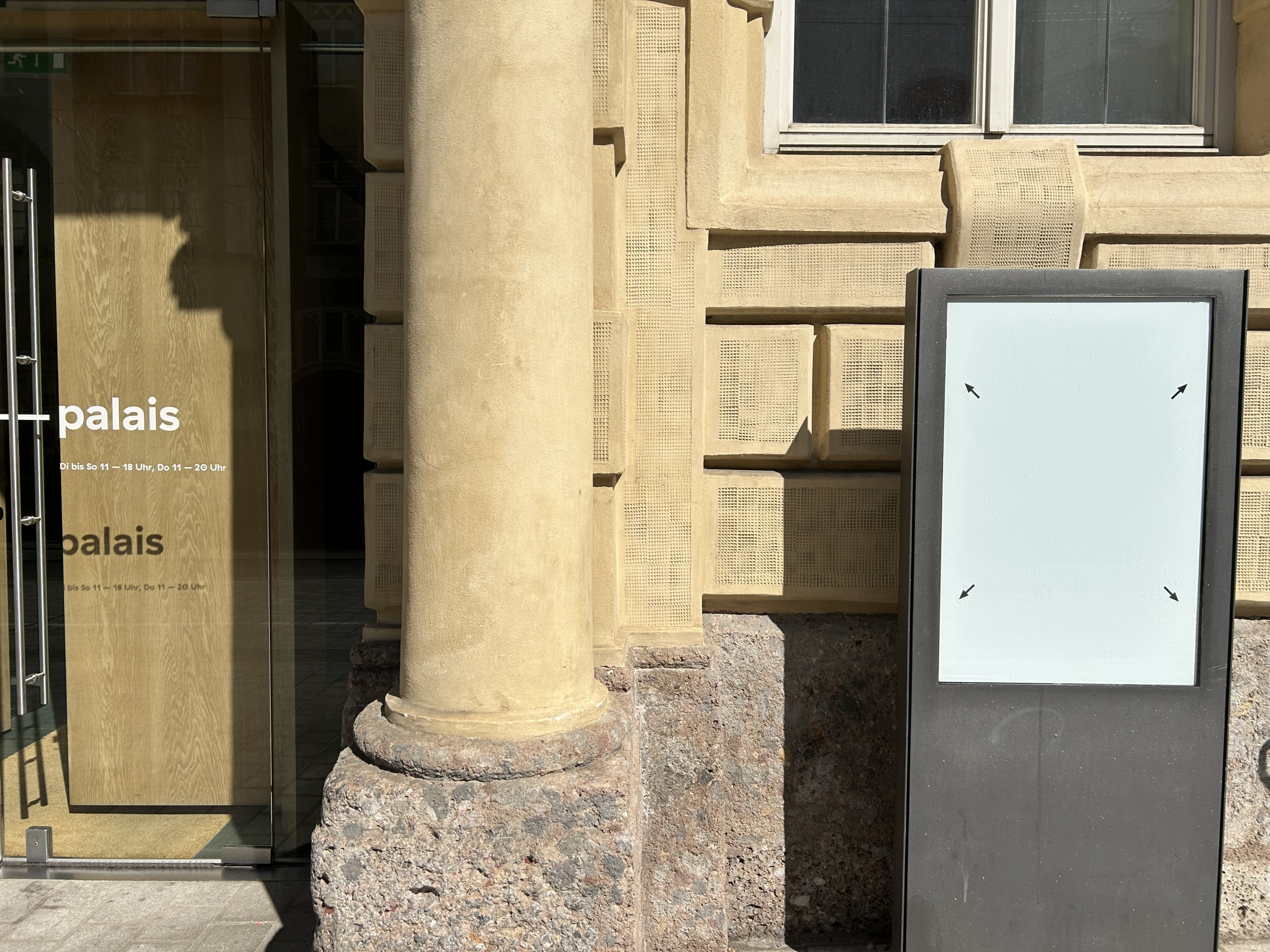
The next work is in front of the Taxispalais, at number 45 Maria-Theresien-Straße. Here the small-format work is placed on a pole to the right of the Taxispalais entrance door. In the work "Vektoren"(vectors) four arrows point to the corners of the sheet. A sense of dynamism is created and the center of the blank sheet vibrates, as if a tension is concentrated in an undefined and intangible center.

Stage four: from the city to Bergisel

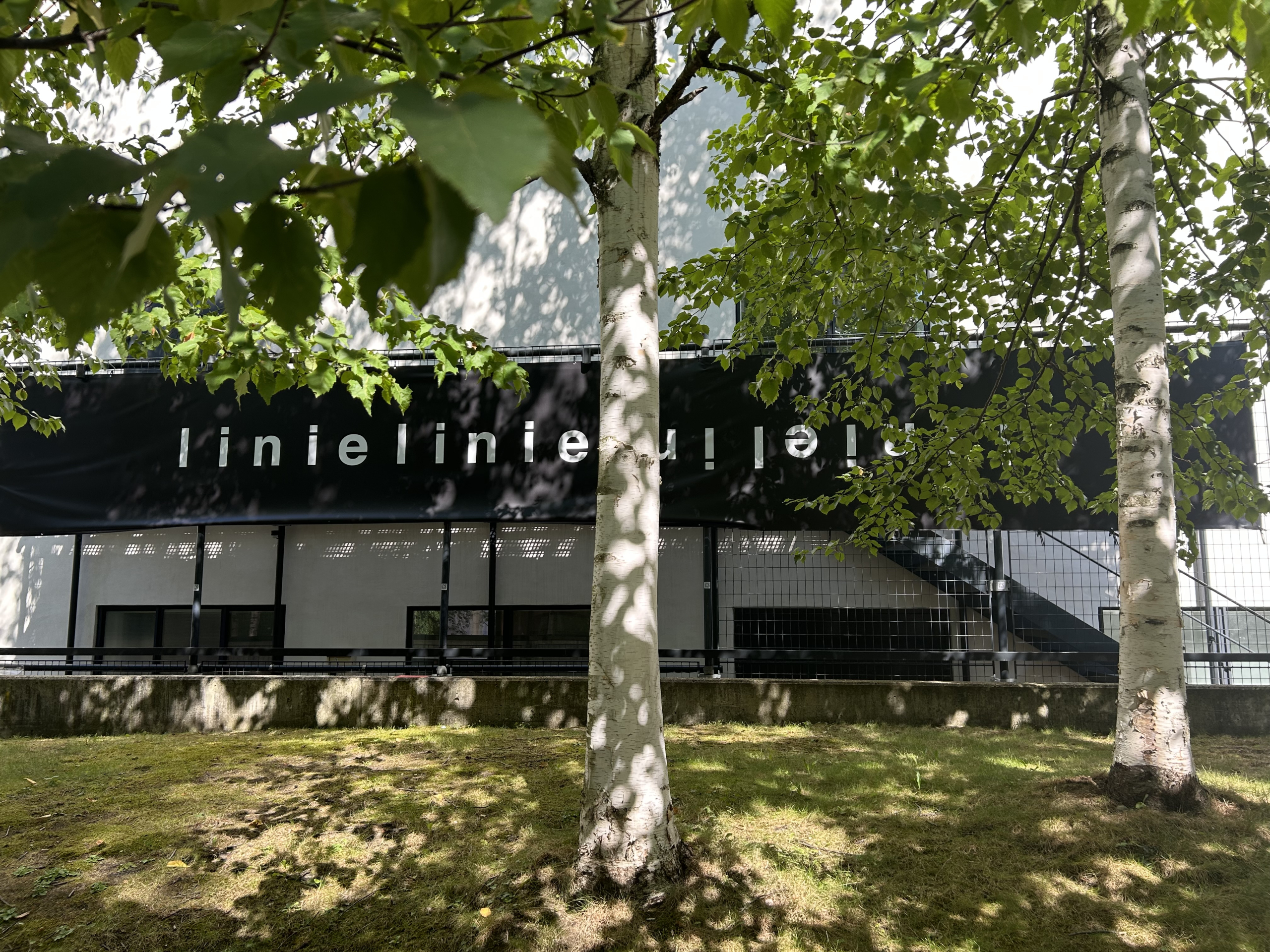
For this stage the distances begin to lengthen. Near the central station, on the entrance to aut.architektur und tirol(Lois Welzenbacher Platz 1) stands the work entitled "Linie"(line). What if a line is not drawn but depicted by the word, running in different directions?

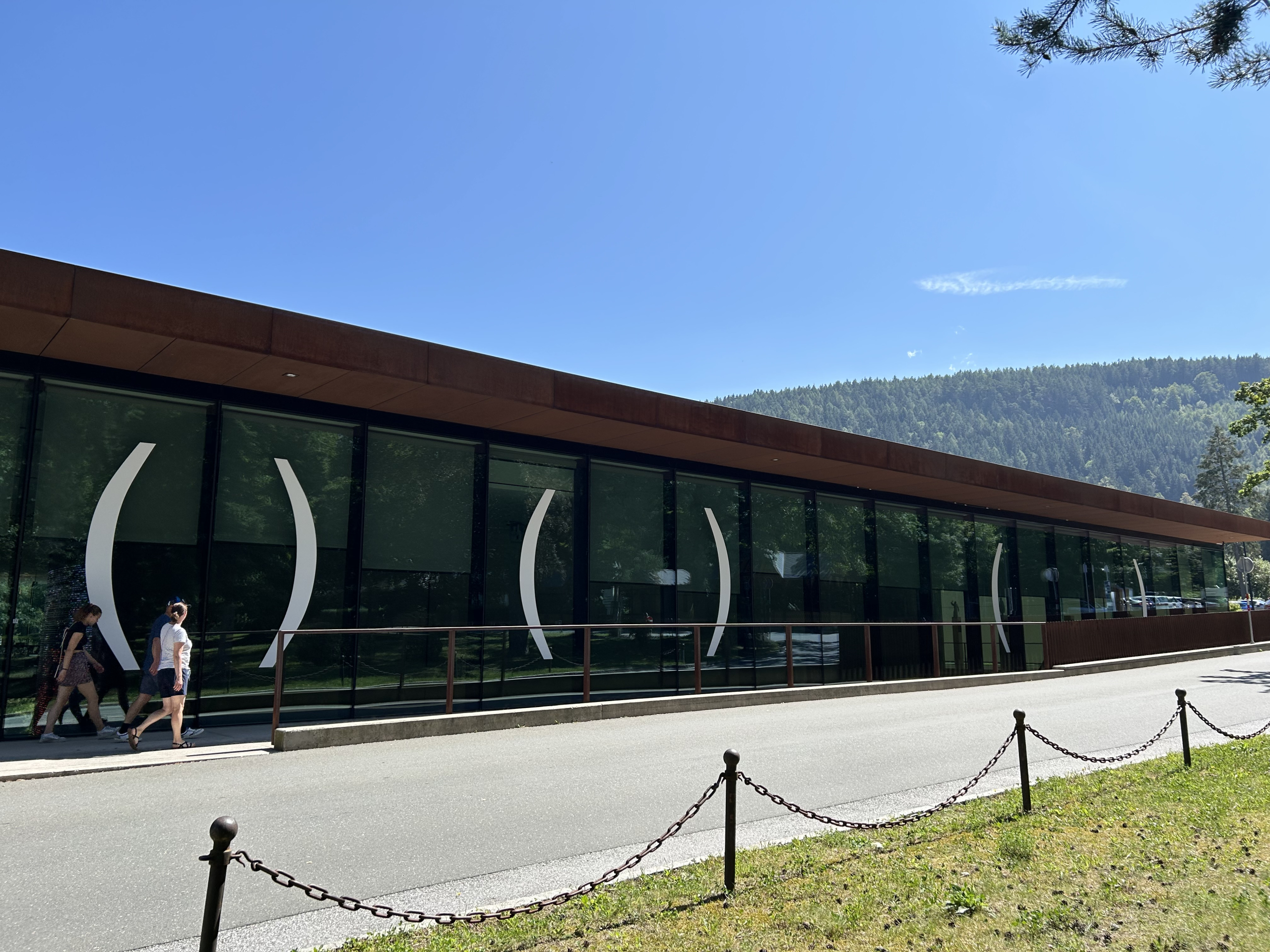
We continue up to Bergisel, where the work "Klammern"(brackets) is installed on the Museum "Das Tirol Panorama"(Bergisel 1-2). Large brackets stand out on the museum's stained glass windows, but there is nothing in between the brackets, only space, which gradually increases from left to right. The content of the parentheses is in the imagination of the viewer and can thus take on multiple meanings. A word of advice: walk along the stained glass window to better appreciate the work.
If you have walked this far, you have earned a break in the park in front of the museum. And before you leave again, enjoy the view of the city and the mountains!

Stage five: out of the center

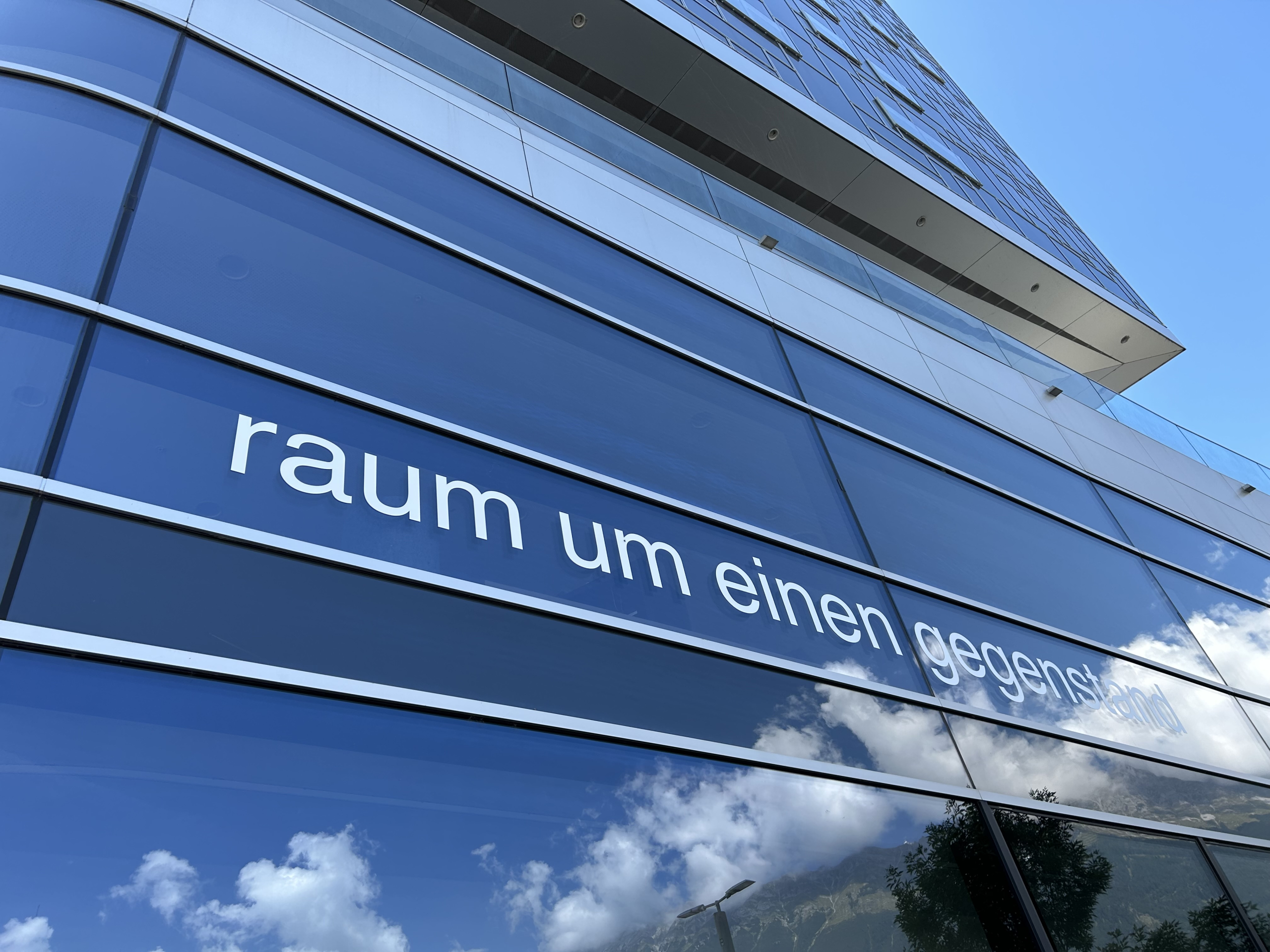
Three other works remain to be seen, but walking to them takes some time. For those who don't want to miss them, perhaps it would be more convenient to take a rented bicycle and take a ride. The works are installed at Stadtbibliothek Innsbruck(Amraser Straße 2), at GEIWI-Turm at the University of Innsbruck(Innrain 52) and at Studio 3 - Institut für experimentelle architektur(Technikerstrasse 21).
At some of these stops (e.g., at the Court Church or Das Tirol Panorama museum) you will also find a small brochure with a list of the works and a map, which can help with the tour. Enjoy your visit!

Useful information

"Heinz Gappmayr. 100"
Outdoor Exhibition in Innsbruck
from July 4 to September 28, 2025

The ten must-see works:
"Eins, deux, three, four," 1990, Zeughaus, Zeughausgasse 1, Innsbruck
"Ist wird," 1969, Hofkirche, Universitätsstraße 2, Innsbruck
"Alles nicht sichtbare," 2005, obermoser + partner architekten, Herzog-Otto-Straße 8, Innsbruck
"Vergangenheit Gegenwart Zukunft", 1992, Kunstraum Innsbruck / Galerie Elisabeth und Klaus Thoman, Maria-Theresien-Straße 34, Innsbruck
"Vektoren", 1993, Taxispalais Kunsthalle Tirol, Maria-Theresien-Straße 45, Innsbruck
"Linie", 1966, aut.architektur und tirol / Archiv für Bau.Kunst.Geschichte, Lois Welzenbacher Platz 1, Innsbruck
"Klammern," 1966, Das Tirol Panorama, Bergisel 1-2, Innsbruck
"Raum um einen Gegenstand," 1978, Stadtbibliothek Innsbruck / Plattform 6020, Amraser Straße 2, Innsbruck
"Gedanke", 1969, GEIWI-Turm / Universität Innsbruck, Innrain 52, Innsbruck
"Echo", 1995, ./studio3 - institut für experimentelle architektur, Technikerstraße 21, Innsbruck

Similar articles