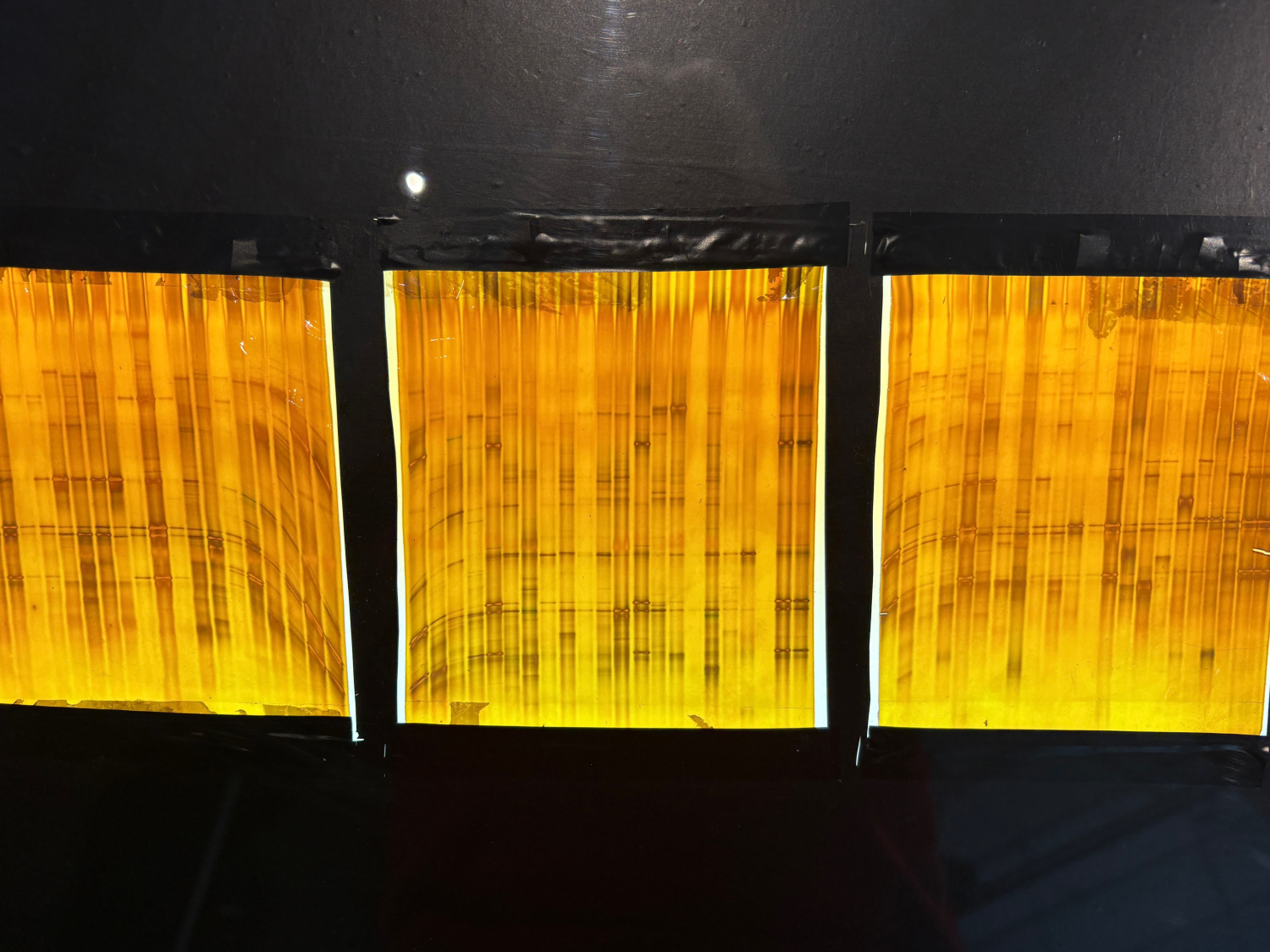
© Bettina Sonntag
A very special kind of museum recently opened its doors in Zirl. It showcases the driving forces behind the evolution of our planet and our food, as well as the work that microbes do to benefit humanity. ‚mikroVERSUM’ This unique “microbe zoo” is well on its way to becoming a new attraction for locals and tourists alike. If it manages to set a new “world record” in the near future, the ‚mikroVERSUM’ will certainly be the talk of the town.
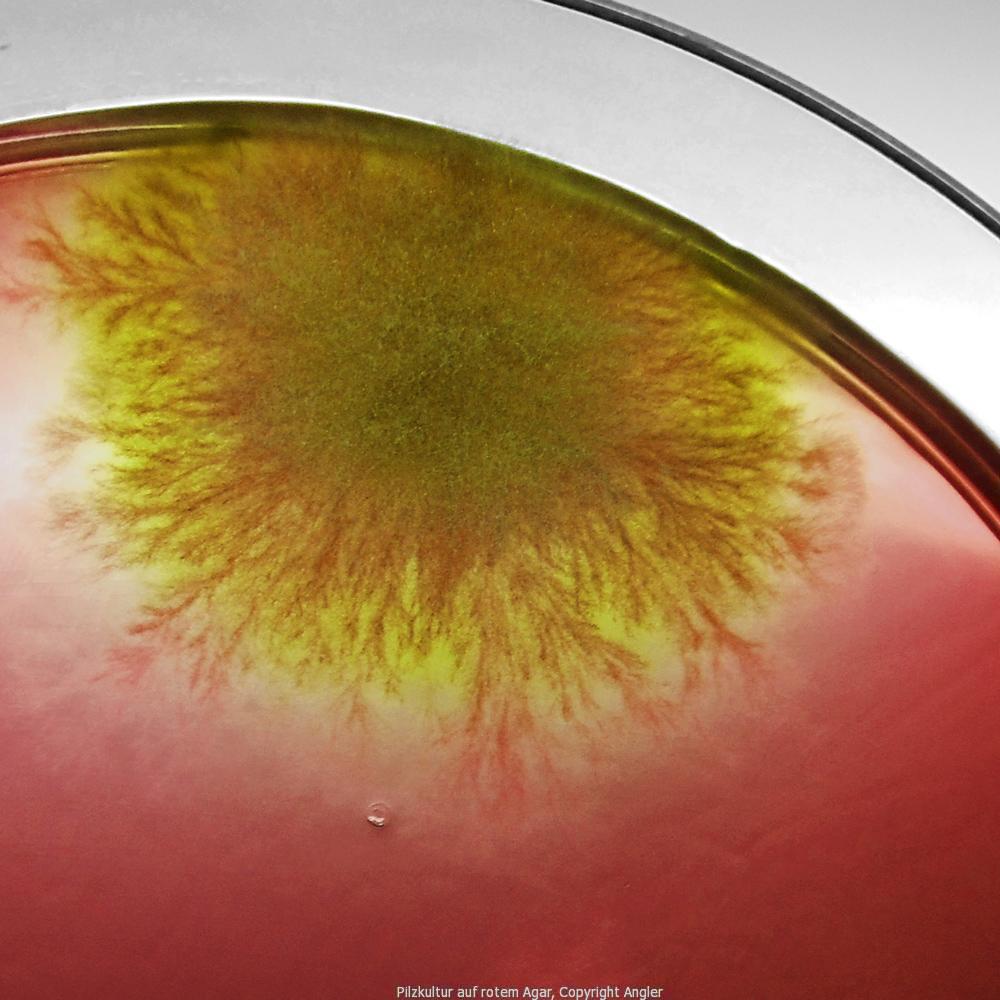
With this opening, our state brilliantly showcases its 80-year history of pioneering work in the field of microbiology. But be warned: this is no traditional museum, but rather a hands-on presentation—in the truest sense of the word—of bacteria, archaea (formerly known as archaebacteria), fungi, microscopic algae, and protozoa.
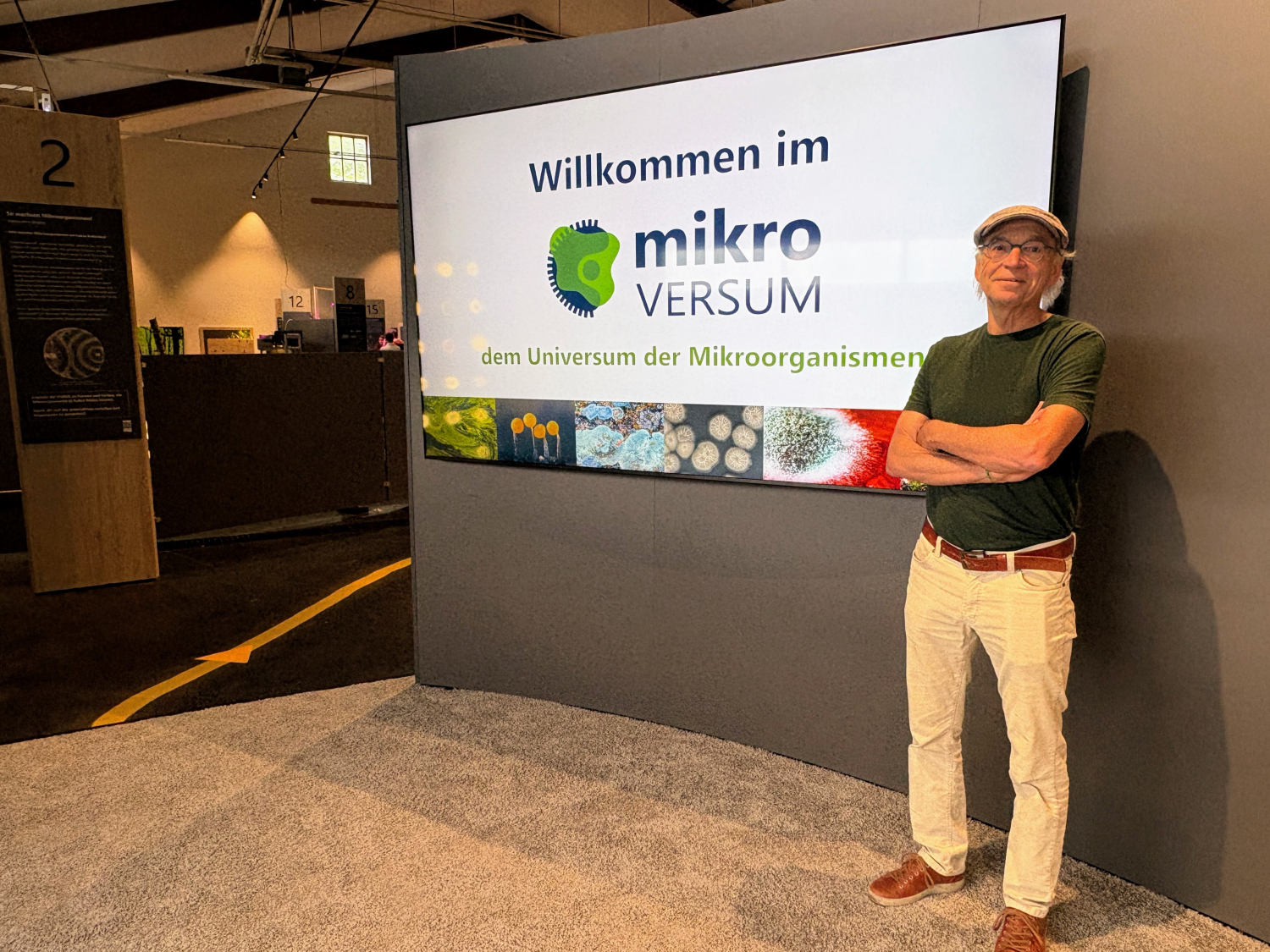
Fourteen years after the initial idea, Prof. Heribert Insam was able to make his dream of a “microbe zoo” in Tyrol a reality.
Curious—and often amazed—visitors enter a large interactive space “inhabited” by hundreds of billions of microbes, which turns out to be a place of wonder and small miracles. It is a completely new kind of “educational hotspot”—designed to be both appealing to the public and artistically sophisticated . It is equally attractive to locals and tourists alike. Following the Botanical Garden and the Innsbruck Alpine Zoo, this attraction brings the third classical discipline of biology—microbiology—into the spotlight.
After 14 years of preparation, the time has finally come
The world’s only museum specializing exclusively in microorganisms is the Micropia in Amsterdam. Other museums and science centers cover microorganisms in part or offer temporary exhibitions on the topic. Fourteen years later, after countless attempts, grant applications, and discussions, the time has come in Tyrol: The ‚mikroVERSUM’ Zirl is the first institution in the German-speaking world dedicated exclusively to the tiniest living organisms. This new knowledge center reflects the work carried out daily by dozens of scientists at the University of Innsbruck and the MCI. With their outstanding expertise, they were also instrumental in the creation of this “microbe zoo.”
Inspired by Amsterdam
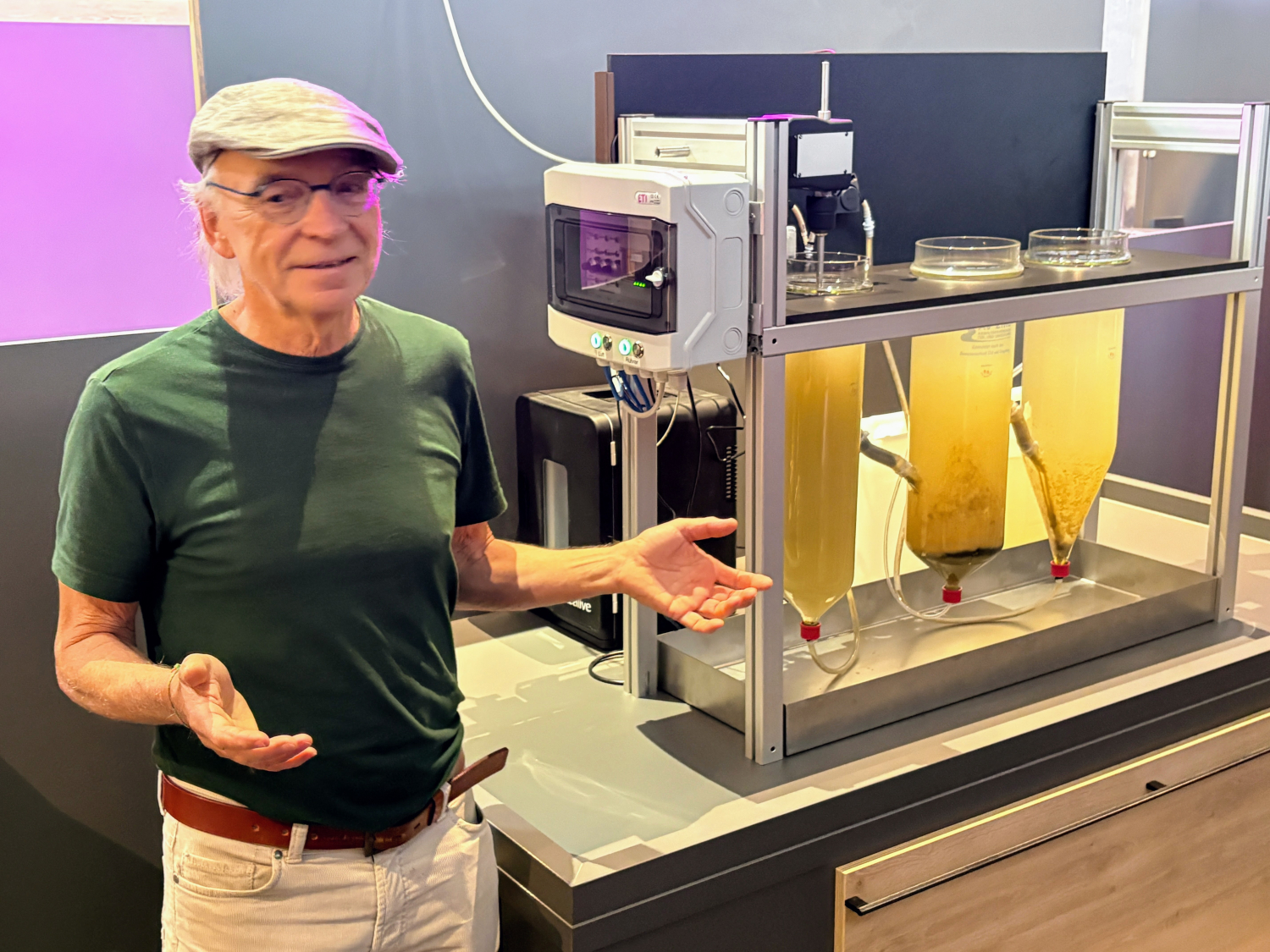
“He really just wanted to ‘explain science in an exciting way,’” the founder of the Zirler MikroVERSUM tells me Univ.Prof. Dr. Heribert Insam during my visit. He’s currently guiding a school class from Kematen through the exhibit. After visiting the microbe exhibit at the Amsterdam Zoo in 2012, it became clear to him: “Tyrol, with its long, globally recognized tradition in microbiological research, could really use a facility like this.” As a sort of preliminary step, he launched his highly interesting website ‚Mikromondo‘ , which also previewed the exhibition’s concept.
It’s not widely known: Tyrol is a pioneer in microbiological research
As incredible as it sounds, Tyrol is a global pioneer in microbiological research and development. In Kundl, Tyrolean researchers Dr. Ernst Brandl and Dr. Hans Margreiter achieved in 1954 what giant corporations, despite spending millions, had failed to do. In a decommissioned brewery that belonged to the ‚Biochemie Kundl‘, they developed the world’s first oral penicillin. It was a milestone in pharmaceuticals.
This success is also based on the fact that the University of Innsbruck has a long and successful tradition in microbiology. Research into how microorganisms live, function, and shape our world began here early on. Notably, the Kundl-based company Sandoz remains the last antibiotic manufacturer in Europe to this day.
Without microorganisms, life on Earth would be no fun
Although the term “microorganisms” occasionally makes negative headlines, life without them is impossible. If all microorganisms—from bacteria to fungi, yeasts, and archaea, all the way to protozoa—were to disappear all at once, life on Earth would essentially be shut down. Human survival isn’t the only thing that depends directly on these microorganisms. They purify water, break down pollutants, make food safe for human consumption, and remediate problems caused by humans. That’s exactly what the “mikroVERSUM” is all about.
mikroVERSUM andIts Exciting Approach to Sharing Knowledge
For Heribert Insam, the microverse fulfills an important educational mission. “Alongside animals and plants, microorganisms are the third major group in the symphony of life. Knowledge about them, however, is far less widespread than that about the lives of marmots and elephants, or plants.” The university professor, now emeritus, is still fondly remembered by many of us: At the suggestion of one of his doctoral students, he has coordinated Austria-wide wastewater monitoring for the coronavirus since 2020. Now continued by the Austrian Agency for Health and Food Safety ( AGES ), the program also regularly collects data on RSV and influenza viruses. This data forms the basis for improved forecasting of disease outbreaks and supports preventive measures. Another Tyroleanmilestone in microbiological research has been set.
Insam has always been committed to a broad educational mission. Whether it’s about where most of our planet’s oxygen comes from, how many microbes live in the human body, or how to harness them to generate energy—these are fascinating questions, and the answers can be found at mikroVERSUM.
During the COVID-19 pandemic, Prof. Insam extrapolated the “infection rate” of the local population based on analyses of wastewater treatment plant effluent. The microVERSUM illustrates the work of the microorganisms that are, in effect, used for wastewater treatment.
The “Microbe Zoo”
The vast range of microbial functions is presented across 31 “stations.” The beginning of the tour—depicted as the start of the day—is thoughtfully designed for educational purposes. Questions such as who provides the majority of the world’s oxygen (it’s cyanobacteria in the world’s oceans) or what is responsible for the taste and quality of breakfast serve as a gentle introduction to the world of fungi, yeasts, and bacteria.
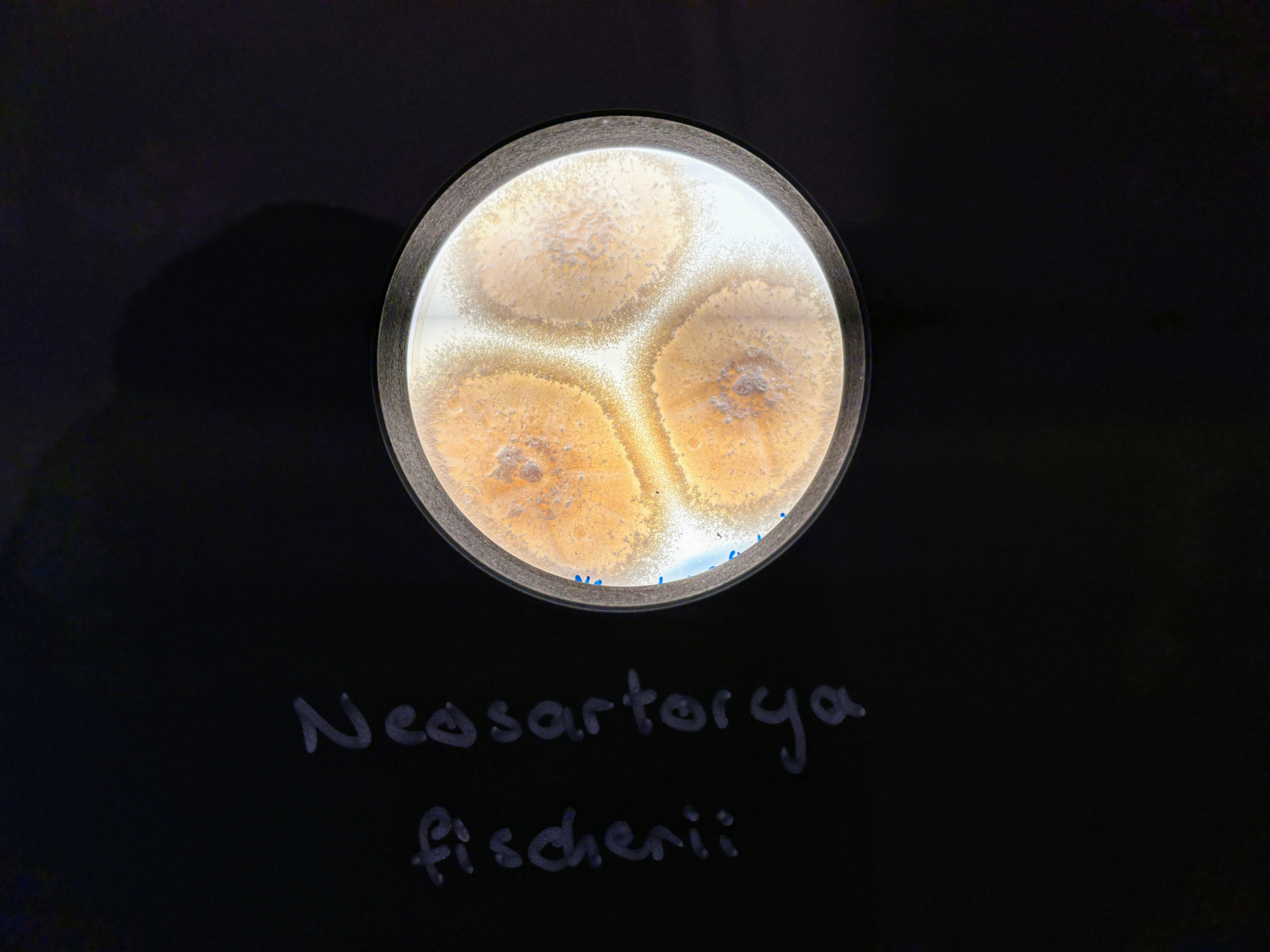
The tangible, universally visible consequences of microbial activity in food production, wastewater treatment plants, forests, or in the stomachs of our cows are a virtually endless topic. It’s striking to see what a breakfast table looks like after a few days, when mold begins to grow on the food. In the forest, it is bacteria and fungi that break down leaves and wood. A “leaf column” vividly demonstrates how, without the work of wood-decomposing fungi, our forests would be covered in meters of leaf litter after just a few years.
Potential for the Future
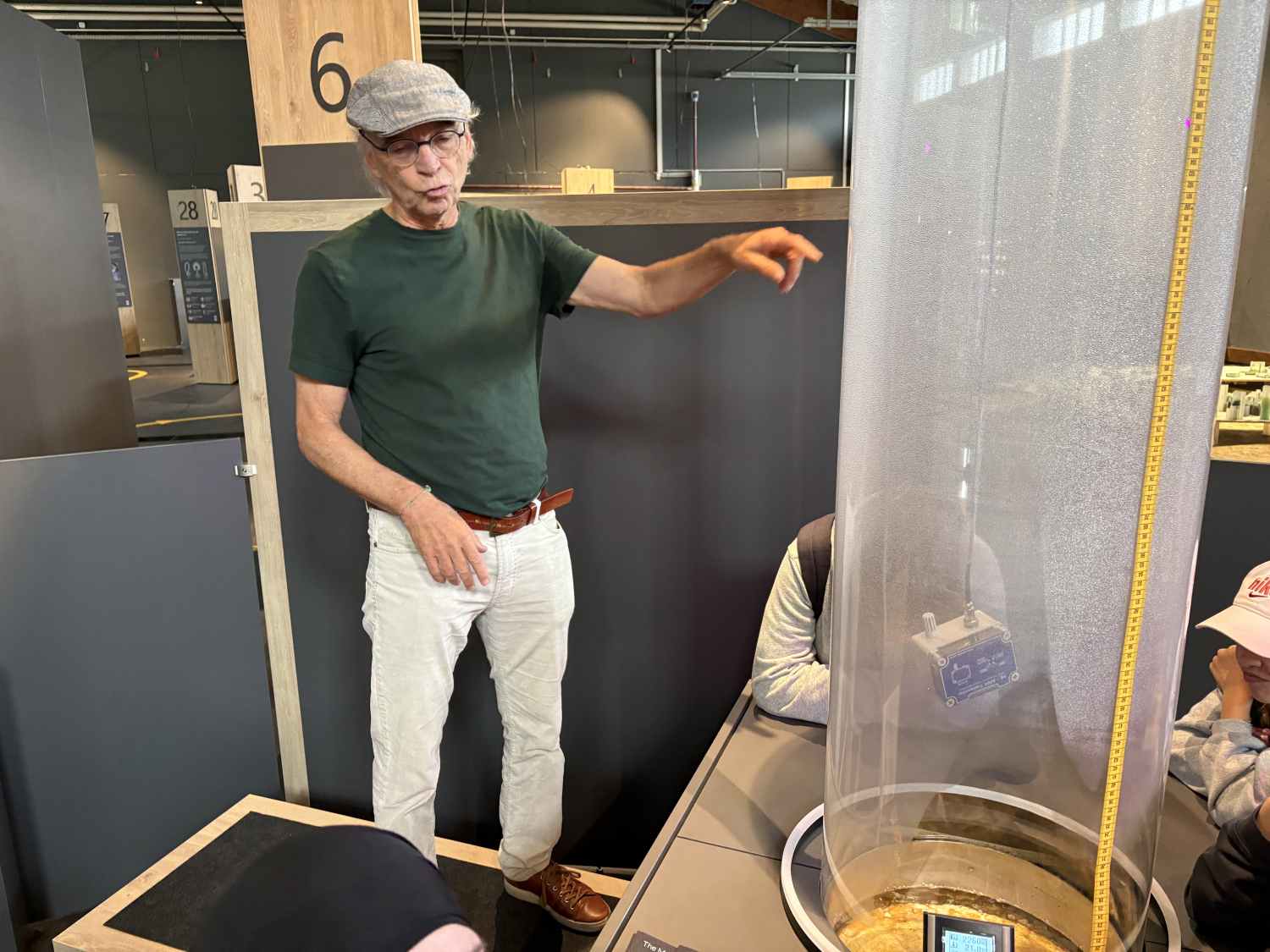
There is no shortage of visions for the future either: Microbes are not only capable of producing energy or securing the food supply in a city of the future. A world record attempt at the ‚mikroVERSUM‘ is also indirectly related to food production. In collaboration with the renowned Innsbruck Mushroom Research Center ‚Glückspilze‘ , the largest known Reishi mushroom to date is set to grow in a Plexiglas column. In China, it is known as the “mushroom of immortality.”
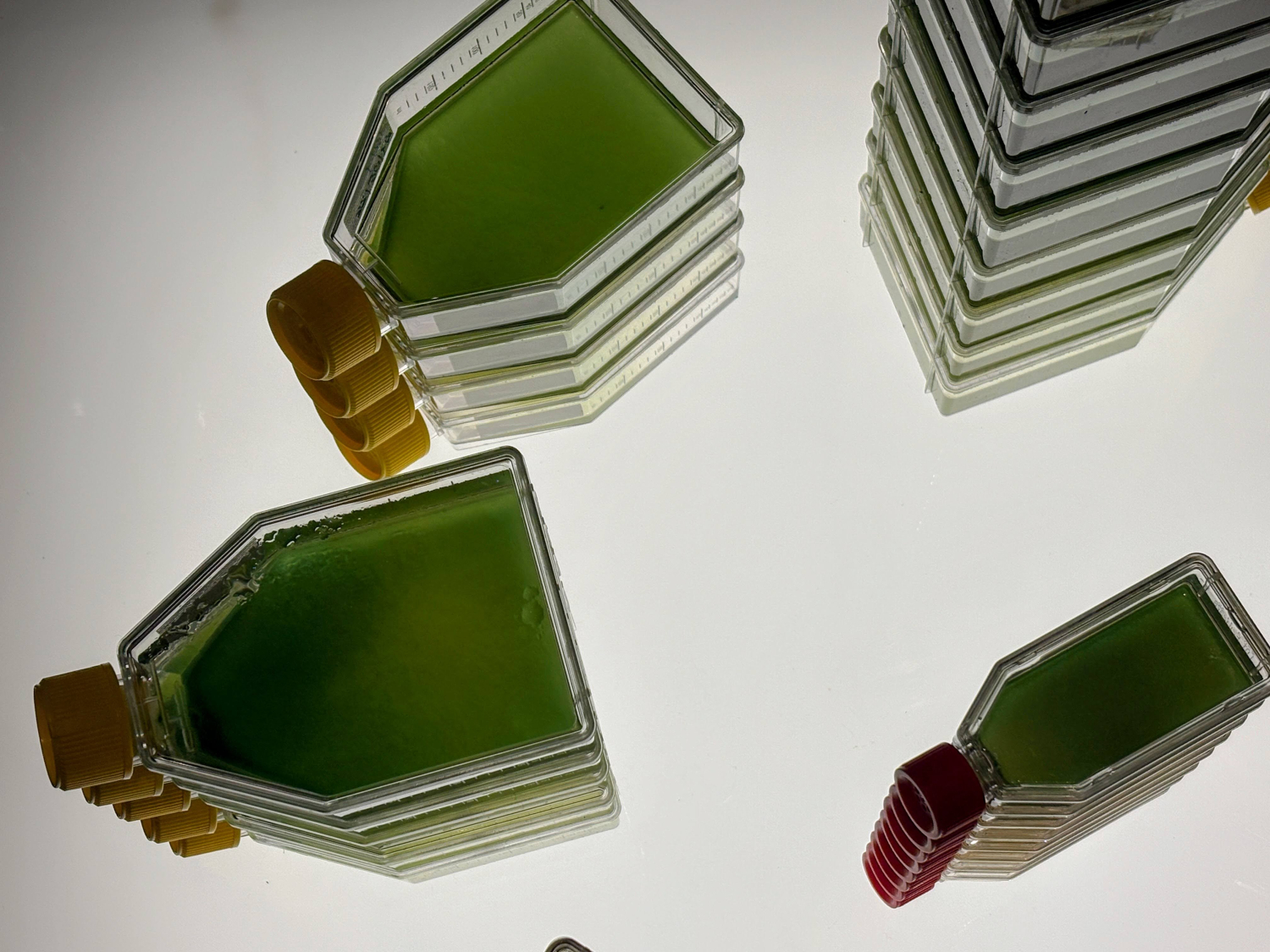
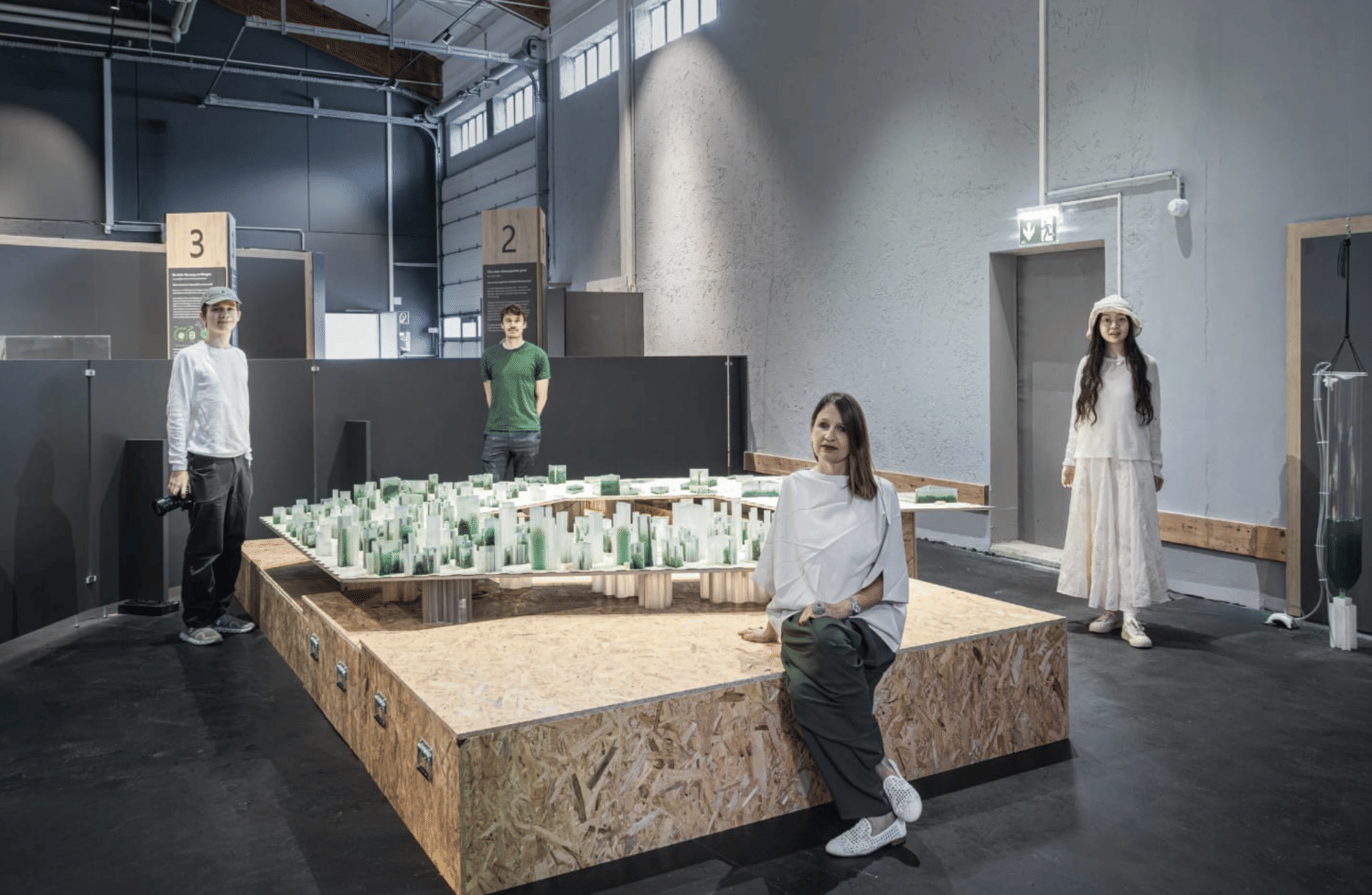
An “Algae Show” at the mikroVERSUM—artistically designed in a highly engaging way by Univ. Prof. Claudia Pasquero—impressively showcases the capabilities of microalgae: Not only do they produce oxygen, but they can even generate energy. Spirulina algae are also the new superfood.
The Reishi mushroom that is expected to grow to a world-record size is growing in this Plexiglas tube.
From the very beginning, and Judith Ascher-Jenull have been committed to connecting art and architecture with science. It is left to two art installations to depict the global spread of microbes. In one of them, a globetrotter from Innsbruck collected 365 soil samples in test tubes during a year-long bicycle tour from Innsbruck to Laos; these samples were subsequently analyzed scientifically. The result: microbial activity is similarly intense worldwide, though the proportion of bacteria present varies by species.
Wolfgang Burtscher cycled from Innsbruck to Laos and collected 1,000 soil samples. This made it possible to study the differences in microbial communities in various regions. The results are presented in mikroVERSUM.
A fun fact to wrap things up: The “ ‚mikroVERSUM‘ ” even has a sort of “zoo caretaker” in the person of Mag. Clara Mühlegger. She “feeds” the microbes, regulates their water supply, and is the “good spirit” of the exhibit. So the museum really is alive.
Important Information
mikroVERSUM KulturLabor was established through a collaboration between hollu and the University of Innsbruck. It is located on the hollu campus in 6170 Zirl and is just a few minutes’ walk from the local train station. (See map below).
Hours of Operation
Mon–Thu 8:00 AM – 4:00 PM, exclusively for registered guided tours and workshops for school groups
Fri–Sun, 12:00 PM – 6:00 PM, open to the public with free admission.
Contact for schools and workshops: [email protected]
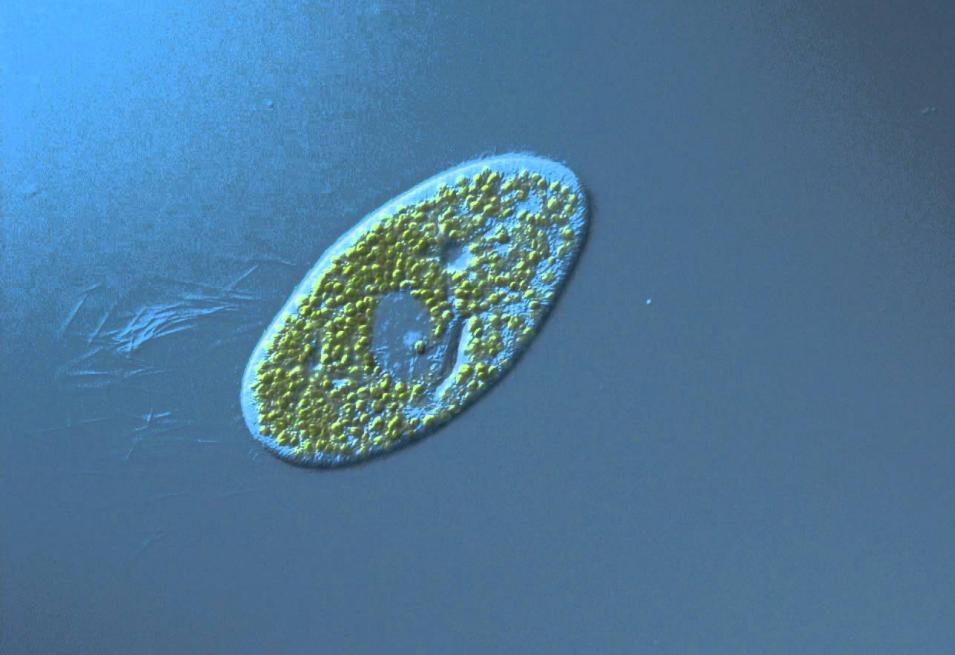
By the way, the cover photo shows a ciliated protozoan, commonly known as a “slipper animal.”
Show me the location on the map
A volunteer at the "Schule der Alm" alpine farming school, cultural pilgrim, Tyrol aficionado and Innsbruck fan.
Similar articles
Anyone who attended the 2019 premiere of the play “Verkaufte Heimat” at the Tiroler Volksschauspiele will feel…
Spring brings a craving for things to do and be out and about--why not take a tour…
The name of this landscape alone exudes a mysterious magic: St. Moritzen. Located to the west…
the handpan The Handpan - a more generic term for a Swiss invention first known…