01 April 2026
#
Post originally written in: Deutsch Information An automatic machine translation. Super fast and almost perfect.

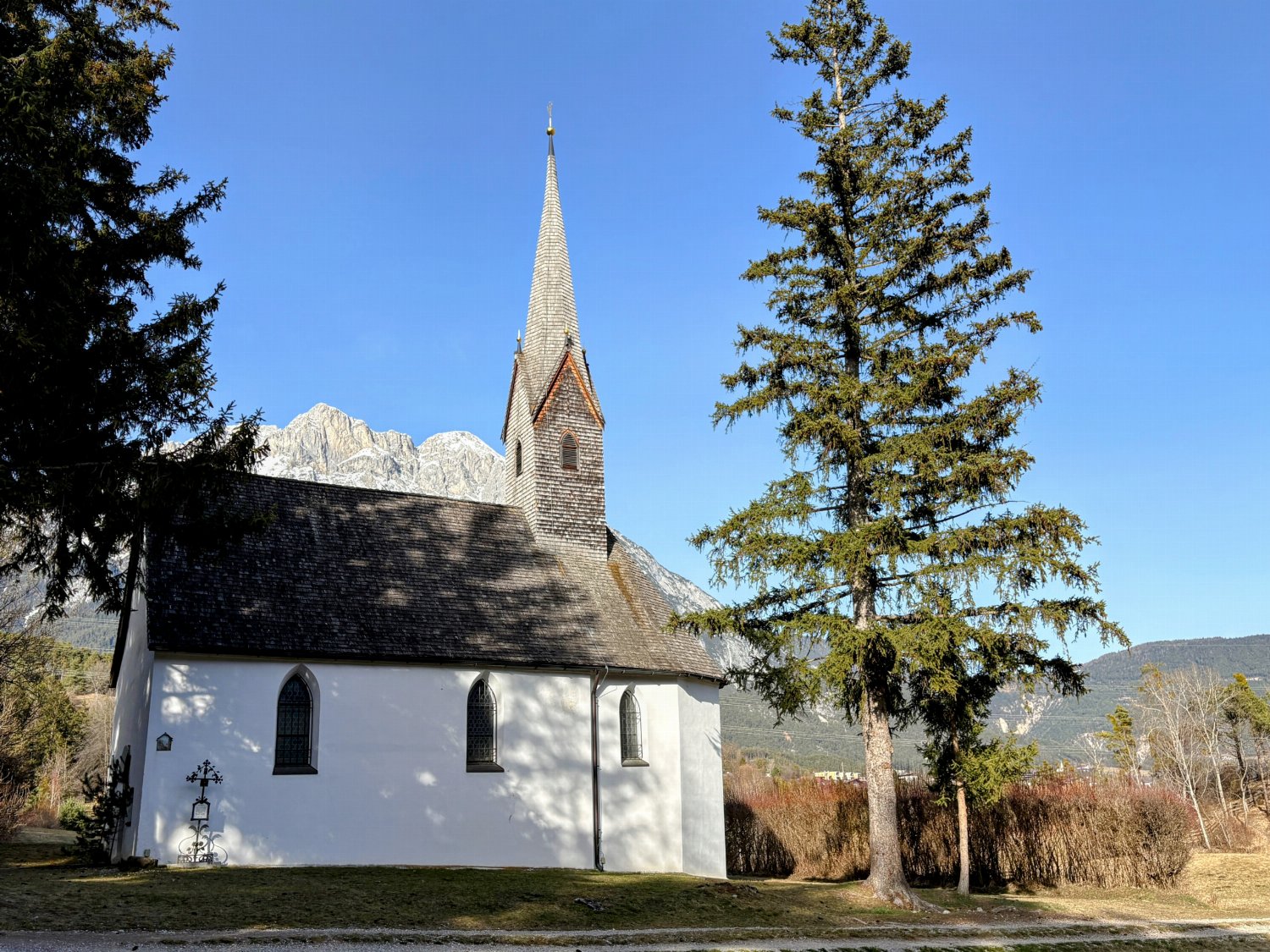
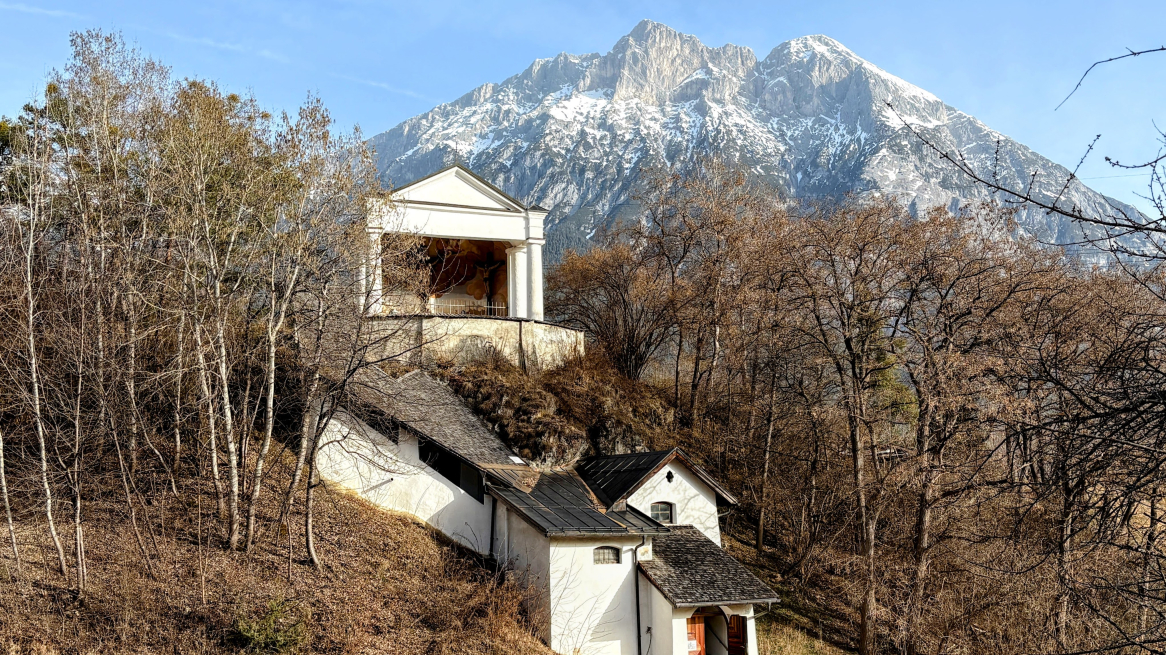
The name of this landscape alone exudes a mysterious magic: St. Moritzen. Located to the west of the market town of Telfs, the hilltops surrounding a small pilgrimage church are shrouded in an enigmatic aura. Mystically complemented by the monumental towering mountain range of the 'Hohe Munde'. A spring walk through this spiritually powerful landscape has been a recurring ritual for many people for thousands of years. How do we know this? From an excavation ten years ago, during which a late Latène cult site was uncovered at Schlossbichl in St. Moritzen, the forerunner of today's Christian pilgrimage site.

The pilgrimage church 'St. Moritzen'

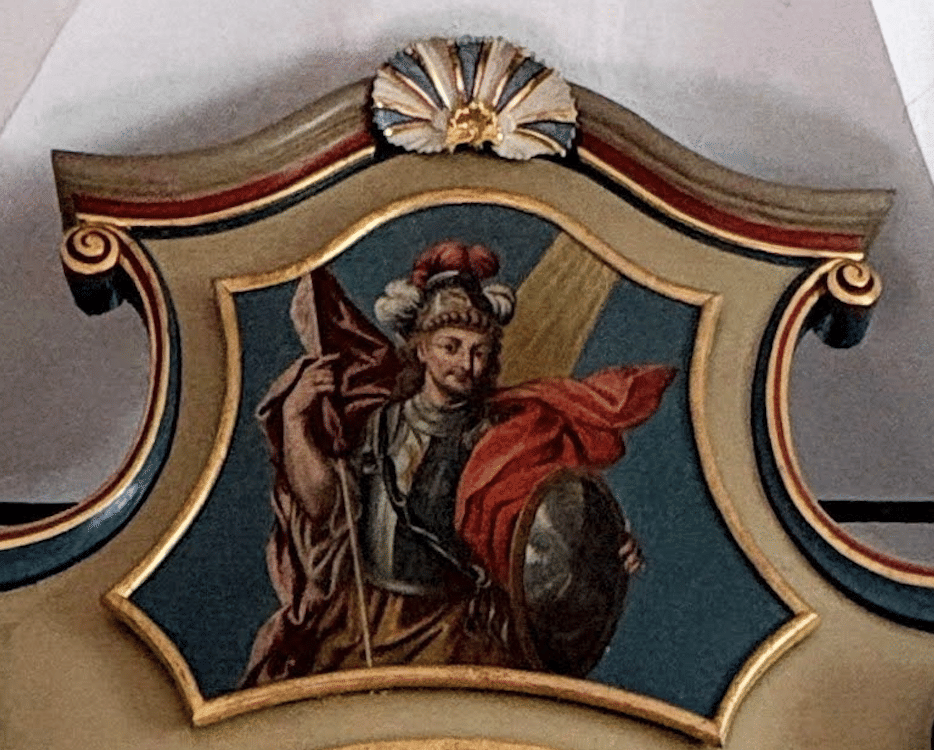
One question needs to be answered first: what is the name behind St. Moritzen? The answer is relatively simple: it is the Tyrolean name for the 'Place of St. Maurice', in short 'St. Moritzen'. Highly revered in France in particular, 'St. Maurice' was a commander of a Roman legion, presumably from Egypt and already a Christian, who was ordered to fight against Christians around 300 AD. Together with his legion, he refused to obey orders, whereupon he was executed along with his legion. Consequently, he is venerated as the patron saint of the army (especially the infantry!) and of knife and weapon smiths. He could no longer defend himself against this...

St. Mauritius and the Holy Lance

The patron saint of knives and weapons can be explained. In the High Middle Ages, he gained legendary significance due to the assumption that he was in possession of the Holy Lance. It was the lance with which a Roman soldier stabbed Jesus in the chest on the cross. However, it is invoked by devout Catholics for more mundane ailments such as ear ailments, obsessions, gout and sick children.

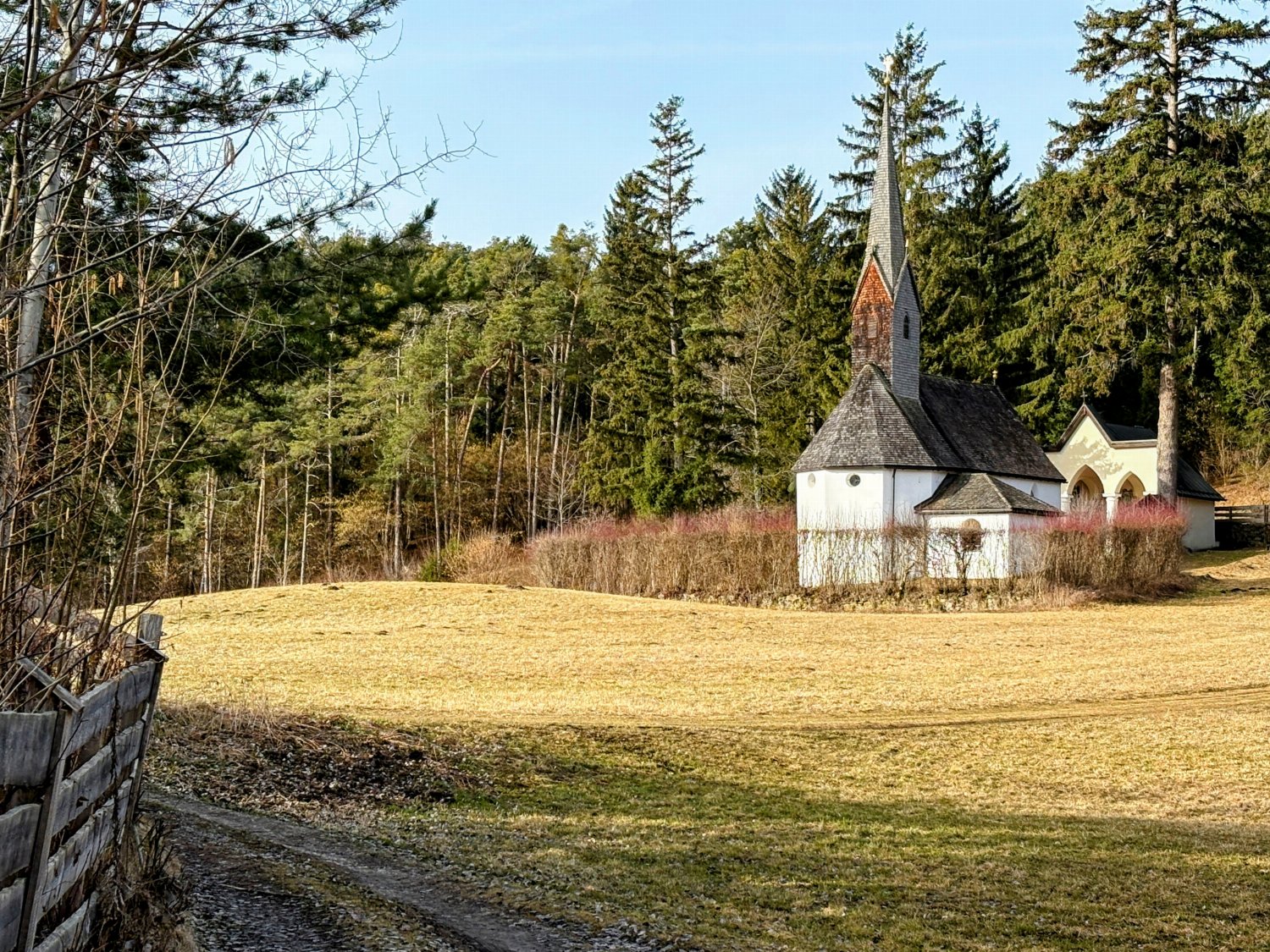
At the heart of this scenic jewel is the little pilgrimage church of St. Moritzen with a burial chapel in front of it and, a little further away, a Calvary that is unique in Tyrol with the chapel in which the 'Moritzner Muttergottes', venerated in Telfs, has her place of honour. The entire ensemble is located at the foot of the so-called 'Schlossbichl', where, according to local legend, 'Eben Castle' once stood. A legend whose real foundations were virtually uncovered during excavations in 2015 and 2017. The Schlossbichl turned out to be a prehistoric cult site. It can certainly be described as a precursor to today's pilgrimage church. People from the late Bronze Age and subsequent Iron Age, as well as the Romans, worshipped their gods here.

The Moritzen white horse and its golden key

There has been no lack of references to the prehistoric past of St. Moritzen. For centuries, the legend of the 'Moritzenschimmel ' has told of a 'treasure' to be unearthed.

It is said to have been a carter from Nassereith who once gave his horses and their heavy carts a rest at the Wendelin Chapelabove the little church of St. Moritzen. Until he was woken by their neighing. He saw a bright light emanating from a shining white horse with a golden key in its mouth. It was said that whoever was the master of the key would have access to a treasure chamber of the former 'Schloss Eben' and could call everything they found their own. (Today we know that this was not a castle, but the prehistoric cult site) When the carter forced the white horse, which was suddenly trotting towards his team of horses, to stop with a crack of the whip, the golden key fell to the ground. The carter ran to the place where the key must have been, delighted to find only the pin called the 'Luniger', which fixed one of his wooden wagon wheels. After all, if this pin had been missing, he would have lost his wagon and freight, as the wheel would have rolled off the axle.

(You can find the full text of the legend here)

The pilgrimage route

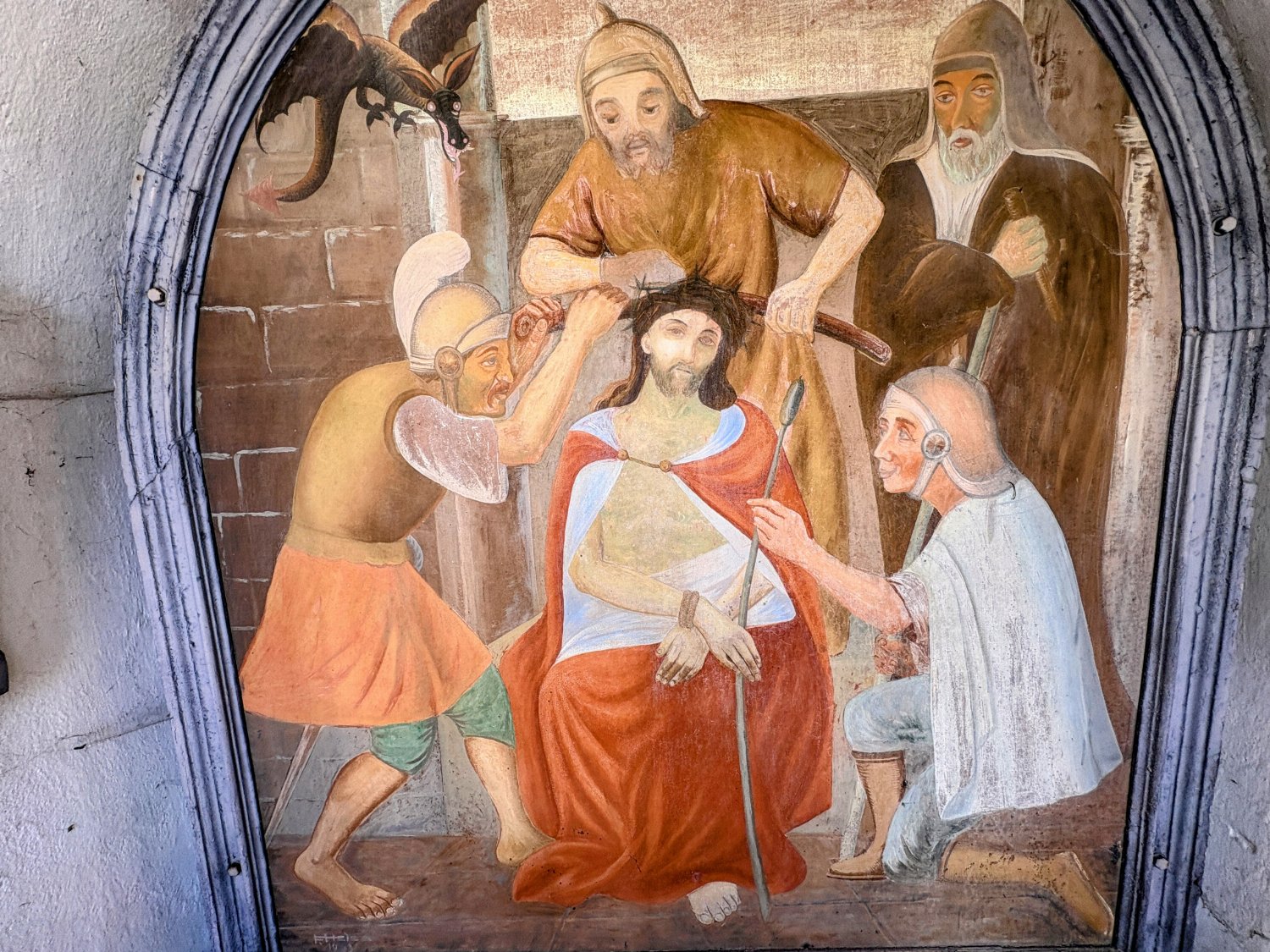
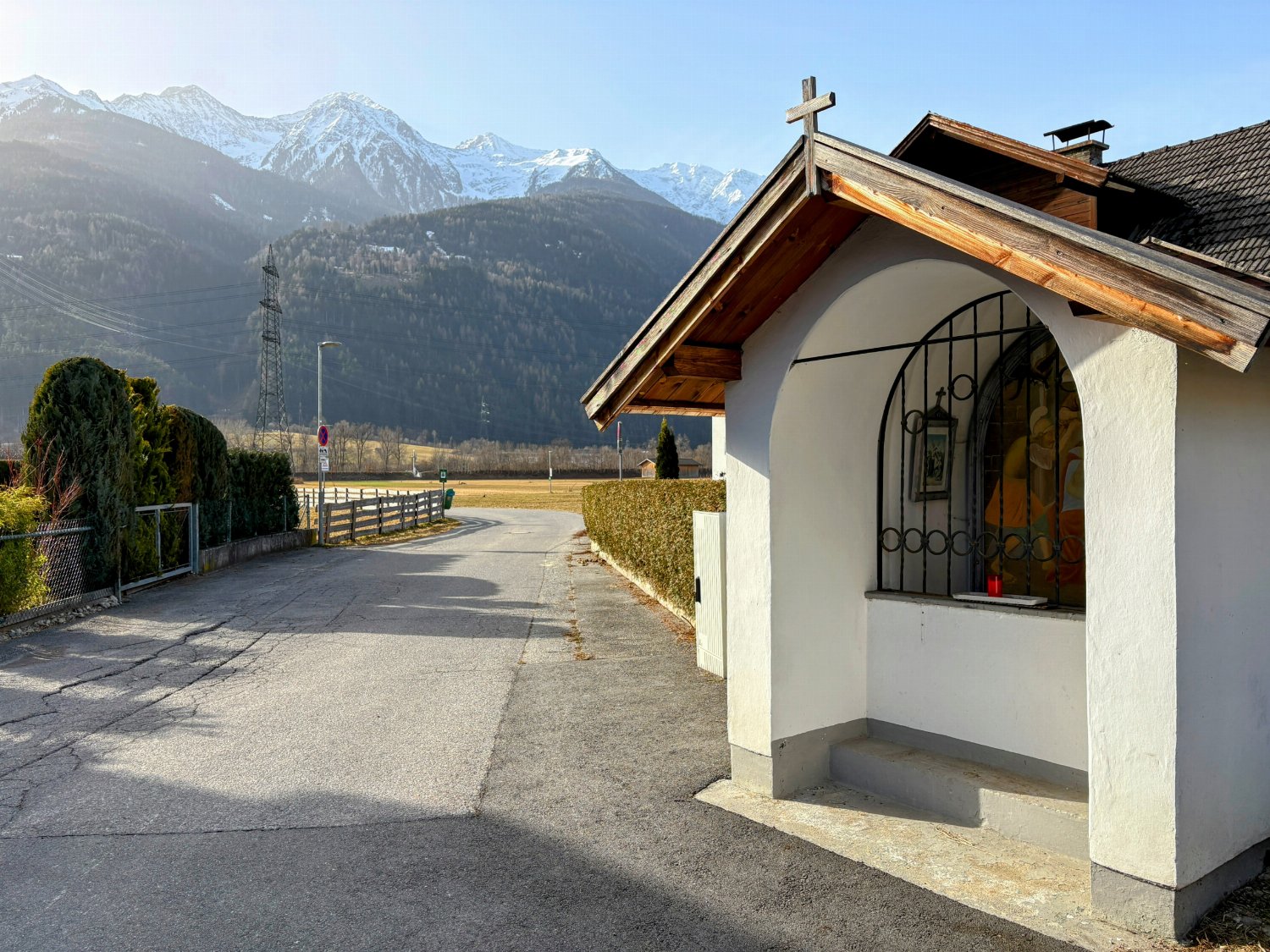
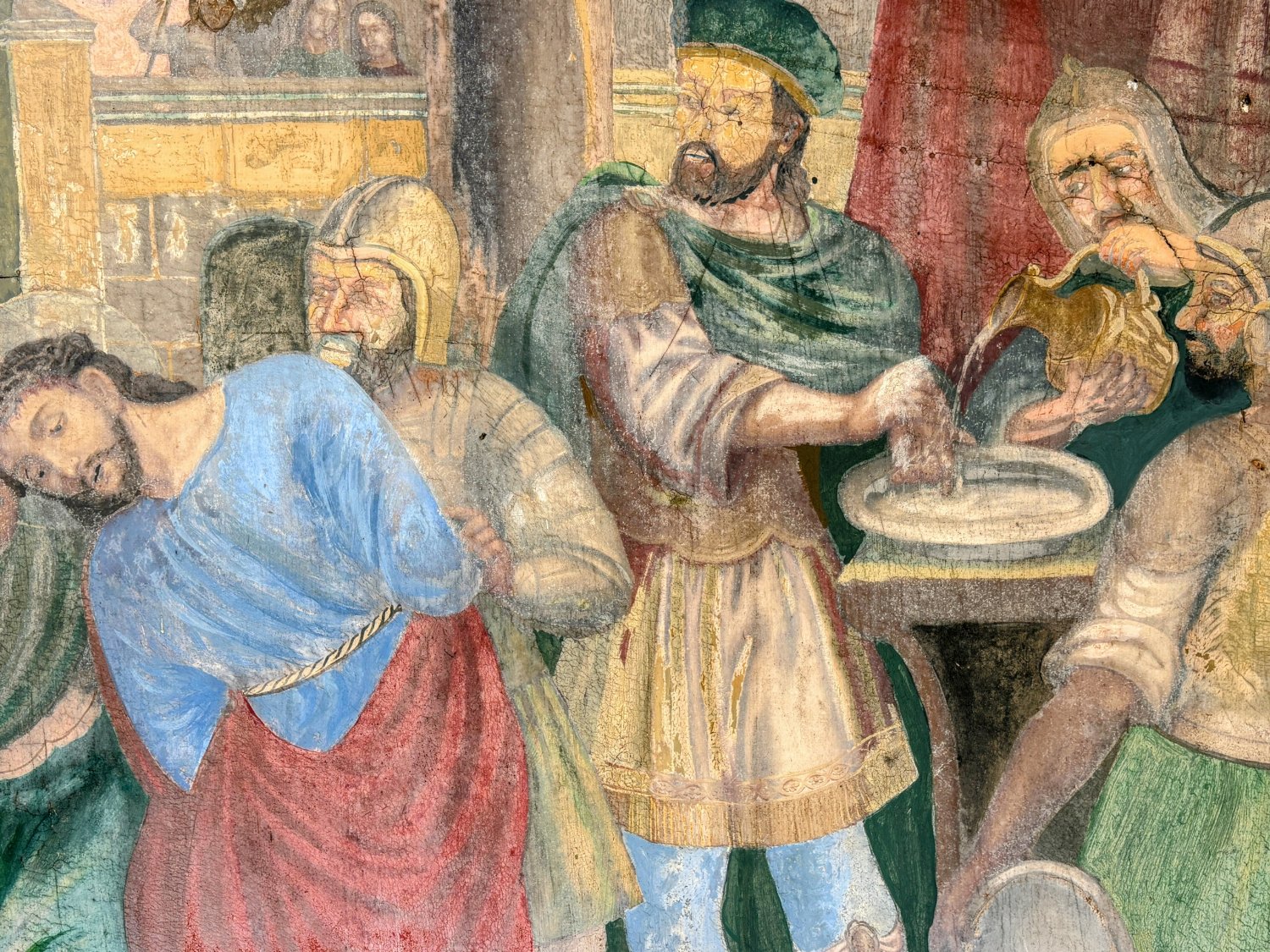
A walk through this magical, spiritual landscape is highly recommended, especially in the pre-Easter Lent period. Pilgrims, nature and culture enthusiasts are best advised to start at Moritzenstraße, which is lined with the first chapels of a Way of the Cross.

It is a fine composition of Catholic choreography that can still be traced today and forms the basis of this route. Not only devout Catholics and pilgrims follow it to St. Moritz, but also many art aficionados and people seeking contemplation. After the last houses, you enter a visibly 'different' landscape, with the Calvary and the Moritzen church at its center. (Alternatively or in addition, there is the 'Moritzenrunde', which leads from the 'Wendelinus' parking lot to the sacred buildings on the banks of the Inn)

Our Lady of Sorrows and the "Holy Staircase" of Tyrol

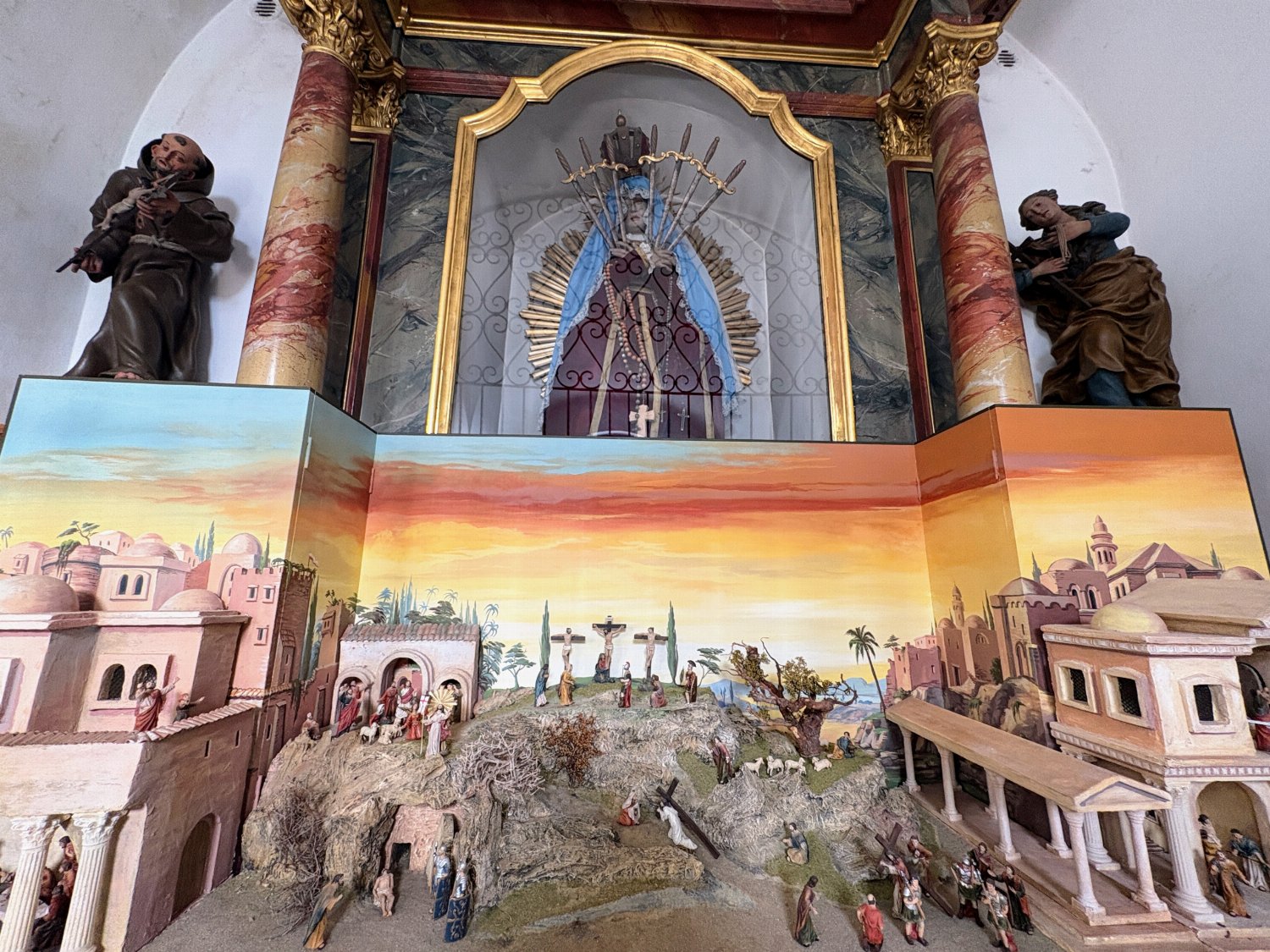
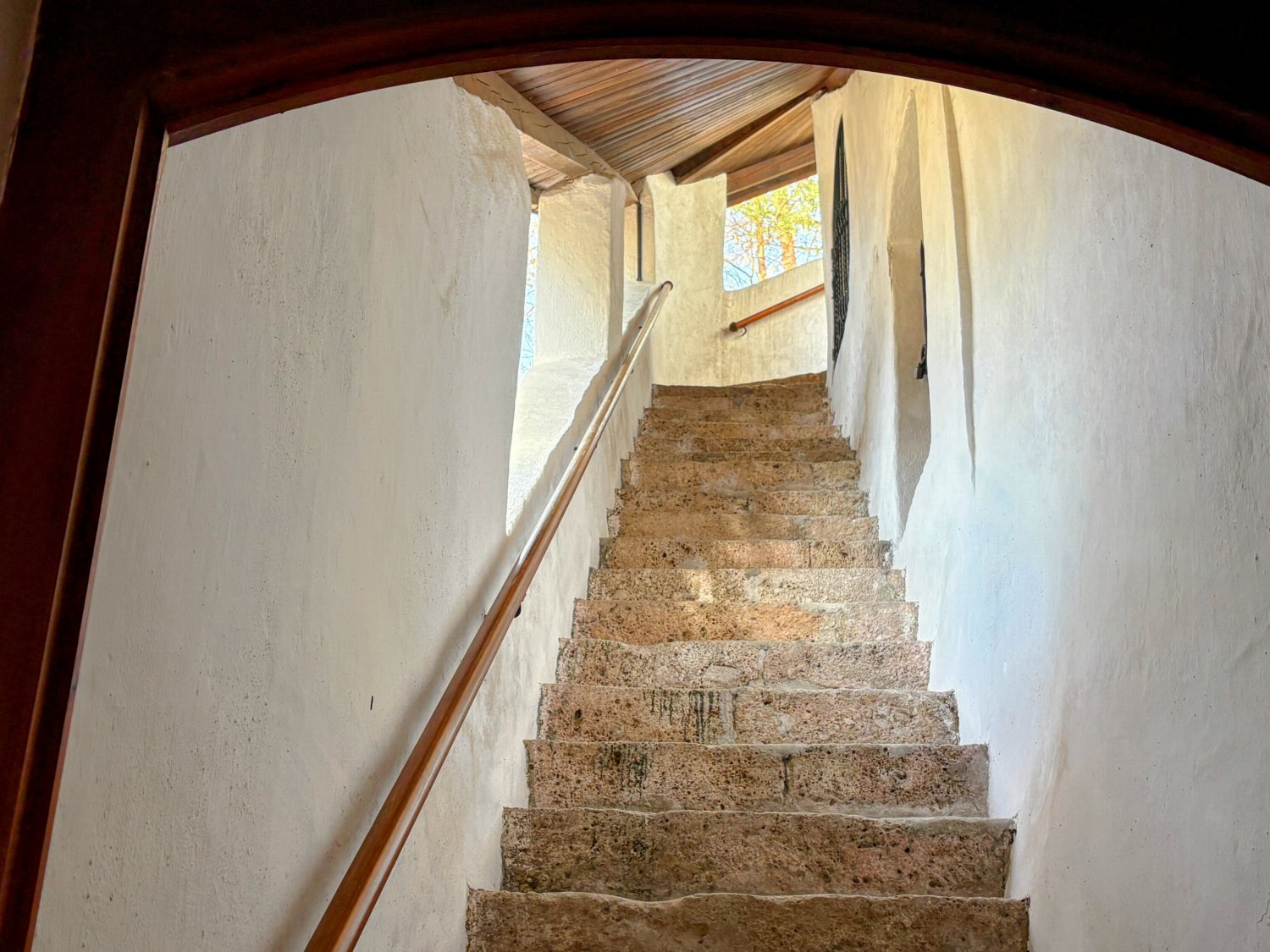
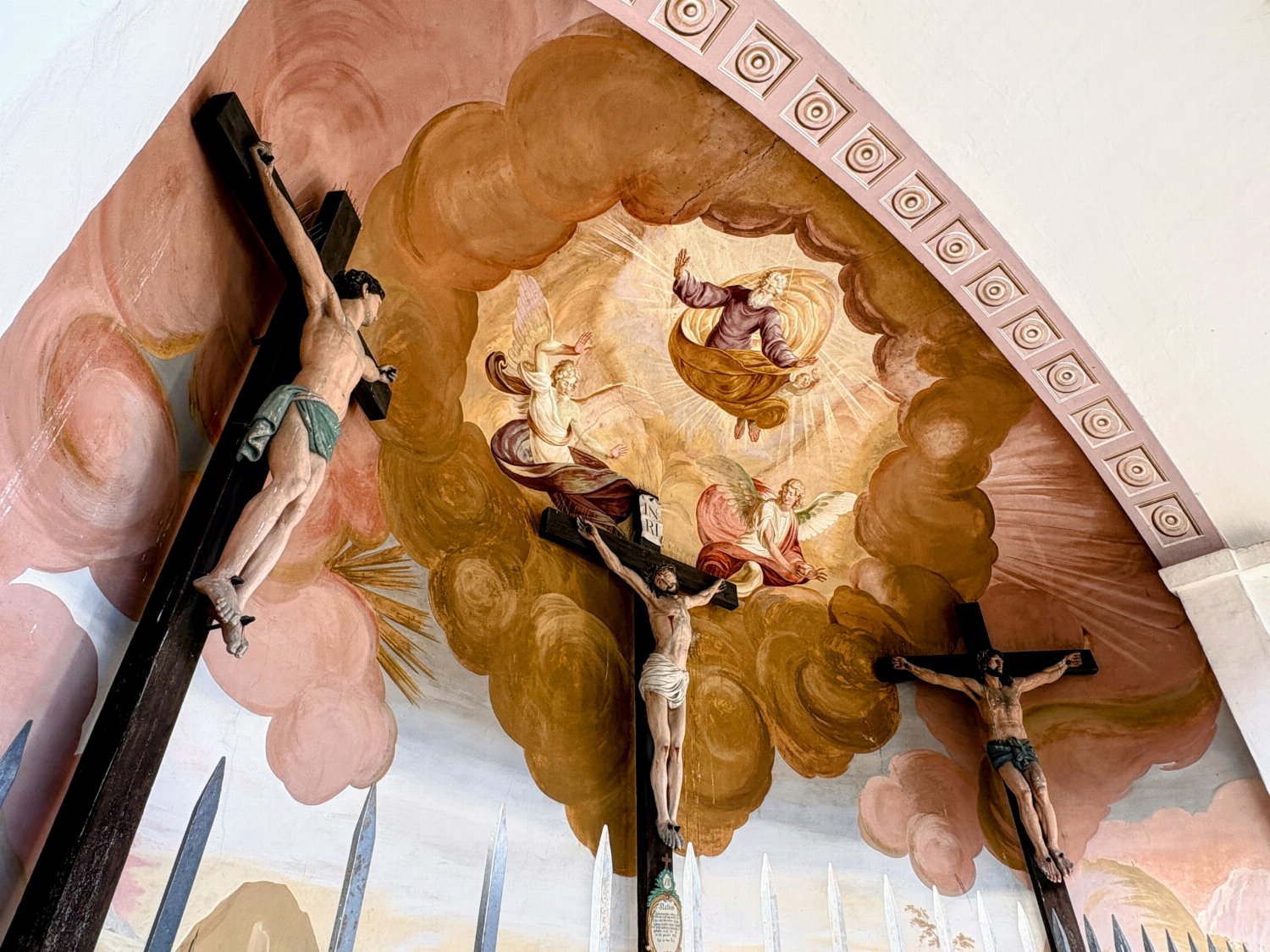
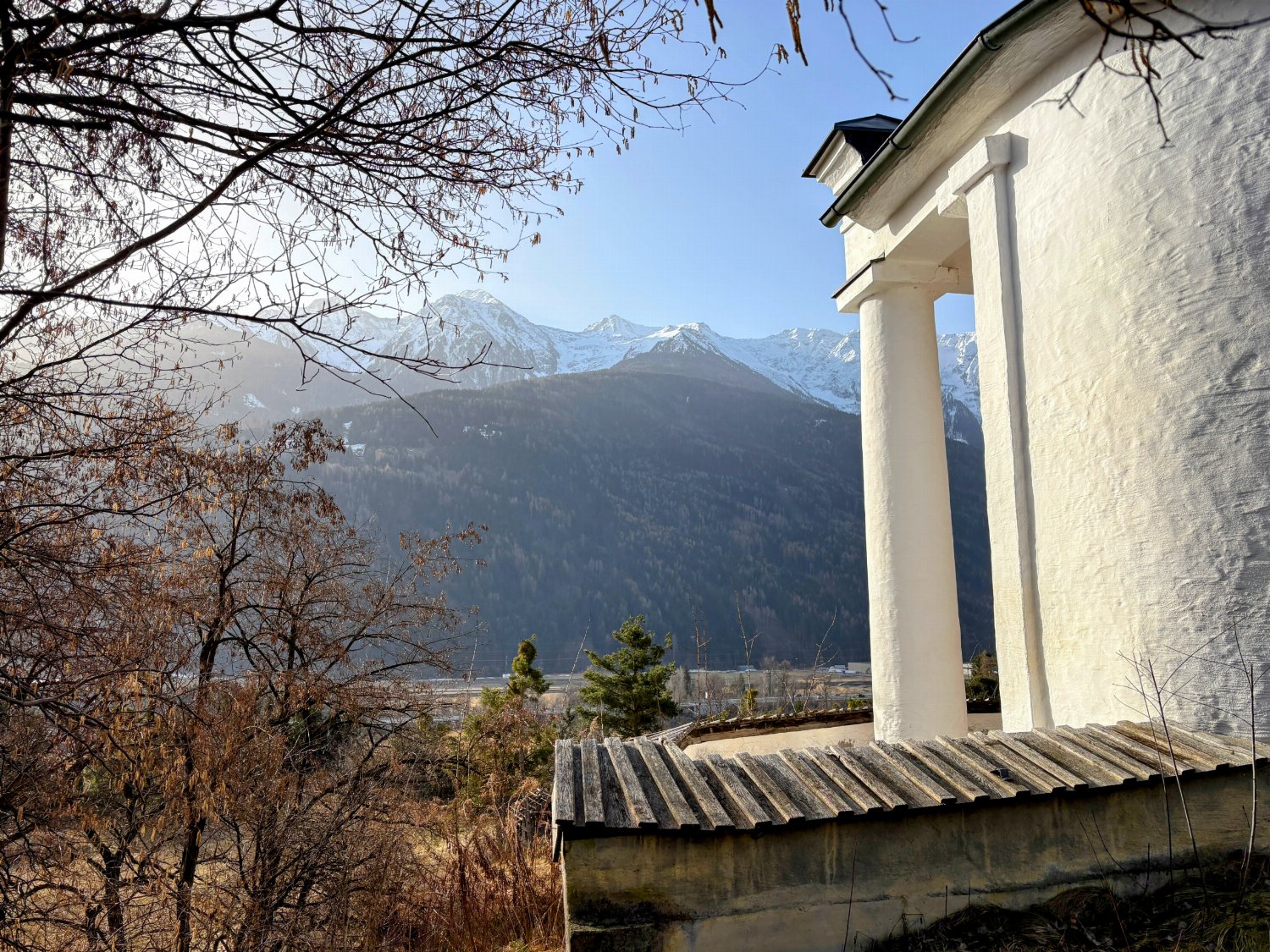
The first highlight is the Calvary, which is located on a wooded hill and was built between 1820 and 1830. Visitors are greeted by truly surprising architecture. The ascent to the actual Calvary, which presents itself high above the path as a kind of Roman temple, is via a covered staircase. There is another surprise in a moment. Immediately after the entrance, after 17 steps, you enter the Chapel of the Virgin Mary and thus the sacred interior of the mountain. Behind a glazed niche is the actual destination of the pilgrimage, namely the miraculous image of 'Mary as the Mother of Sorrows' with seven swords, the 'Moritzner Muttergottes'.

The legend of the 'Moritzen Madonna'

It is not surprising that Mary is also the subject of a legend here. She was supposed to prove that prayers would be answered.

Once upon a time, an old woman set off on a pilgrimage to St. Moritzen. She called on the Mother Goddess to ask her to help some of her friends to a 'good death'. As she was praying, she came across a woman in a wide blue cloak who seemed to be in a great hurry. It was the 'Moritzen-Madonna'. "Annale," she said, "you don't need to go to Moritzen today, I'm not out because I have to go to a dying man." And indeed, when the woman entered the chapel, the place was empty.

The following staircase with 46 steps is a kind of "holy staircase" in the Tyrolean sense. Each step brings believers and culture vultures closer to 'Golgota', a crucifixion group with a sober formal language. The focus is entirely on the cross. Only the magnificent view of the mountains of the Stubai Alps breaks up the gloomy scene and enhances the spiritual effect of this place.

The St. Moritzen church and the burial chapel

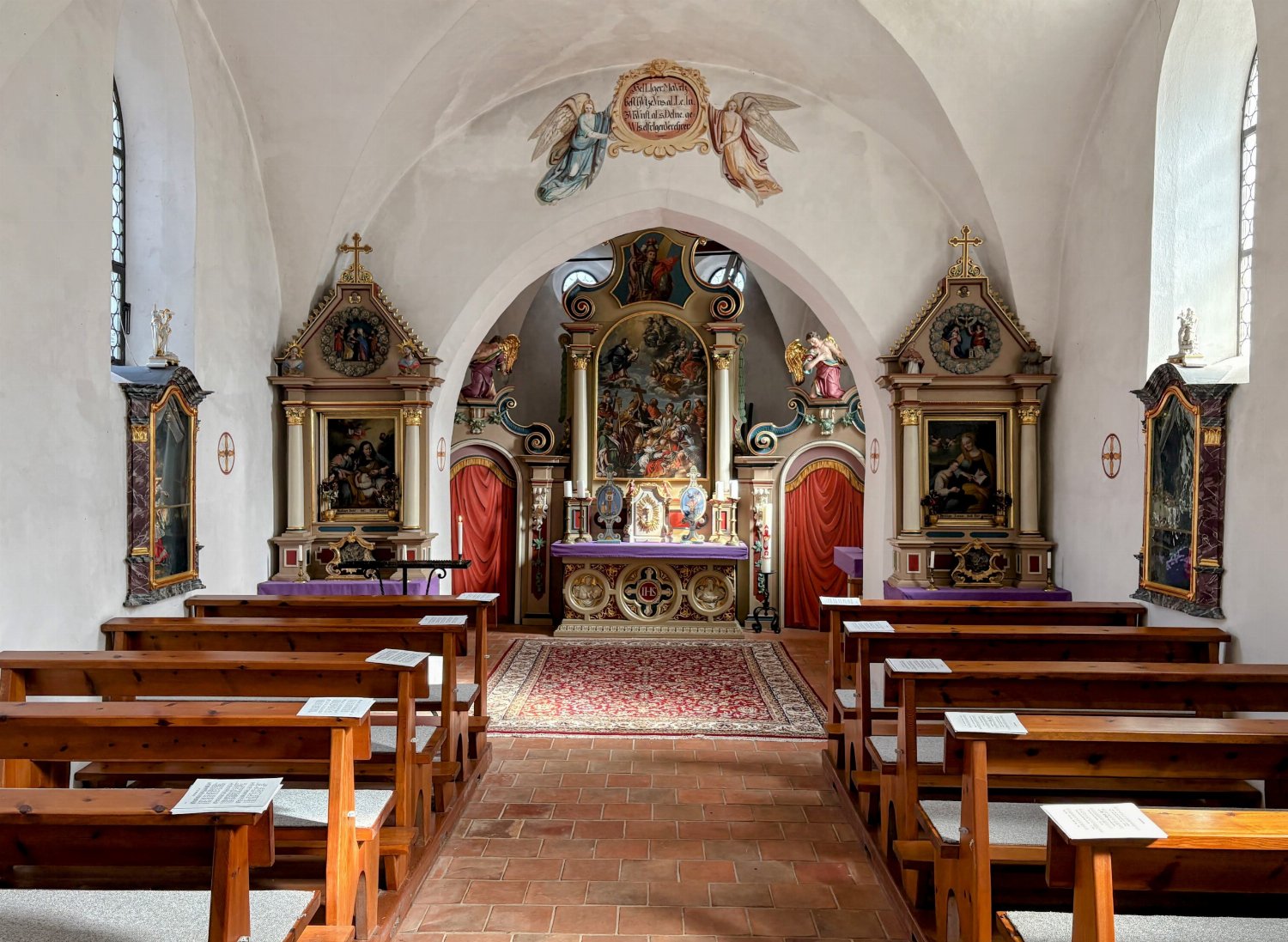
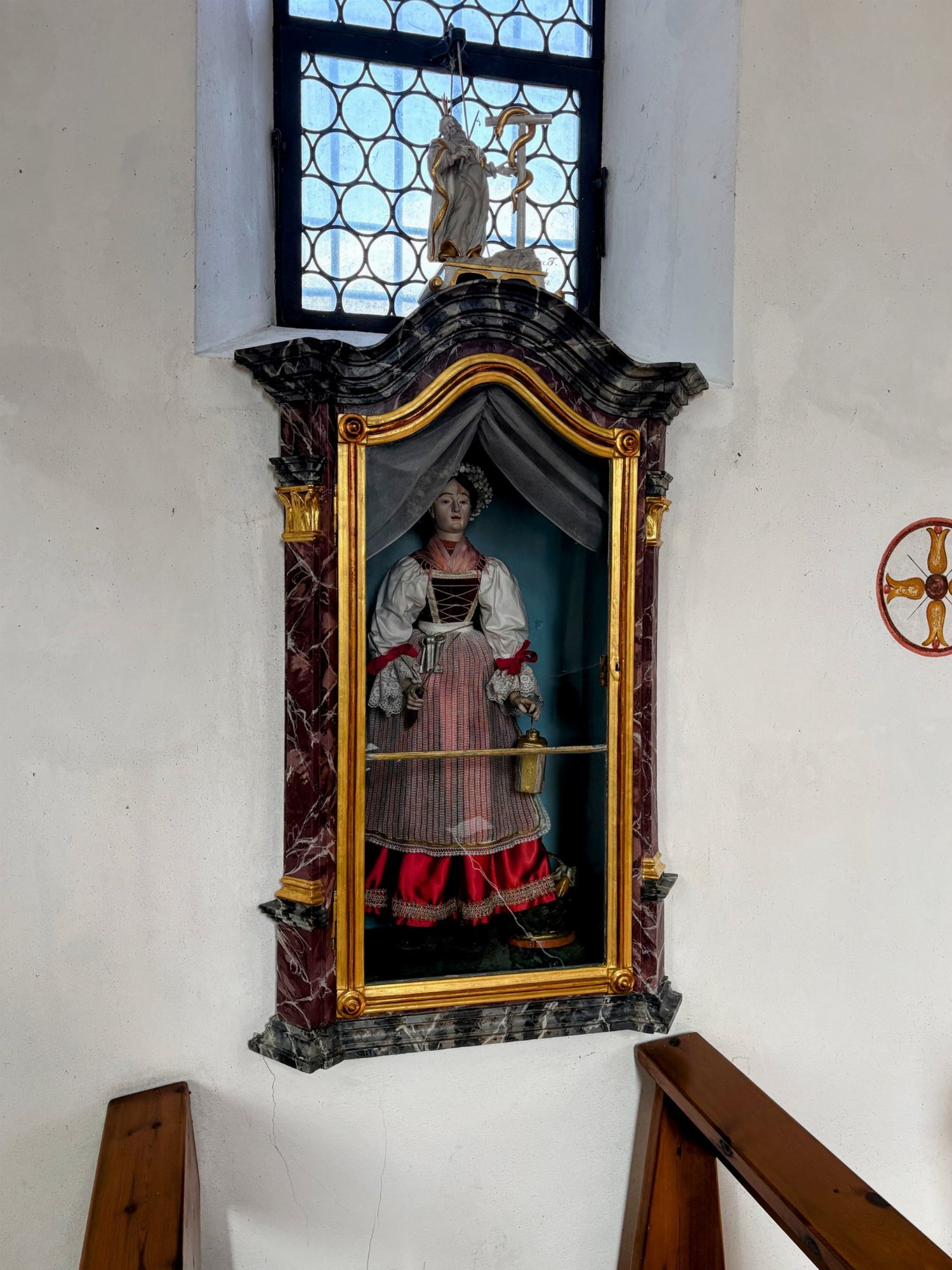
Barely a stone's throw away, the 'St. Moritzen-Kirchl' is another highlight of any spiritual journey. First mentioned in documents in 1352 and 1409, it became a popular place of pilgrimage in the 18th century. During the great plague outbreak of 1634, a plague cemetery had to be built here in the middle of the murderous 30-year war. The present church was built in the middle of the 17th century. The late Baroque high altar, which is flanked by so-called 'sacrificial portals' and two side showcases, are remarkable. One of the display cases depicts Notburga, who is revered as a saint in Tyrol.

Opposite St. Moritz Church is the burial chapel built in the 17th century. It represents the 14th Station of the Cross, namely the 'Holy Sepulchre' .

A highly entertaining attraction awaits pilgrims and art enthusiasts here: a mechanical Lenten nativity scene, which attracts many visitors to St. Moritzen during Lent. It is put into operation on Lent Sundays between 1:00 and 5:00 pm, which is the only time when 'the Mandl_n go around', as they say in Telfs. Small, carved figures represent the Stations of the Cross in action while the angels of the Lord scurry over the crucifixion group. A highly entertaining show that magically attracts families with children in particular. You can even see the drive unit, which is located in the attic of the Chapel of the Holy Sepulchre.

Finishing on the banks of the green Inn

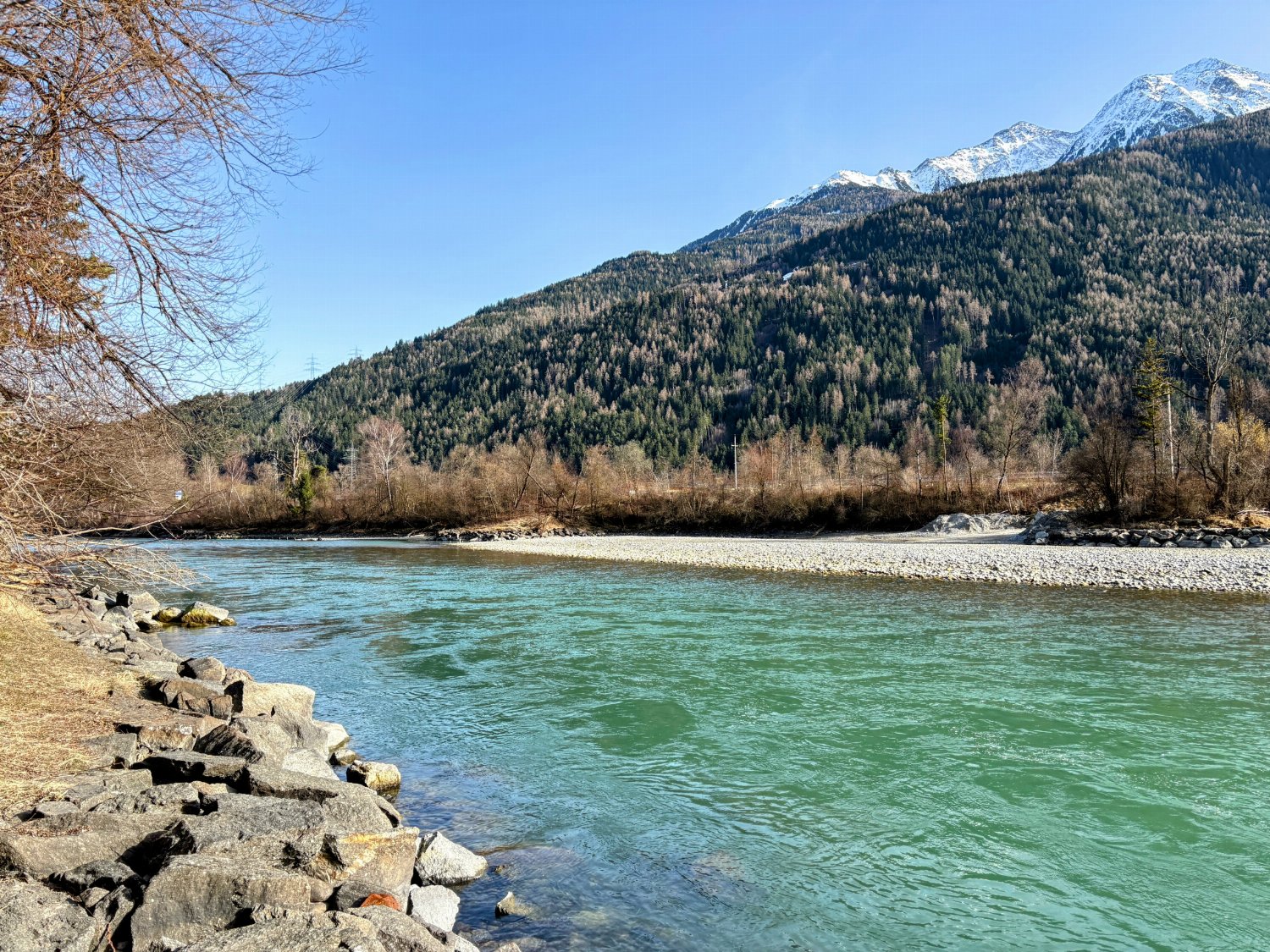
From here it is not far to the banks of the Inn. It is the end of a wonderful pilgrimage or a walk through a landscape that thrives on the dialog between natural and sacred architecture and is exceptional even in the 'Holy Land of Tyrol'.

Similar articles