the handpan

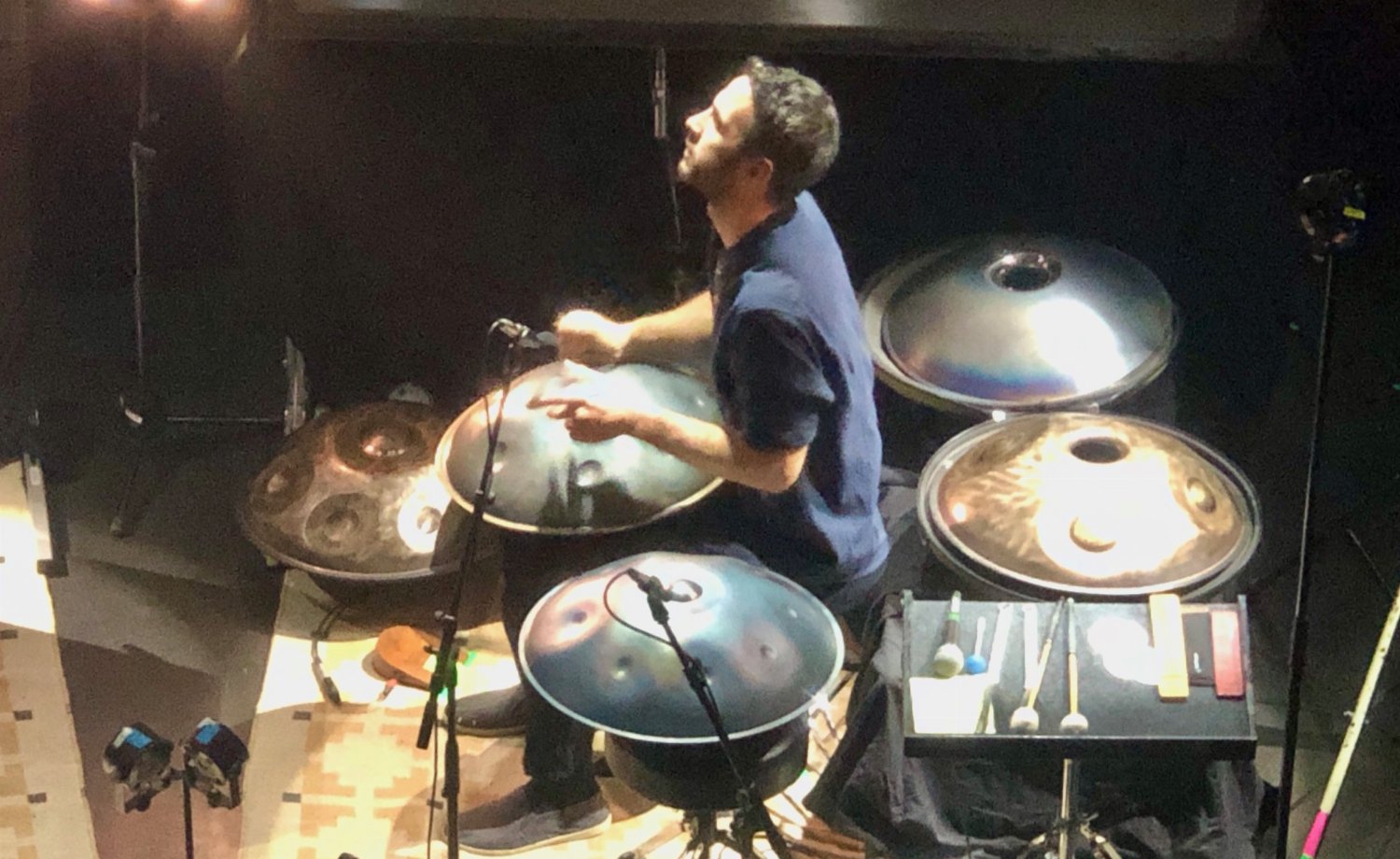
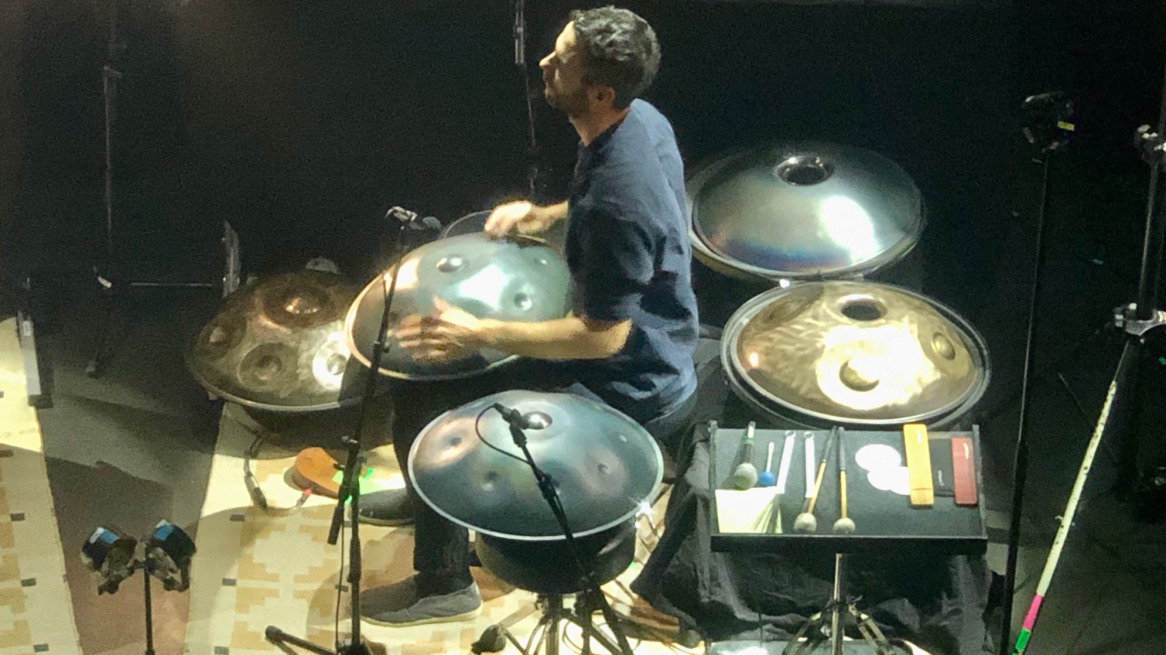
The Handpan - a more generic term for a Swiss invention first known as the hang - was the first new musical instrument invented this century. Described by Scottish percussionist Evelyn Glennie as ‘looking like a cross between a wok and a flying saucer’, its sound is both percussive and melodic, hard and soft, modern and ancient.

Tirolean musician/composer Manu Delago is perhaps the instrument’s most prominent practitioner.

Delago was introduced to the Hang in his late teens by his father Hermann Delago - also a renowned musician - which set him on the path to taking this new sound out into the world. The invention of YouTube not long after that certainly helped. It’s arguably the first instrument to ever go ‘viral’, with some handpan videos receiving millions of views. YouTube has played a prominent role in Delago’s career too, as I found out when I interviewed him recently.

Although he’s released several solo albums, it’s through his collaborations, particularly with Björk and sitar player Anoushka Shankar (daughter of Ravi Shankar, the man who took the sound of the sitar from India to the wider world), that he’s become better known internationally.

A fascinating career

But his own career has taken him in some fascinating directions too, not least when Delago has combined his musical prowess with a typically Tirolean love of the outdoors. The film Parasol Peak for example, in which Delago led an ensemble on a musical mountaineering tour in the Alps. Or the ReCycling tours, when Delago and friends travelled from gig to gig via peddle power.

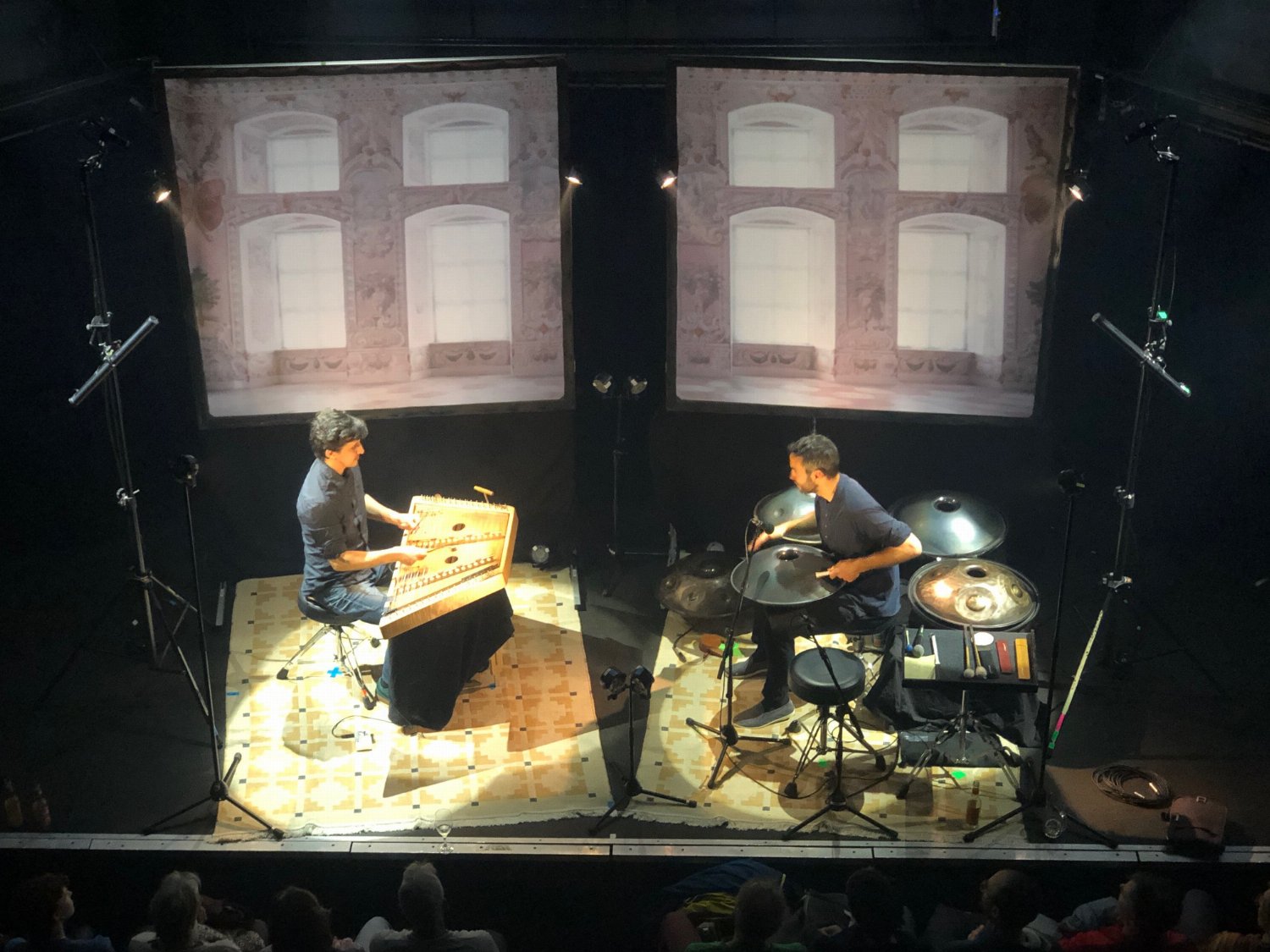
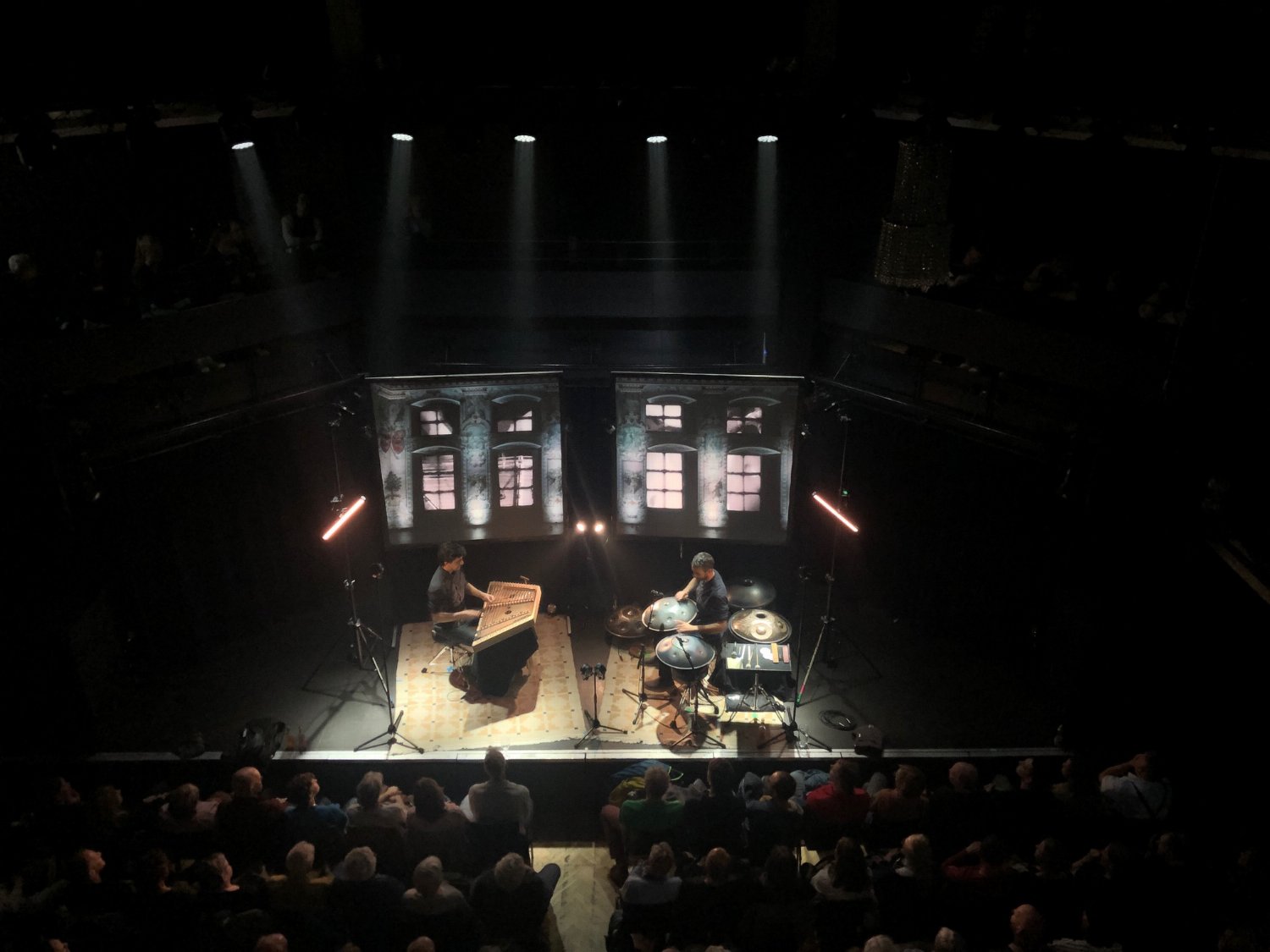
His latest collaboration is with American dulcimer player Max ZT and on March 15th I went to Treibhaus to see the pair play songs from their recently released album Deuce. It was an a joyous experience, especially as I was up in the Gods, looking down from the top of the tower as the ethereal sounds floated up.

family and friends

Because the last gig I went to at Treibhaus was Nenda, that’s where our conversation started…

As a fellow Tirolean musician who lived in London for years, do you know Nenda?

‘I heard her music driving in Austria on FM4. I liked the song so much that I had to Shazam it. I looked her up on Instagram and it said ‘follow back’, so it was like, ‘she’s following me?!’. I thought she was some kind of international star or something… but then I realised she's close friends with my cousins! Then we got in touch and met up several times. We actually did a song together two years ago’.

When I interviewed her last year, she said she was ‘half living in London, half in Innsbruck’. What’s your situation?

‘Very similar. I was in London for eighteen years but have been back here more and more recently and at the beginning of March I returned the keys for my London flat. We’re living in the village my wife is from now, just outside Innsbruck’.

Was family the motivation for moving back?

‘We have a daughter who is nearly four. It’s a very family-driven move, definitely. During the second Covid lockdown we were spending more time back here. When our daughter was born it just made more sense to be here’.

Where did you grow up?

‘Different villages. We were in Kematen for nine years and then Mieming for another nine years. Then I was in Innsbruck for my undergrad studies before moving to London’.

Was music your focus from a young age?

‘Focus is too professional a word, but there was a drum kit in our flat from when I was two and I was just playing. Music and football - those were the two main things as a child and as a teenager. When I was 17, I had to choose and I took the music path. I was spending five days a week on the football pitch but making a decent living from football in Austria is kind of impossible. I wouldn't have made it, but it felt serious at the time. It was just a big passion. I was already an Arsenal fan at school. Moving to London was amazing because I could go to lots of Arsenal games’.

drums

What was it about drums, or percussion generally, that you connected with?

‘In my first band I played electric guitar but I couldn't really stand how the drummer played! So I said “let's swap”.. I don't know what it was… I think maybe the drummer is the driving force behind the band. I think if the drummer is good you can get away with a lot of things in a youth band. The drummer and the singer are both important.

Also, I liked being in the background. I didn’t like being at the front. That was something that I had to learn later. Playing my own music, I was still quite shy and didn't want to be in the foreground but I kind of had to be. I had to learn that because it was my name in the spotlight. Before that I was in bands for around seven years - 1999 until about 2006’.

What was the impetus to strike out on your own and release your own music?

‘In all my bands we wrote our own music but I wasn't a singer or guitarist so I wasn't at the front but I realised a lot of the ideas were mine. When I started playing the handpan, I realised those tracks were often the most popular ones we played. They got the best reception. Then in 2005 I got asked to guest by a band who had a residency at Treibhaus. They did one night when they only played my music. It was under their name - I was only a guest - but that was really well received. That was the trigger: I decided then I had to do it under my name basically because it was strange to play my music under a different name. Treibhaus invited me to do a residency myself so I played there every Wednesday. That was like doing a course, it was like learning… playing my music, talking to the audience… at first it was scary. It grew from there. I moved to London not long after that because I realised ‘okay, there's somewhere to go’. I wanted to do it internationally straight away. As soon as I was doing my own thing I moved to London which really helped me become an international musician rather than just known as a local musician’.

So you thought if you moved to London more opportunities would come up?

‘Yeah. I did study but that wasn't the reason for moving to London. Being a student was a good way into the city, to meet people. But it wasn't my main reason for going there’.

hang time

What is it about the sound of the handpan that draws people in?

‘Probably because it's a new sound that people are not so familiar with. And it's quite versatile. It has a soft sound like a harp. The harp is a very different instrument in the way it's built and the way it works.. but it still has a similar sound I think. But it can also sound very metallic and percussive. That's what drew me to it - how versatile it is considering how small it is. With a marimba or a xylophone you have a lot of different notes but you don't have a lot of different sounds whereas with drums you have a lot of dynamic range but you don't have the pitch. It's new and it's old and it's not geographically attached to a culture. It was invented in Switzerland but it doesn't sound Swiss. People don't really know where to put it… is it Asian? is it Caribbean? is it African?… it's just a global new instrument basically’.

Do you describe yourself as a percussionist or a musician?

‘I would say a musician and a composer. But percussionist is definitely not wrong so… whatever!’

björk

Let’s talk about some of the musicians you’ve played with. How did your collaboration with Björk come about?

‘Björk was a YouTube thing. She saw me on YouTube and just contacted me. It was quite straightforward really’.

That must've been surreal?

‘Yeah, it was. I was a student in London then. Funnily enough, not that long before I recorded an album with my duo Living Room and our manager then said you should get Björk to sing on it, to which we replied “you're crazy, how are we going to get Björk to sing on the album!?”. I think he tried to get in touch with her but it didn't work out. And then, not even a year later, it was only a few months later, she got in touch with me! So that was a nice surprise. Especially as I've listened to her music a lot since I was a teenager. It's a dream come true and I've done way more with her than I'd originally hoped as well. I've been touring with her for 13 years’.

How does it feel when you play with someone like Björk in front of tens of thousands of people?

‘Size of audience doesn't change things that much for me - you still have to do the same thing. It's a bit like when you're climbing. Climbing a small wall or up a 500 meter rock, you still have to do the same things, you have to be focused on the next hold. With playing music, whether it's to fifty people or thousands you still have to stay focused and give your best. Somehow, it doesn't change how you approach it. It's more that I see it as a privilege and I appreciate it. I'm happy to have that responsibility. I quite enjoy it actually’.

It seems like she's someone who is happy to spotlight some of the people she works with as well. You got to play a drum solo on the Later… with Jools Holland show for example…

‘That was flattering. When I first heard the song Crystalline on the Biophilia album, there was a drum solo at the end, a programmed thing by this producer from London called 16-bit and I had to go back and rewind it…like, this really happened at the end of this song?! I had to listen to it again and thought ‘it would be really amazing to play this’…it’s right up my drumming street. So I told her, and on the tour I did it every show’.

pioneering

And Anoushka Shankar?

‘That came about because I did a show at the Roundhouse in London with a group called Shpongle, a psyche trance band. They saw me on YouTube and they booked me for their show. That was my first proper London show and it was at the Roundhouse. I’d seen James Brown play there just before he passed away, so I knew The Roundhouse and I knew it was an iconic place. I've never heard of Shpongle before though and suddenly I got a call from them saying “hey, we've got this gig at the Roundhouse in six months and it's sold out.. would you mind being part of it?” So I was like, ‘Roundhouse? Sold out? Sure!’.

Anoushka was at that gig and she contacted me afterwards on MySpace - remember MySpace?! - asking me to collaborate. Her and Björk are the artists who I've worked with for the longest time. At first I played support for her band at the jazz café in London. Then I recorded with her and I wrote some stuff, then we toured. For the next album Land of Gold, she asked me to be her co-writer. The whole album was a collaboration, it was really intense. I was like the music director.

I don't know if other handpan players have played with sitarists. Maybe there are other people who do it but obviously Anoushka is one of the most one of the best known sitar players so it's going to have more impact. That's the beauty of playing a new instrument; you can do a lot of pioneering work’.

And Max ZT?

‘It was a long time in the making. We met in 2016 at a show in New York which is where he lives. I was there with Anoushka. Next, in 2017, he played as a support act for me in New York when I did a solo show. Then we hooked up and said “’lets do something together”. In 2019 I spent a month in New York with Björk, that's when we started jamming together. We did a show in New York as a try-out show and then we said “okay, we have to try and make this a proper thing - this has to be a duo”. Then Covid came…

Eventually Max visited me in London twice and then he spent a week in Austria. We wrote most of the music beforehand but we rehearsed and recorded the album together that week. Made the videos too. And now the album is out and we're on tour.

All the videos on YouTube are from that week in Austria, the whole thing was done in one week at the monastery in Stams - the baroque hall. The monastery is from the 13th century and the hall is from the 18th century. It’s a really beautiful hall - that’s where we recorded the album’.

parasol peak

I’d love to talk about Parasol Peak. Was that your idea or or did it come from somebody else?

‘It was my idea. It was a bit crazy in hindsight but everyone survived! I don't know what I was thinking but I'm really happy we did it. I guess it's maybe the thing that I'm most proud of. The project was a really unique experience for everyone involved. It was the first time for me making a film. I had a great team but I had no idea if it would work because up until then I'd been doing albums and live shows, never a film. But it was super well received. It won seven film awards and I’m really happy with the outcome. I’m proud of everyone involved. But we can’t do it again. Firstly, because I don't want to repeat myself, but also, I'm not sure health and safety-wise it was so good. No-one had children then! I don't think we could do that again now but it was a great experience. Tough. Cold. But great.’

What’s next? How far ahead do you plan?

‘About a year to a year and a half. We're talking a lot about 2027 at the moment. I’m planning to do a ReCycling tour next year - we've done two already. This year is quite busy with the shows with Max; we’re doing 27 this spring, then taking a break in the summer before doing more in the autumn’.

Finally, how does it feel to be back home?

I guess mixed feelings. I mean, there's a lot of things I love about Tirol but there's a lot of things I miss about London. But, I'm not 20 or 30 anymore. I’m 41, and it feels like the right thing at this stage in my life.

Manu plays at Treibhaus in Innsbruck again on Thursday April 30th, and at Kultur Weberei in Telfs on Thursday May 14th.

For more information on tour dates, releases etc go to his website.

All photos: Leon Barton

Similar articles