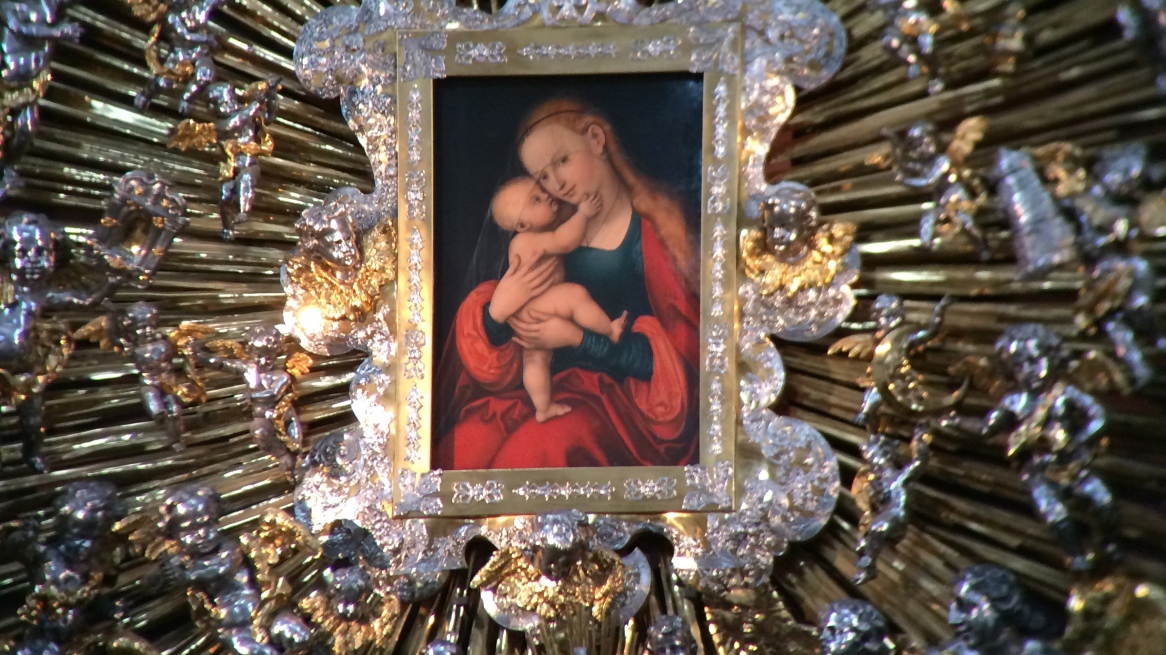
What could you do if the stomach pains became unbearable or a child had swallowed something life-threatening? Not to mention accidents in which the horse and cart and their valuable cargo were in danger? 350 years ago, such problems could neither be solved by an insurance company nor by doctors. So the only solution was to call on heavenly powers. This is exactly what was possible in Innsbruck from the middle of the 17th century, after the 'Mariahilf' miraculous image moved into the cathedral. The 'clientele' was illustrious, ranging from aristocrats, court officials, craftsmen and students to simple, mostly desperately poor people. There is a simple reason why we know this today: the answers to prayer were meticulously recorded by the people concerned.
For example, there was a master builder from Innsbruck who wanted to catch the author of a threatening letter and offered heaven a reward, so to speak. Or a waggoner who was swept away by the River Inn with his horse and cart and feared for his life. A master saddler fell from a raft into the Inn and was in danger of drowning. Children who fell from high storeys or swallowed things, whose parents turned to the image for help. People with physical ailments of all kinds turned to the heavenly powers, specifically to Mary, the Mother of God, to be healed of their suffering. Women who were childless or suffering from serious illnesses. They all have one thing in common: they testified in writing that they were helped by invoking the image of Mary Help of Christians.
The attraction of the image of the Virgin Mary
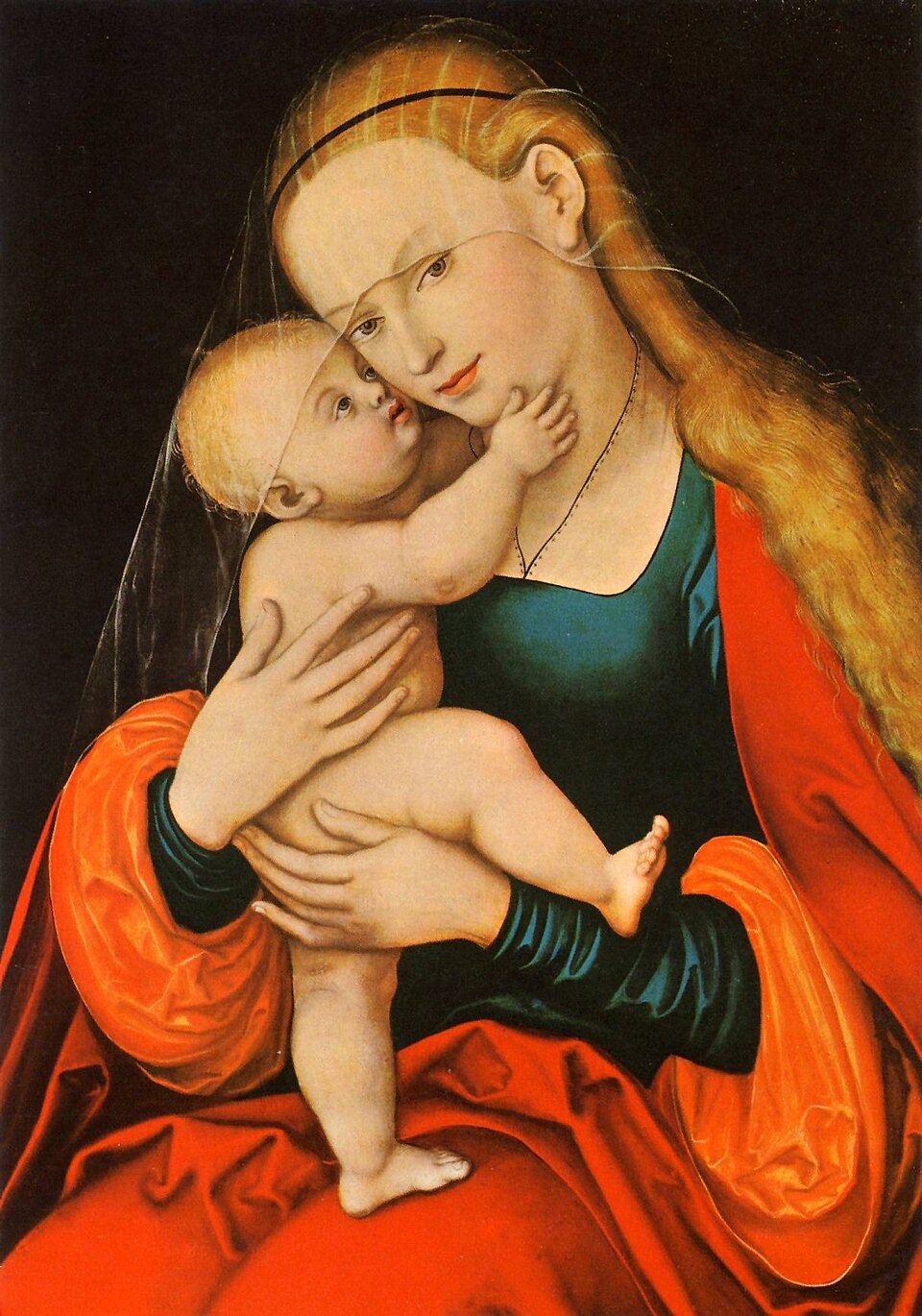
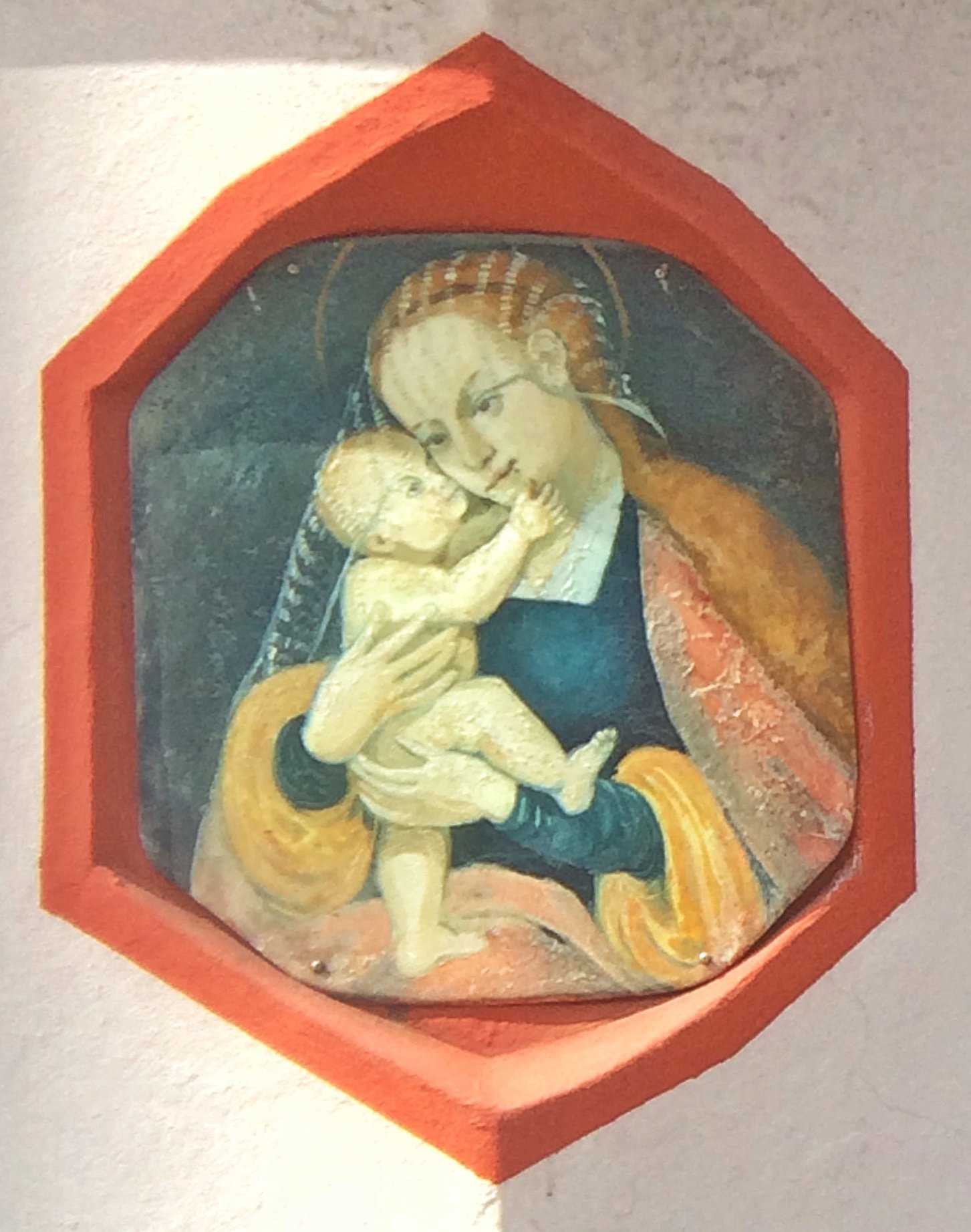
The image developed an almost magnetic effect on people. From the middle of the 17th century, Innsbruck Cathedral became the destination of tens of thousands of pilgrims who joined the many pilgrims to St. James. The painting by the painting genius Lucas Cranach, a depiction of the Mother of God with child, became a'picture of grace'. The extent to which the people of Tyrol venerated it can be seen not only in Innsbruck's old town: More than 25 copies of the image can be seen there as frescoes on the outer walls of houses. Throughout Tyrol, the number is probably in the hundreds. (As an aside, it should be noted that the miraculous image was rescued from Nazi thieves at the end of the Second World War and hidden high in the mountains of the Ötztal in a unique rescue operation.
How the painting came to Innsbruck
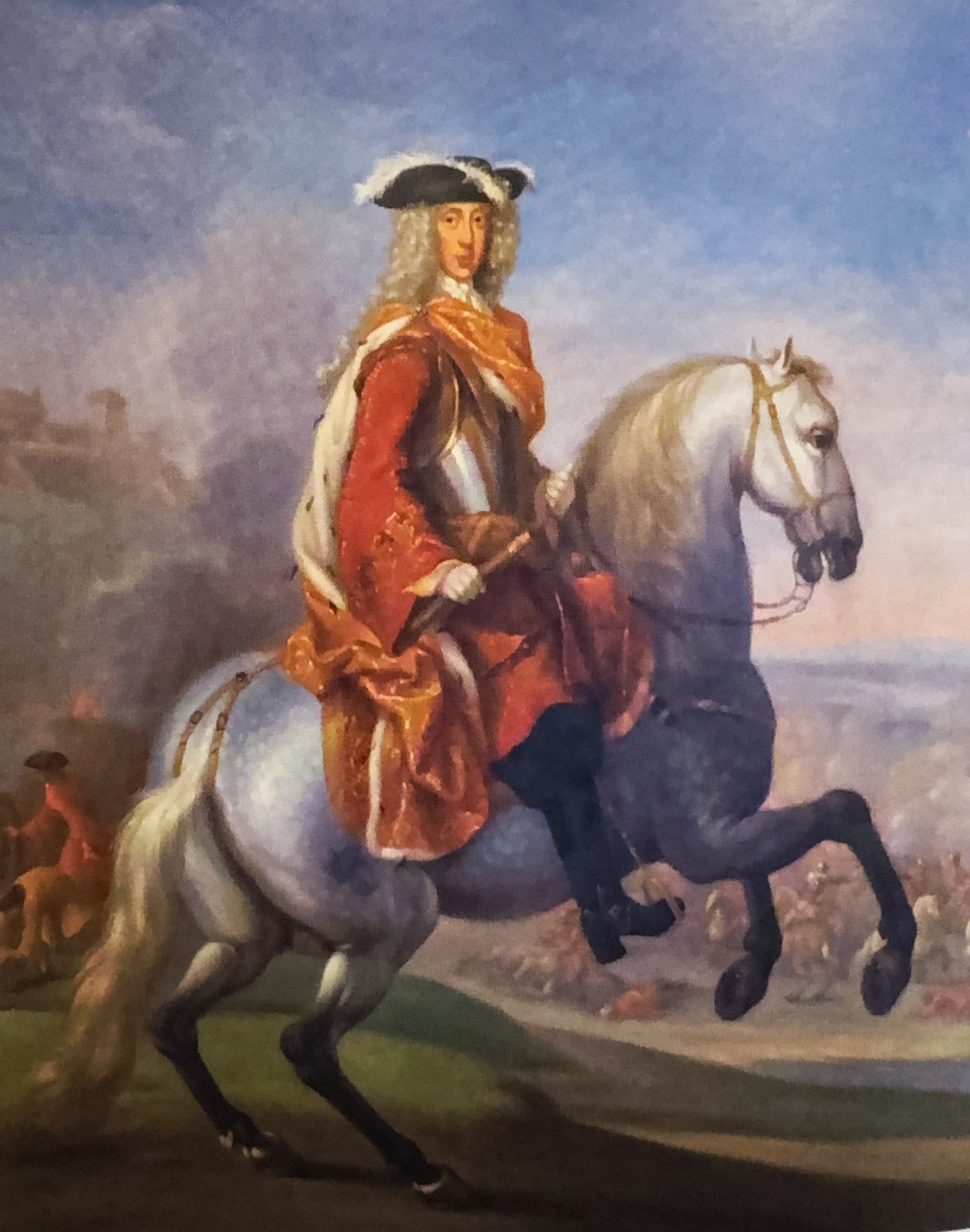
It is thanks to Leopold V, who was appointed governor of Tyrol in 1619, that Cranach's masterpiece found its way to Innsbruck. As the son of Archduke Charles II, he was elected Bishop of Passau at the tender age of 12 (!). Ordination to the priesthood was not even necessary, as he was less concerned with heavenly matters than with the human power and influence of the House of Habsburg.
In the course of a diplomatic mission to Saxony, which Leopold carried out as a Catholic bishop, the boy was once invited by the local Elector George I to browse through his picture gallery. He was allowed to choose a painting as a gift. His choice fell on a painting by a close friend of Martin Luther, Lucas Cranach, which Leopold immediately had shipped to Passau.
As bishop, he immediately commissioned a copy to be made and displayed in a Passau church for devotions. It promptly triggered 'visionary apparitions' in the Inn-Danube town, as old documents say. If the copy of the picture 'worked', how effective the original had to be. Soon there was talk of miraculous effects, so-called miracles, emanating from the painting.

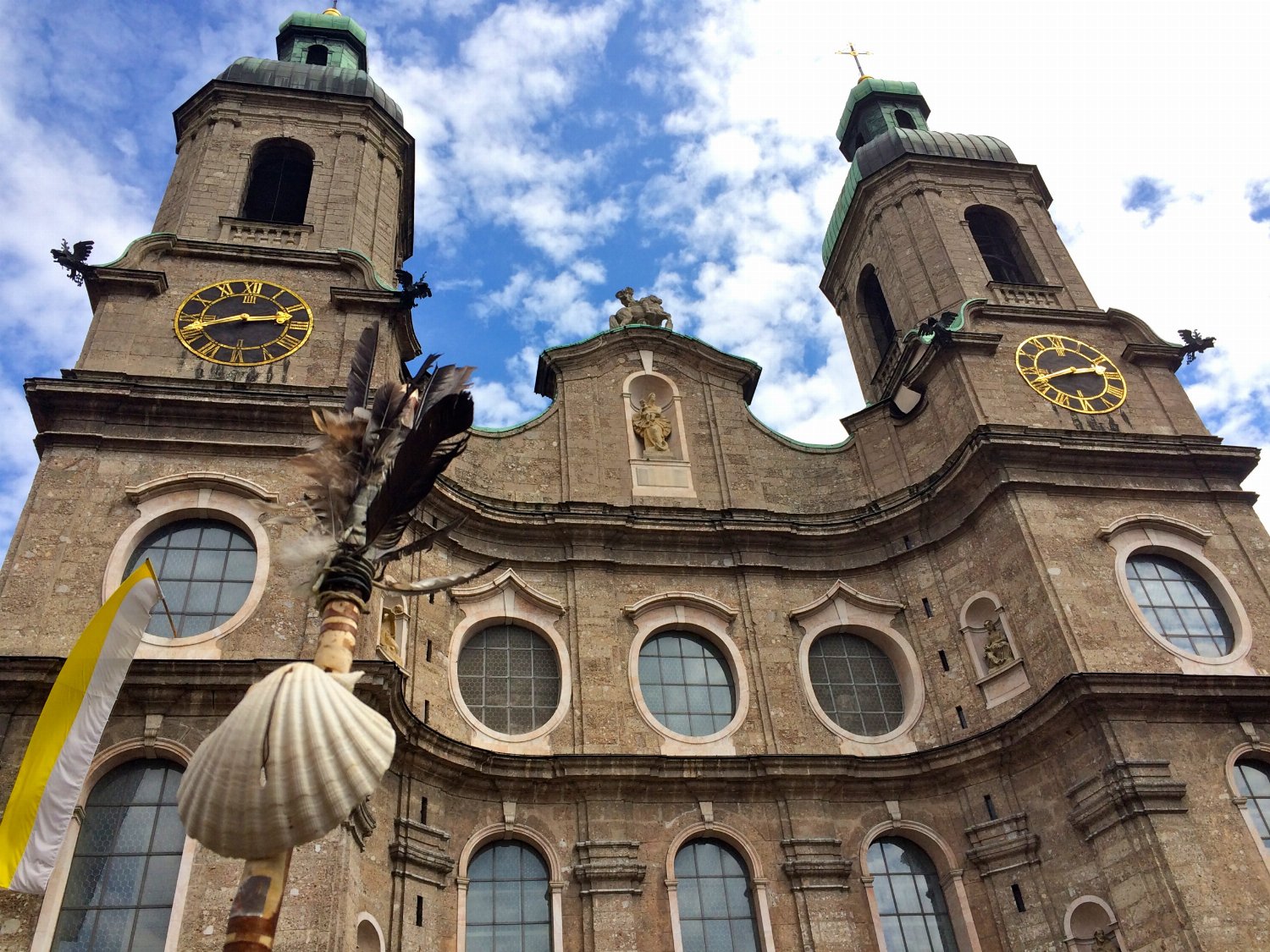
Leopold's son, Ferdinand Karl, as his father's successor as Tyrolean governor, ordered the transfer of the miraculous image from Passau to the then parish church in Innsbruck in 1650. Initially, it was only to be accessible to him and his family. Later, the miraculous image was presented to the faithful in a side chapel of the old, then still Gothic parish church of St. Jakob. Now the picture's triumphal march into the hearts of the Tyroleans began.
Social media of the Baroque
It was the Jesuit priest Wilhelm von Gumppenberg who took charge of marketing from 1662 and founded the pilgrimage to Innsbruck's parish church. On the one hand, as a Jesuit and member of the 'shock troops of Christ', he wanted to 'immunize' the faithful of Tyrol against the rise of Protestantism. On the other hand, pilgrims and pilgrims made the coffers of the church princes, who were not at all averse to luxury, ring.
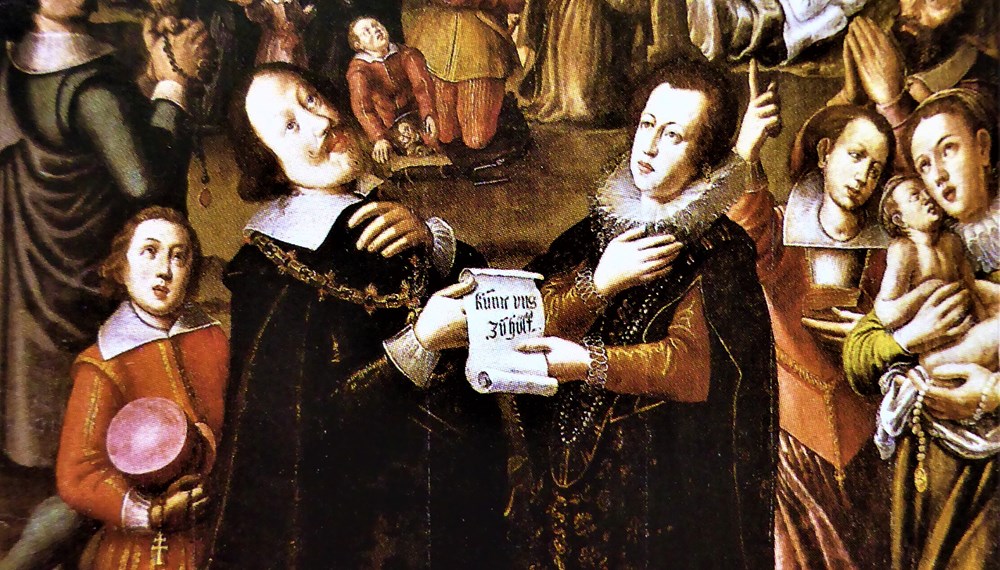
Commemorative picture from 1630 on the occasion of the transfer of the picture to Innsbruck. Picture: Provost's archive St. Jakob
Then Father Gumppenberg had another idea that turned out to be brilliant. What we call 'social-media' today was then called confession writing. He asked pilgrims and pilgrims to record their answers to prayer, i.e. the miracles, in writing. The miraculous power of the image was thus documented in writing and virtually 'proven' and preserved for posterity. Today, we would call the approximately 3,000 miracle reports 'postings', as they convey an impressive picture of the worries and hardships, fears and hopes of people from the mid-17th century to the beginning of the 18th century. These written confessions allow an unadulterated view of the worries and hardships of the Tyrolean population during the Baroque period.
The Innsbruck 'Miracle Books' between 1662 and 1724
For more than 60 years, the accounts of answered prayers were compiled in the form of 'letters of confession' in the so-called 'Miracle Books'. A kind of track record of prayers.
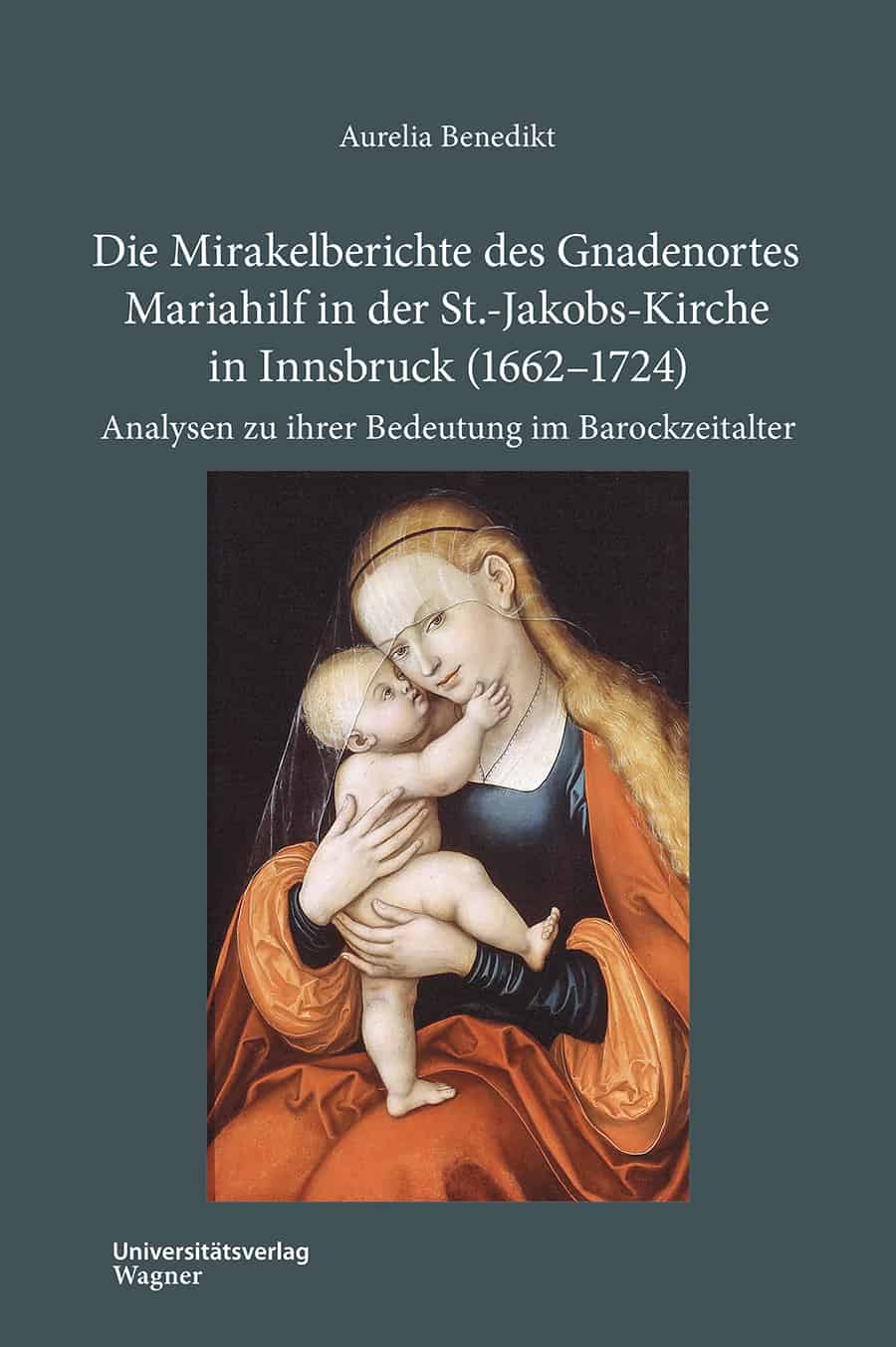
The cultural scientist DDr. Aurelia Benedikt has meticulously transcribed and evaluated around 400 of these Innsbruck 'miracle reports'. These praises of heavenly grace are quoted in her remarkable book. They can be read in the 'Publications of the Innsbruck City Archive':"The miracle reports of the Mariahilf place of grace in St. Jacob's Church in Innsbruck (1662-1724)".
In the hope of heavenly help, people from the Tyrol region in particular set out from 1662 onwards to personally present their worries and needs to the Virgin Mary in Innsbruck. After all, they had heard of the miracles that the image could bring about. The miraculous image also worked from a distance: it was always invoked when the need was greatest, no matter where you were. The faithful 'betrothed' themselves to the image and promised prayers, wax candles or other gifts should heaven help.
It is no wonder that many supplicants asked for healing or salvation from severe pain. It was still a time when medicine tended to achieve the opposite of healing. So heaven, specifically the Virgin Mary in the form of the miraculous image, became a kind of 'hope for survival' for many people.
What is extremely astonishing to me is that people at the end of the Middle Ages openly describe their predicament in their 'letters of confession' on paper, admitting wrongdoing or describing sheer fear. And, of course, the answer to their prayers. Unsurprisingly, believers who knew how to write, such as court servants, craftsmen and clerics, were among the most 'eager' seekers of help.
Women on pilgrimage
Another figure is interesting. The proportion of women in the miracle reports examined by Dr. Benedikt is higher than the proportion of men. Apparently, women in the Baroque period seized the opportunity to go on pilgrimage. Otherwise, they were not allowed to go on pilgrimages without a male companion.
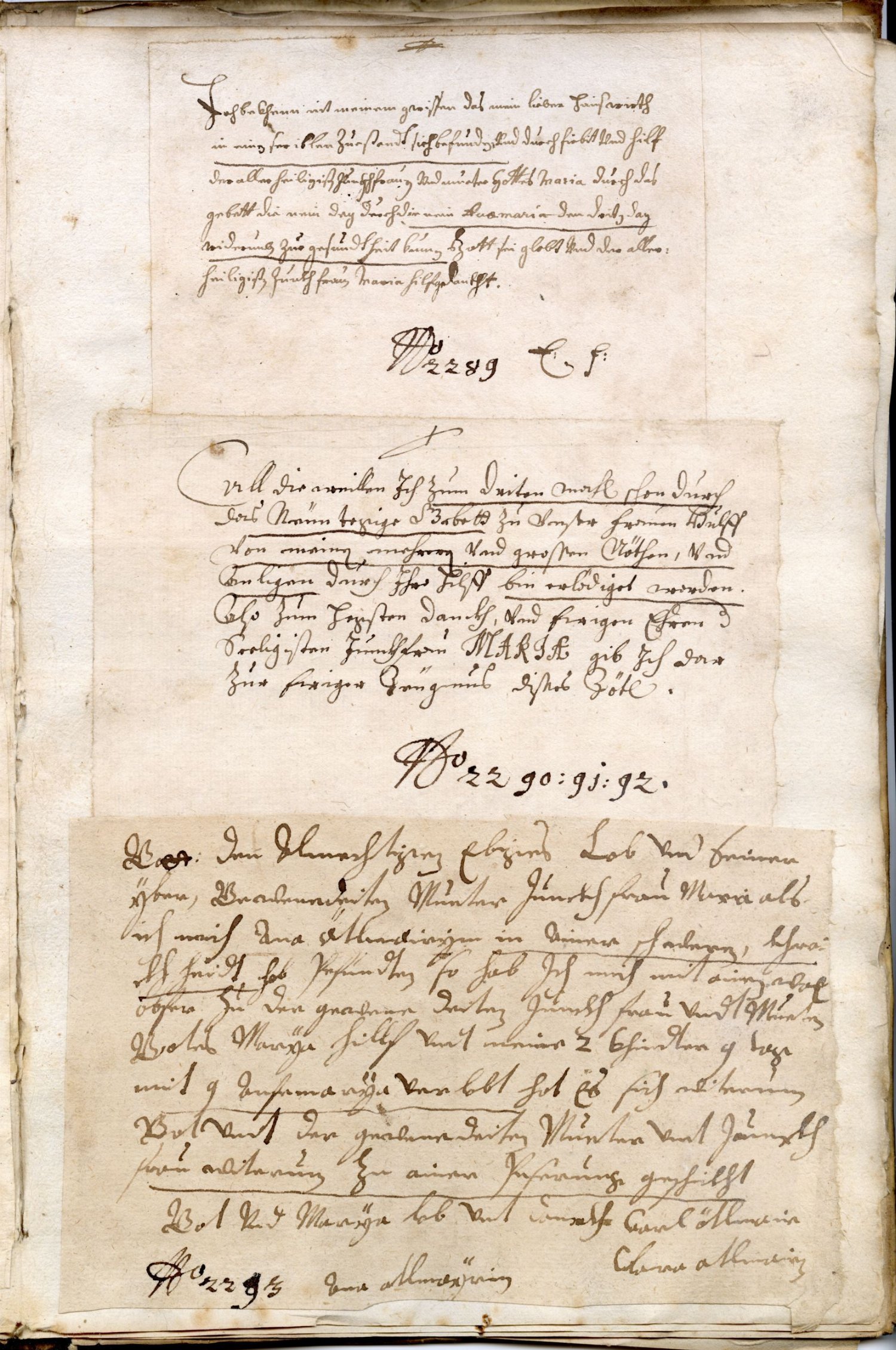
The letter of confession of a countess, namely the Freyin von Schneeburg. Image: St. Jakob provost archives
Innsbruck's "Miracle Books" are considered to be one of the most extensive collections of miracles in Central Europe. They are also a unique testimony to Tyrolean popular piety after the Reformation and the Thirty Years' War. In addition, these handwritten 'letters of confession', today they could be described as postings, were intended to prove the unbroken impact of the Catholic faith. In this case, the helping heavens were clearly Catholic. This effectively strengthened Rome's back in the conflict with the Protestants.
Some interesting letters of confession from the Miracle Book
Finally, I would like to present the contents of a few letters of confession that have been painstakingly transcribed into High German by Dr. Benedikt.
The perpetrators were caught with heavenly help
An extraordinary letter of confession comes from the famous Innsbruck court architect Christoph Gumpp. At the moment of danger - someone threw a stone into his bedroom and sent a threatening letter - he made a vow to 'pray before the Mariahilf picture and make sacrifices' if the perpetrators were found. The perpetrators were indeed caught and admitted the crime, and in gratitude he completed a nine-day 'Hail Mary' in front of the miraculous image.
Becoming sole heir after the vow
Matthias Waid 'betrothed himself to the Mariahilf picture' - you could also call it a vow - in order to win the case in an inheritance dispute against his sister. Heaven was radical here: the sister died and he became the sole heir.
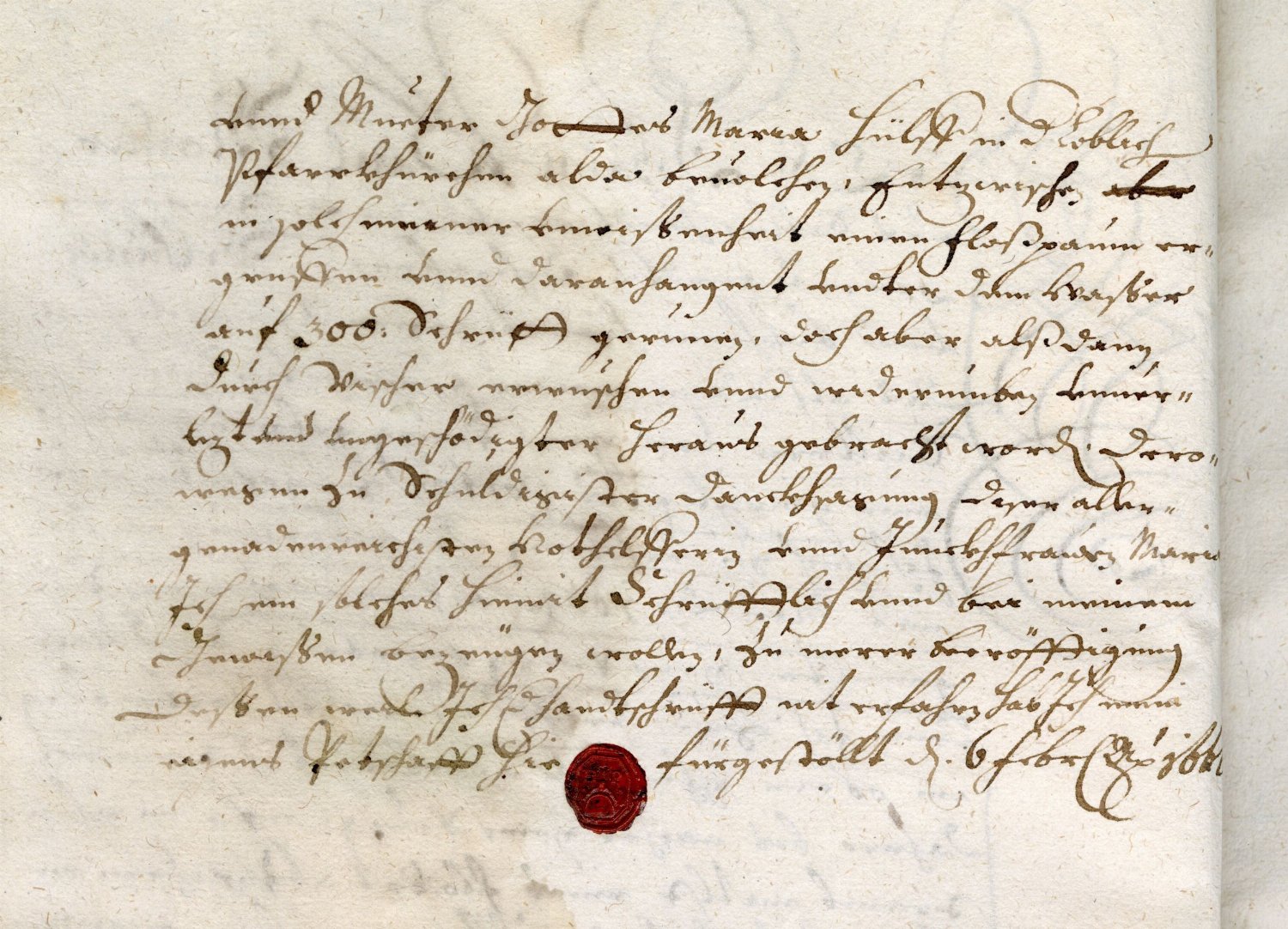
Horses rescued after falling "bay der Schießhitten into the waters of the Ynn"
Horses are the focus of several invocations to the image of grace. Andreas Stolz, a chamberlain on horseback, and his wife vowed to pray a nine-day Hail Mary before the image of grace when their horses had fallen into the water called the Ynnsprugg 'Bay der Schießhitten zu Ynnsprugg' and seemed irrecoverably lost. On June 24, 1665, he confessed that the horses had been rescued unharmed from the Inn through the intercession of the Virgin Mary.
Doctor and horse rescued from pit
Wolfgang Reiter, doctor of theology and pastor from the Stubai, expressed his gratitude for the many proofs of grace in several letters of confession. Above all, however, for the fact that, by the grace of Mariahilf, he had emerged unharmed from a pit into which he had fallen with a horse during the winter.
Miracles for children
Children are very often at the center of prayer invocations. Illnesses such as measles, infantile paralysis or consumption were said to have been healed by heavenly intervention. At that time, children apparently often fell out of windows and sometimes swallowed dangerous objects.
Child fell from 3rd floor but remained "fresh and healthy" unharmed
Anna Hafner confessed that her six-year-old child had fallen from the third floor of the house 'onto the street ' on July 3, 1663, but had remained unharmed, 'fresh and healthy' thanks to the miraculous image.
Seal stamp, spinning needle or shirt button swallowed
Children have always swallowed objects that were lying around. Like the boy who swallowed a 'Petschierstöckl', a stamp used to seal documents. Another child swallowed a spinning needle. The vow with a holy mass and a nine-day devotion to Mariahilf helped. The needle 'came out of the child's throat the next day'.
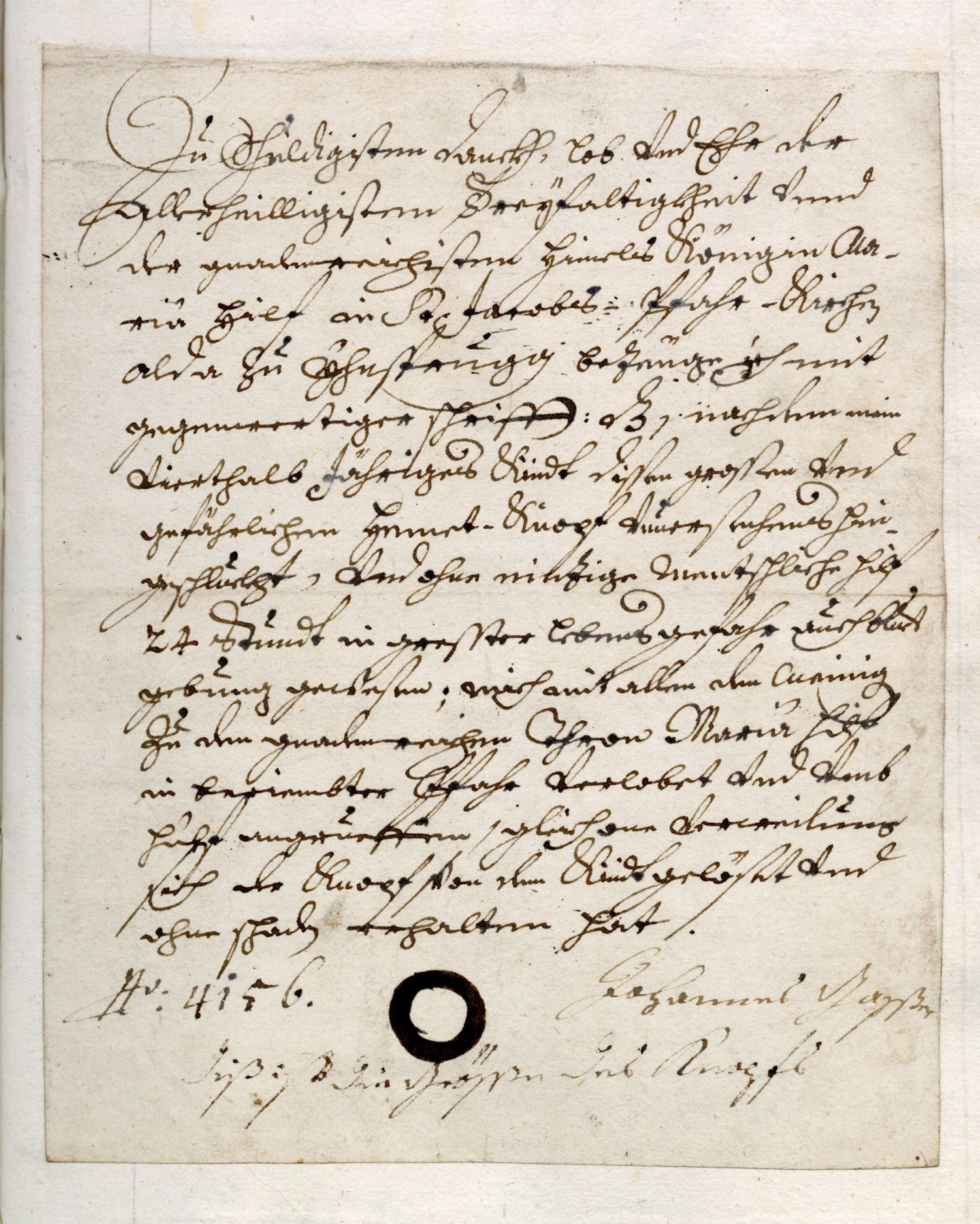
Johannes Gasser's letter of confession is remarkable. His four-and-a-half-year-old child had swallowed a shirt button. it had been spitting blood for 24 hours without any humanly possible help, whereupon he had 'invoked the gracious throne of Mary Help of Christians'. During the prayer, the button came off the child without any damage. Gasser then drew the size of the shirt button on the page of his miracle report.
Letter of confession by Johannes Gasser showing the shirt button, which appears miraculously after clicking on the image! Picture: Probsteiarchiv St. Jakob
Students with faith in God
Matthias Albanus, an Augustinian canon in Neustift, confessed that he had invoked the image of Mary "as the seat of wisdom and grace". Mary was prompt and also always merciful and mild.
Student's unchaste thoughts driven away
Sebastian Cerstleitner was freed from unchaste thoughts during a prayer in front of the picture, and his studies also returned to normal.
The blind could see again and the deaf could hear
Most of the letters of confession contain thanks for physical healings. No wonder, as there was no medical care in the modern sense. This left people with only the hope of heavenly help. Letters of confession also often mention that the image of grace healed blindness, deafness or paralysis.
The Stuaier vow
Last but not least, the miraculous image was invoked to grant protection from warlike events. As reported in a letter of confession from the Stubai court after a pilgrimage to the miraculous image, the people of Stubai had donated a 'sung mass' and prayed 9 Hail Marys for 9 days in a row as thanks for the protection from the plundering and murdering Bavarian hordes during the Bavarian raid in 1703.
A procession with the miraculous image
In the past, the miraculous image of Mariahilf was also carried outside the house in the event of significant incidents. For example, during the procession in February 1690, which was 'decreed' after the earthquake on December 22, 1689, which claimed 13 lives. All abbots, prelates, indeed the entire clergy, court servants and the city government had to take part. The preacher said that the population should kindly refrain from sins and vices.
Link to the book order:
Publications of the Innsbruck City Archives, Volume 72; ISBN 978-3-7030-6565-1; 652 pages, hardcover; € 29.90 plus shipping costs
Show me the location on the map
A volunteer at the "Schule der Alm" alpine farming school, cultural pilgrim, Tyrol aficionado and Innsbruck fan.
Similar articles
Spring brings a craving for things to do and be out and about--why not take a tour…
The name of this landscape alone exudes a mysterious magic: St. Moritzen. Located to the west…
the handpan The Handpan - a more generic term for a Swiss invention first known…
As part of the third Innsbruck Winter Dance Festival, this time the Limonada Dance Company…