4_Ultra memoria cosmica_Susanne Gurschler
15 September 2025
#
Post originally written in: Deutsch Information An automatic machine translation. Super fast and almost perfect.

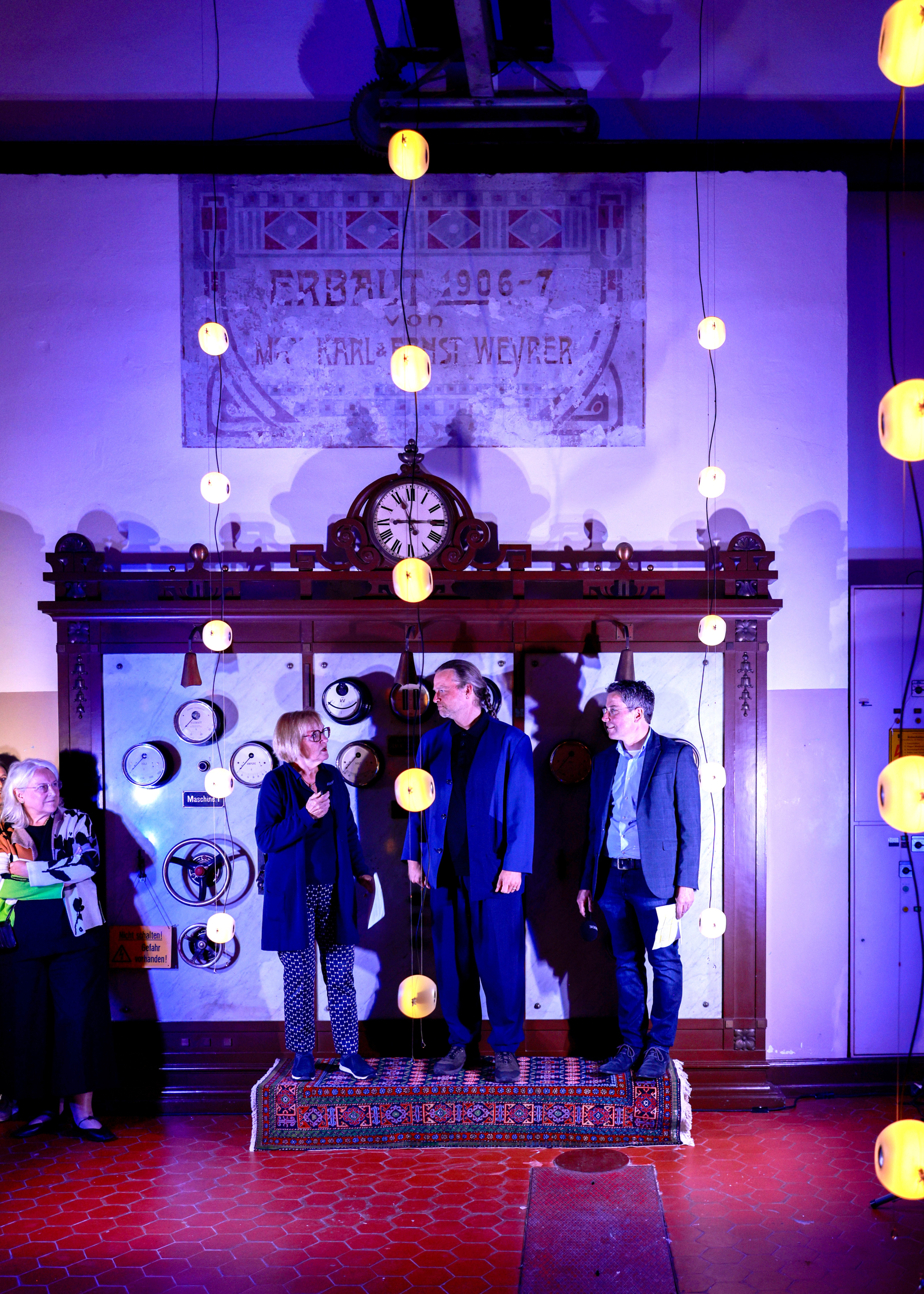
Sounding particles in KG17: the titles of the pieces are „Movimento zigzag”, „Galassia mormorante” or „HERCanum”. - A total of 13 pieces make up the score that can be heard in the turbine room of the former power station at Kirchgasse 17 in Mühlau. The special feature: Data sets from neutrino observatories in the Antarctic ice and in the deep sea of the Mediterranean provided the source material for Tim Otto Roth's sound laboratory „ULTRA | memoria cosmica” by Tim Otto Roth. The artist makes sounds of microscopically small parts audible and visible.

From outer space

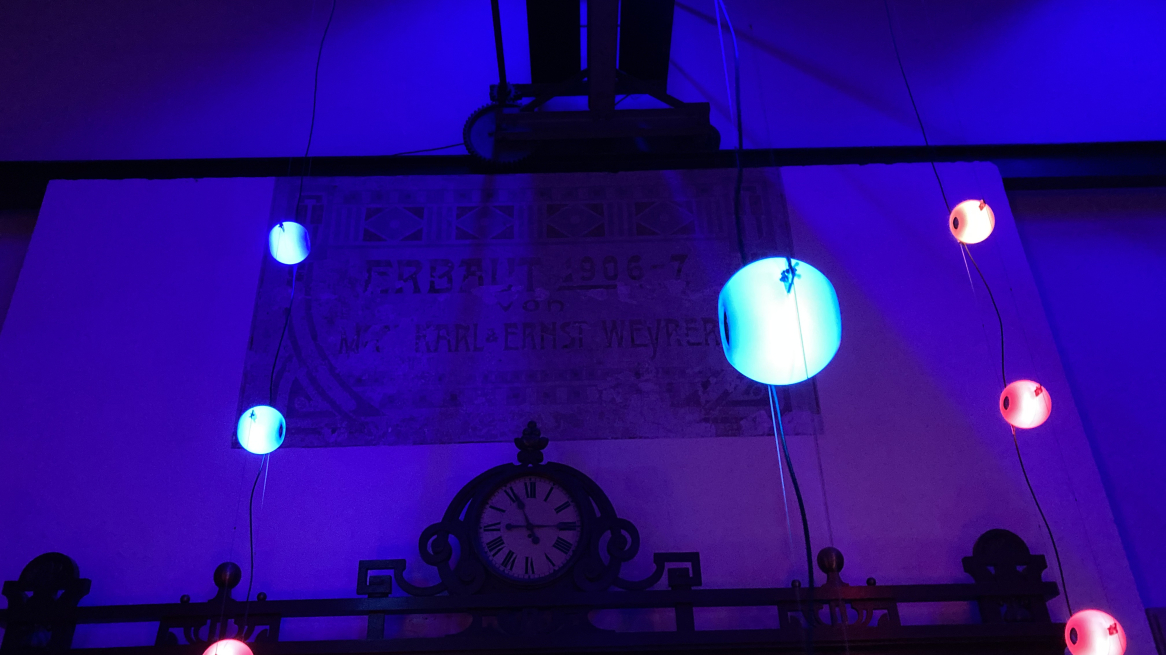
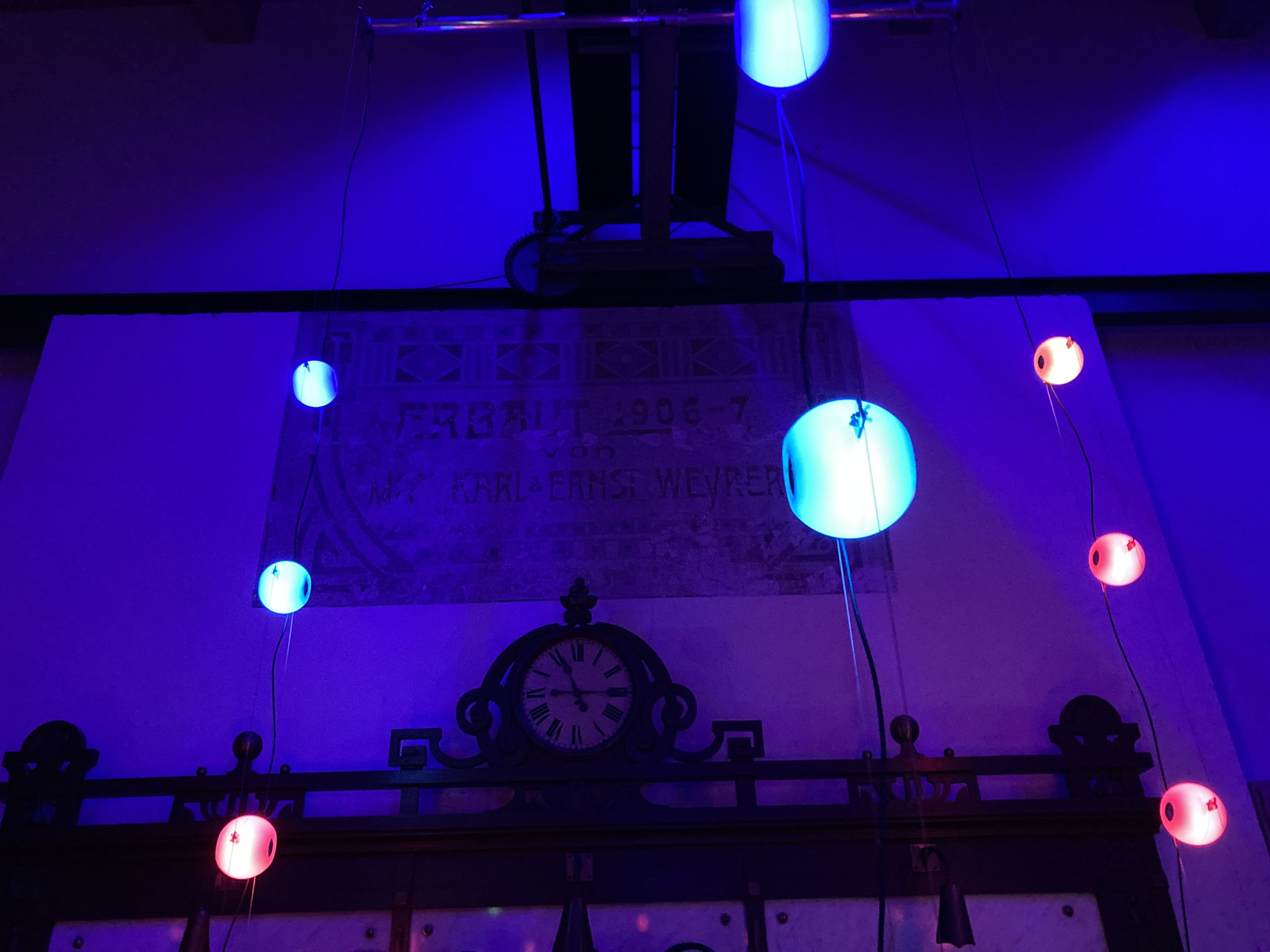
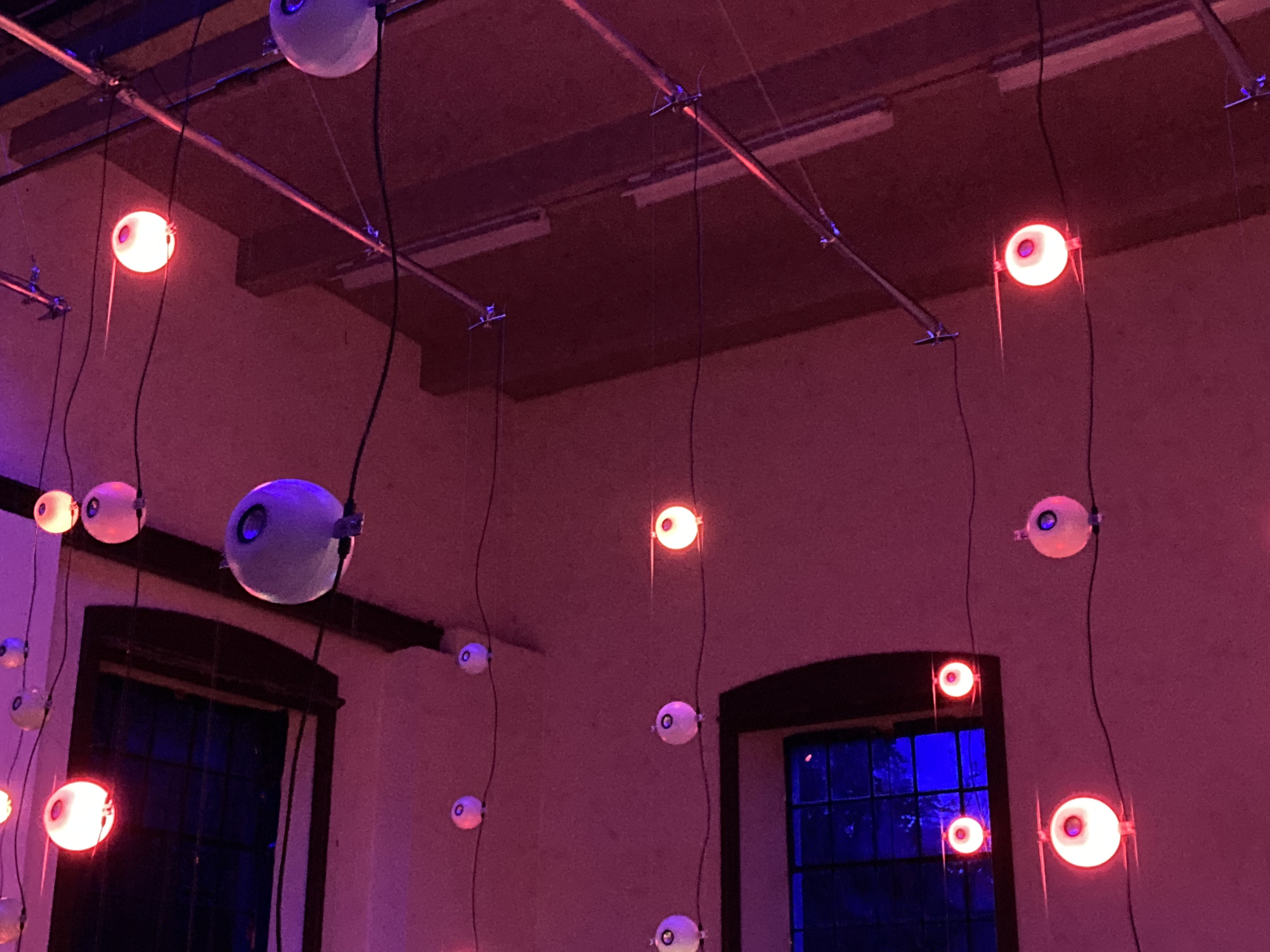
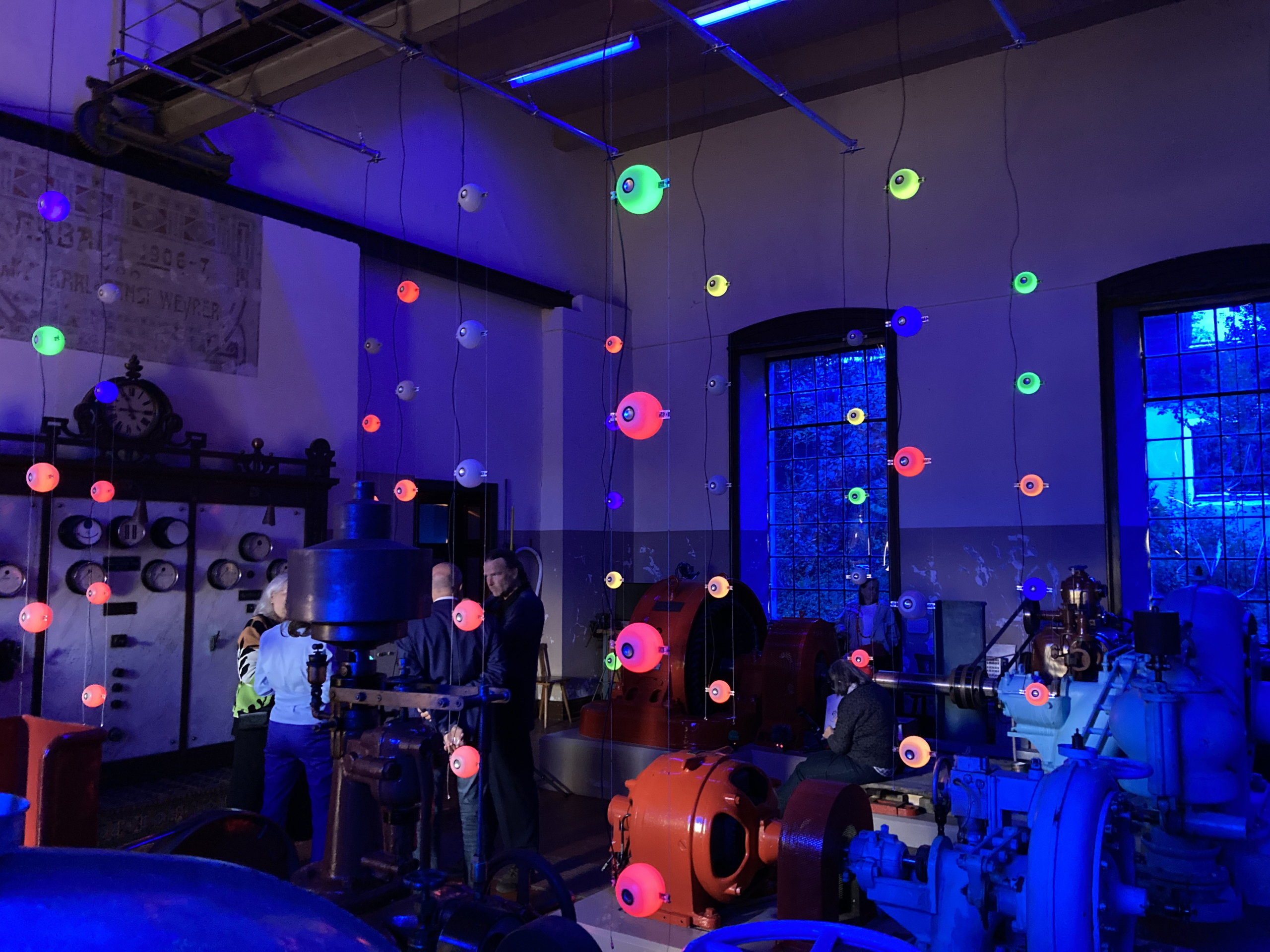
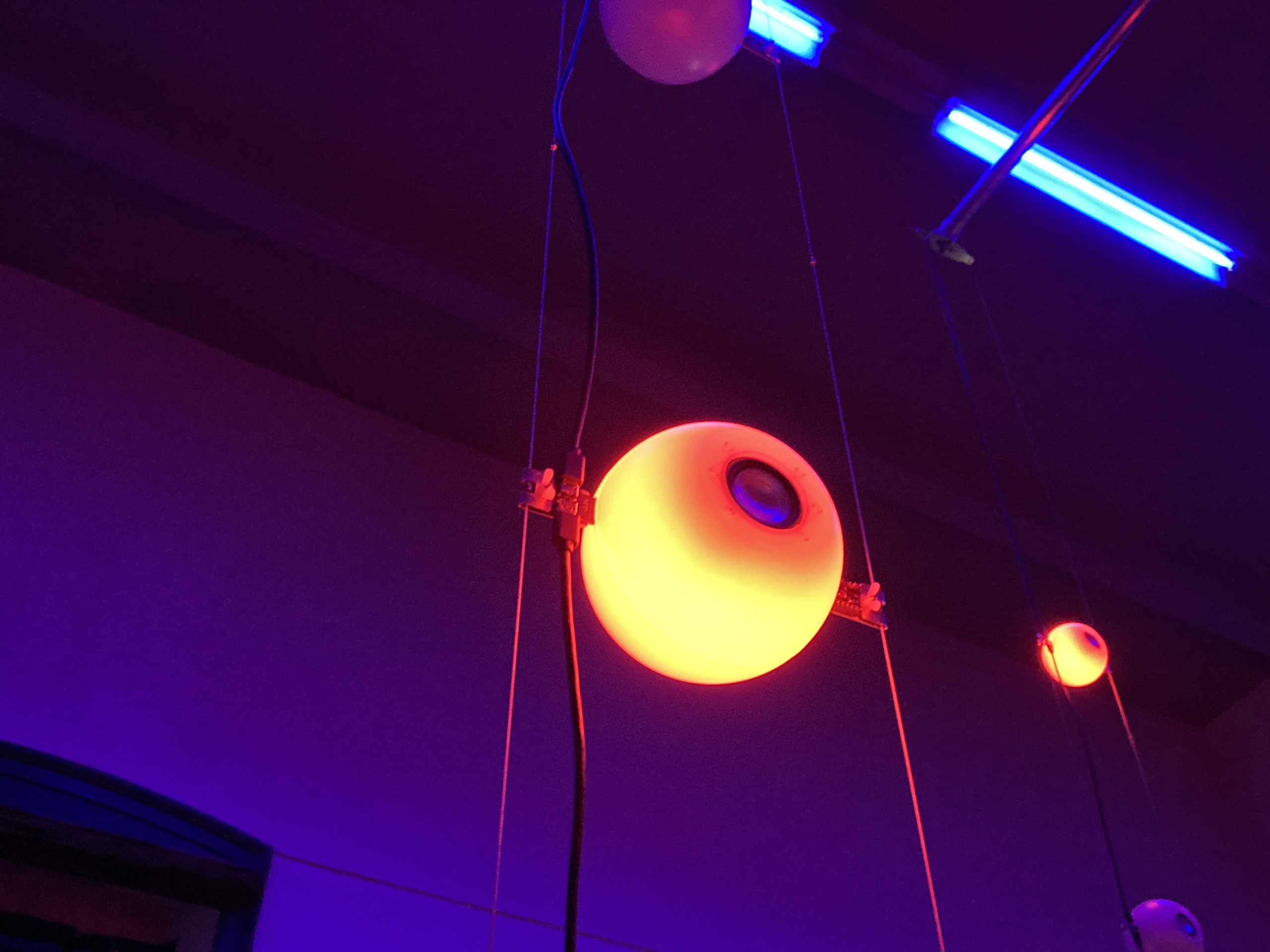
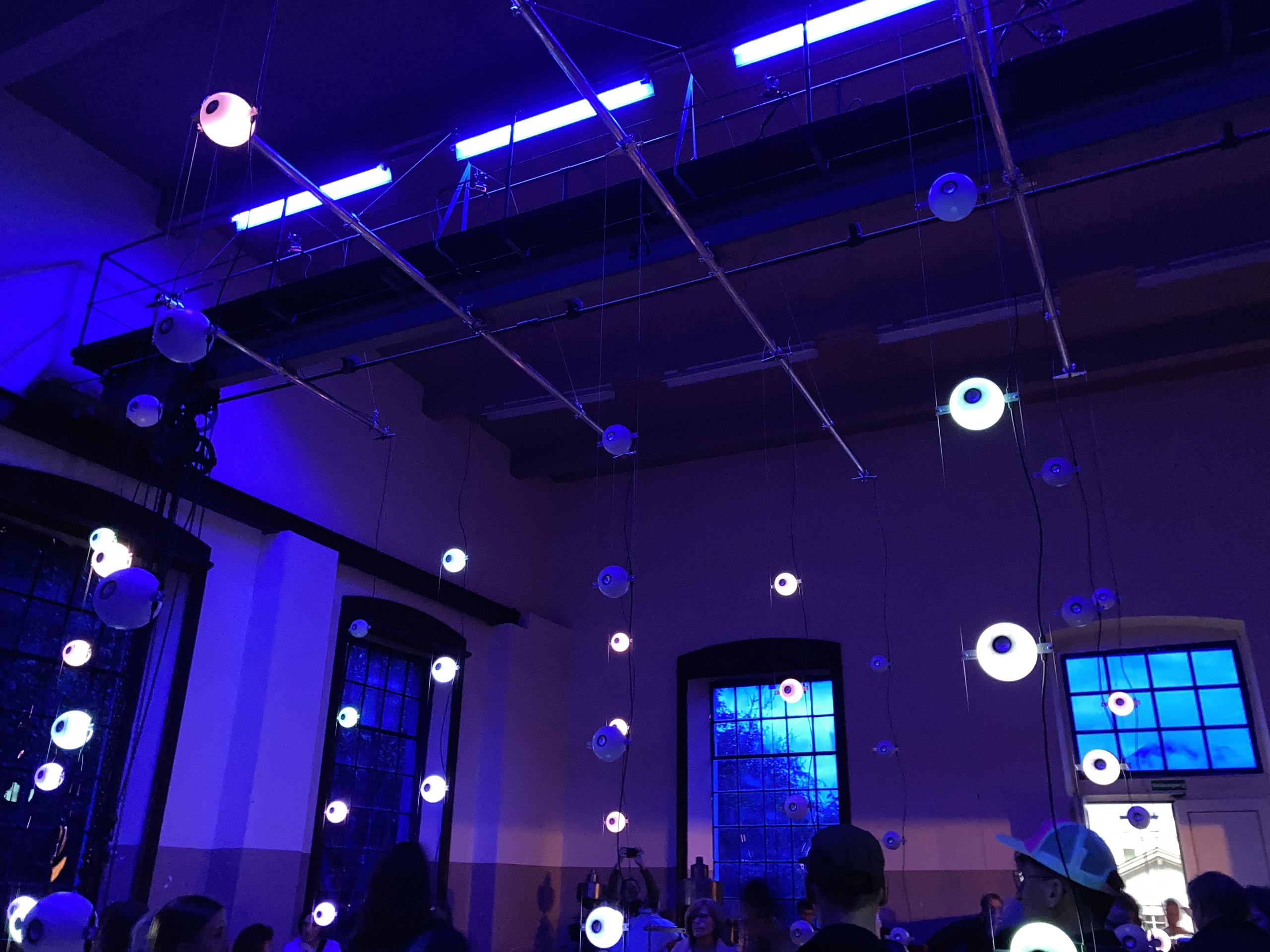
Foils on the large windows of the industrial monument bathe the room in a spherical blue light. Spherical, luminous loudspeaker sculptures hang from the ceiling, attached to constructions made of aluminum tubes and steel cables.

They allow us to experience the movement of the particles from top to bottom, from space to earth. Every second, millions of particles from the universe , invisible to us, crash into the atmosphere, hit air molecules and continue to fall in cascades. The so-called "light shower" penetrates the surface of the earth, our skin.

We can't see them, we can't hear them, we can't smell them and we can't feel them. And yet they are there.

Roth has developed a method to make this phenomenon visible to our eyes and audible to our ears. I walk through the turbine hall, past the loudspeakers that glow in spectral colors and emit memorable melodies - listening and marveling. Magical. Breathtaking.

Power plant with history

The installation "ULTRA | memoria cosmica" by Tim Otto Roth looks as if it was made for this setting . And indeed, the composer and conceptual artist from the Black Forest has tailored his project to the turbine room. Since 2022, the KG17 association has been organizing very special cultural events here: The listed industrial building and its history are always the starting point for readings, concerts, performances and exhibitions.

And so the civil engineer Gerhard Kerschbaumer and the cultural mediator Helga Madera were looking for a project to mark the 100th anniversary of quantum mechanics this fall that would link this anniversary with the topic of water and water molecules. It didn't take them long to find what they were looking for.

Center of Astrophysics

In his work, Tim Otto Roth deals intensively with research in the field of astro(particle) physics. What's more: Innsbruck has not only been an important research center in this field since the present day. Even before the 2nd World War, the University of Innsbruck was world-famous in this field. This is linked to a very well-known and a - wrongly - less well-known name.

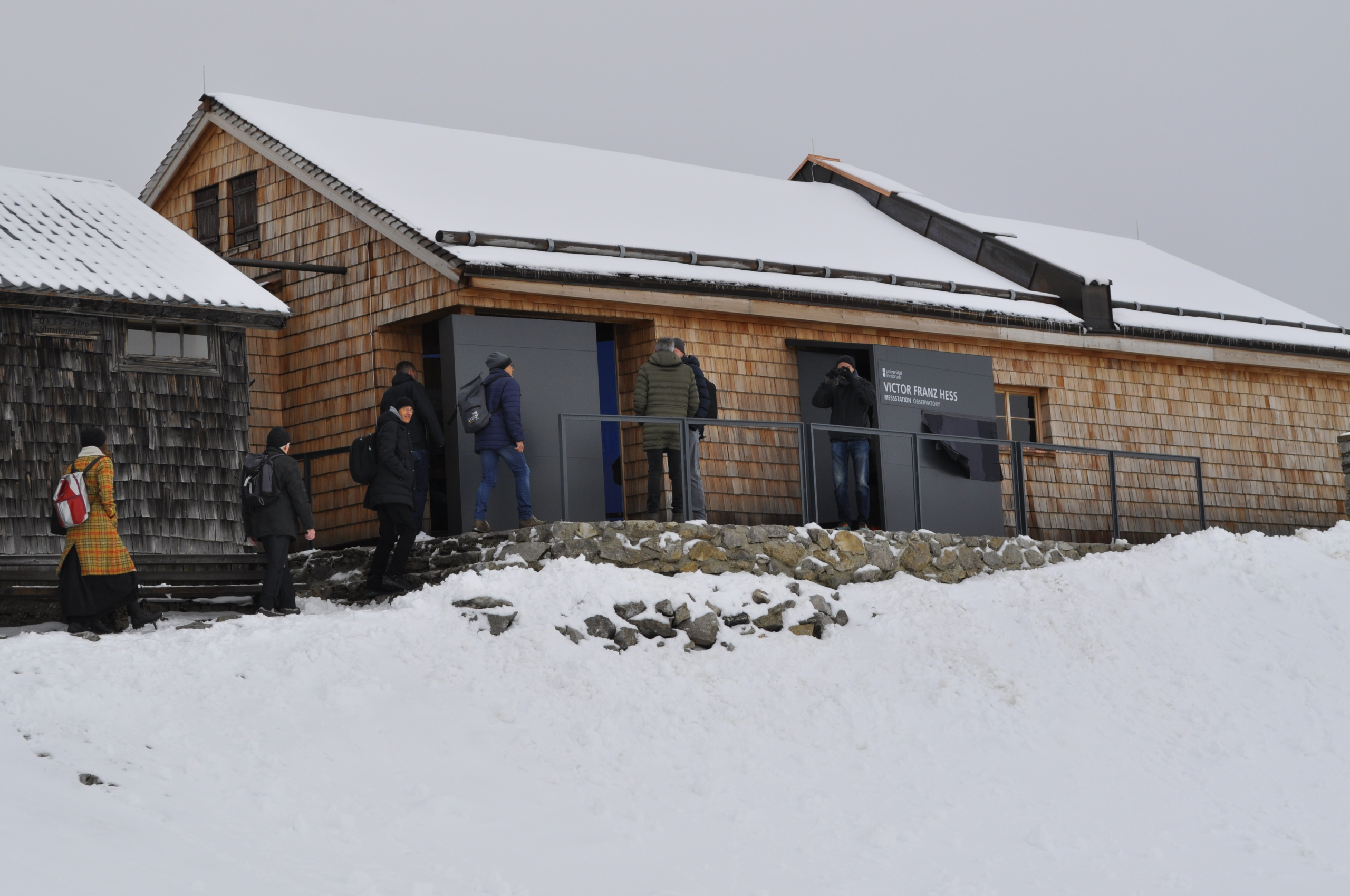
The former is Victor Franz Hess (1883-1964), discoverer of cosmic radiation and Nobel Prize winner in physics. The scientist followed a call to the University of Innsbruck and built a laboratory for "ultra-radiation research" at Hafelekar in 1931, which is still in operation today(click here for the blog post on the occasion of the reopening of the adapted and expanded measuring station).

Marietta Blau

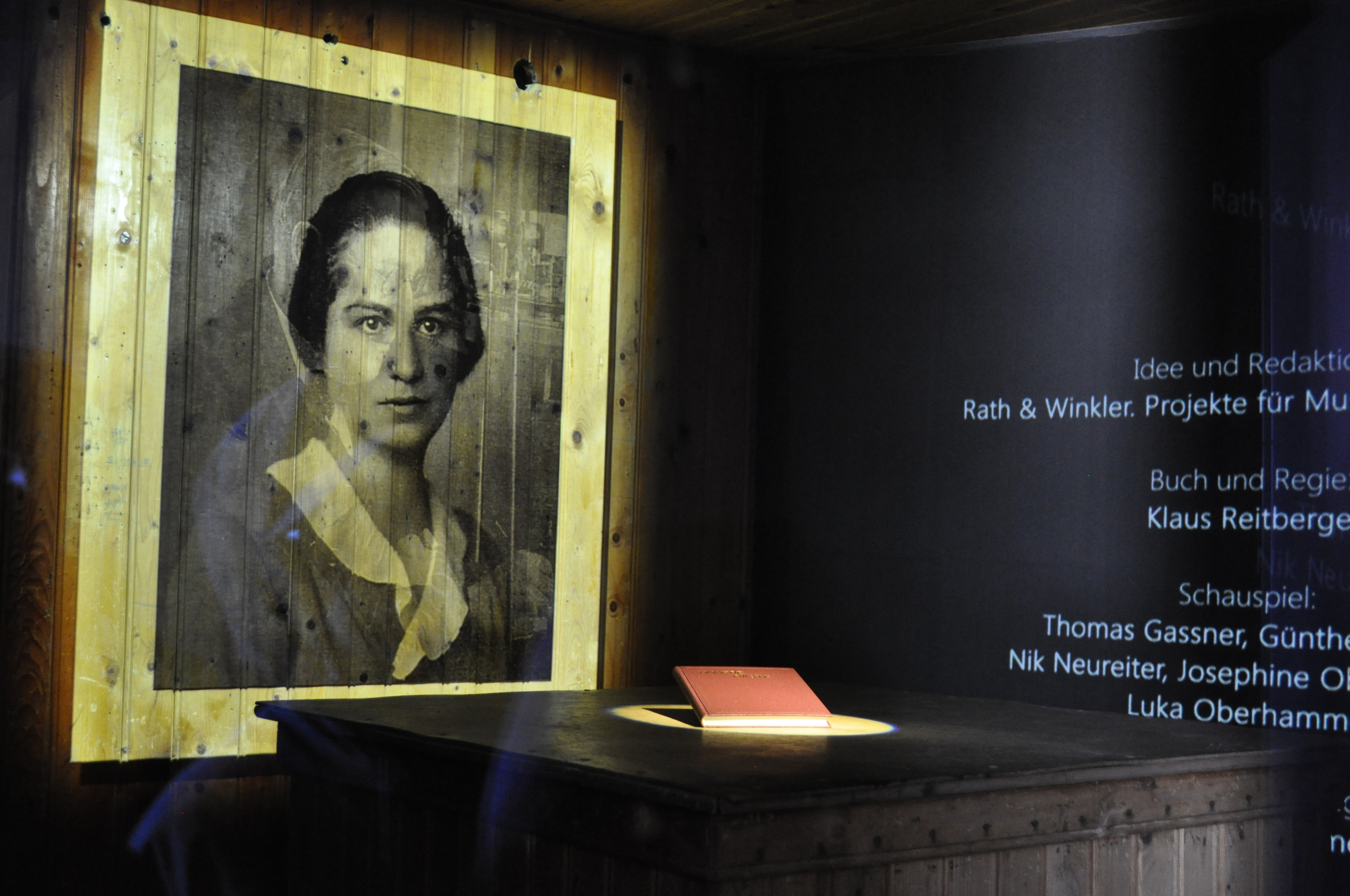
Also honored there is Marietta Blau (1884-1970). The scientist, who is only known to insiders today, was not an outstanding researcher and made a discovery that was just as groundbreaking and worthy of a Nobel Prize as that of Hess. But as is so often the case in history, women have long been ignored in science, even when they achieved top results and broke into new, unknown fields. And that is what Marietta Blau and her colleague did Hertha Wambacher (1903-1950). They made invisible radiation visible.

Blauwho had studied physics and mathematics at the University of Vienna, graduated in 1919. Her research focus, radioactive radiation, would continue to occupy her intensively. During the interwar period, she worked as a physicist in Berlin, Frankfurt and Göttingen and finally at the Radium Institute in Vienna. In 1925, she presented a method for capturing microscopic traces of charged hydrogen nuclei (protons) in photographic emulsions. She also supervised scientific qualification work, which led to a collaboration with Hertha Wambacher.

Core fragmentation on Hafelekar

In 1937, Blau set up eleven silver-coated photo plates at Hafelekar. They remained there for four months in a vertical position. During the evaluation at the Institute for Radium Research in Vienna, Blau made an almost unbelievable discovery: the radiation had not only - as expected - just left traces in the silver emulsion of the plates.

There were also star-shaped traces converging at one point.

A clear indication that the cosmic ray particles smashed atomic nuclei directly in the emulsion. "These disintegration stars were a scientific sensation," explained Roth at the opening, Marietta Blau thus a "real game changer" in this field.

Like Hess, Blau had to flee from the Nazis. Initially working in Mexico on the recommendation of Albert Einstein, the physicist moved to the USA in 1944, where she worked on the development of a particle accelerator, among other things. Despite her sensational discovery, Blau was denied the Nobel Prize.

ULTRA | memoria cosmica

It is wonderful that the exhibition at the Kraftwerk in Mühlau is also a tribute to this great scientist and her achievements. "At the same time, ULTRA is an invitation to the public to engage with processes that are omnipresent but elude limited human perception," says Roth.

In this way, the project in KG17 on the occasion of 100 years of quantum physics represents an extremely exciting connection between the measuring station at Hafelekar, the scientist Marietta Blau and Tim Otto Roth's sound laboratory, between art and science. Surrounded by turbines, visitors come into contact with sounds from outer space, from which particles pelt down to earth imperceptibly to us - hearing their sounds, adapted for our ears, is breathtaking.

The exhibition "ULTRA | memoria cosmica" runs until October 24, 2025.

KG17

Kirchgasse 17, 6020 Innsbruck / Mühlau
Mail: info@kg17.at
Tel.: +43 699 11357508

Opening hours:

Fri and Sun 4-7 pm; information on the supporting program at: www.kg17.at

You can find more exciting events in and around Innsbruck in the Innsbruck Tourismus event calendar.

Photos, unless otherwise stated: © Susanne Gurschler

Similar articles