The witty readers of my blogs already know: I am an admirer of old craftsmanship in Innsbruck and adore our unique, historic buildings. Especially when they still serve a contemporary-modern purpose after centuries. After the fabulous renovation of the house in the Hofgasse 5 i discovered another building with a highly interesting past in which craftsmanship is practiced in a listed environment. I followed up a reference to the first 'Tyrolean country house', which is said to have been located at Herzog-Friedrich-Straße 29 from 1613.
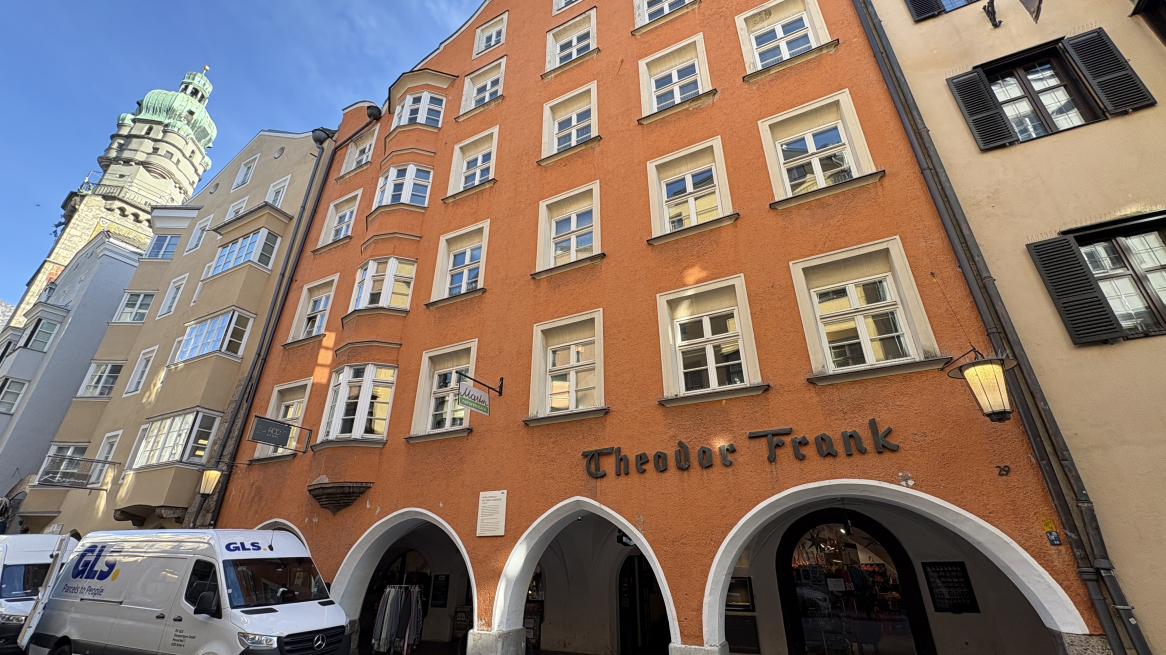
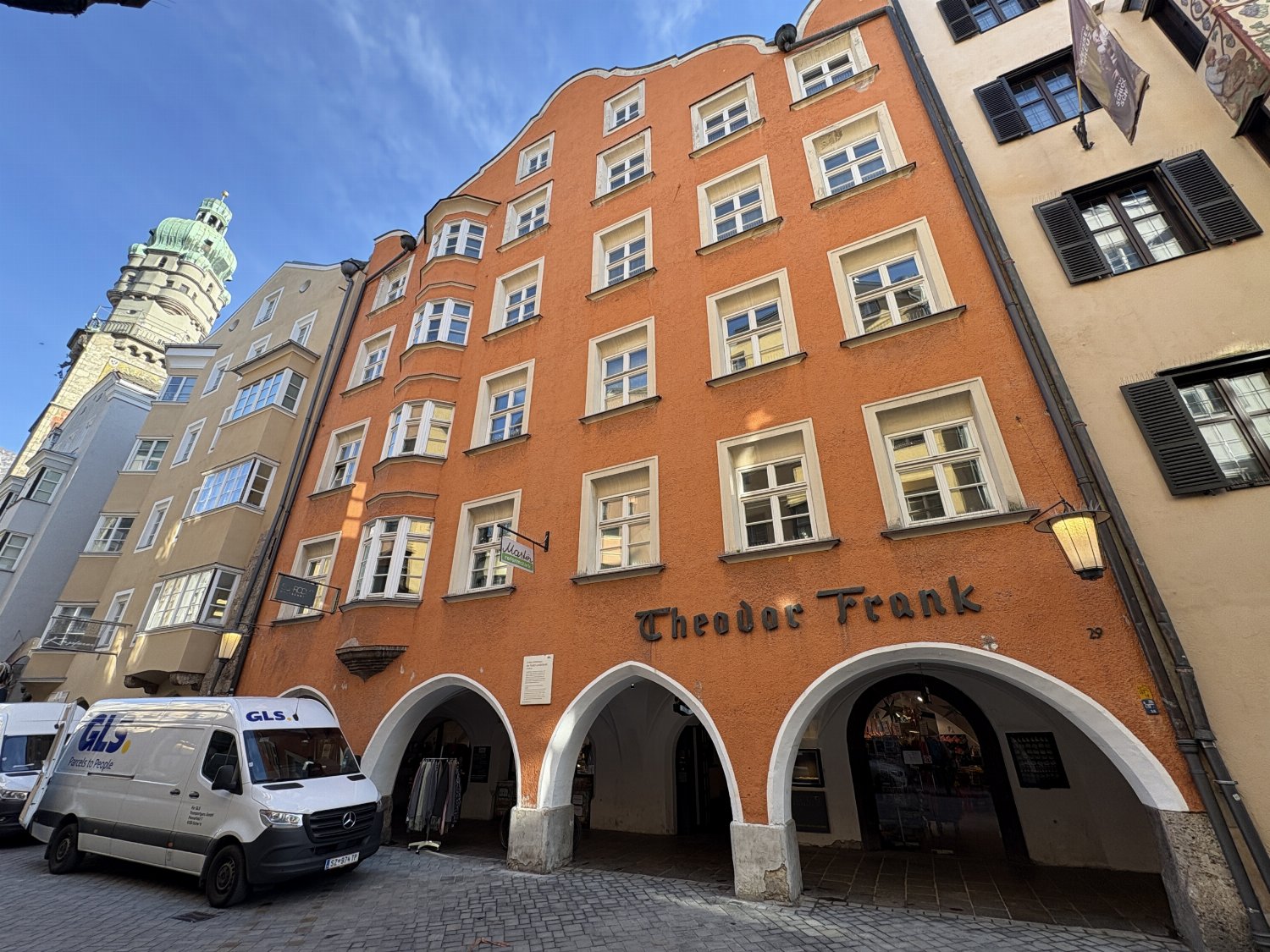
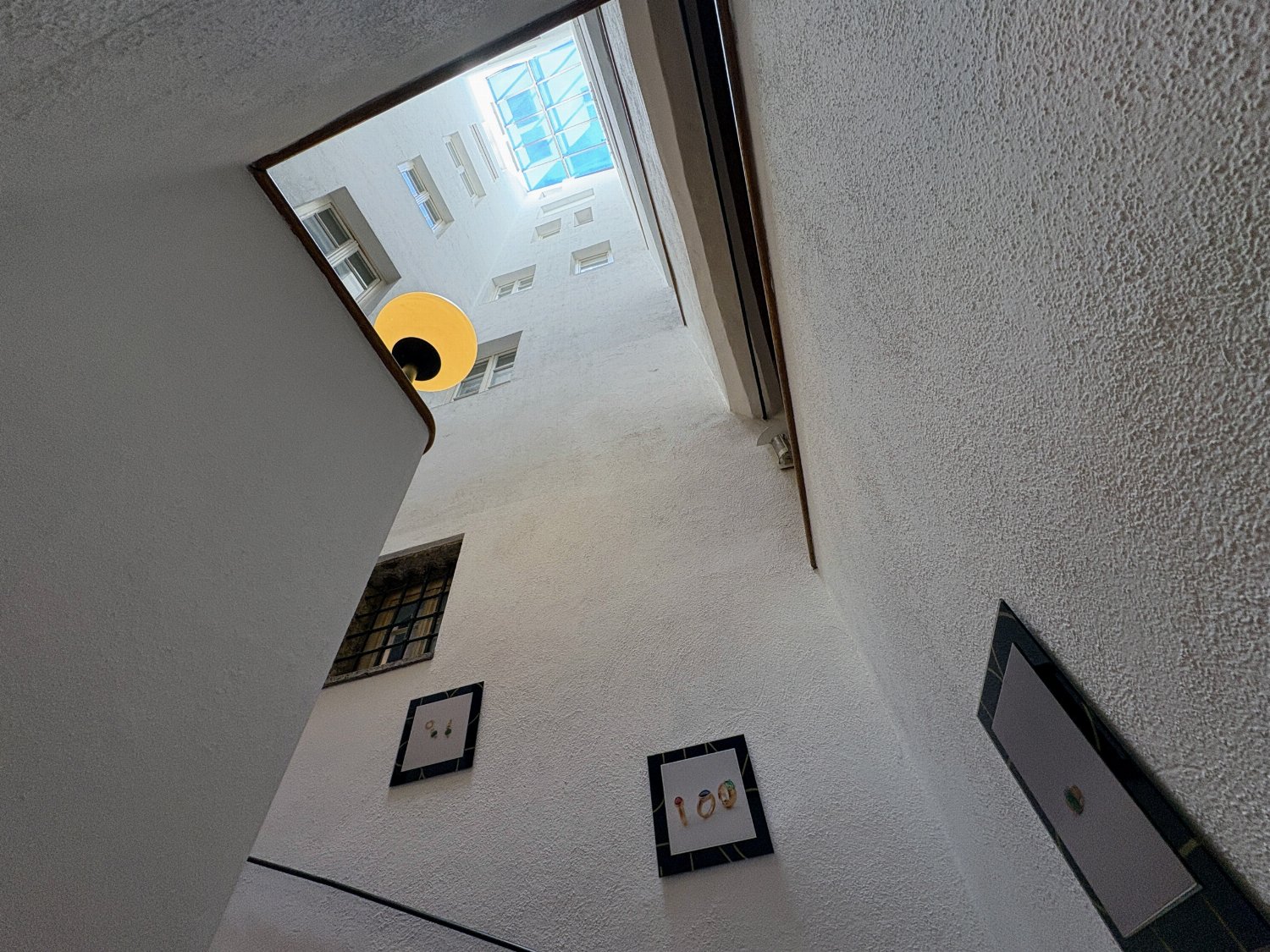
At the time of its construction at the beginning of the 16th century, the house was once the mightiest on the square. On closer inspection, the exterior is almost monumental. The baroque-style façade, which was later altered, shines in a wonderful shade of red. According to an old building description, the building once also housed stables. The 'far-reaching building, five storeys high with arcades, bay windows and gables' still stands out from the multitude of medieval houses in the old town. It is also interesting to note that the staircase inside the building leads to all five floors around a 'light shaft', i.e. it is lit by daylight.
The mighty 'Frankhaus' in Innsbruck's old town was the first Tyrolean country house more than 400 years ago. ©W. Kräutler
Tyrol's first country house
Even 'old-established' Innsbruck residents know little about the role that house no. 29 once played in Herzog-Friedrich-Straße. It was first mentioned in documents in 1572 as an inn „Zum gulden Engel“, which came into the possession of Hans von Freysing in 1603. in 1613 it was bought by the Tyrolean Estates, who used it as the first permanent Tyrolean country house until 1666. Around 50 years later, when the rooms were no longer sufficient, the Tyrolean estates acquired the former Harnischhaus in the new town, which stood on the site of today's Altes Landhaus. Harnisch because the ceremonial armor, the elaborately decorated breastplates of the knights for Emperor Maximilian, were 'tailored' here.
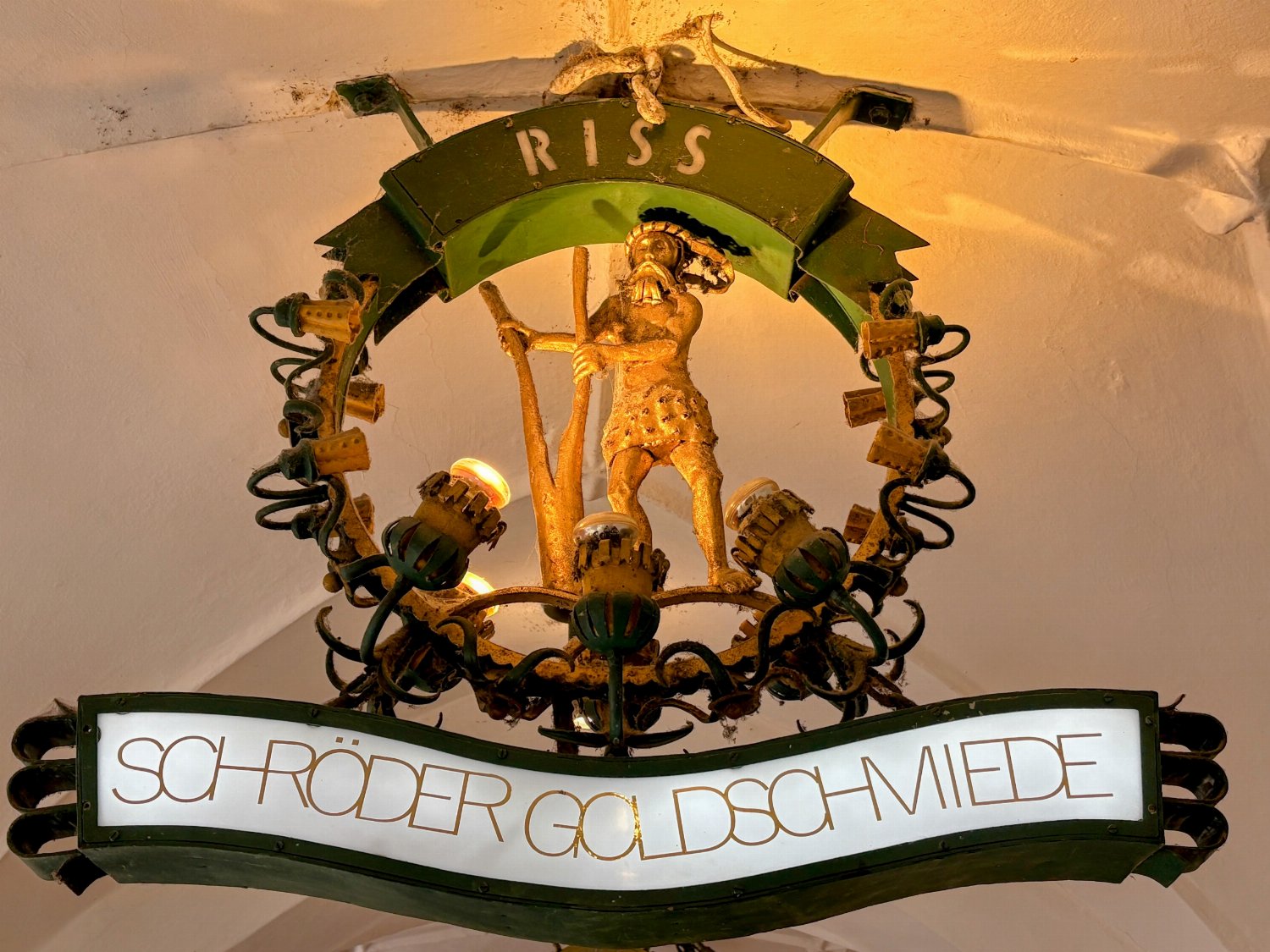
At the beginning of the 19th century, the house came into the possession of the Riss family. A reminder of this is still visible today in the arcades with the late Gothic star vaults: an ornate sign hanging from the ceiling in front of the entrance and bearing the name ‚Riss‘. Designed with great attention to detail, I believe it depicts a 'Wild Man'. In modern times, the house became known as ‚Frankhaus‘, named after the merchant family of the Theodor Frank. The old lettering still adorns the façade today.
The artistic sign for the old Riss merchant family and the Schröder goldsmith's studio in the arcades. ©W. Kräutler
From the Golden Angel to the gold workshop
It is a wonderful coincidence that an inn 'Zum Goldenen Engel' was once run here. What I would not have expected on a visit was that 450 years later, this late Gothic building has a commercial namesake, namely the goldsmith's workshop Schröder. To a certain extent a historical continuity, but certainly an ideal use of the historical building core.
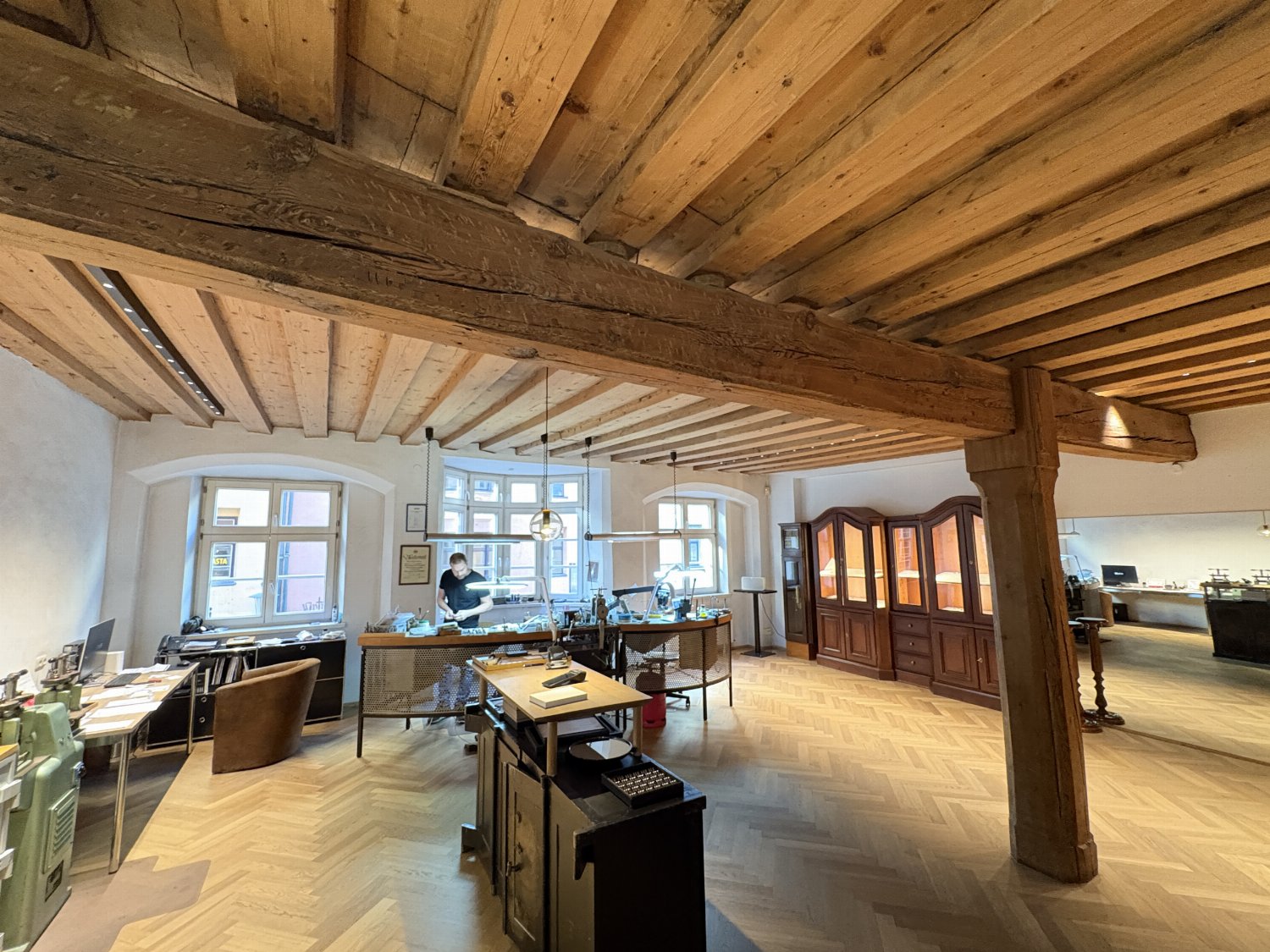
Historic beamed ceiling with wooden pillars
The entrance to the studio leads visitors first to an atrium with a light inlet. The studio of the Innsbruck goldsmith Goldsmith Christian Schröder on the first floor is housed in the rooms that most likely once housed the country house. A massive, continuous beamed ceiling and a free-standing wooden pillar are perfectly preserved and form a kind of patina for the goldsmith's ancient craft.
The 'master room' of the studio with its original wooden ceiling and free-standing pillar. It can be assumed that this room was used by the Tyrolean parliament for meetings 400 years ago. ©W. Kräutler
When the studio was set up here in 1987, the rooms served as a kind of warehouse. When the building was renovated, a wonderfully preserved, original beamed ceiling came to light, which was "cleaned and uncovered by hand" under dozens of layers of paint, as Schröder tells me. We are sitting in the customer corner of the 'Meisteratelier', whose massive wooden ceiling and the massive, late Gothic freestanding wooden pillar give this room a very special aura.
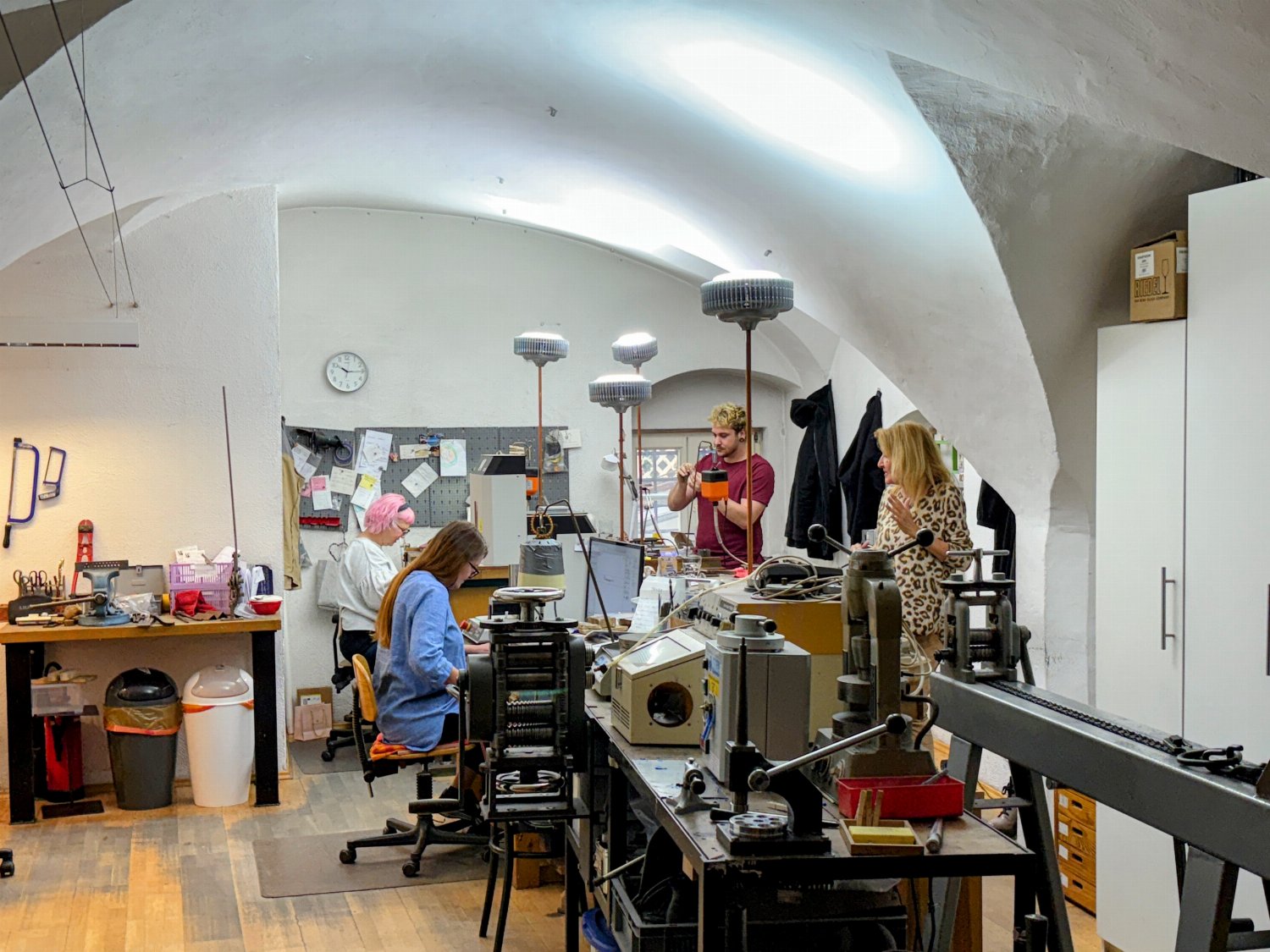
Studio in the 'barrel vault'
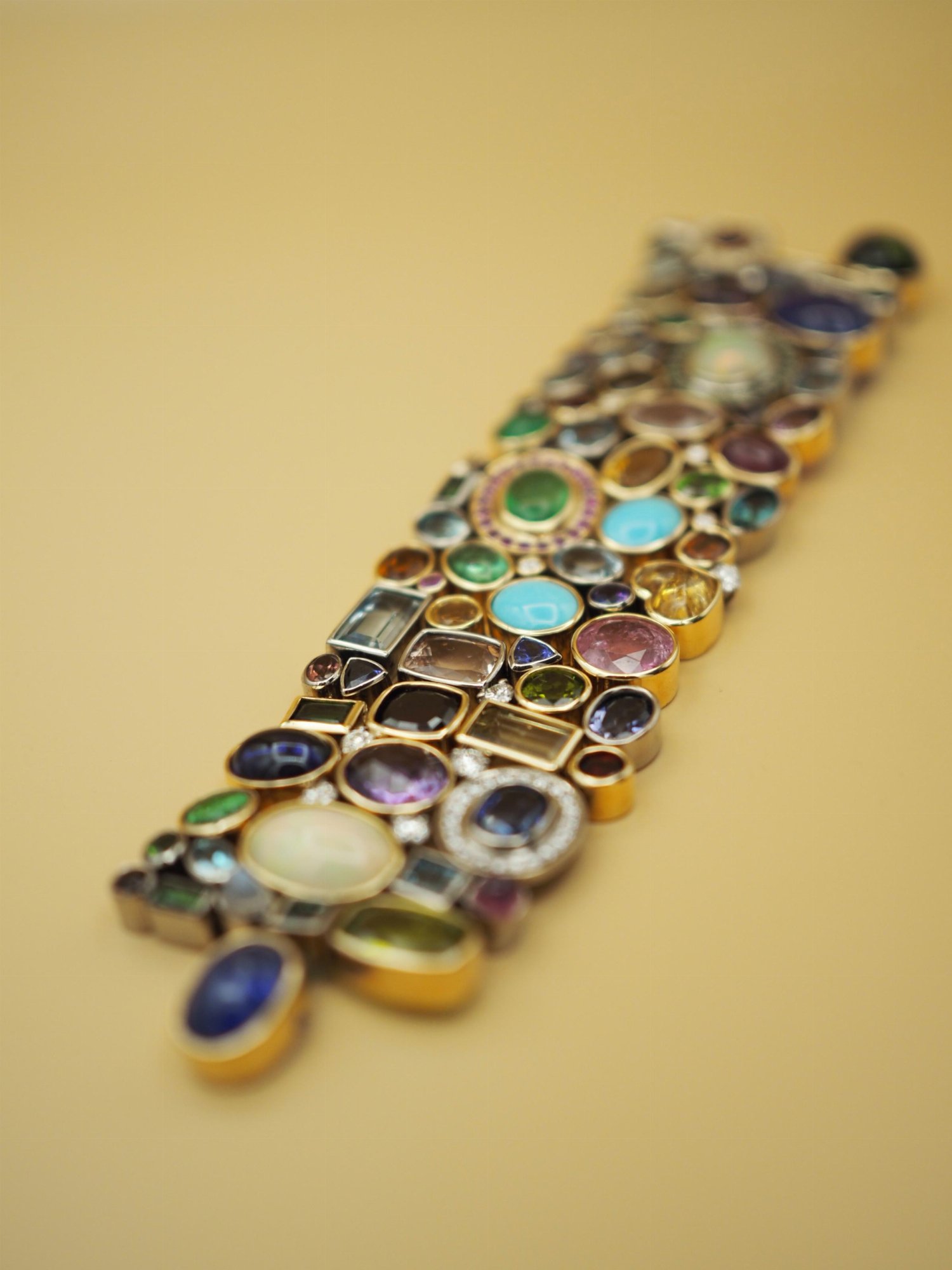
Schröder began his goldsmith apprenticeship here in 1991 and became a partner in the workshop in 2001. He has been running it alone since 2023. Together with six employees, who work in a wonderfully renovated, ancient barrel vault, they create fine pieces of jewelry made from gold, platinum, palladium and silver. They cut, solder, hammer, file, engrave and melt just like 'in the old days'. With the difference that electric current and gas burners are used. Engraving has also changed fundamentally: it is carried out with a modern laser.
In these historic rooms, however, gold is also 'melted', which means that it is fused with copper to different carat sizes with an accuracy of a hundredth of a gram. "18 carat gold, for example, must contain at least 750 parts gold out of 1000 parts. If there was one part less, I'd be in serious trouble," explains Schröder. With his master's hallmark next to the carat indication, he virtually guarantees the gold content.

The barrel vault gives the studio an elegant touch. ©W. Kräutler
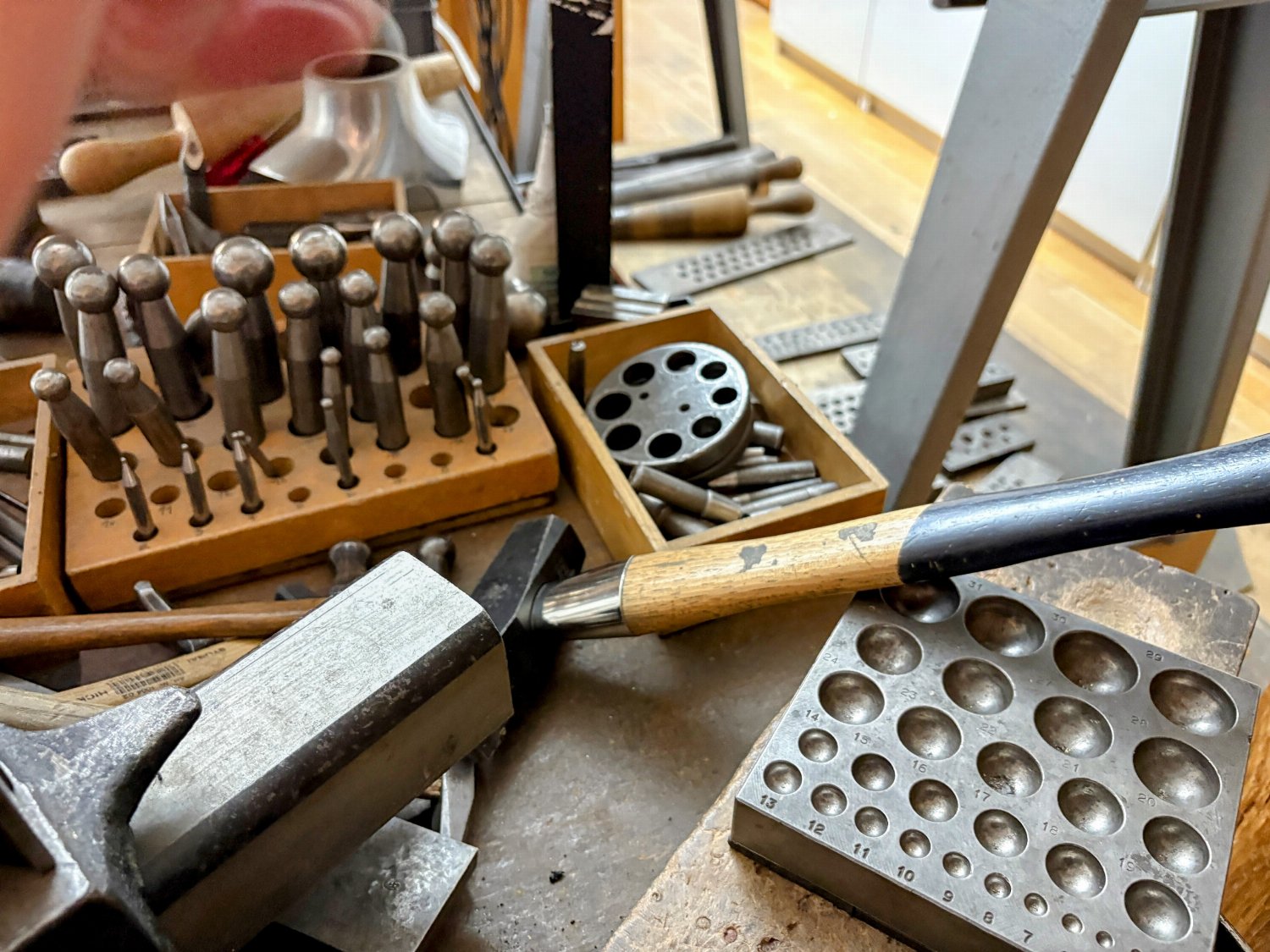
Goldsmith's tools. ©W. Kräutler
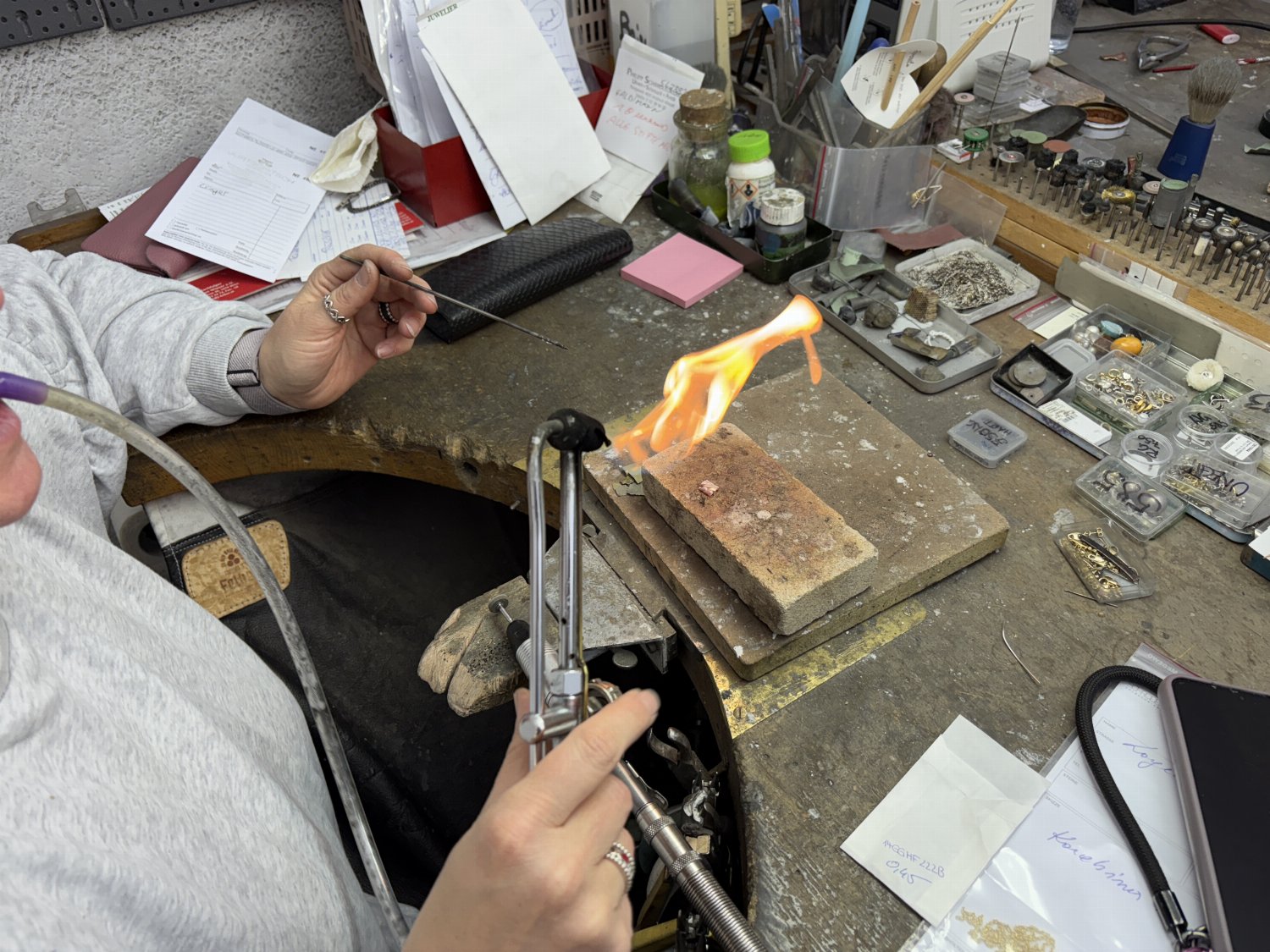
Silver is being heated here. ©W. Kräutler
Exclusively unique pieces
The fact that Atelier Schröder does not offer any 'merchandise', with the exception of bought-in, already cut gemstones, did surprise me somewhat. "We develop individual pieces together with our customers, quasi unique pieces," says Christian Schröder, not without pride. Merchandise is therefore not in keeping with the workshop's principle of producing exclusively individual and handmade pieces of jewelry. Most of the master craftsman's customers come to the workshop with specific ideas, which are then implemented until the customer is completely satisfied.
The 'wedding ring satisfaction guarantee'
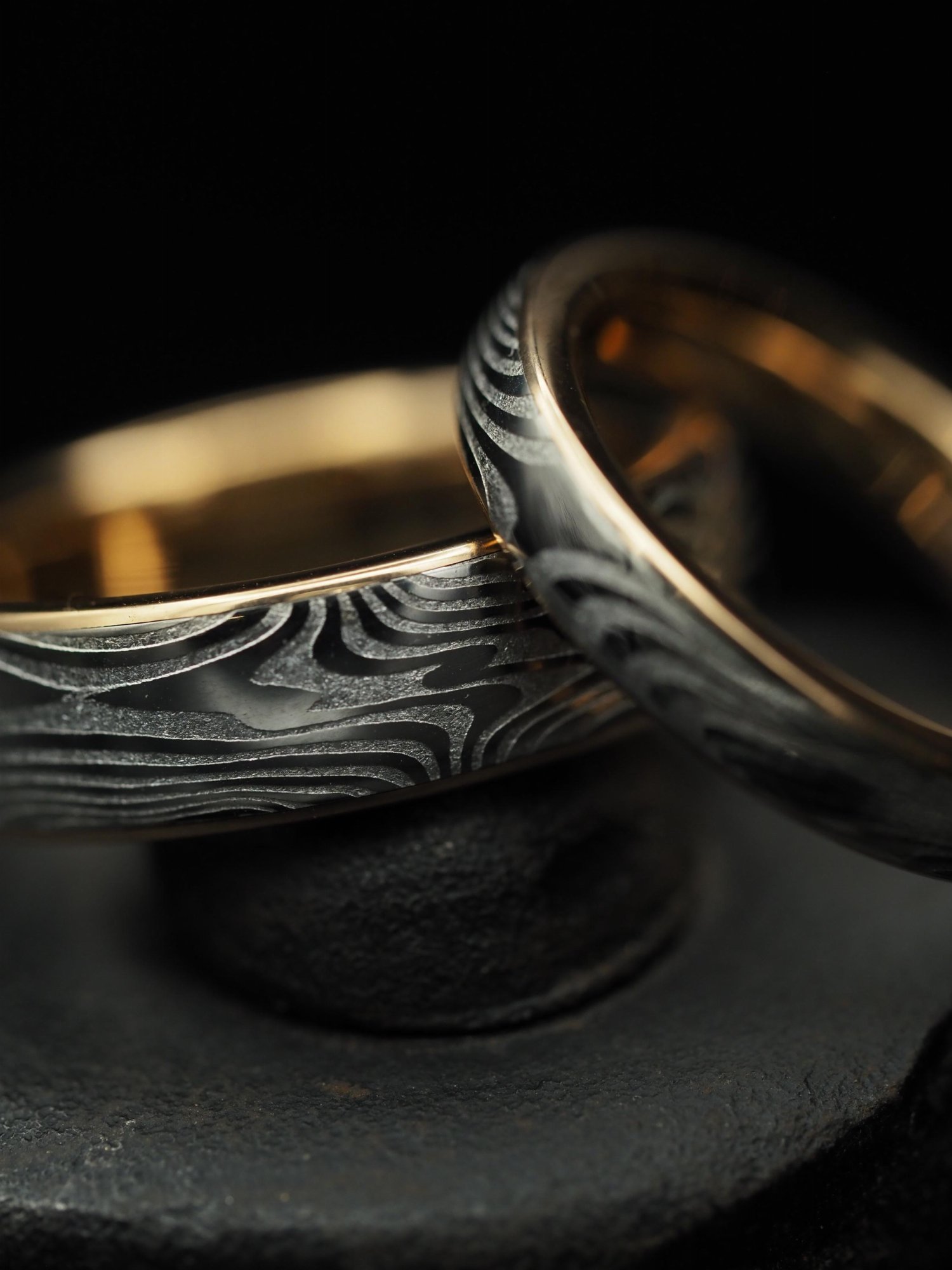
The atelier is evidently continuing an old tradition of goldsmiths of letting word of mouth advertise for them. A good example of this is wedding rings, which form an important part of Schröder's orders. "Our principle of developing the rings together, modifying and adapting them until the customers are completely satisfied is actually the basis of our business, we are unbeatable in this respect," he explains and calls this the 'wedding ring satisfaction guarantee'. And satisfaction triggers word of mouth, that is an incontrovertible fact.
The fact that goldsmiths in the Middle Ages mainly settled in residential cities also has to do with the fact that wealthy nobles and members of the ruling families, who had ample financial means at their disposal, placed orders there. What is it like today? "Custom-made jewelry is actually possible for all income levels," says Schröder. "There are levers for setting different prices for pieces of jewelry. Starting with the carat, i.e. the gold content of a piece of jewelry, through to its total weight. We always find a solution."
Timeless elegance and an individual touch: handmade wedding rings from Atelier Schröder. ©Schröder/Pr. Sailer
And then there are the special orders. Like the one where only a photo of a piece of jewelry was left: a small brooch with a depiction of the Virgin Mary. It was worn by a woman in her childhood who contacted the atelier. "It was a considerable effort, but I was happy to accept it. It was important to me to give this piece back to the customer, so I didn't care how long it took." He made changes until the customer was satisfied that the piece 'felt like it used to' before falling asleep.
Architectural beauty goes hand in hand with master craftsmanship
The fact that this house still has something to do with gold today is a really nice coincidence. Perhaps the parlors of the 'Golden Angel' of 1572 were even where ornate pieces of jewelry are made today. In any case, the house at Herzog-Friedrich-Straße 29 is for me an outstanding example of how architectural beauty and master craftsmanship form an ideal combination. This is exactly what makes Innsbruck's old town so attractive, not only for me but also for us locals and tourists.
Show me the location on the map
A volunteer at the "Schule der Alm" alpine farming school, cultural pilgrim, Tyrol aficionado and Innsbruck fan.
Similar articles
Which restaurants in Innsbruck are open on Sundays? The fact that it is not easy…
A relaxed brunch and breakfast with children? Sometimes it sounds like a dream - but it's not…
My favorite way to start the day is with coffee, but that's not enough - we need…
Spring Starts Here It is finally really spring in Innsbruck, the weather is warming up,…