© Ligges - Thomas Steinlechner
For many people, fall is their favorite season. Or maybe it just seems that way to me—but my Instagram “For You” page is currently full of fall inspiration: outfit ideas, day trips, and, of course, plenty of recipes. Because as the days get shorter and the evenings get longer, and the desire to cozy up at home grows, there’s one thing you can’t do without: good food! And what fruit goes better with fall than the apple? Hardly any other fruit is so versatile: apple strudel, apple cake, apple crumble, apple pancakes… Just writing this is making my mouth water. That’s exactly why we’re dedicating this post to the apple: Where does it actually grow? How do they get from the tree to the supermarket? What happens between bloom and harvest? And, of course: What can you make with them?
15,000 apple trees and a family-run business
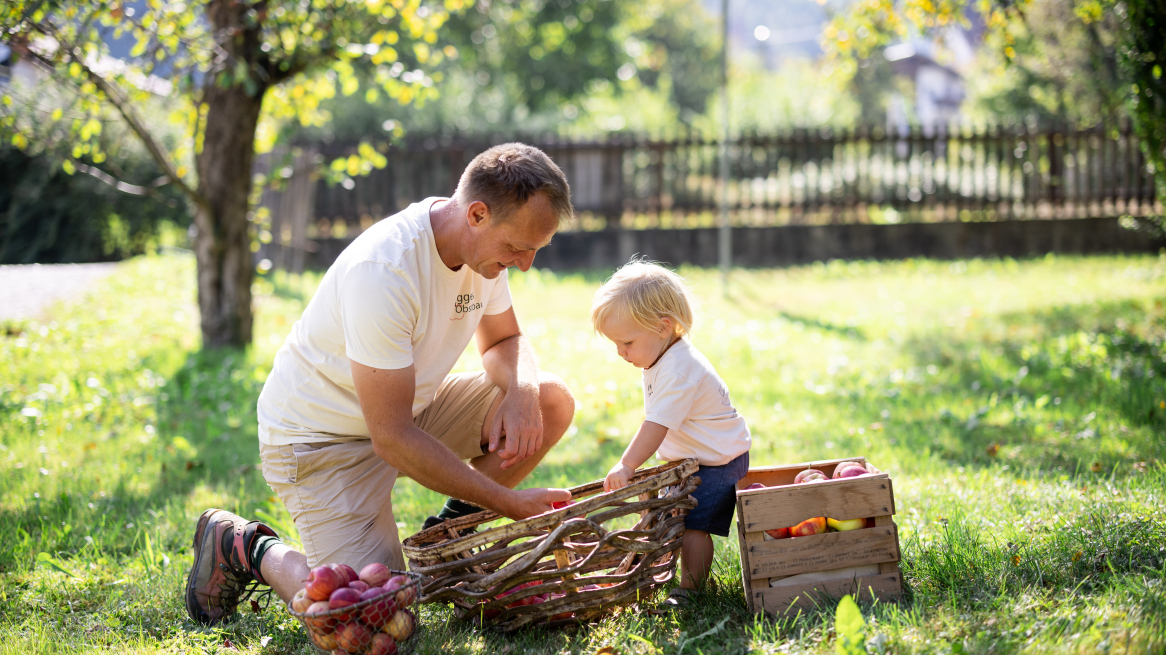
My research led me to Flaurling . More specifically, to Angelika and Wulf Ligges of Ligges Obstbau. The two of them run their family farm, which consists of a total of three orchards covering about five hectares. Maybe you have just as much trouble picturing five hectares as I do. But if I tell you that around 15,000 apple trees of 15 different varieties grow here, the whole thing becomes a bit more tangible. And apples are by no means the only thing: Ligges Obstbau also grows pears—including the “ Williams ” variety—plums, and walnuts. But the focus is clearly on apples.
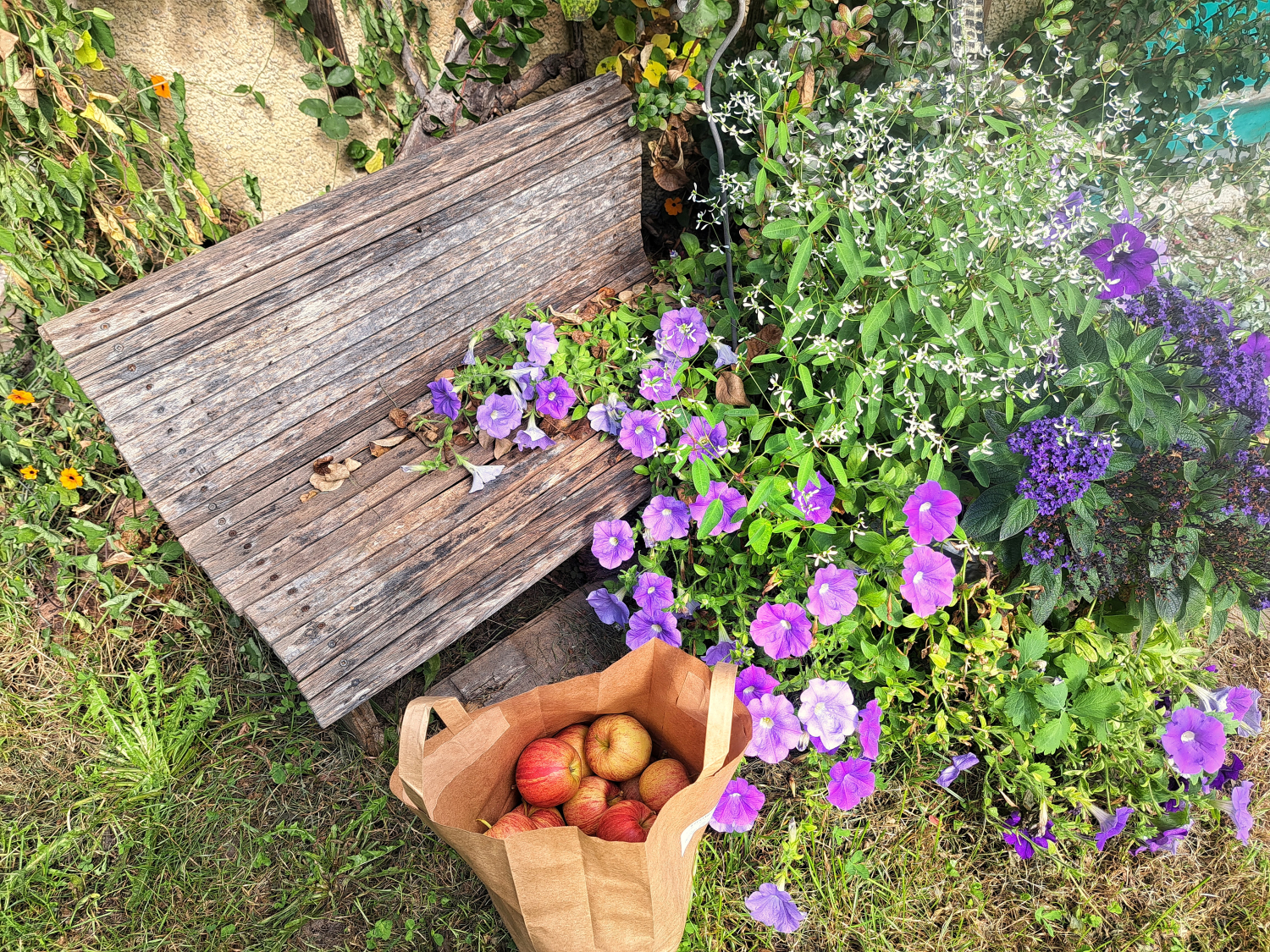
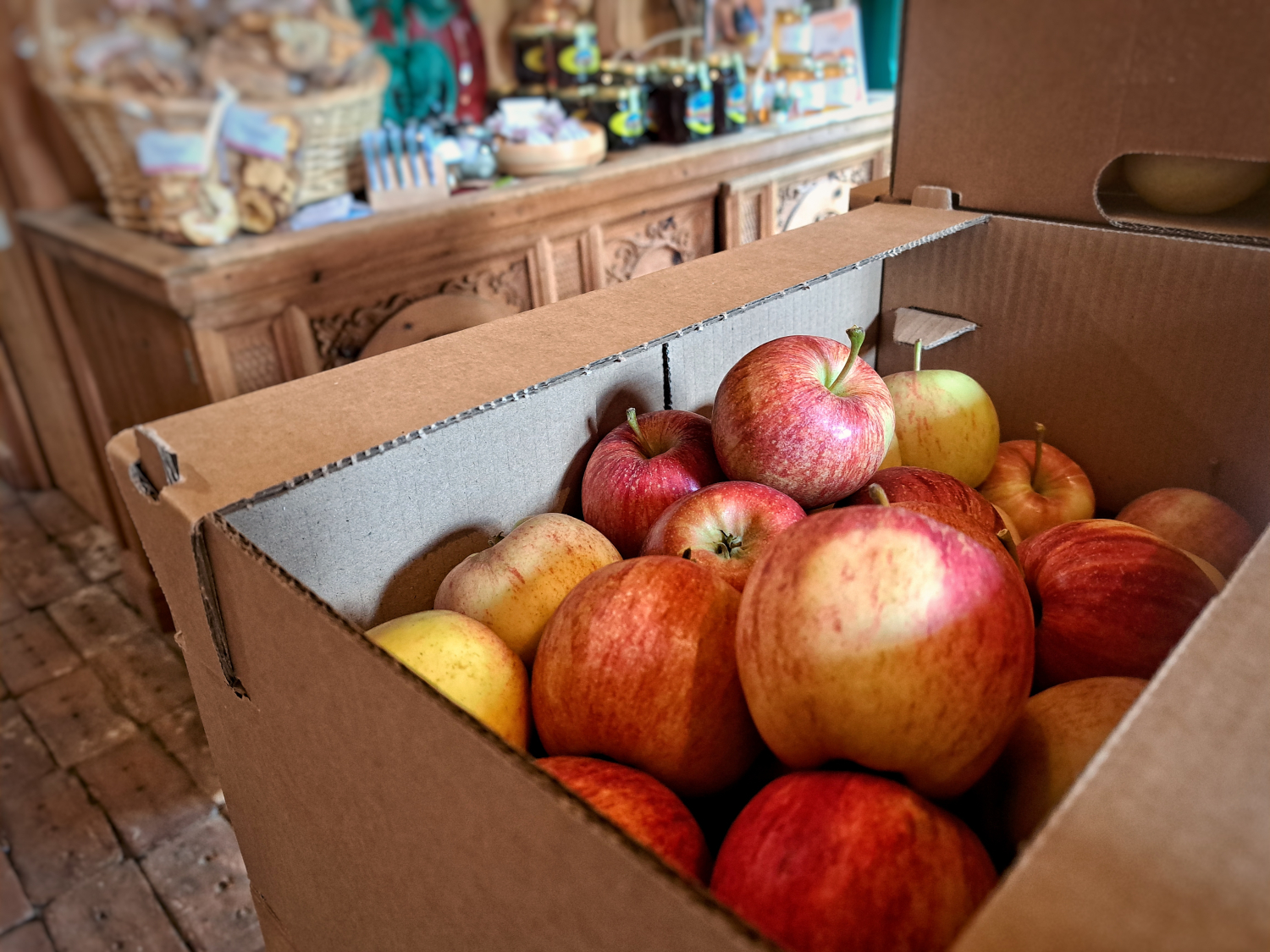
This is what fall tastes like! What’s the best thing to make with these delicious apples?
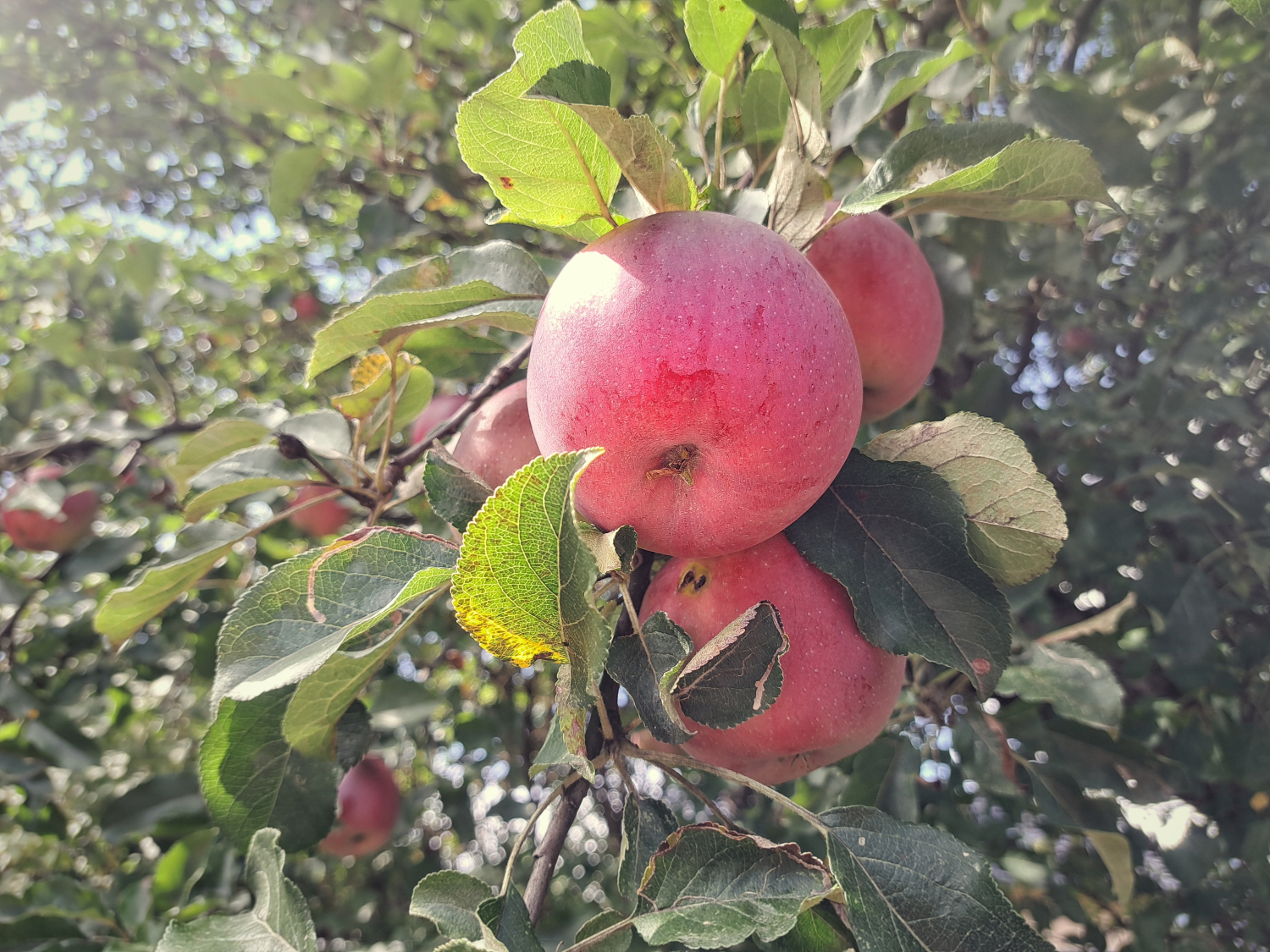
Apples are little vitamin powerhouses; they contain fiber and antioxidants that protect and support the body!
From Media Designer to Master Orchardist
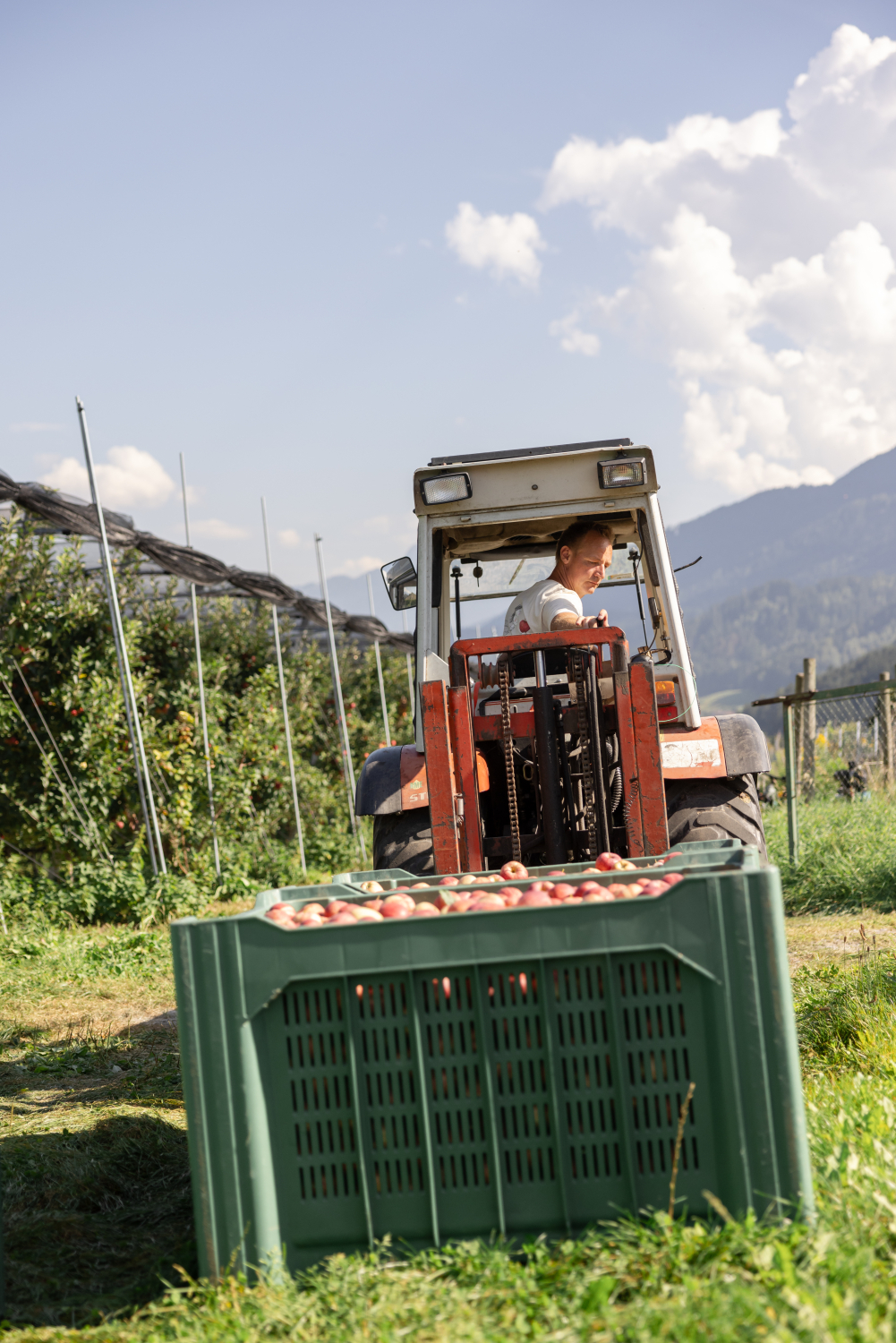
Angelika and Wulf Ligges run the Ligges fruit farm together and make a well-coordinated team. However, Wulf is primarily responsible for the orchards—after all, he learned his trade from the ground up. After taking over the farm from his uncle, the media design graduate went on to complete his training as a master fruit grower. Today, he manages the five-hectare orchards largely on his own. Wulf only gets help during harvest season. “We have help during the harvest months. For years now, four men from Macedonia have been coming to help, and we’ve almost become friends with them,” Wulf explains.
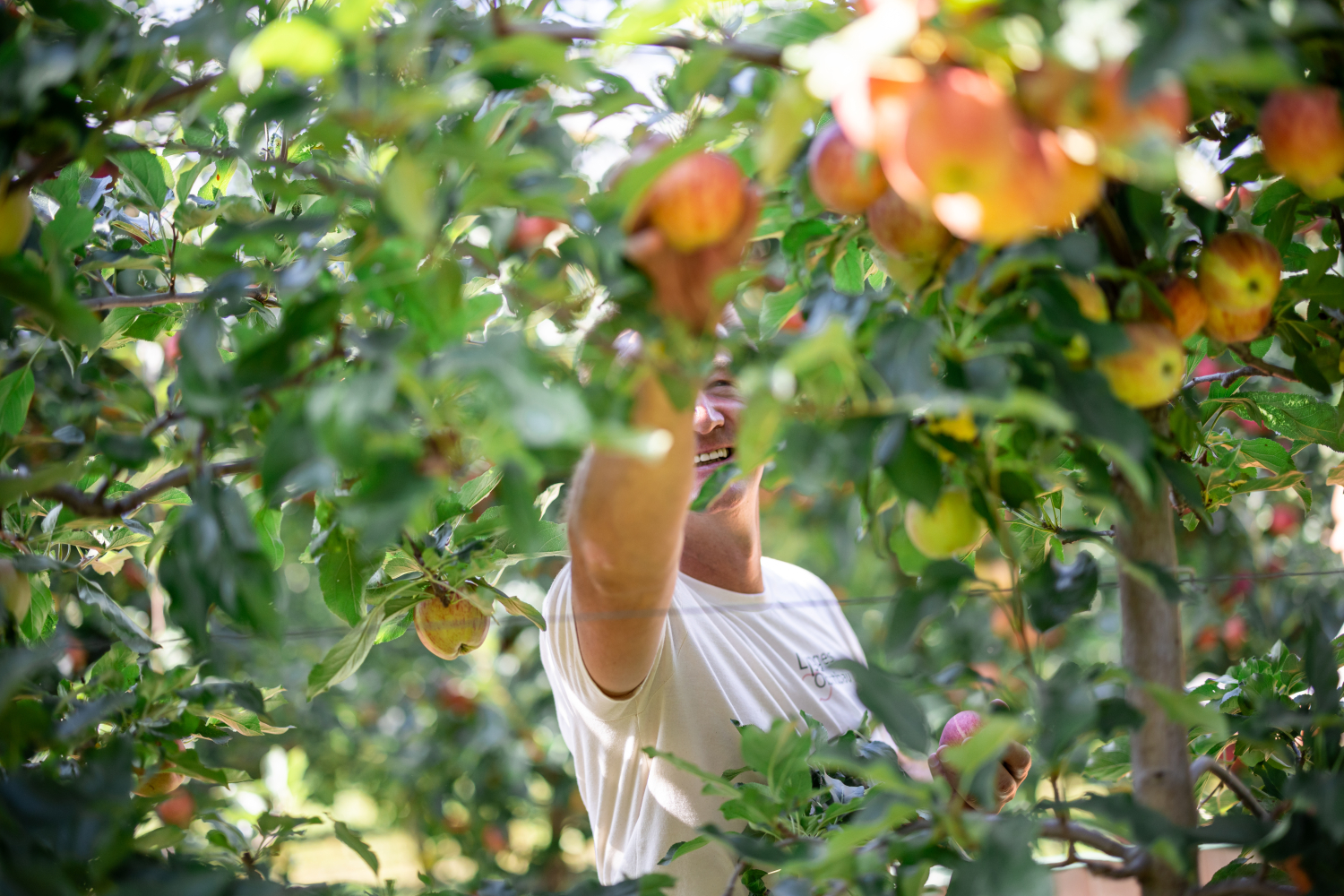
It's hard to believe, but it's true: Every single apple is still harvested by hand today! There's so much work and attention to detail behind it.
Apple harvesting is truly manual labor
To be honest, I didn’t know anything about fruit growing until now. My mom does have an apple tree in the garden, but I never would have imagined how much work goes into a professional apple harvest or how carefully it has to be done.“We harvest everything by hand,”explains Wulf. And that’s not all: Each row of trees is walked through several times, because every single apple is examined closely. Is it ripe yet? Is it ready to be harvested? Only when everything checks out does it come off the tree. And you can’t just pluck the apples or—heaven forbid—rip them off. They’re carefully twisted off the tree so the stem remains intact. It’s also essential to avoid bruises and fingerprints—after all, the apples need to stay fresh in storage for as long as possible. And especially when the apples later end up in stores, the standards are high: they’re expected to look nearly perfect. Size, shape, and surface must be just right. At the farm stand, things are a bit more relaxed—because in the end, one thing matters most: the taste.
Small Helpers, Big Help
“It’s also important to us to work with beneficial insects,”Angelika tells me. The Ligges family follows the guidelines of “integrated production” and strives to maintain as natural a balance as possible in their orchards. To that end, they collaborate with beekeepers, provide nesting boxes, and pile up rocks to serve as shelters for animals such as weasels and grass snakes. These little helpers make an important contribution: beneficial insects like ladybugs and lacewings support the health and resilience of the plants. As a result, pesticides are used only very sparingly.
Climate change doesn't spare Flaurling either
But sometimes nature doesn’t play by the fruit growers’ rules either. Angelika and Wulf recall storms that nearly destroyed their entire harvest. Spring frost or summer hail can have devastating consequences for the fruit trees—and thus for the harvest as well. Now, however, the two know how to cope: frost sprinkler systems protect the delicate blossoms from freezing temperatures, and hail nets shield the apples from severe damage in the summer. Still, the risk cannot be completely ruled out. As is evident even at the Ligges farm, climate change isn’t making fruit farming any easier and presents farmers with new challenges every year.
Local, fresh, delicious: the farm stand
If you love apples as much as my family and I do—and if fall isn’t truly wonderful for you until there’s a slice of apple pie on your plate—then I definitely recommend a visit to the Ligges fruit farm. The self-service farm stand, which is open daily from 7:00 a.m. to 7:00 p.m., naturally has plenty of fresh apples. And I can really recommend them to you: you can just taste the difference. The apples come straight from their own orchards and don’t have to travel thousands of kilometers before they reach us. In addition to fresh fruit, there are also plenty of apple-based delicacies —from dried apple chips, even chocolate-coated ones, to apple juice. There are also products from local farmers, most of them from Flaurling itself: sausage and dairy products, honey, and much more.
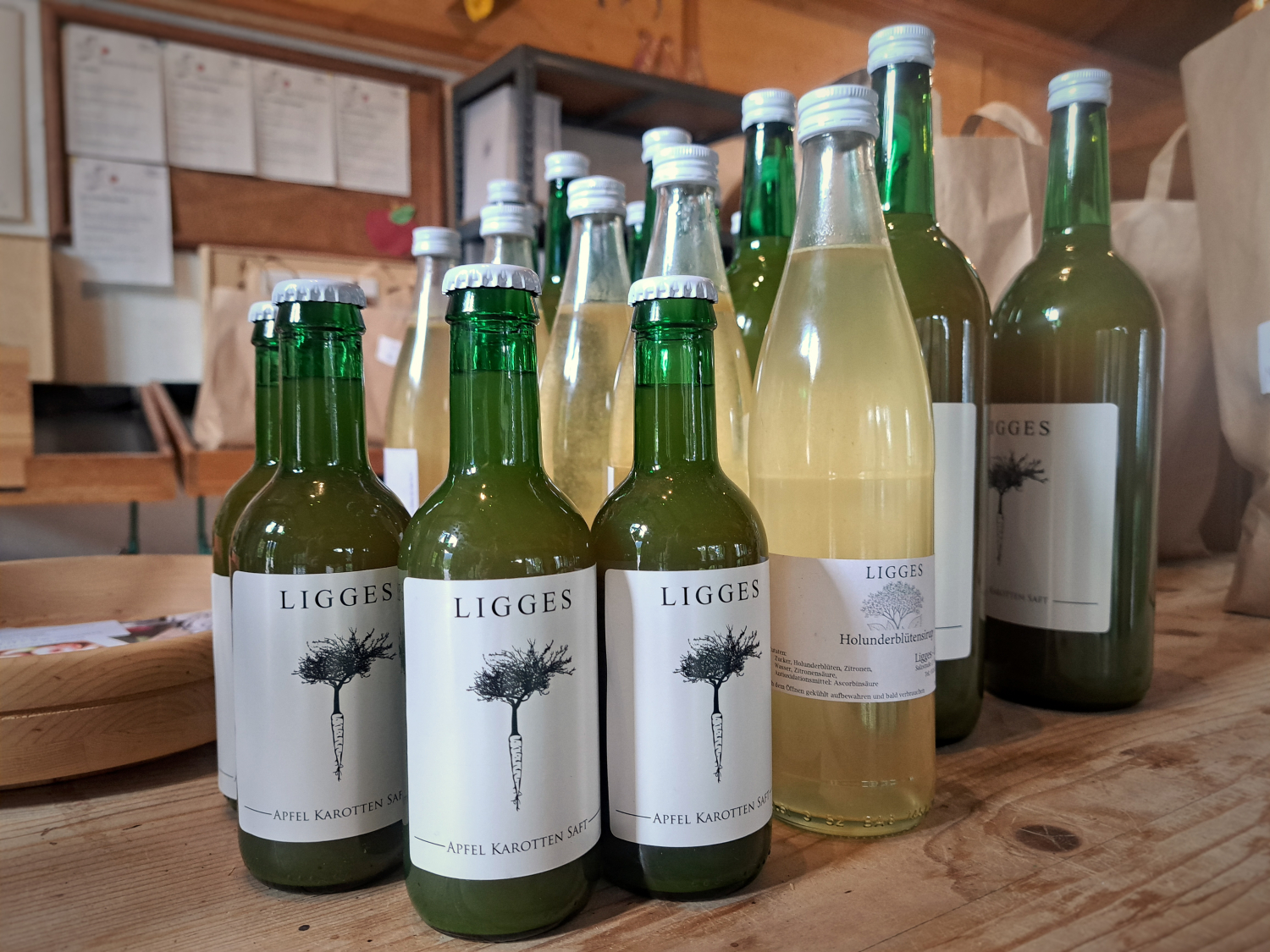
At the farm stand, you'll find all kinds of apple-themed treats: from juice to crispy, dried apple chips to regional products straight from the farmer.
homemade apple juice
Get Hands-On: Picking Apples at Ligges
According to social media, “Apple Picking” is on almost every fall bucket list. Is it on yours, too? Then you’ll have the chance to do just that on Saturday, September 26, 2026, and Saturday, October 17, 2026. Wulf and Angelika are opening their apple orchard to visitors of all ages. On the first date, the varieties “ Gala, Topaz ” and “ Elstar ” are waiting to be picked; in October, “ Mariella ” and “ Pinova ” will follow. It’s best to bring your own baskets, bags, or crates so you can pick plenty. A kilo of apples costs €2.50 this year, and only €2.00 for 15 kilos or more. And since apple picking works up an appetite, food and drinks are, of course, available. Parking is available at the designated area at Unteren Weglänger. From there, it’s just a few minutes’ walk to the apple orchard on September 26. On October 17, guests will even be chauffeured there by a horse-drawn trailer attached to a vintage tractor. If you’re traveling by public transportation, you can use the Flaurling train station—from there, it’s about a ten-minute walk to the apple orchard.
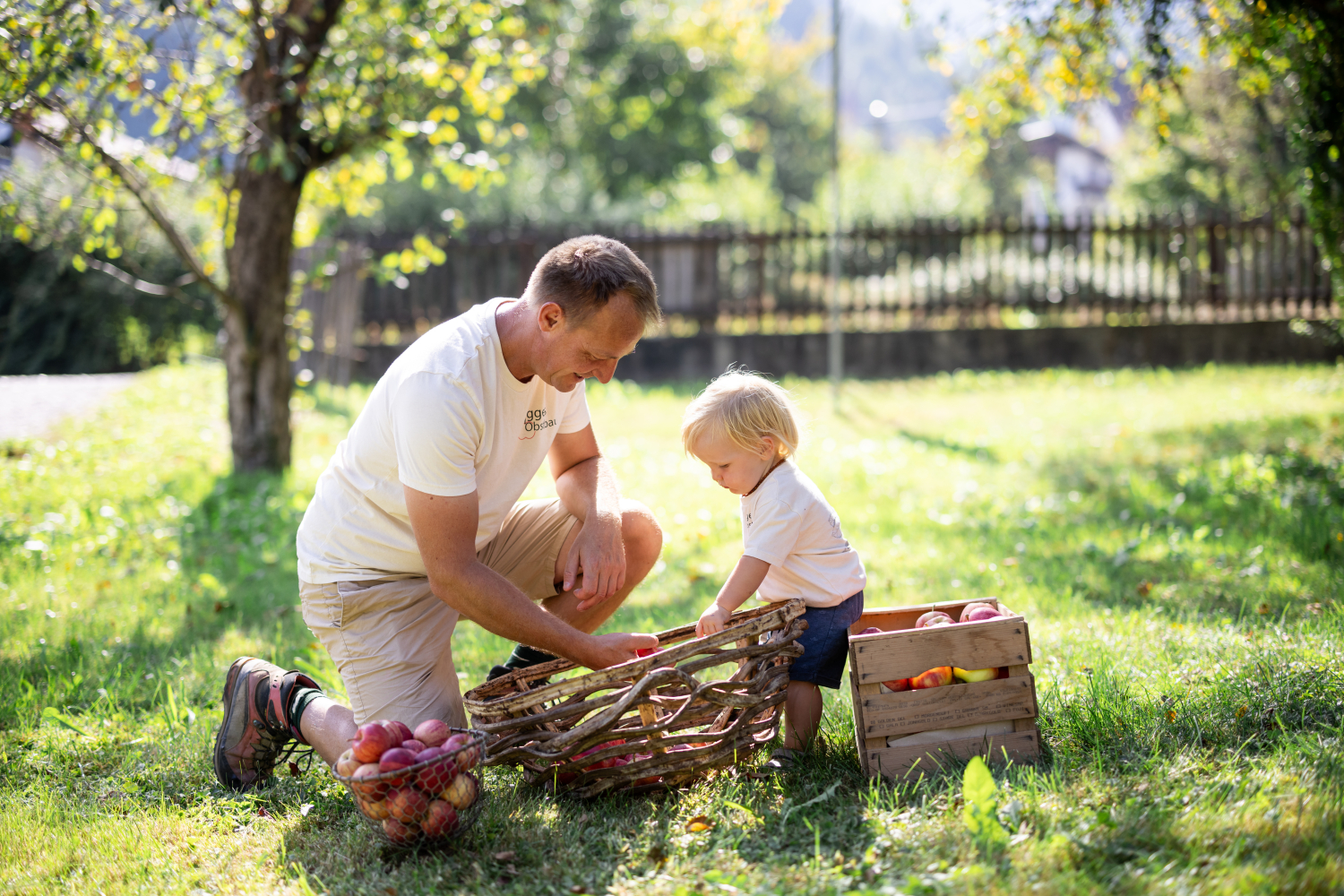
Pick your own apples: A real treat for the whole family! Get out into nature, pick out the best apples right from the tree, and fill your baskets together—autumn doesn’t get much better than this
The Hub for Tyrolean Fruit
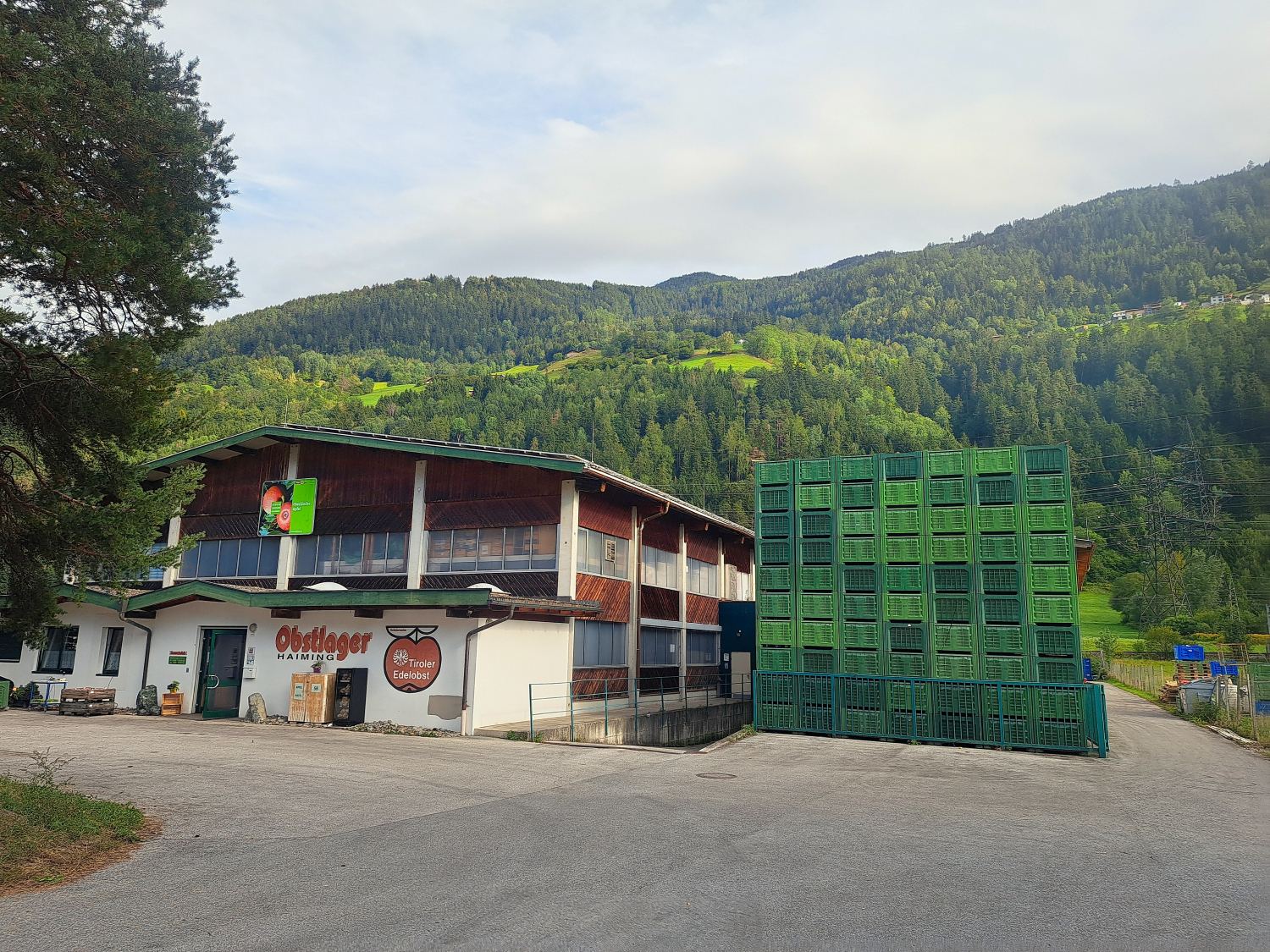
In addition to the “ Ligges ” fruit-growing cooperative, there are, of course, many other fruit growers in Tyrol who market their apples. Some of them first make a stop at the Haiming fruit warehouse —more specifically, at the Oberinntalobst producers’ organization. It is the largest marketing platform for Tyrolean fruit and a key hub for the region’s small-scale fruit farms. The organization was founded in 1991 by ten fruit growers from Haiming, Silz and Stams. Today, it includes 22 farmers from the Upper Inn Valley and East Tyrol. Together, they cultivate about 60 hectares with approximately 180,000 fruit trees.
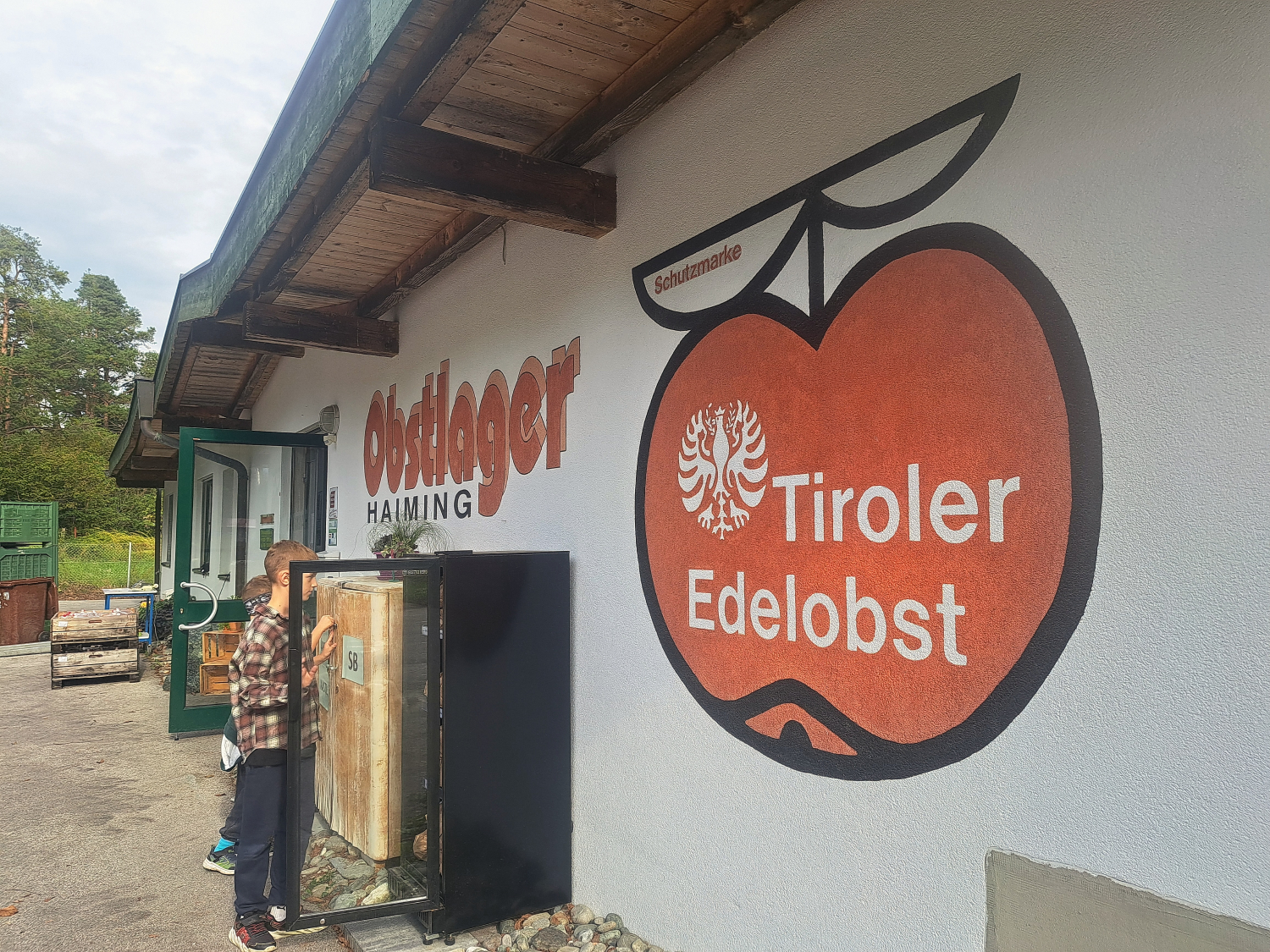
22 farmers, two regions, one passion: A huge variety of fruits from the Upper Inn Valley and East Tyrol makes its way straight to the Haiming fruit warehouse!
With about 10 million apples, the fruit warehouse is the largest fruit distribution hub in North Tyrol!
Ten Million Apples on Their Way to Retailers
And now here’s another impressive number:ten million apples! That’s how many are stored in Haiming every year and distributed from there to Tyrolean grocery stores and restaurants. Of course, that much fruit needs space: the apples are stored under optimal conditions across approximately 6,000 square meters and in 15 cold storage rooms. A modern, computer-controlled sorting system sorts the fruit by weight and color. As we’ve already learned from Ligges Obstbau, apples intended for retail must be virtually flawless. That’s why an optical scanning system is used to detect and remove any bruises or other imperfections.
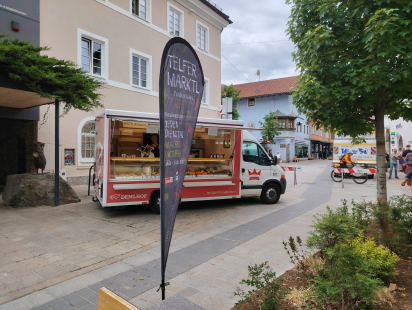
s’Ladele: Local apples taste the best!
A lot has happened since the association was founded: Storage capacity has been expanded to 1.5 million kilograms, and the cultivation areas of the member farms have roughly tripled. The apples bear the“Qualität Tirol”seal of quality—a mark of regional origin and quality. Anyone who wants to buy Tyrolean apples directly on-site can also stop by the s'Ladele (="small shop") at the fruit warehouse. In addition to apples and freshly pressed apple juice, the shop offers other regional products such as schnapps, liqueurs, potatoes, sausages, bacon, and honey. Apples and juice are also available around the clock in the self-service cabinet.
So what am I supposed to do with all these apples now?
Last but not least, I’ll of course share with you the best ways to use the apples you’ve either picked yourself or bought. Personally, I love simply sautéing the apples in a pan and then topping my yogurt or skyr with them —probably the best and quickest warm breakfast! Especially on a cool fall day, it’s just a little treat. To make it, add a small amount of coconut oil to a pan and heat it up. Then add cinnamon and, if you like, a bit of gingerbread spice and ginger. Sauté briefly, then add the thinly sliced apple wedges to the pan. Cook everything until the apples are nice and soft—I love it! But of course, there are plenty of other delicious ways to use up your apples. For those, you should definitely check outNadja’s blog. She’ll show you how to make the perfect apple strudel , or how about a moist apple-chocolate Gugelhupf? Or a dish that most Tyroleans probably associate with their childhood: delicious apple slices.
Information
Ligges Fruit Farm
Salzstraße 15, 6403 Flaurling
Phone: +43 (0)5262 209 10
Email: [email protected] [email protected]
Website
Instagram
Information on Pick-Your-Own
Haiming Fruit Warehouse
Oberinntalobst GmbH Growers’ Association: Wiesrainstraße 13, 6425 Haiming
Phone: +43 (0) 664 3408802
Email: [email protected]
Website
Show me the location on the map

Mother, TV series addict and nature lover with a passion for good food and the mountains!
Similar articles
There’s a lot going on in Innsbruck’s Old Town right now when it comes to food: New…
Als Einheimische, die häufig in den Bergen und auf verschiedenen Tiroler Almen unterwegs ist, kann ich mit…
From Mountains to Beach Never underestimate Innsbruck’s ability to turn an ordinary weekend into something…
Fresh, crisp, and “guat ” (= good, delicious)—that’s how I like the food that ends up on…