© Christian Weittenhiller
I set the butter on fire, drank all the sacramental wine, and stole the decorations. Lord, forgive us—we feasted. Following last year’s semi-secret premiere, the joint culinary concept by the Innsbruck Tourism team and DILON Studio staged just three exclusive pop-up events this year. Which venues, you ask? A barn, a sawmill, and—last but not least—even a Catholic seminary. At the final spectacle at the sacred Collegium Canisianum, I was finally able to snag the very last—and thus my very first—seat at the Innsbruck royal banquet. But now that it’s all over, I finally want to tell you all about it. So get your spoons ready—I’m about to lay it all out for you.
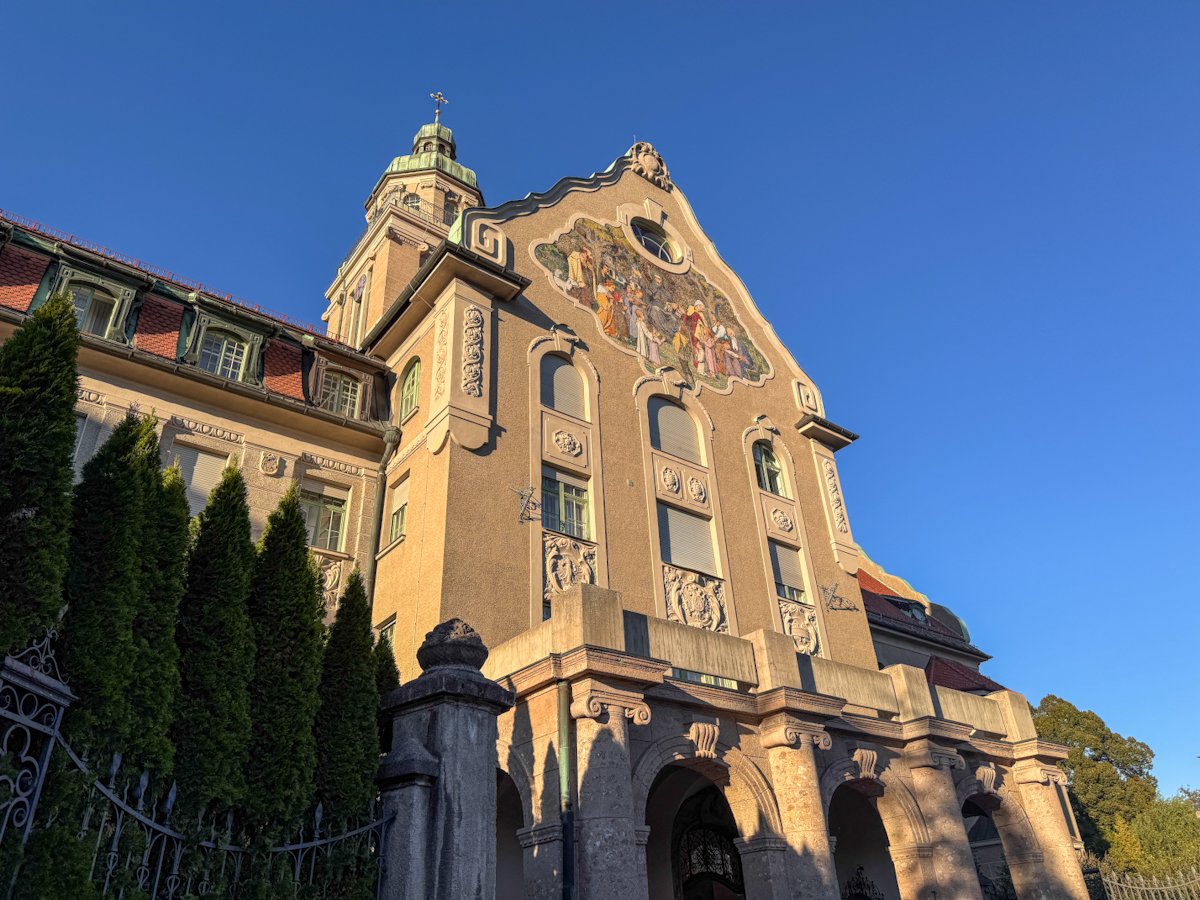
The historic building of the Canisianum in Innsbruck has stood here since around 1910.
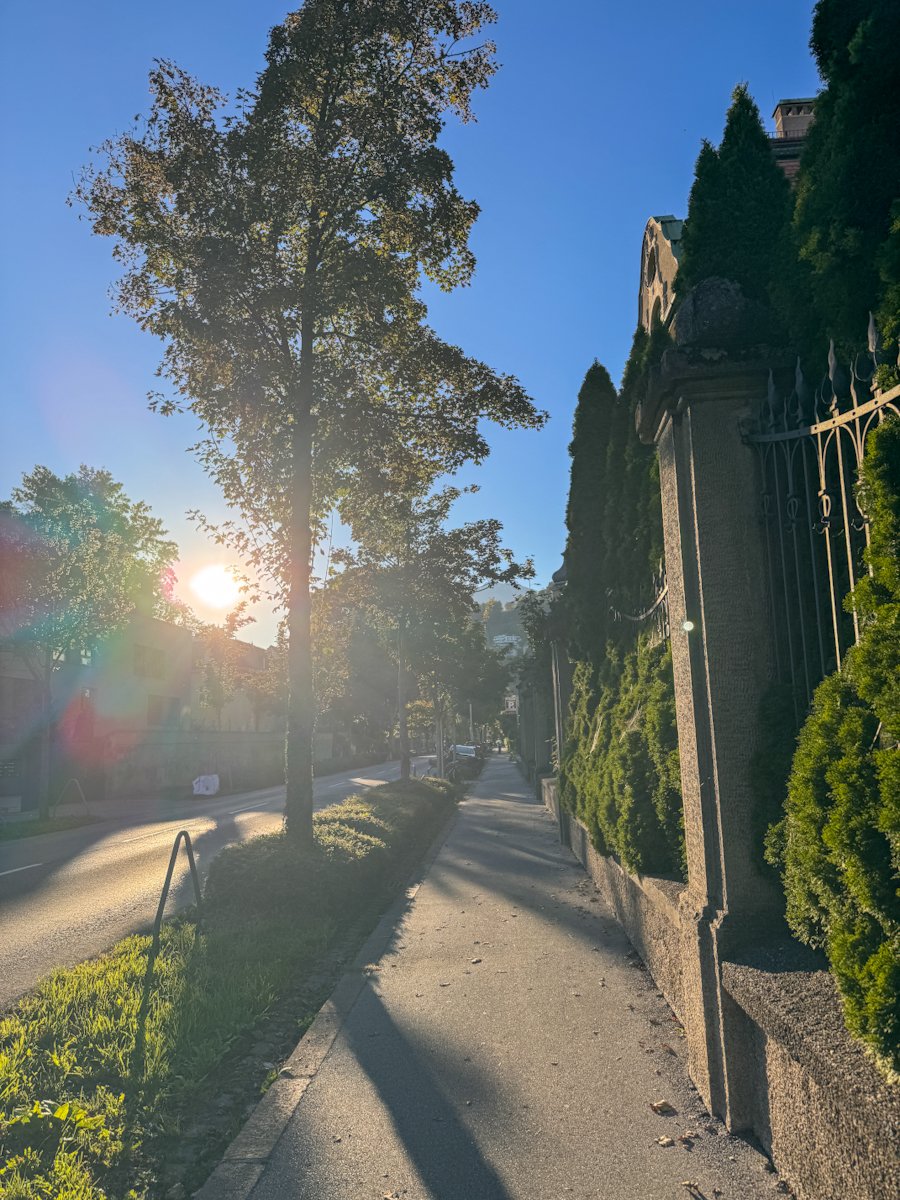
Tschurtschenthalerstraße—an idyllic spot for a stroll past the magnificent buildings.
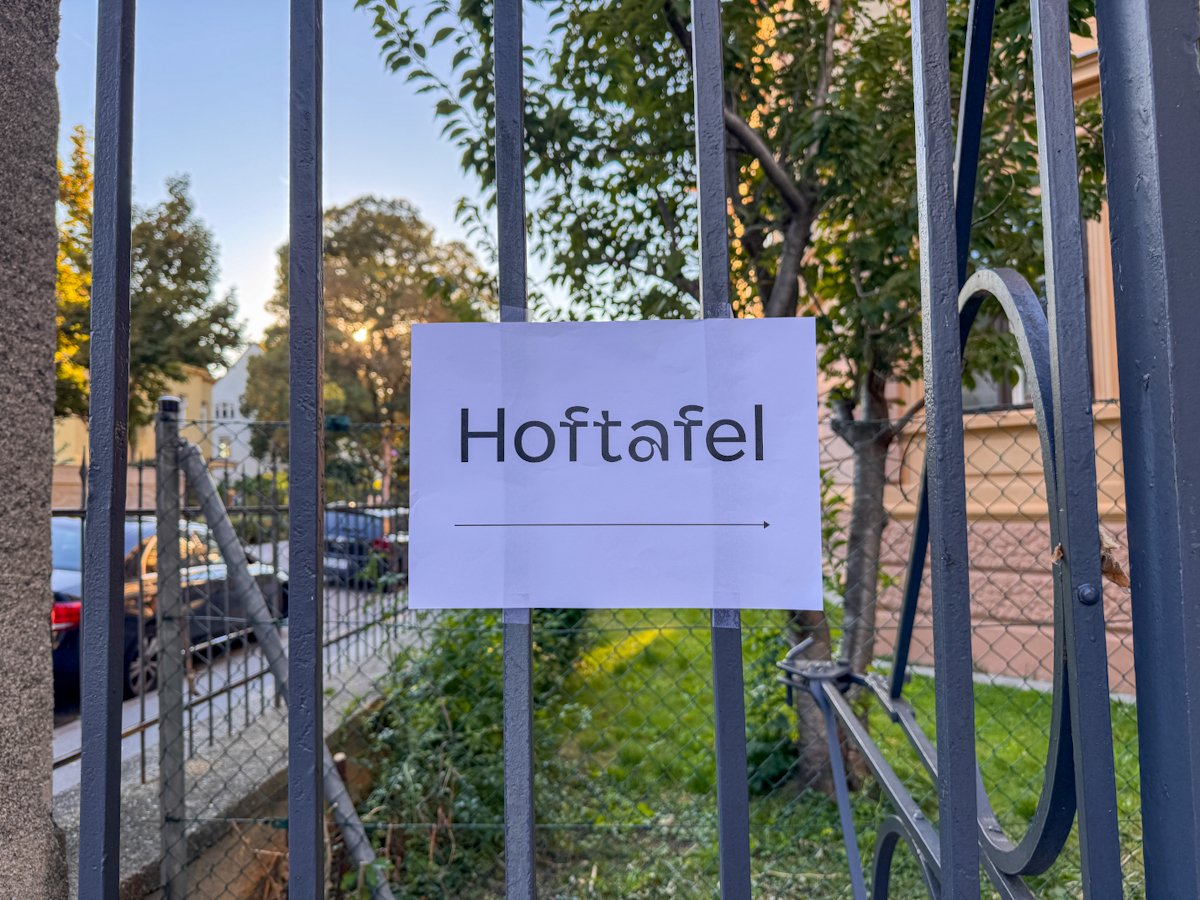
Something different tonight: Head this way to Hoftafel!
Do not be afraid
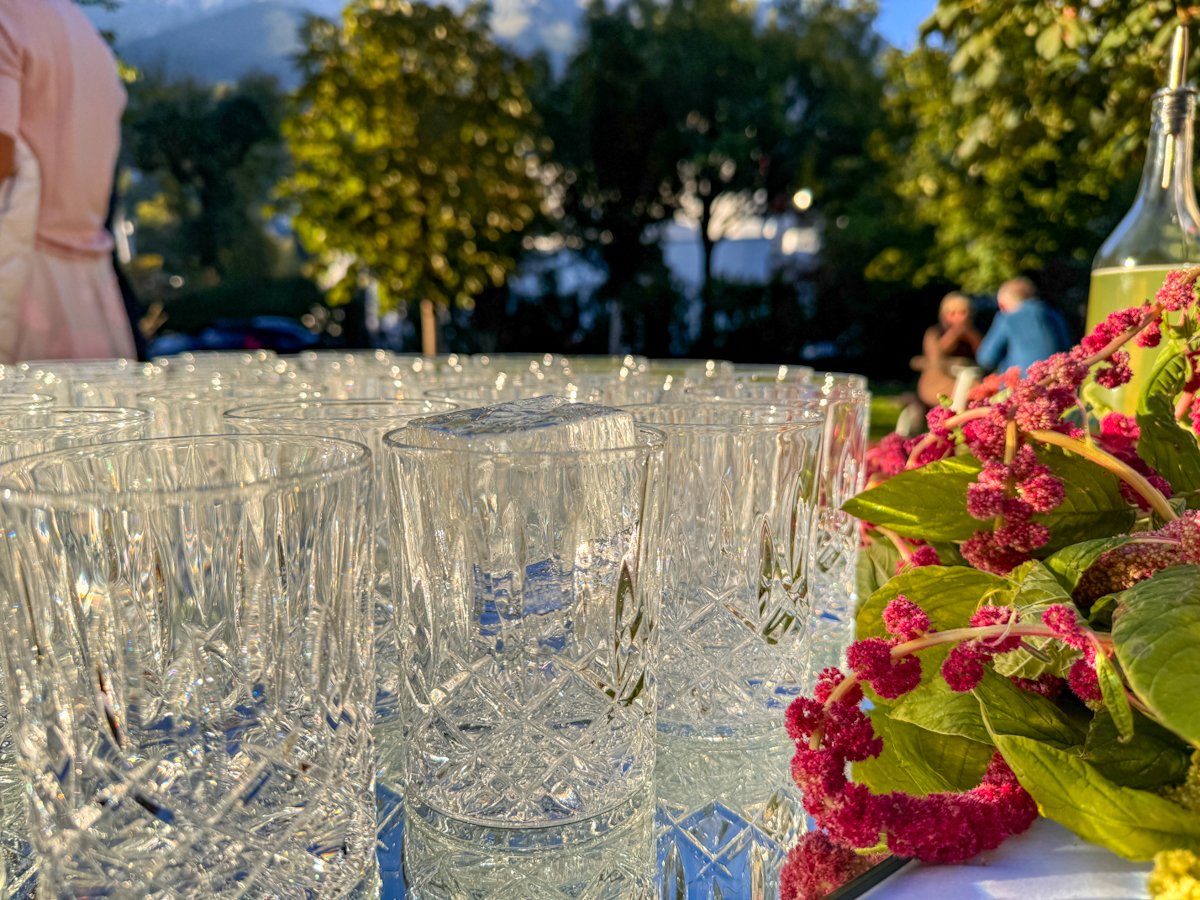
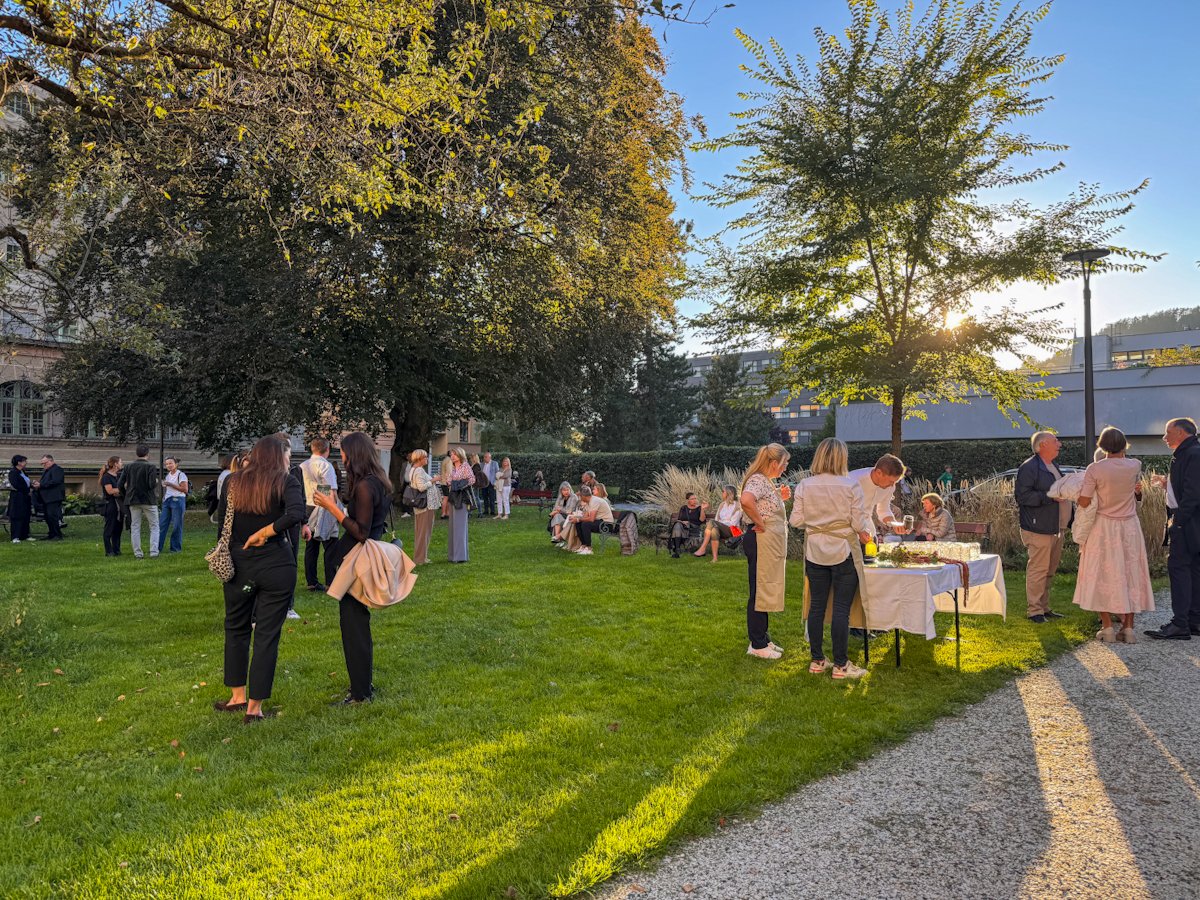
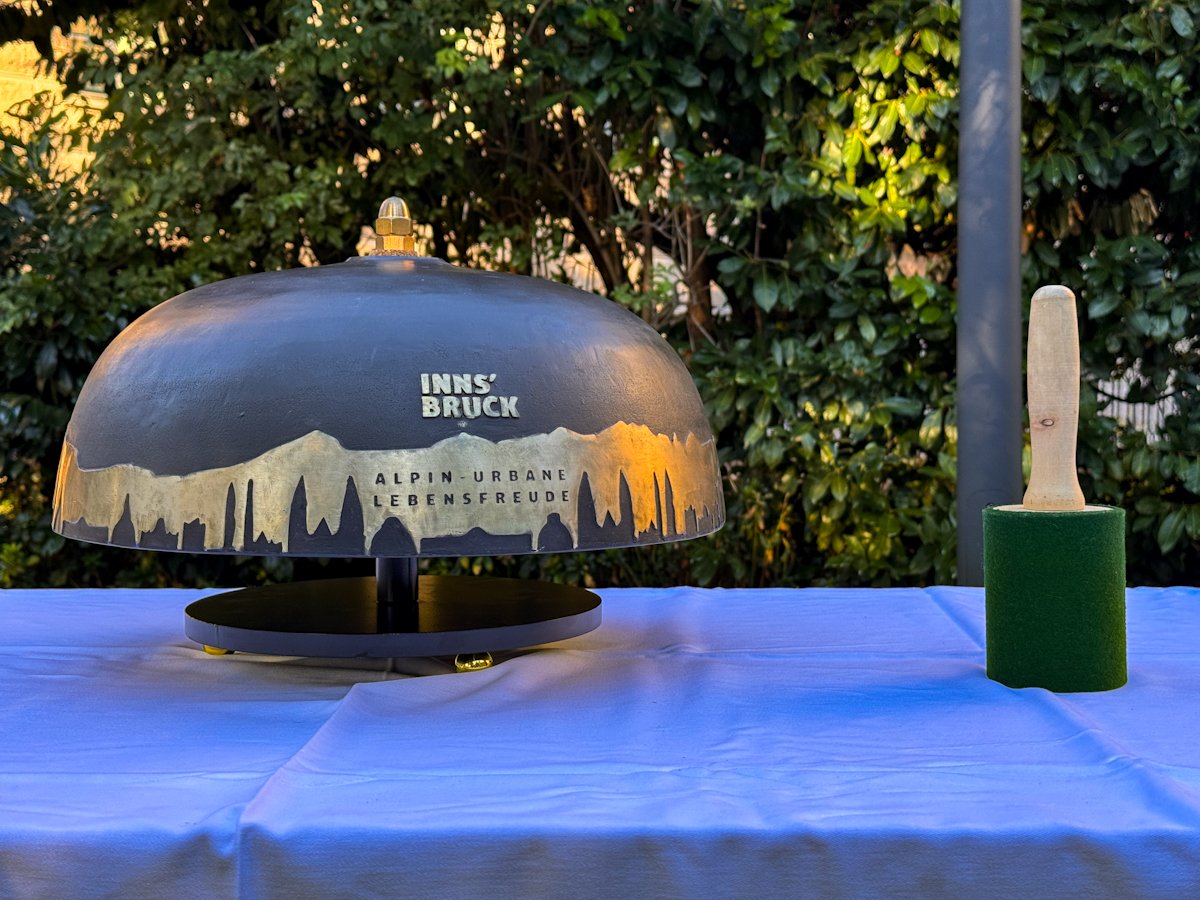
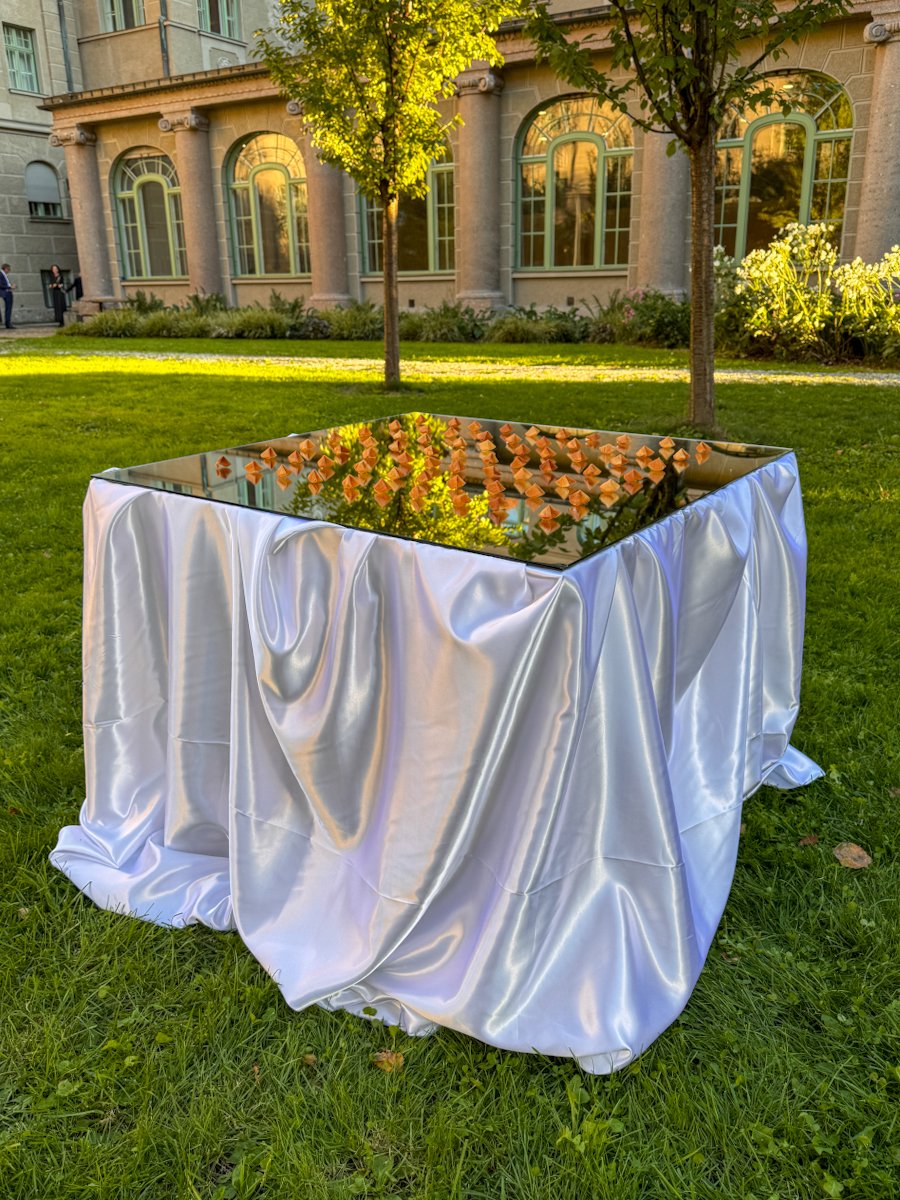
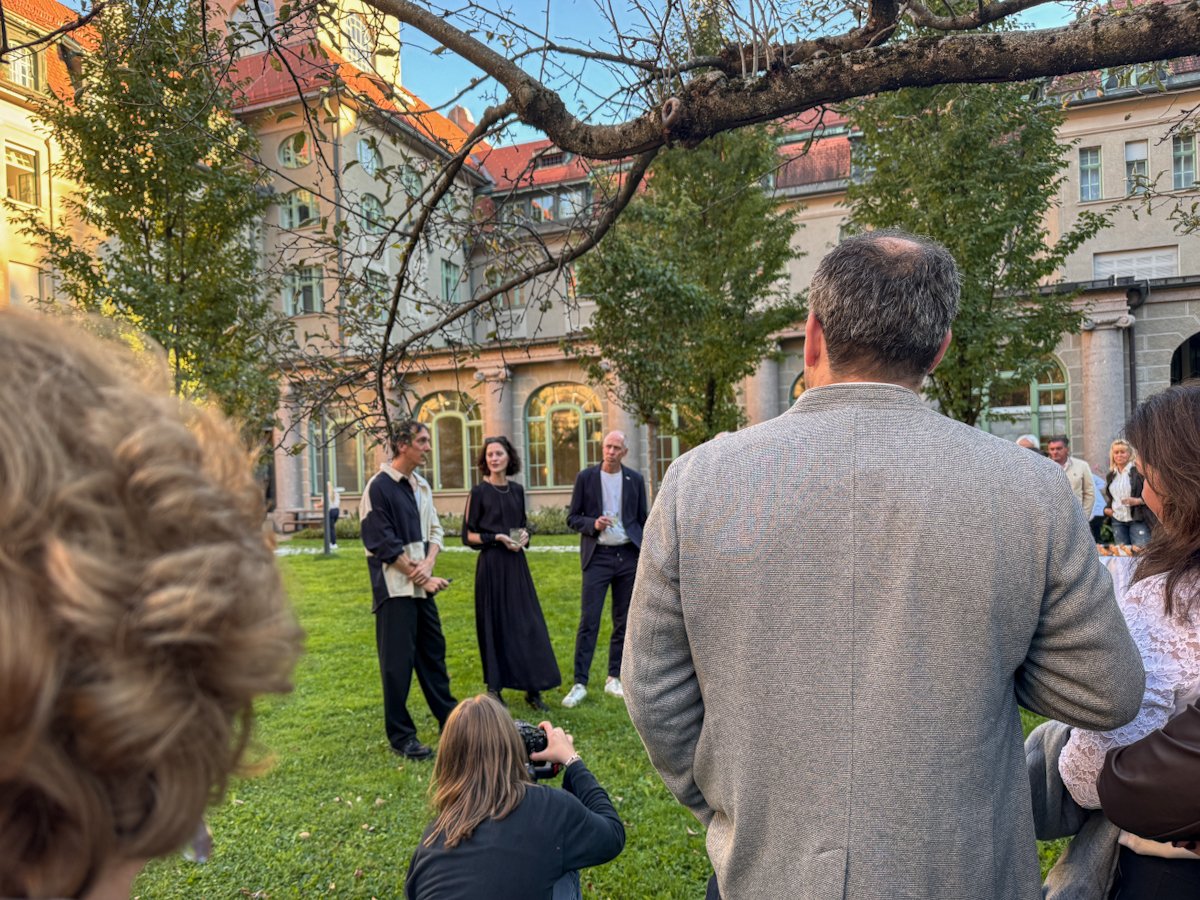
“You’re here for the court banquet,” I’m stopped at the imposing columned portal of the Canisianum in Innsbruck —half in inquiry, half in certainty, as friendly as it is hypocritical. Pleasure and Confession? Today’s theme almost feels like a watchword, and I follow the inviting gesture of the bearded, bald man—who, incidentally, isn’t named Peter—around the back into the paradisiacal garden. Following a few words of welcome from the hosts, a bright chime of a bell kicks off tonight’s narrative—with an aperitif of vermouth, fig leaf tonic and oil, brine, and Tyrolean Sichuan pepper. I think this first “anointing” tastes quite bold. It’s accompanied by a homemade fortune cookie from the mirrored table nestled among the trees, which I’ve been curiously eyeing for quite some time.
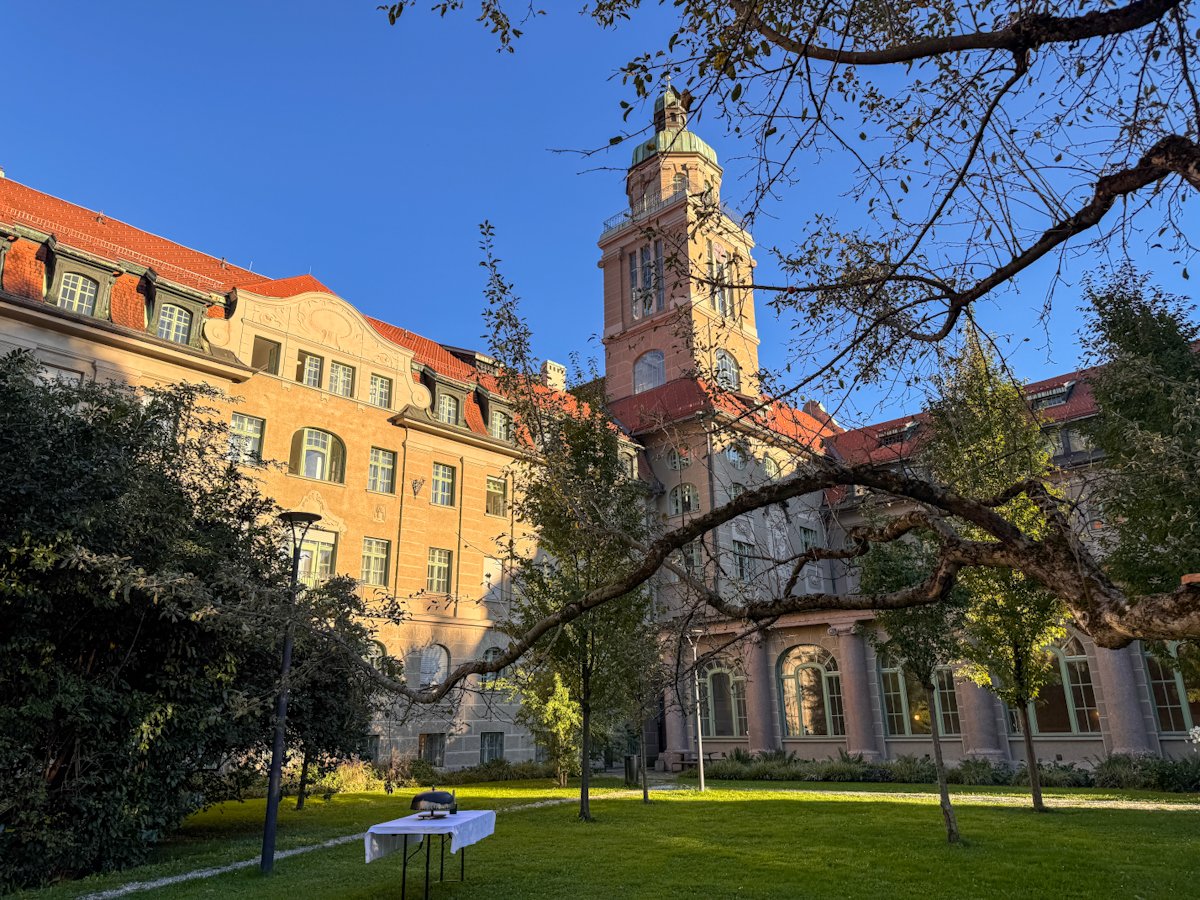
Around the back, following the autumn sun—it all starts today in the garden!
An imaginative aperitif is already waiting in the garden.
The evening sun casts a magical glow on the leaves—then a gong sounds.
The emcee from the Tourism Team guides the audience through the various segments of the evening.
The fortune cookie right at the start—today promises to be different.
And lo and behold: We are immediately asked to go to confession.
Some of us have to fish the slip of paper out of our mouths first. But the next shock follows immediately, because the chewed-up scrap of paper asks us to confess. We’re sorted into three large prayer circles based on the color of our slips, then the cookie wants to know what makes us so happy. The brief biographies, shyly recited one after another, quickly zero in on good food—though I’m often happy just when the toilet paper is hanging the right way. Finally, a note from the director: there’s no service today. The gong beckons us onward, through the back door into the holy house.
One Penz rarely comes alone
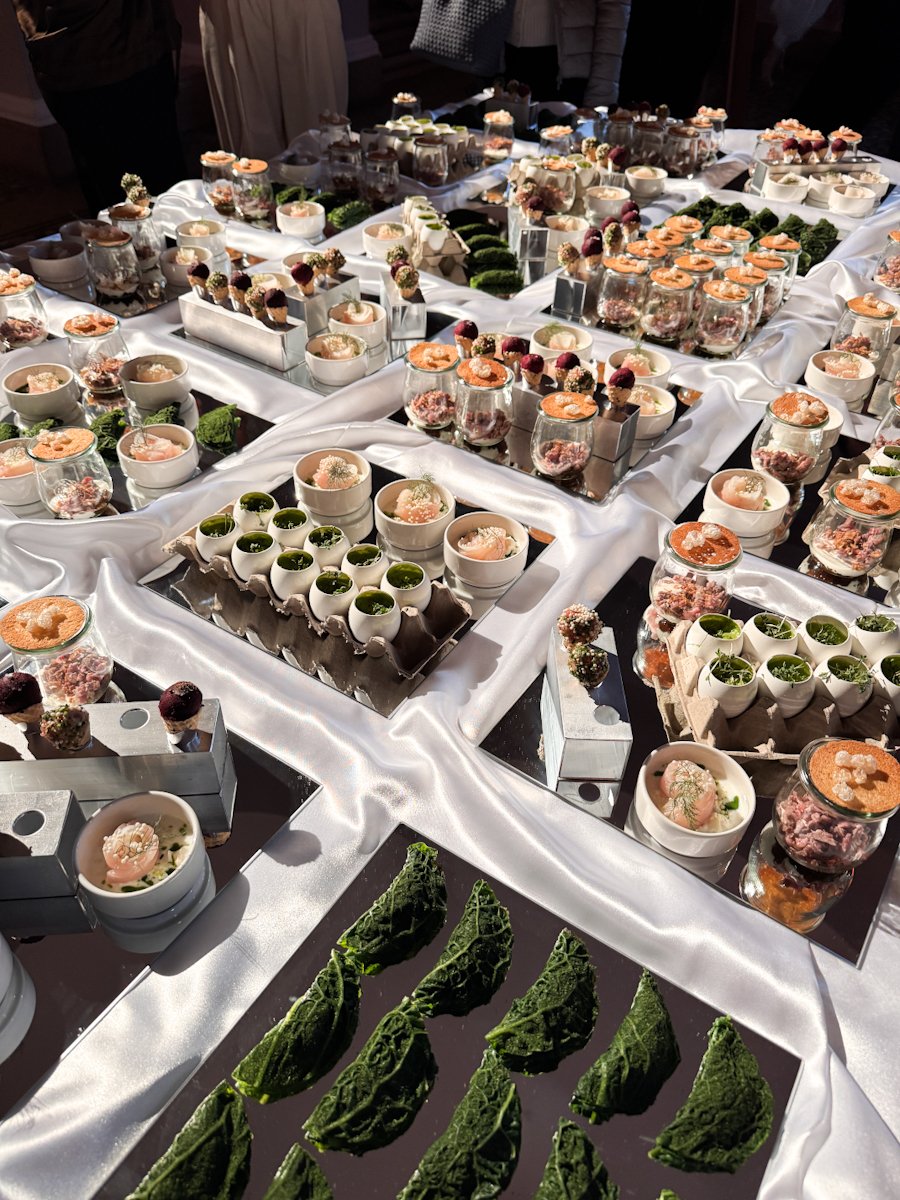
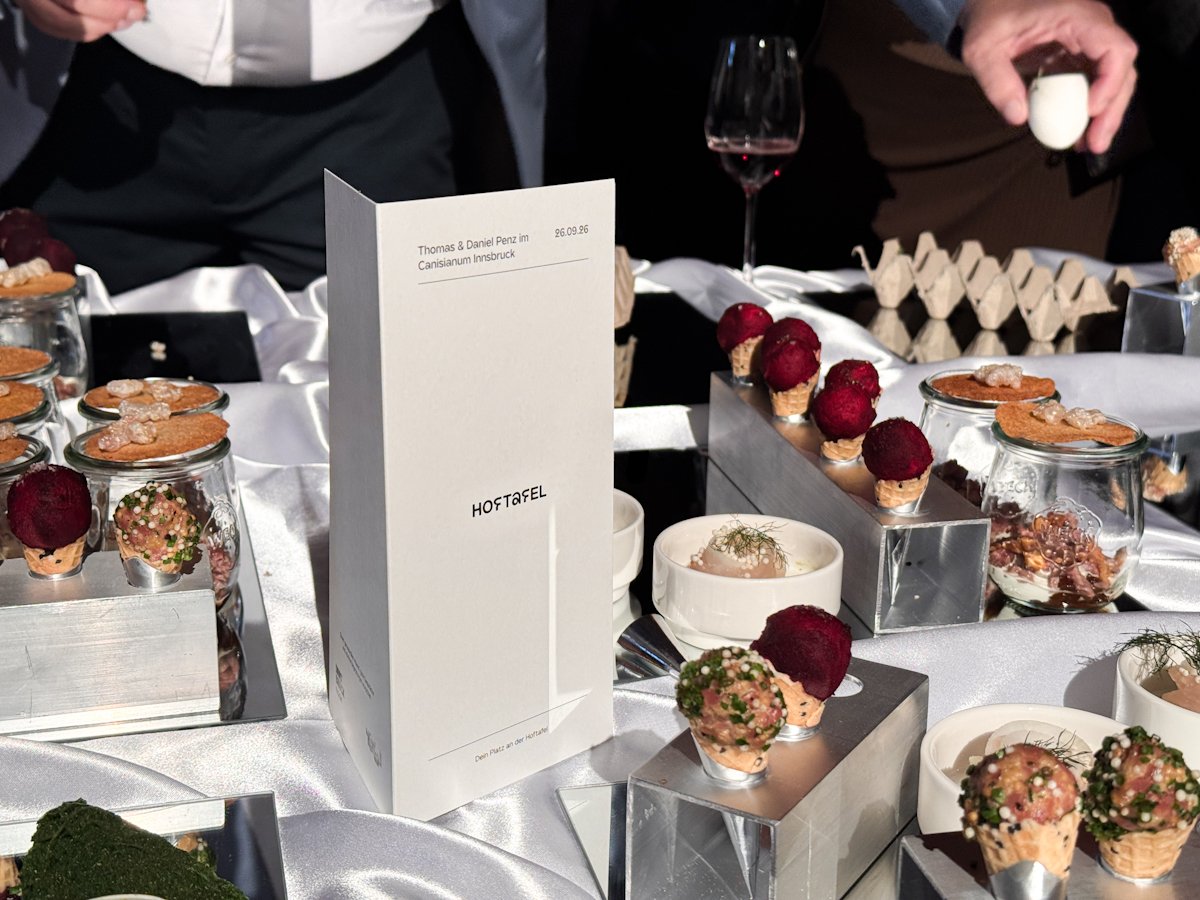
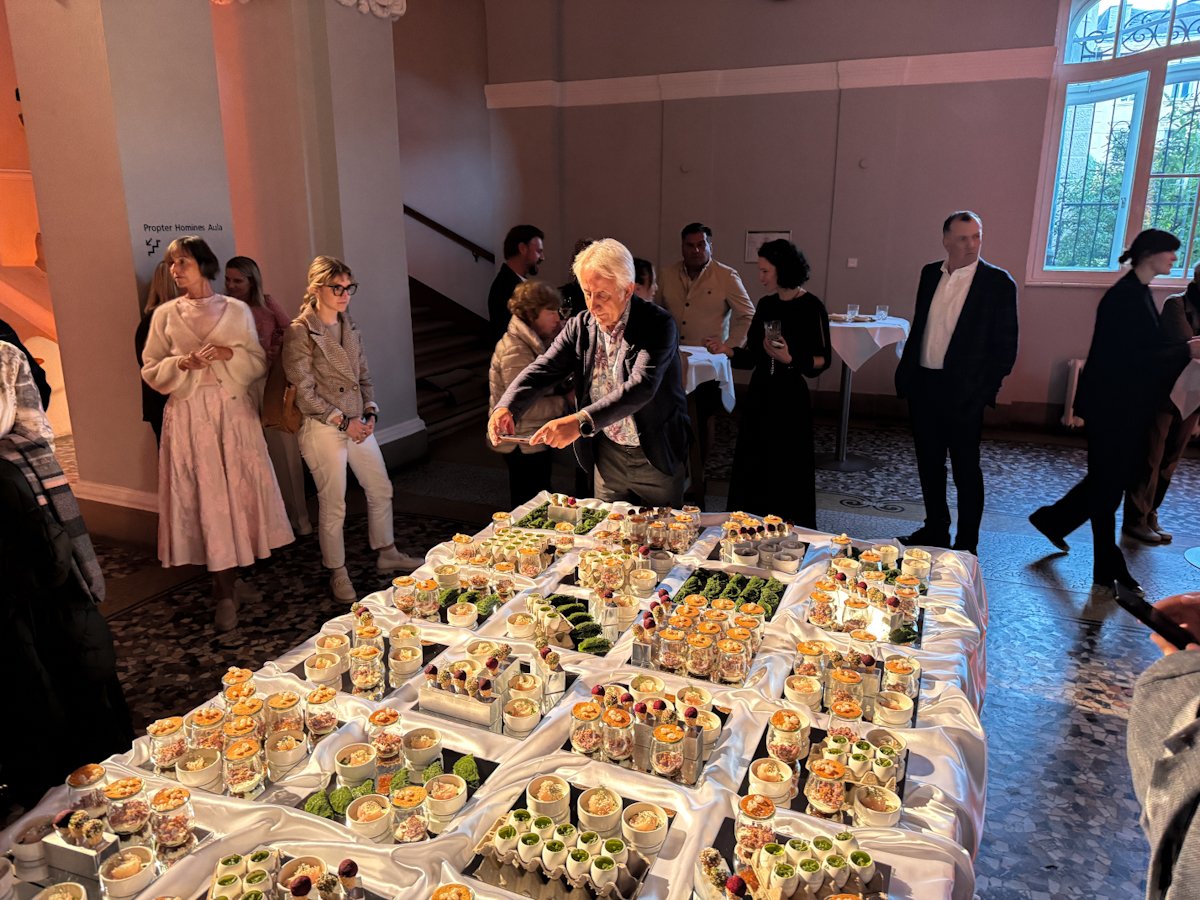
"Appetizer," she says—the only item on this expansive menu, right in the middle of the stairwell. I couldn’t make out anything else about the first course; just as I peered over the shoulder of the person in front of me, the menu was snatched away again. Hundreds of tiny bites glisten before us, dressed up just like we are. One impatient diner takes the plunge, finally reaching out, and we follow like hungry lambs. I count six different symphonies, ranging from local char to delicately smoked fresh goat cheese. Since the menu is still making the rounds somewhere, we grow closer as we sample the dishes; very personal preferences are exchanged quite casually, fueled by the champagne cooler on the side table and eagerly circulating rumors about the menu. And suddenly there they are, two young men in dazzling white, casually leaning against a pillar. Everyone swallows hard; no one says a word—only one person coughs and chokes on his bite. “Daniel and Thomas Penz,” the two chefs introduce themselves; everyone applauds with relief and listens as they briefly read the menu from a board that’s long since been cleared.
Personal favorite: The green cabbage dumplings.
A single card adorns the first plate—and hundreds of greetings from the kitchen.
At first we were shy, then we let loose.
This is my loaf
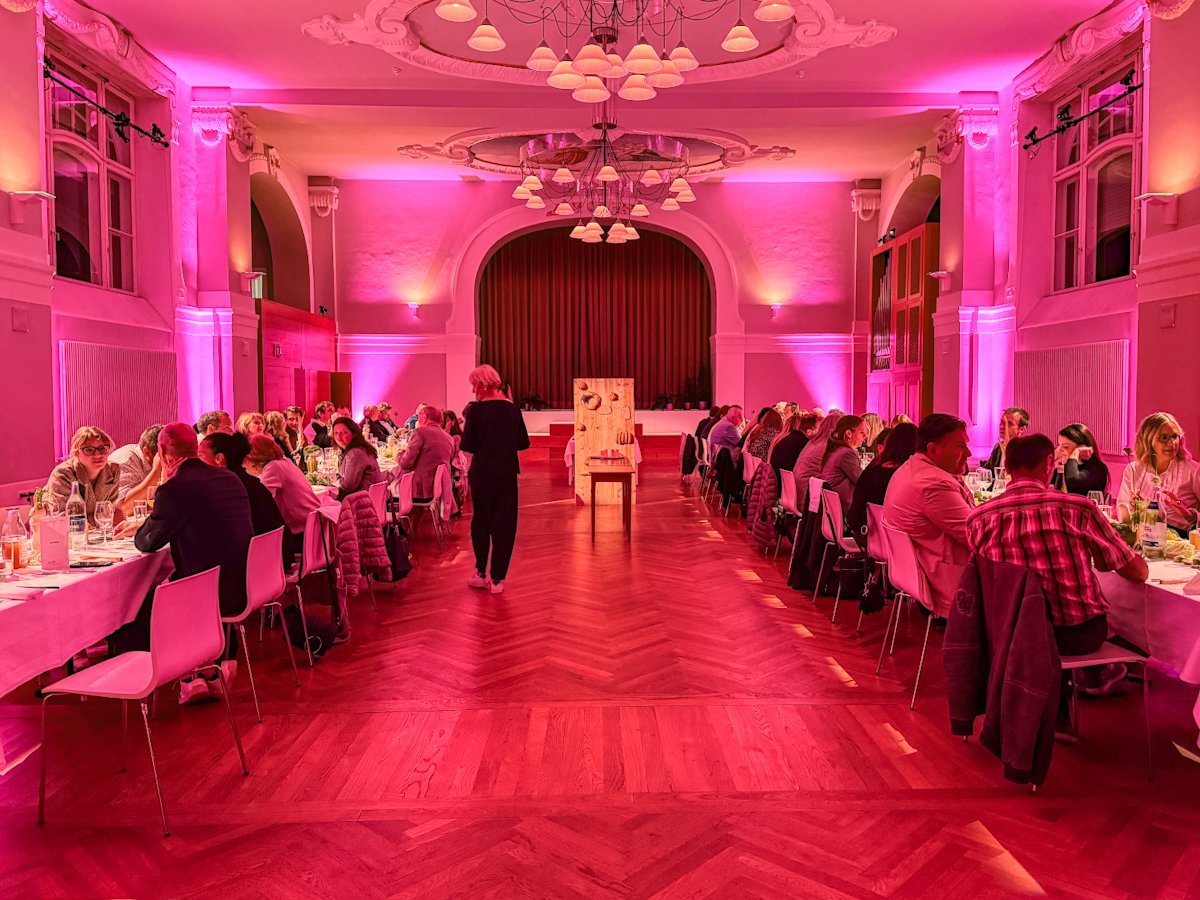
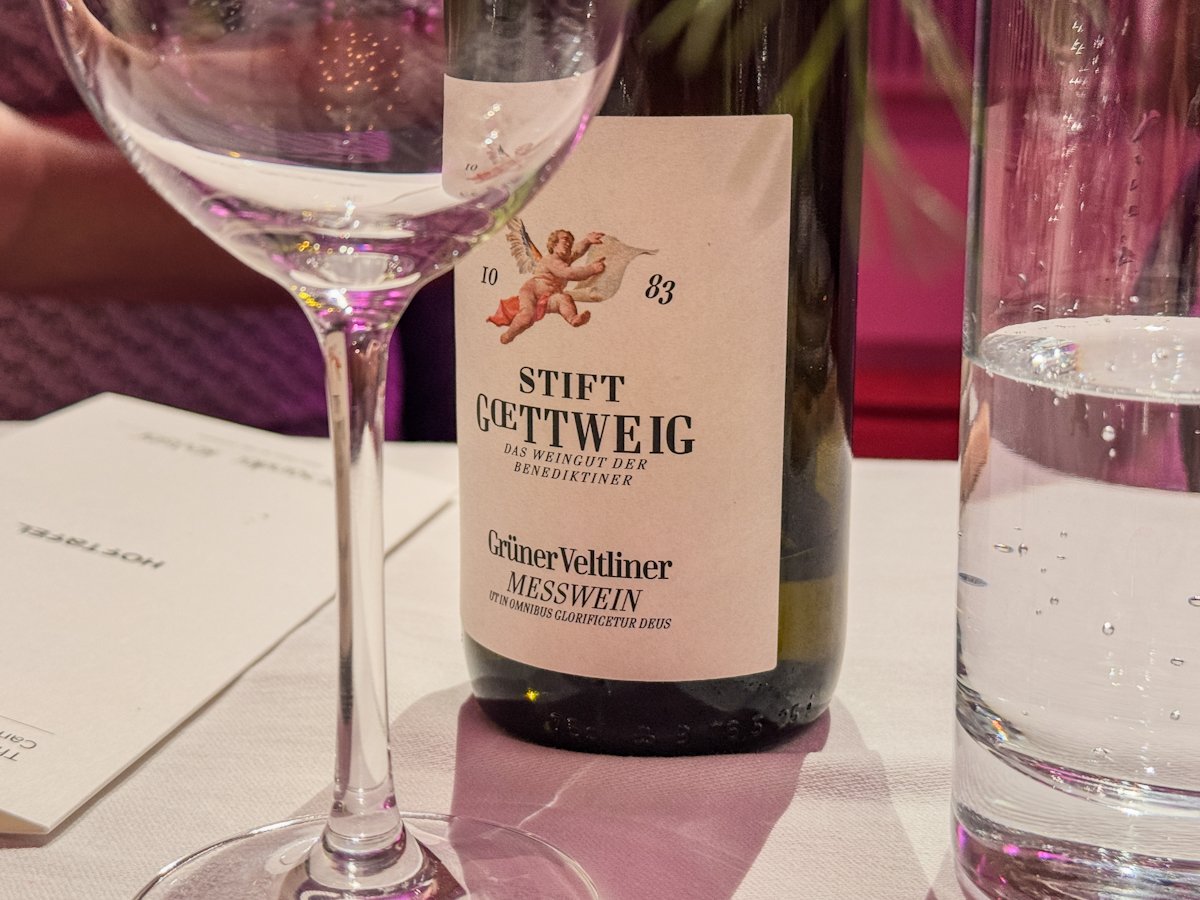
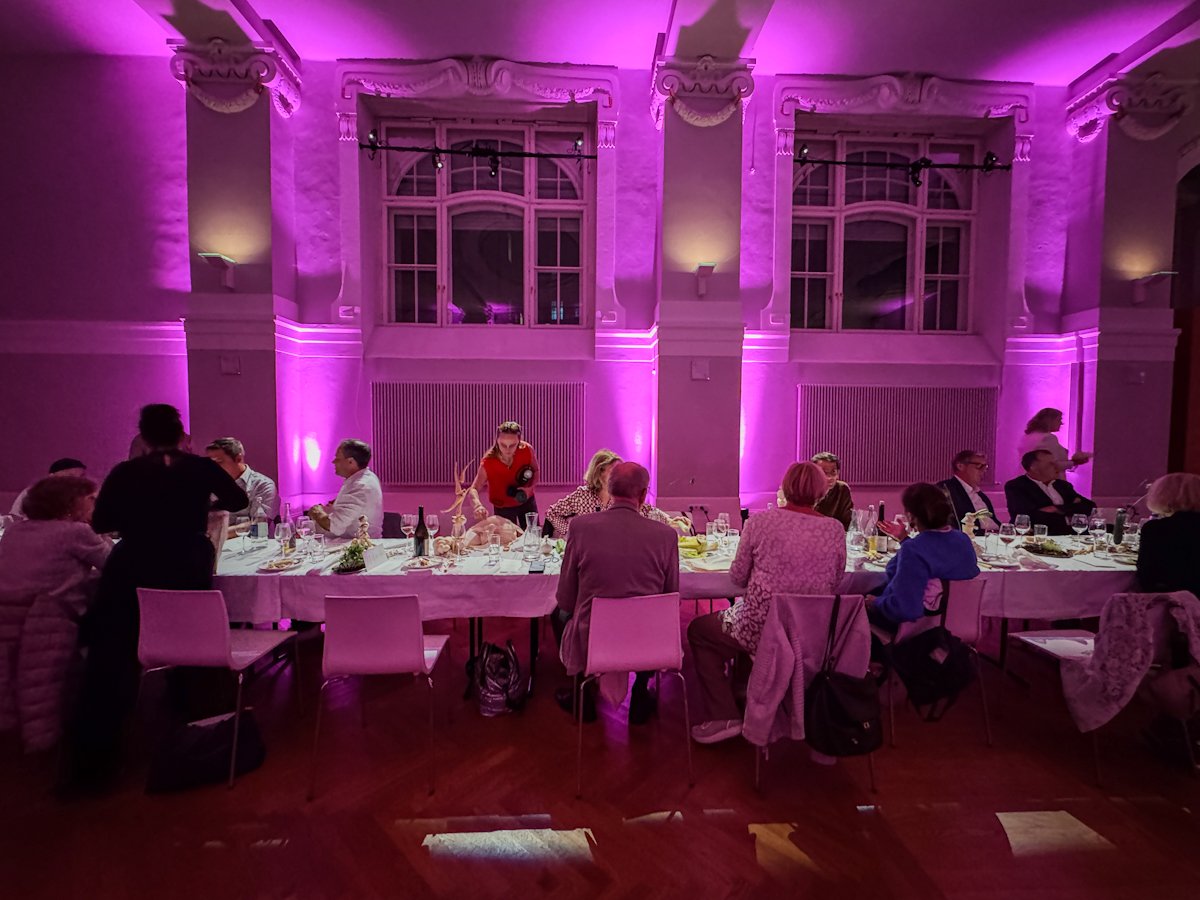
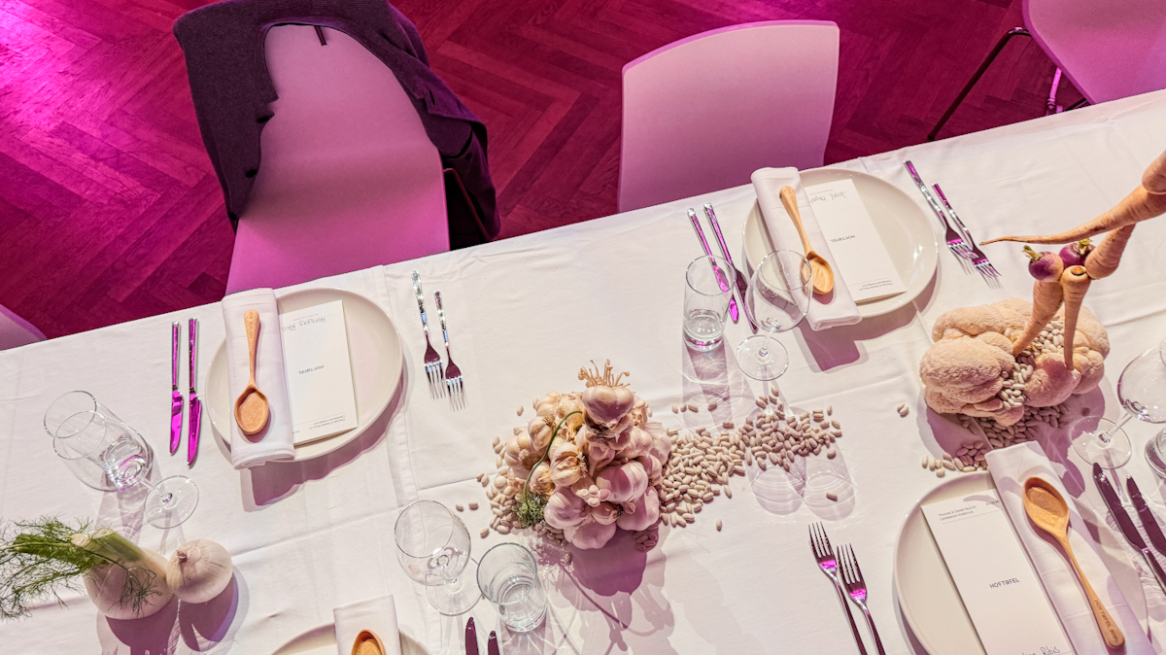
The next gong swings open two double doors, and we stream into a side hall bathed in dusty pink light. Two long dining tables line the sides, and each plate is now adorned with its own place card and menu. Everyone has to find their seat first, which inevitably means passing the wooden block (commonly known as a customer stopper) between the tables, to which various loaves of bread have been nailed with heavy iron nails. Small candles stand nearby; some are already burning. Only the place card finally reveals the truth: bread and butter are already the next course, accompanied by a good sip of sacramental wine (2025) from the Holy Brotherhood of St. Benedict at Göttweig Abbey in Lower Austria. It’s gradually dawning on me: first the Garden of Eden with the washing of feet and anointing, then many small miracles, now the Last Supper and the Crucifixion—there’s a secret story being told between the lines here!
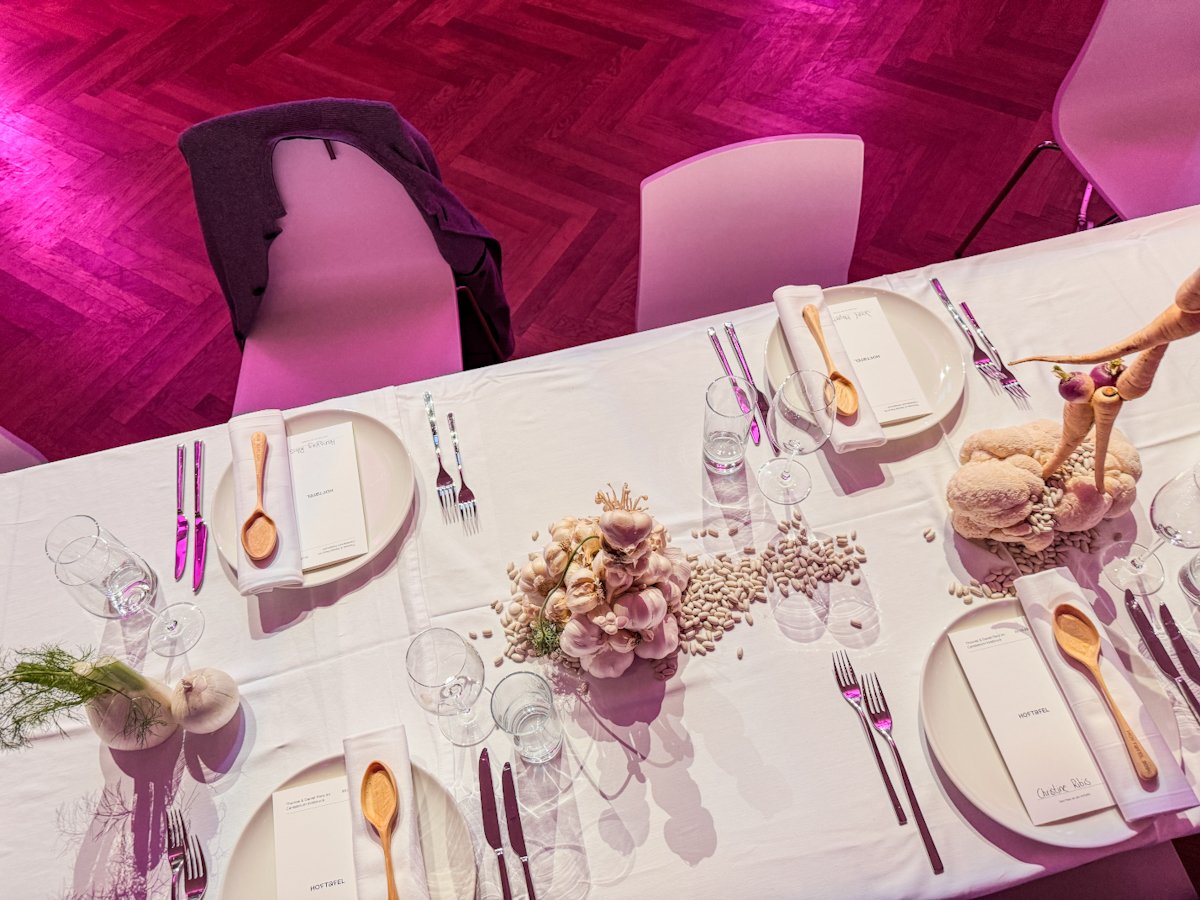
Two impressively decorated tables, each place setting with its own menu—and Swiss stone pine spoons!
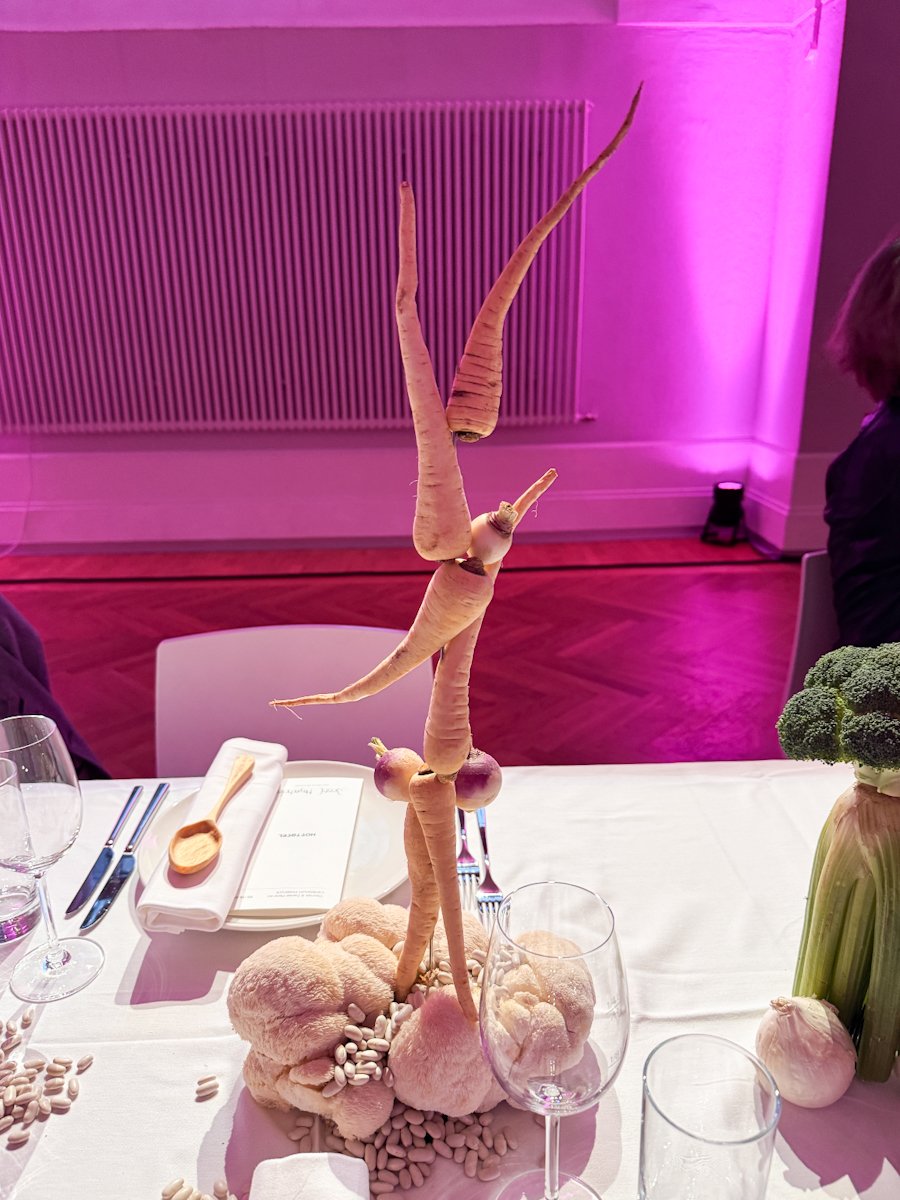
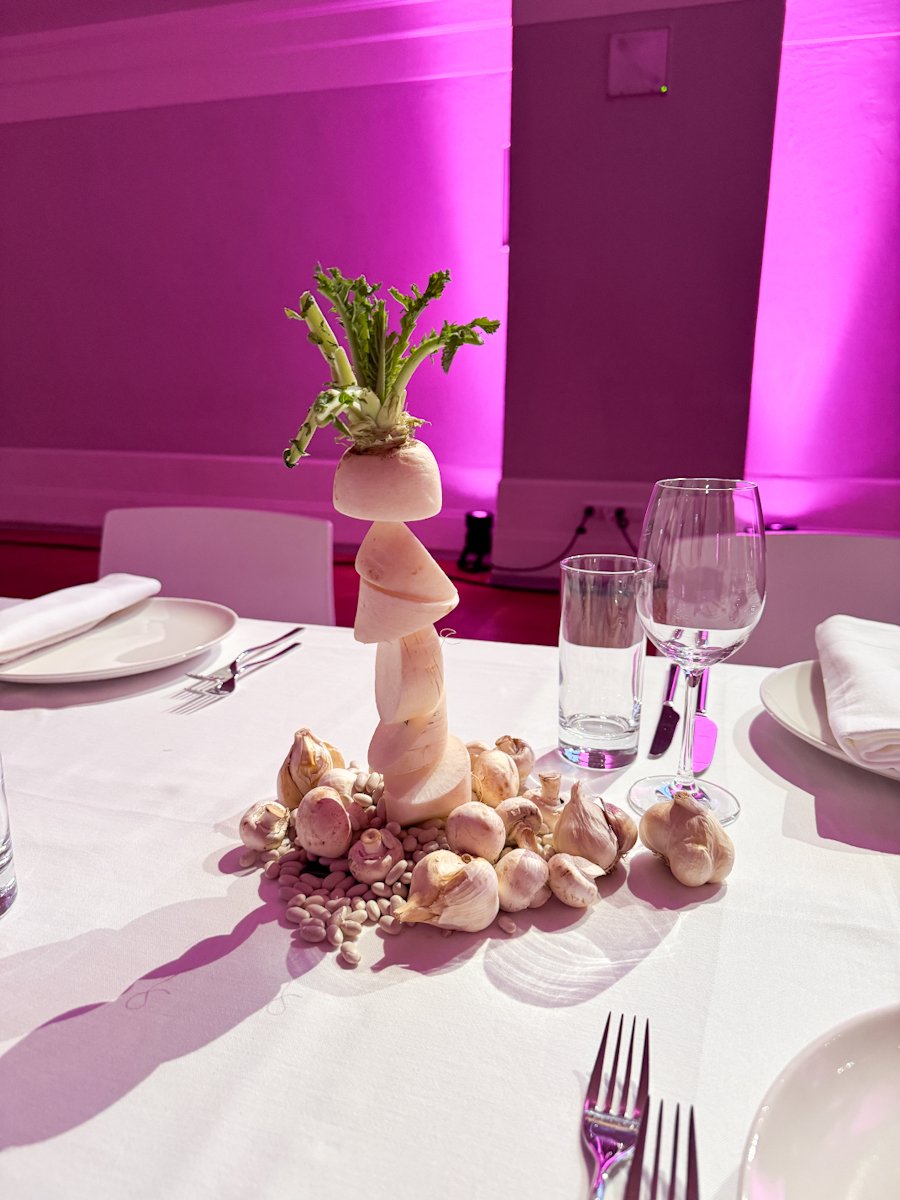
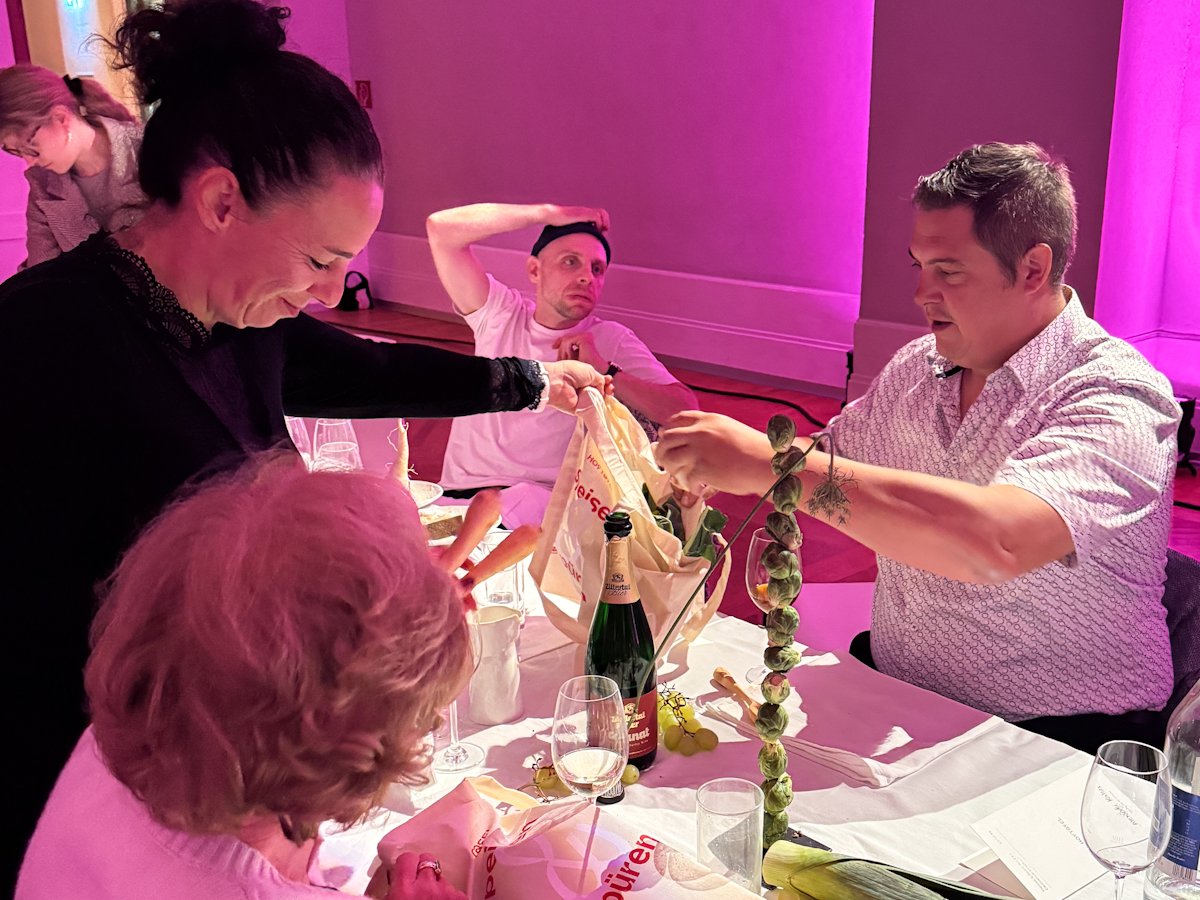
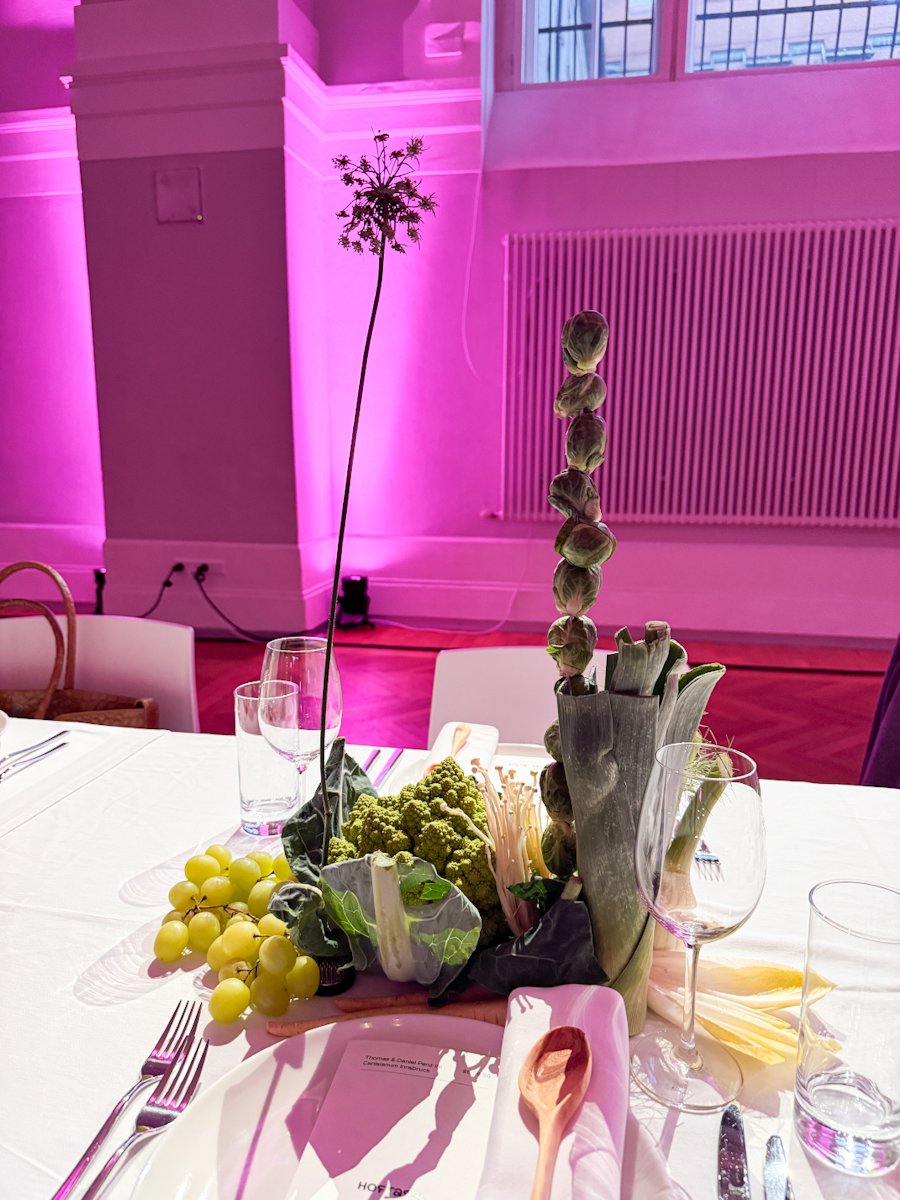
The artistic table decorations really make an impression.
Between the boards stands a wooden block to which bread has been nailed.
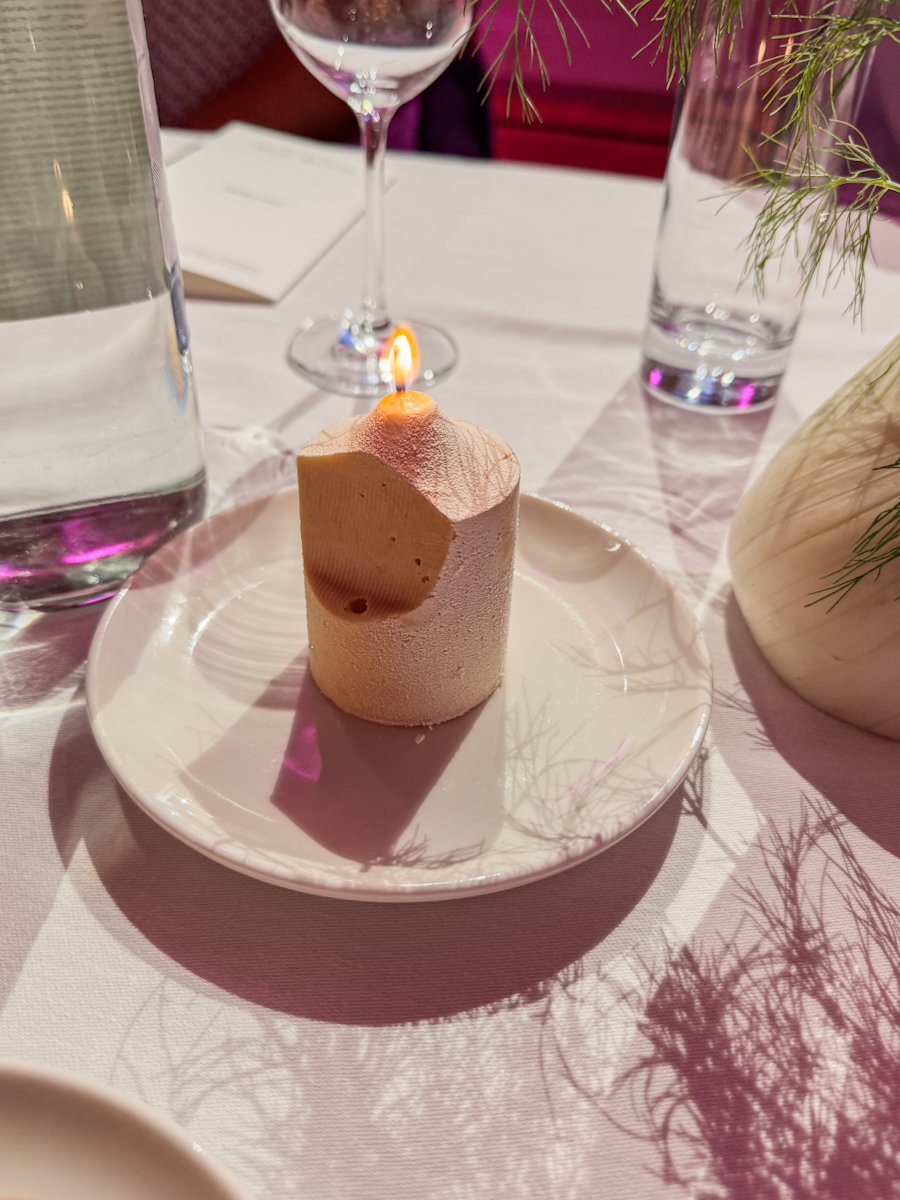
The butter is browning—salted and caramelized.
I'd gladly go to the monastery for a glass of sacramental wine like that.
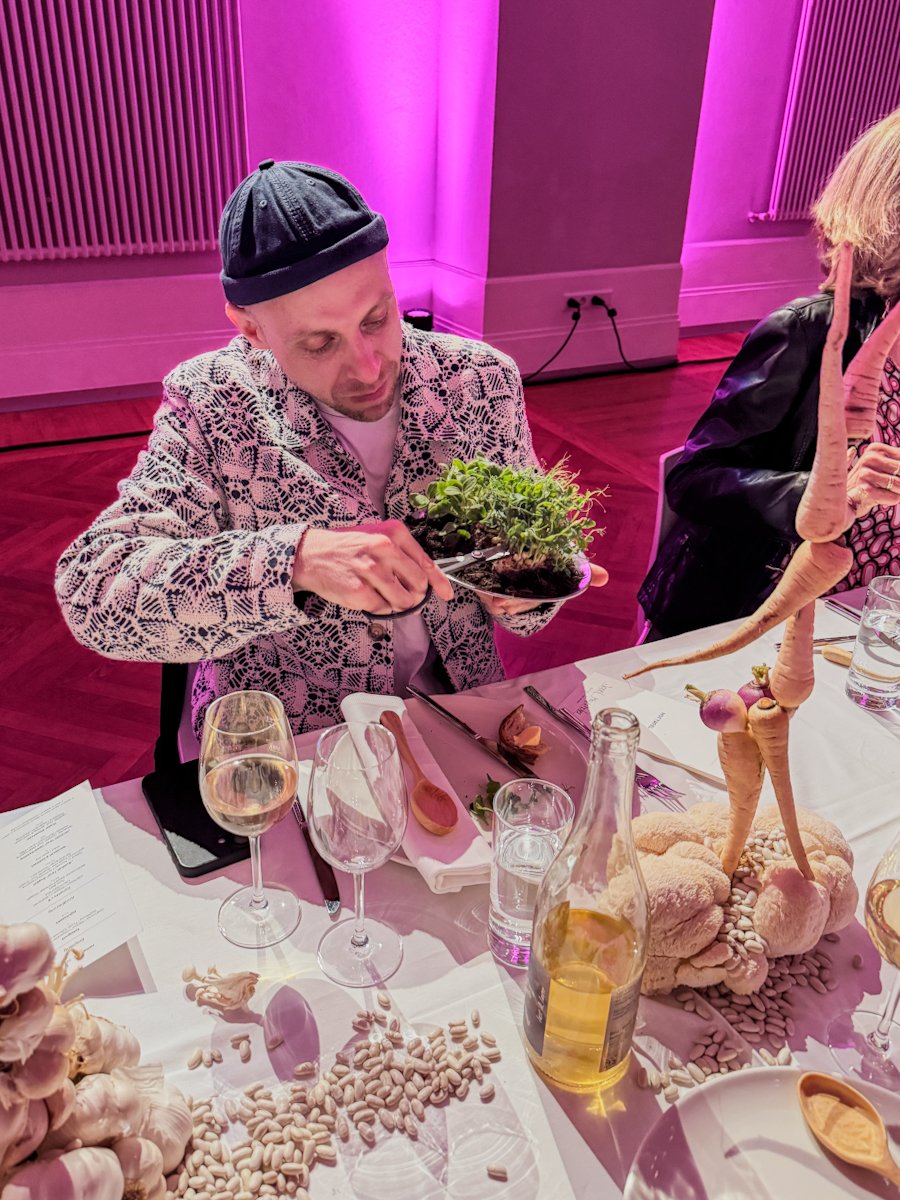
Our gardener, Josef, trimming the shoots.
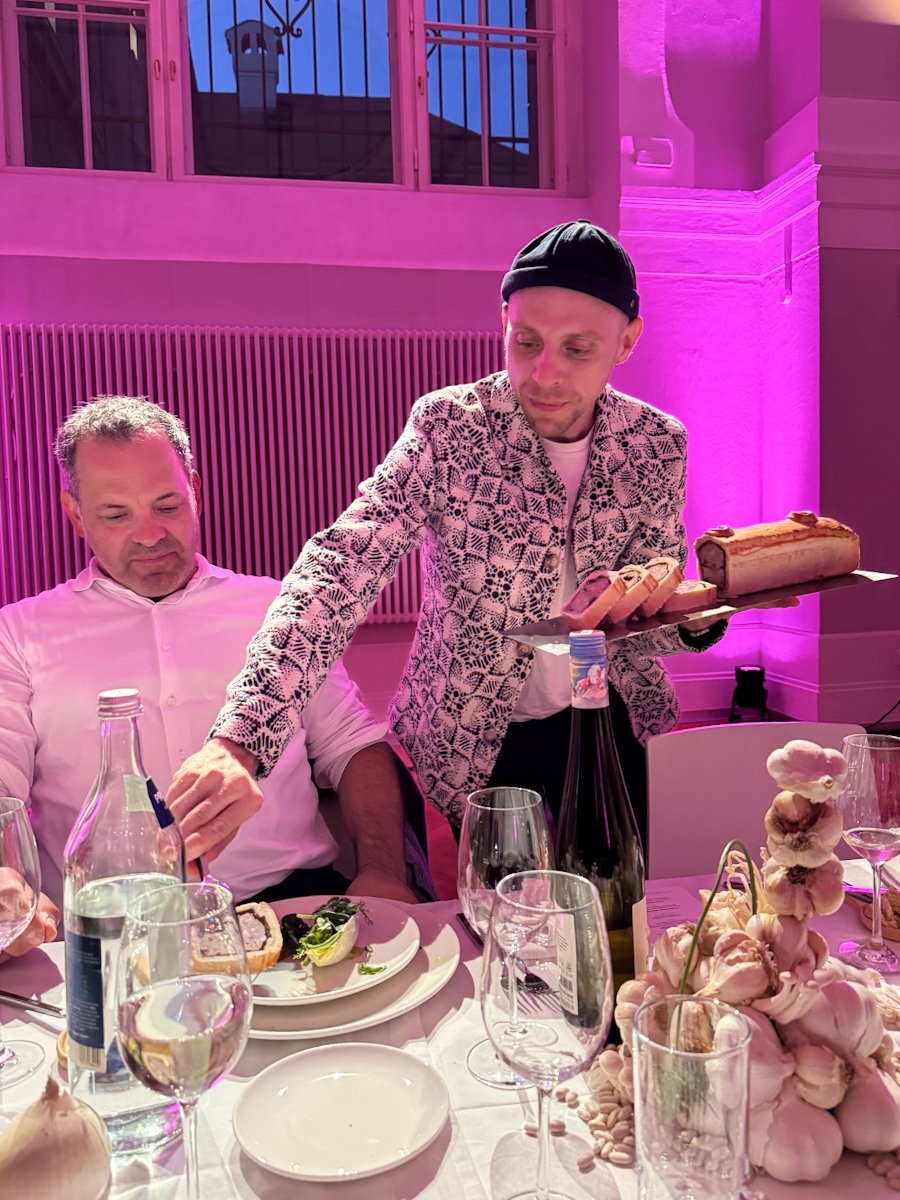
From somewhere, a pair of garden shears and a clump of grass (?) are handed over, and with a skilled snip, my companion arranges fresh sprouts (!) on our plates. Everyone has long since joined in the conversation, breaking bread, chopping lettuce, and shaking their butter-smeared hands. In between, pâté is also served; alpine pork and innocent lamb snuggle heartily in their pastry coating; Josef passes me this resurrection-turned-delicacy across the table; we feel like royalty and pour ourselves another round.
What Makes Us Happy
At this point, we take (yet another) strategic break from our meal at the courtyard table to solve a riddle: Starting today, the hand-carved Swiss stone pine spoon next to our dinner set belongs to us. It serves as a sacred relic of this evening—and as a historical anchor. After all, in the old days, boarders could buy their way into other people’s meals for a small fee, bringing nothing but their spoon. With modern supper clubs, the concept is now being revived through DILON Studio, the tourism team, and the Hoftafel. And how! In addition to “Culinary Storytelling,” the DILON portfolio also includes “Social Choreography.” What does that mean? Forget “no service today”—everything is meticulously planned and executed: A good half-year’s worth of work had already gone into this evening before it even began, a quiet voice involved in the project whispered to me earlier in the garden.
Someone must have made all this look fresh and crisp—otherwise, it wouldn't last.
A little joke with every pastry—every royal court needs its jester!
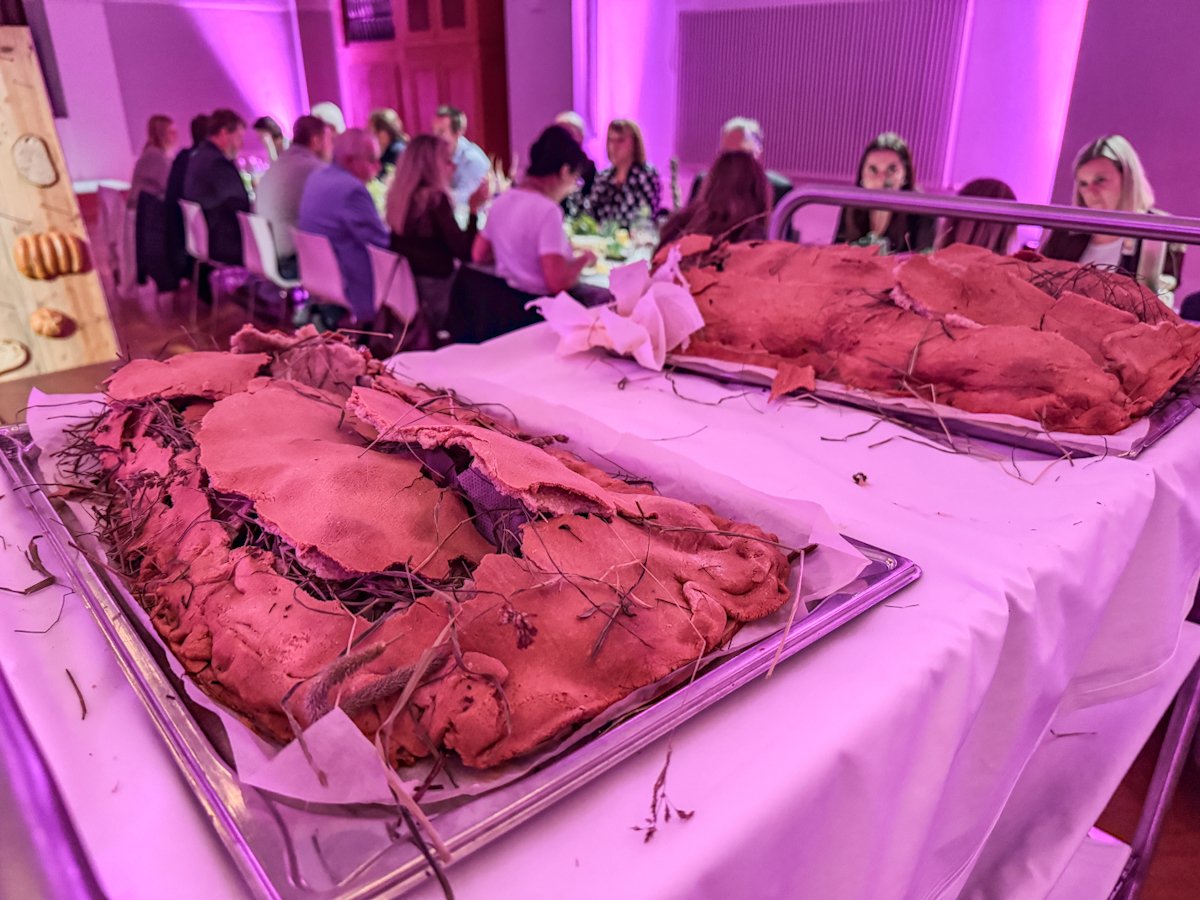
The vegetables wrapped in hay are just one of many highlights on today's farm-to-table menu.
The decorations reveal the most exciting twist right at the very end.
It does have a bit of a Last Supper vibe—and that was all by design.
From the narrative thread that’s always woven into the changing settings, right down to the table decorations made of artfully arranged vegetable sculptures. Someone must have actually carved all of these fresh today, because anything else would stand out immediately here. And indeed, a brief detour while searching for the restroom reveals another hall across the way, where a fully equipped court and gourmet kitchen has been set up for the occasion. A gleaming white hand appears from inside and wordlessly points me in the right direction, as if it knew everything about me. What a lovely coincidence, too, that my tablemates and I already knew each other from somewhere. Or that the toilet paper roll is hanging the right way around today.
Dornbusch and Ende
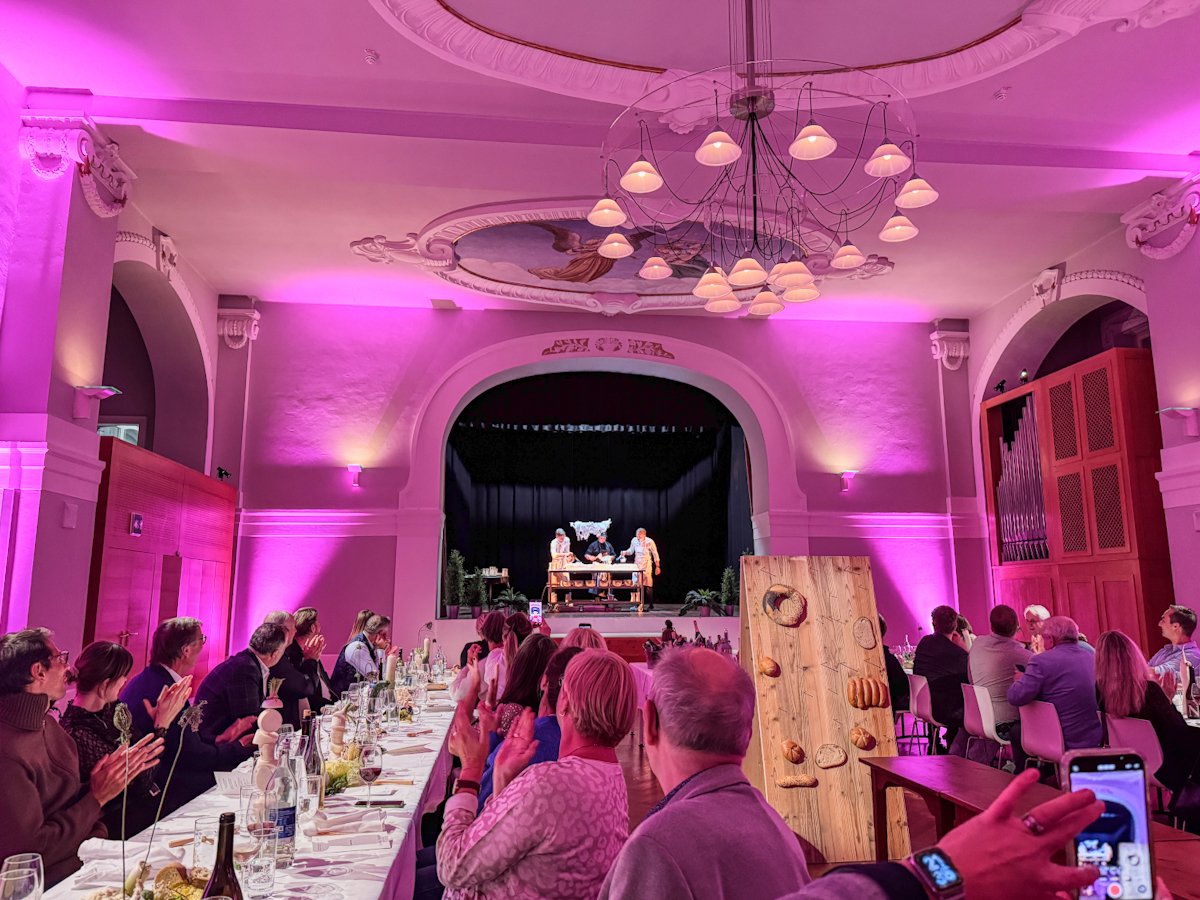
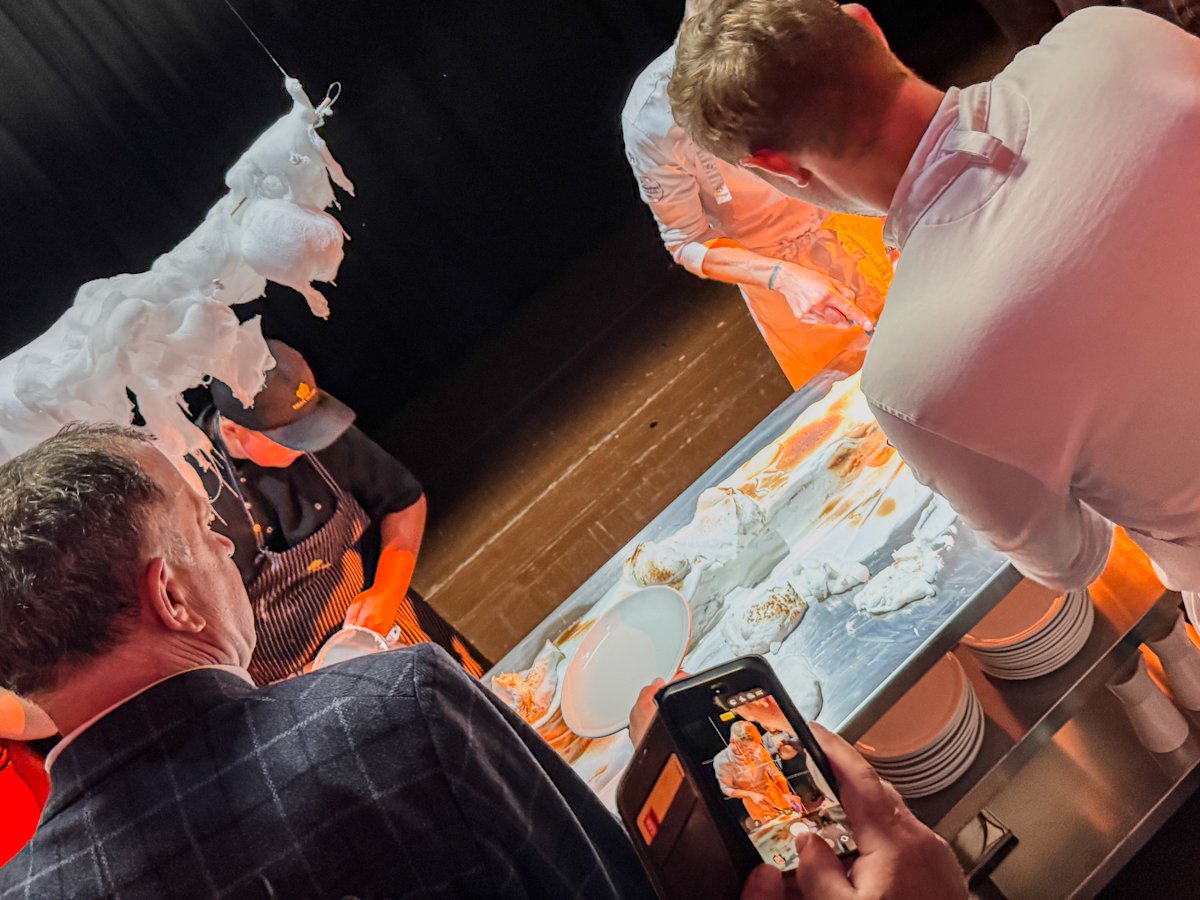
Romantic hunting scenes are also a must at court, so next up is a game and mushroom ragout, served with vegetables wrapped in hay and polenta from heaven. And lo and behold—it’s so delicious that even the grandmother sitting next to me is now in seventh heaven. Another creative intermission—the plates are cleared away—then the black curtain of the auditorium stage bursts open, and once again the two gentlemen appear in dazzling white. Amid mountains of whipped egg whites, two flaming swords blaze—for the burning bush that heralds the end appears today as a Tyrolean pyre. Anyone who forgets their wooden spoon on the way to the front may take one from a heart made of silverware. And then, all of a sudden, we’re all children again, standing in Grandma’s kitchen and allowed to eat as much as we want until we get a stomachache.
The stage also comes into play for the spectacular finale.
We get to be there in person and watch the masters at work.
The best part: We get to take the table decorations home with us!
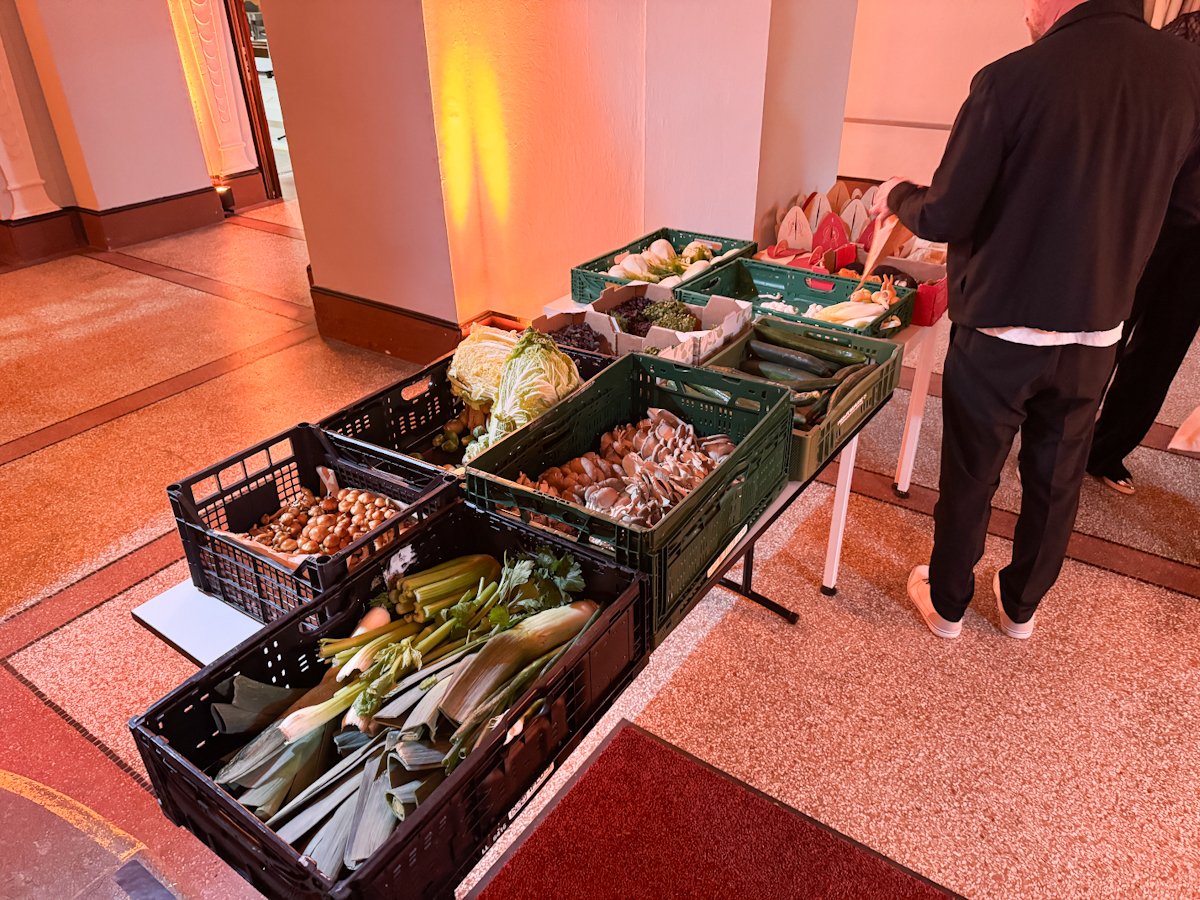
If you missed out, don't worry: Here's the ingredient list!
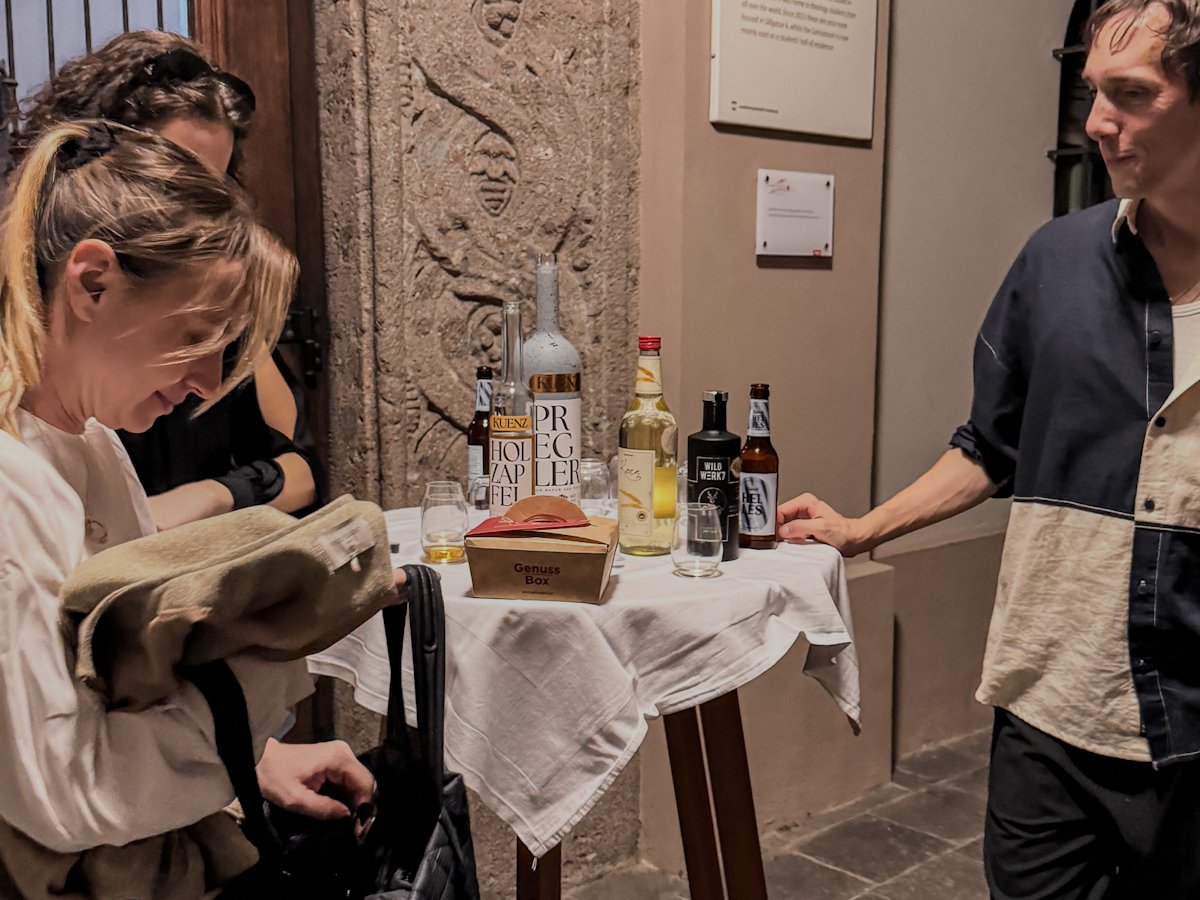
It was great, it was fun—how about a little shot to wrap things up? The hosts, Innsbruck and DILON, say thank you.
Finally, a stand loaded with cloth bags is rolled in, and anyone who can still stand is welcome to take the decorations home. A lively haggling and bartering ensues—just like back in the temple, a thought flashes through my mind. Anyone who misses out will find ready-to-go gourmet boxes filled with ragout on their way out, as well as (yet another) overflowing buffet featuring all the seasonal produce that found its way into today’s story. And as if all that weren’t enough, the hosts are of course waiting at the exit with fine brandies, warm words, a hug, and heartfelt thanks—for being there—and hopefully for seeing you again—at the Innsbruck Hoftafel.
Photos: All the photos included in this article were taken by the author.
Show me the location on the map

A small "scribbler" with huge passions. Born, raised and refined in Tyrol. Loves to read and can cook almost as well as his grandma. At his happiest when out and about and searching for new horizons.
Similar articles
Fall is such a beautiful, colorful season—with traditions that are just as beautiful and colorful. One of…
Kühtai, with its stunning scenery, is at its very best in the fall—golden light, colorful forests, and…
For many people, fall is their favorite season. Or maybe it just seems that way to me—but…
There’s a lot going on in Innsbruck’s Old Town right now when it comes to food: New…