An all-comfort trip to 2,000 meters to observe plants and animals. That's what the "Alpine Grenzgänger" exhibition at Naturkundemuseum Weiherburg at the Alpenzoo in Innsbruck presents. Open until Feb. 28, 2023, this exhibit is produced in cooperation with the natural science department of the Tyrolean regional museums. From showcase to showcase, visitors will take a journey from the edge of the forest higher and higher to the glaciers. It is definitely an exhibition suitable for adults and children, but the explanatory texts are in German only.
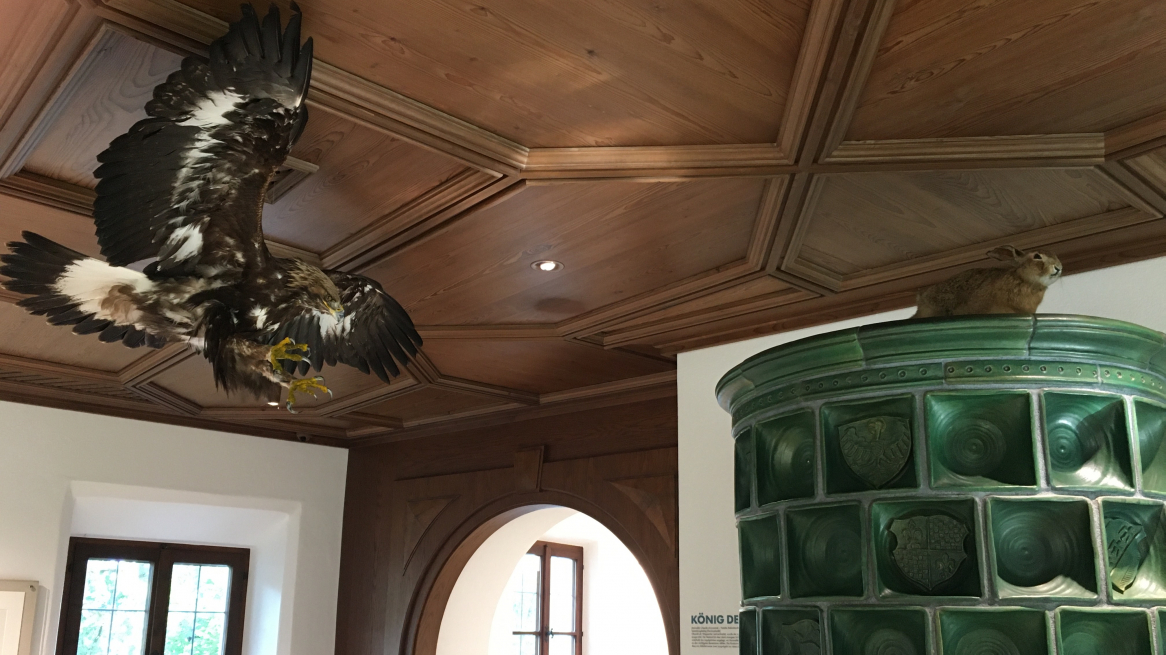
A view in the "Alpine Grenzgänger" exhibition at the Alpenzoo in Innsbruck, Photo © Laura Manfredi
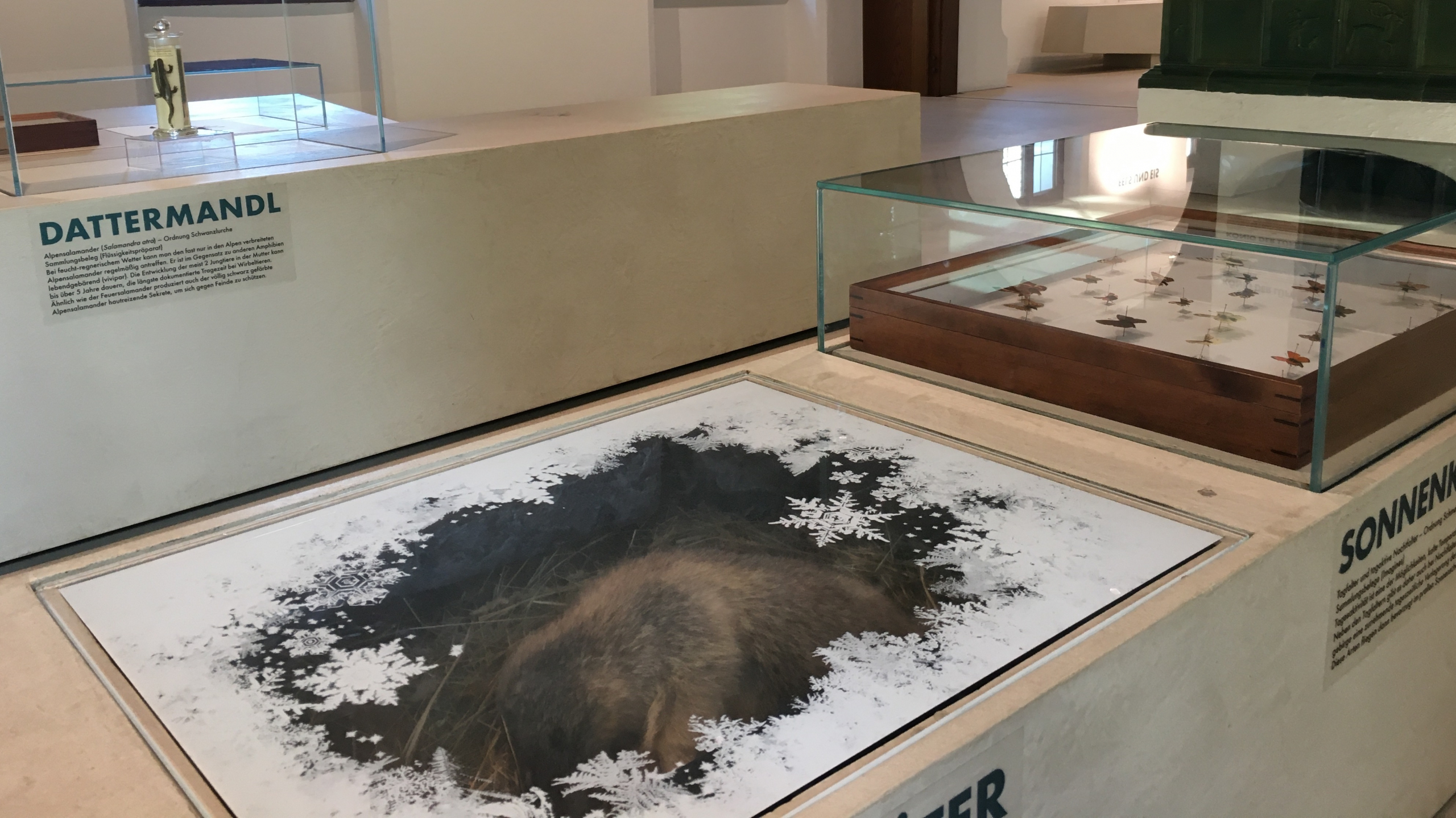
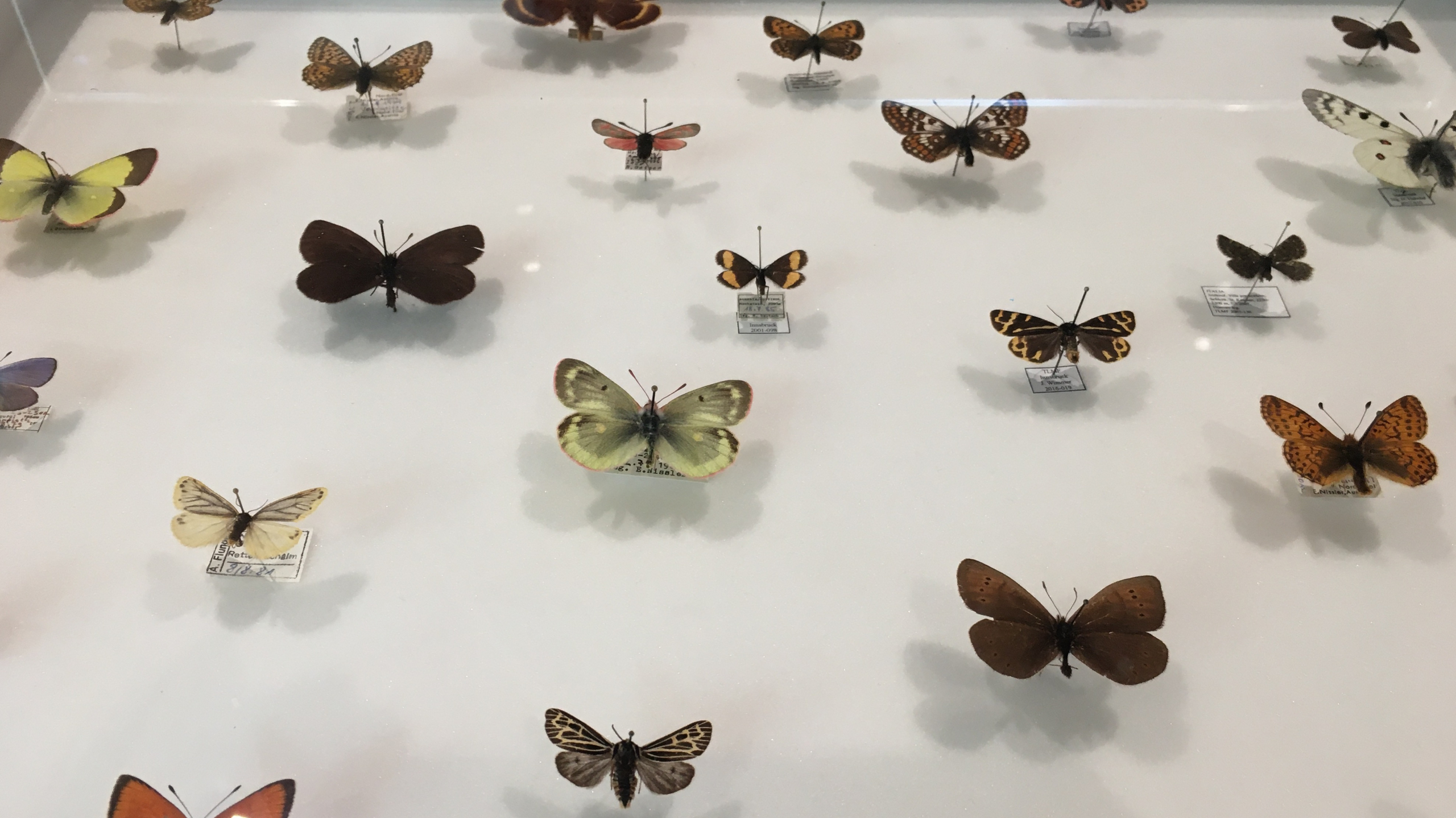
These butterflies love to flutter in the sun, in the "Alpine Grenzgänger" exhibition at the Alpenzoo in Innsbruck, Photo © Laura Manfredi
Greetings from 2,000 meters
How do animals and plants survive in high mountains? The climatic conditions at these altitudes are extreme: large temperature ranges, wind, ice, and short "summers." Yet there are numerous species that have adapted to this habitat by implementing some ingenious tricks. The alpine marmot for example has opted to hibernate. On display we see a taxidermic preparation of a marmot in its burrow. There it spends between 6 and 7 months sleeping. Vital functions slow down: 2 breaths and 20 heartbeats per minute. Thus, energy consumption is reduced and the animal can survive on body fat reserves accumulated during the summer.
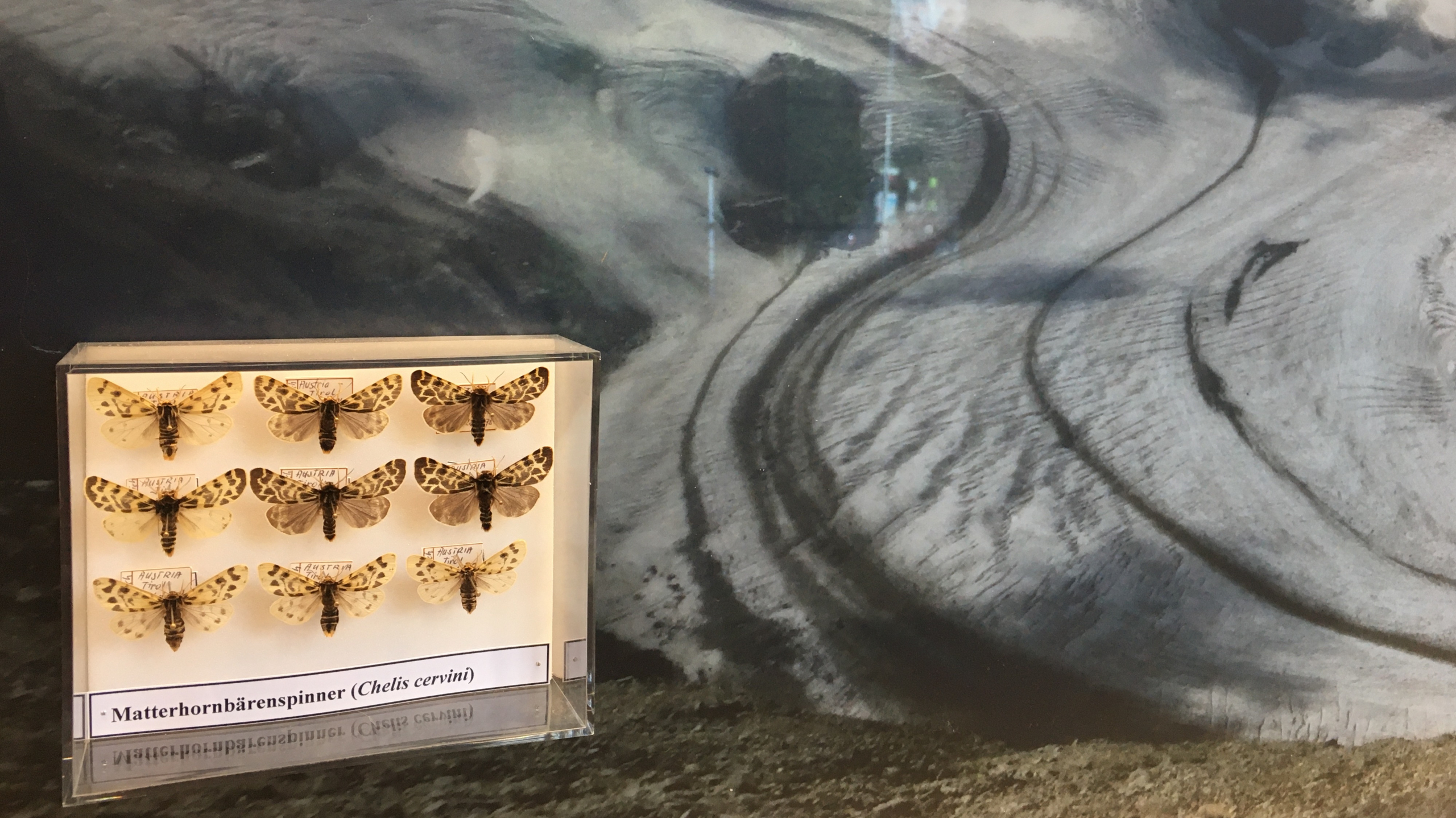
As the name suggests, Chelis cervini lives on the Matterhorn, in the exhibition "Alpine Grenzgänger" at the Alpenzoo in Innsbruck, Photo © Laura Manfredi
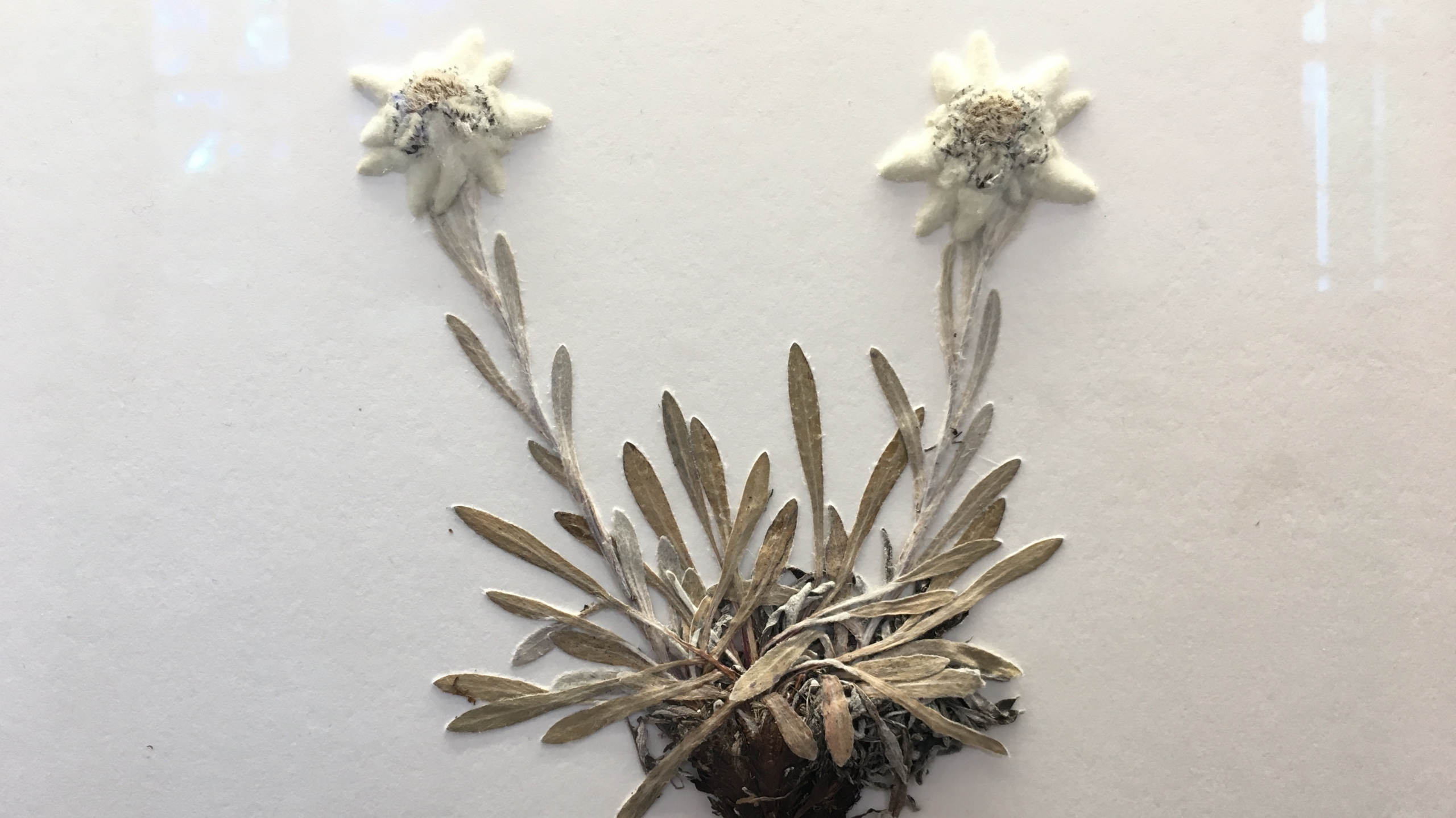
The edelweiss has developed a hair to live in extreme conditions, in the exhibition "Alpine Grenzgänger" at the Alpenzoo in Innsbruck, Photo © Laura Manfredi
Sun, wind and steep rock faces
Thick hair is a solution adopted by animals, we know, but also by some plants. Downy hairs-such as that of the edelweiss, for example-serve in plants to reduce evaporation of fluids and to protect against UV rays, which are very strong at these altitudes.
In order not to fight unnecessarily with gusts of wind, on the other hand, the females of some species of high-altitude butterflies (such as the Sciadia caelibaria) do not fly, but hop around. They can be recognized by their small wings.
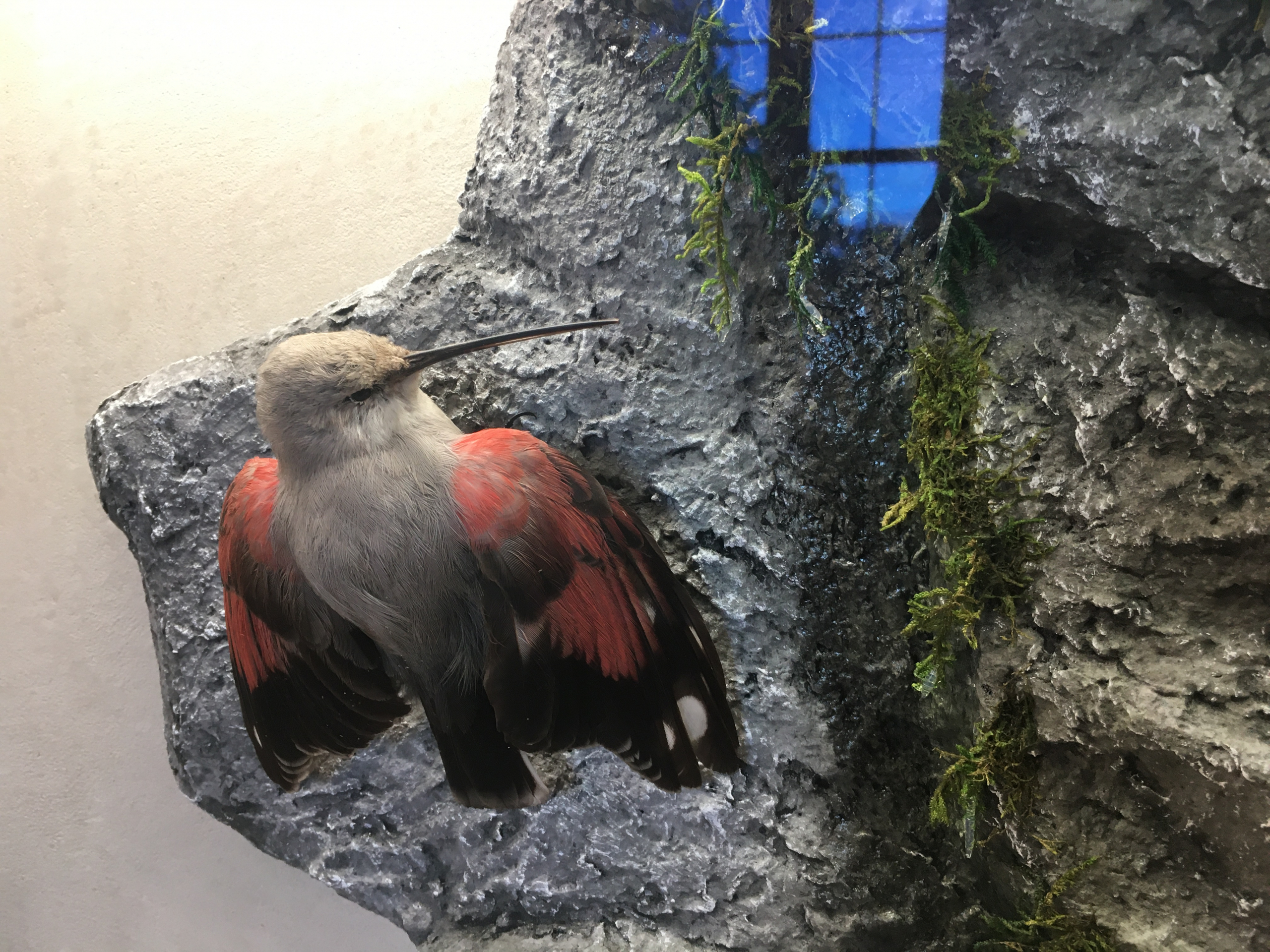
There are birds that have adapted differently. Tichodroma muraria specimens, for example, live on steep cliffs up to 3,500 meters above sea level. Thanks to their long, thin beaks, these birds with beautiful red wings are able to feed by catching insects in the crevices of rocks.
The species Tichodroma muraria lives on steep cliffs up to 3,500 meters above sea level, in the exhibition "Alpine Grenzgänger" at the Alpenzoo in Innsbruck, Photo © Laura Manfredi
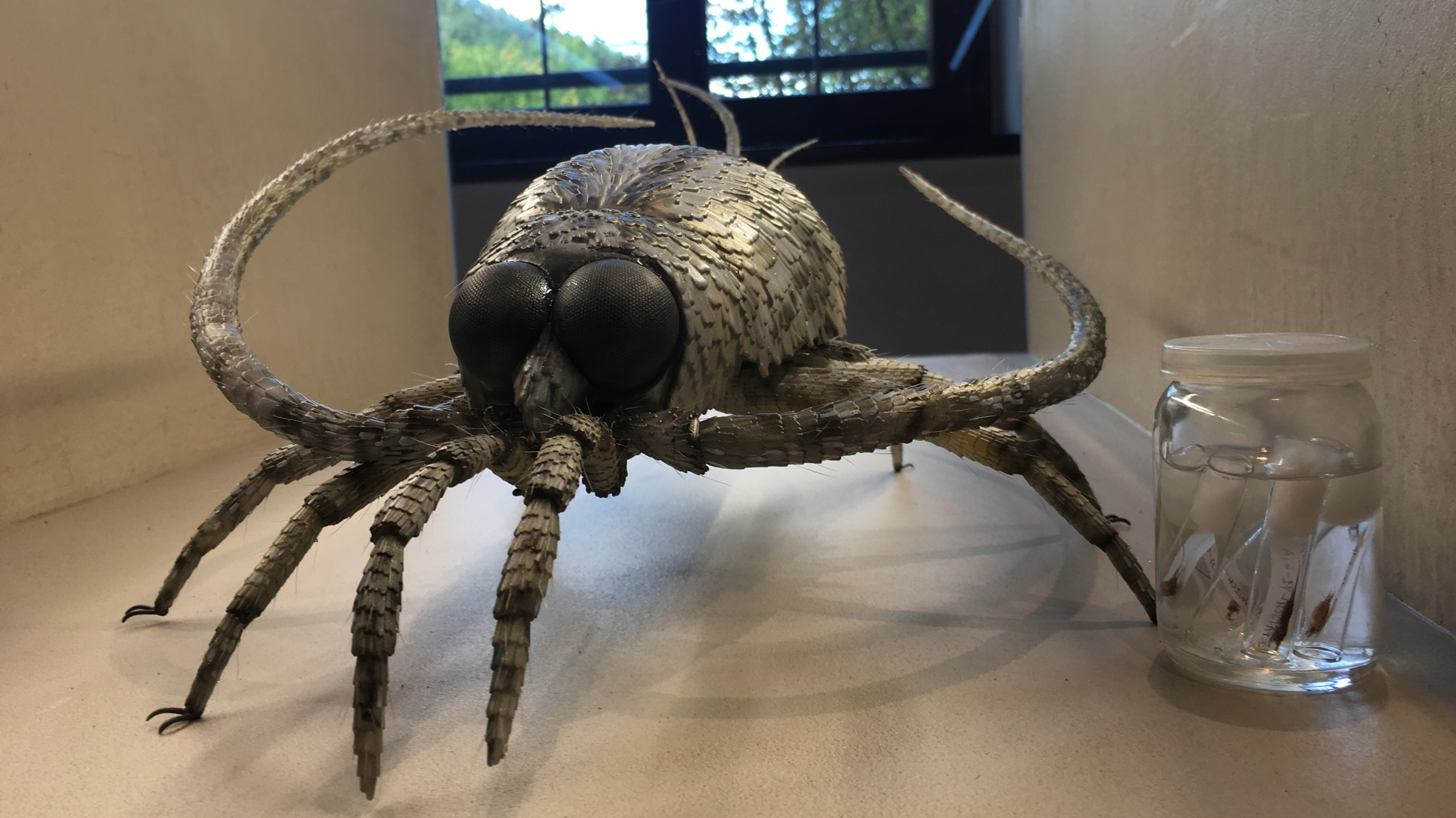
The thrill of gazing into the eyes of a giant Machilidae model, in the "Alpine Grenzgänger" exhibition at Alpenzoo Innsbruck, Photo © Laura Manfredi
To look at and to...touch
The Machilidae is a 50-million-year-old insect that lives at high altitude. One display case shows some specimens of it preserved in test tubes; but an enlarged model allows us to observe all its details and look it straight in the eye.
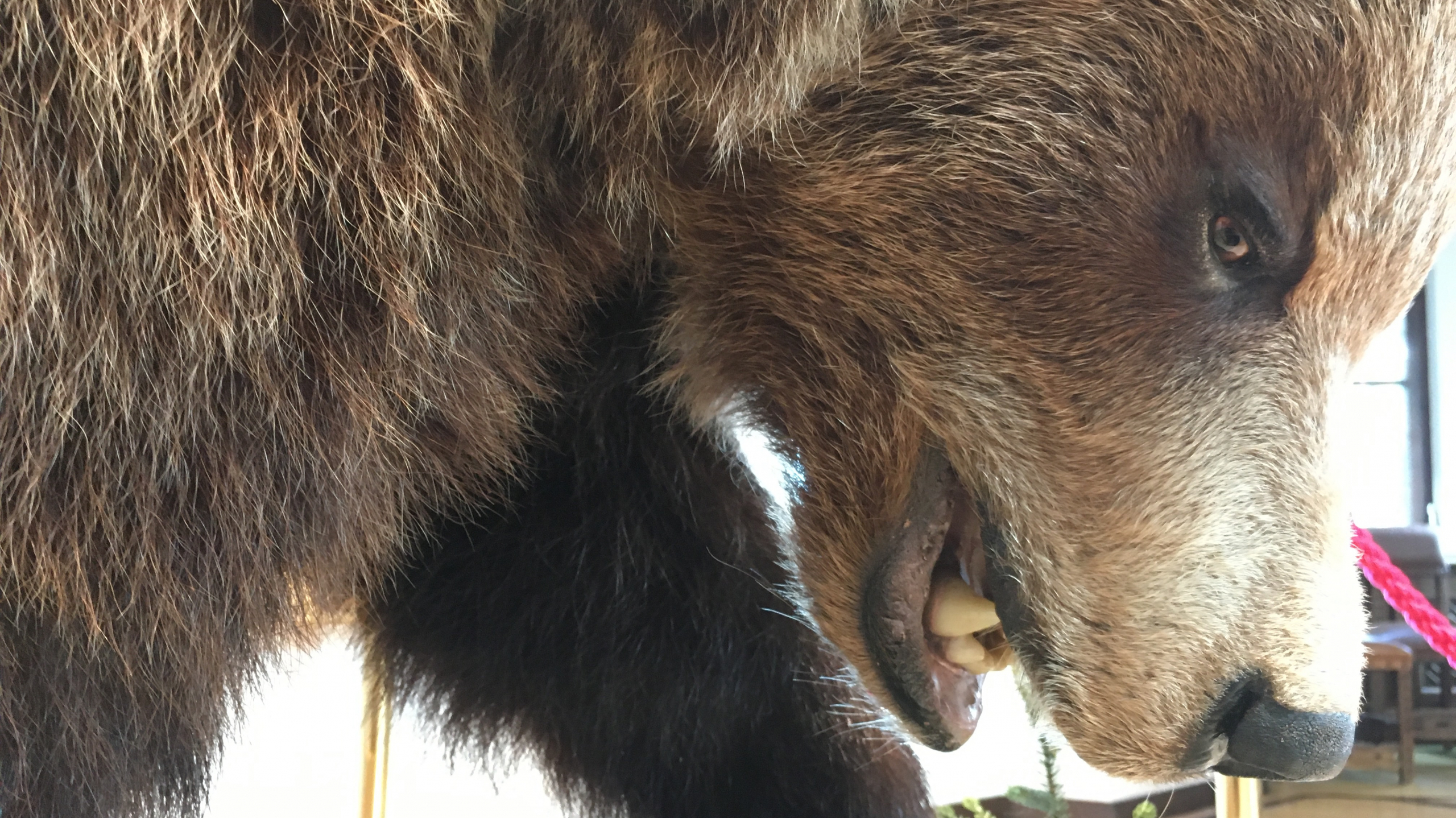
Also on display are some taxidermic preparations of large animals. The most beloved by visitors is definitely a two-year-old brown bear specimen, which you can even pet.
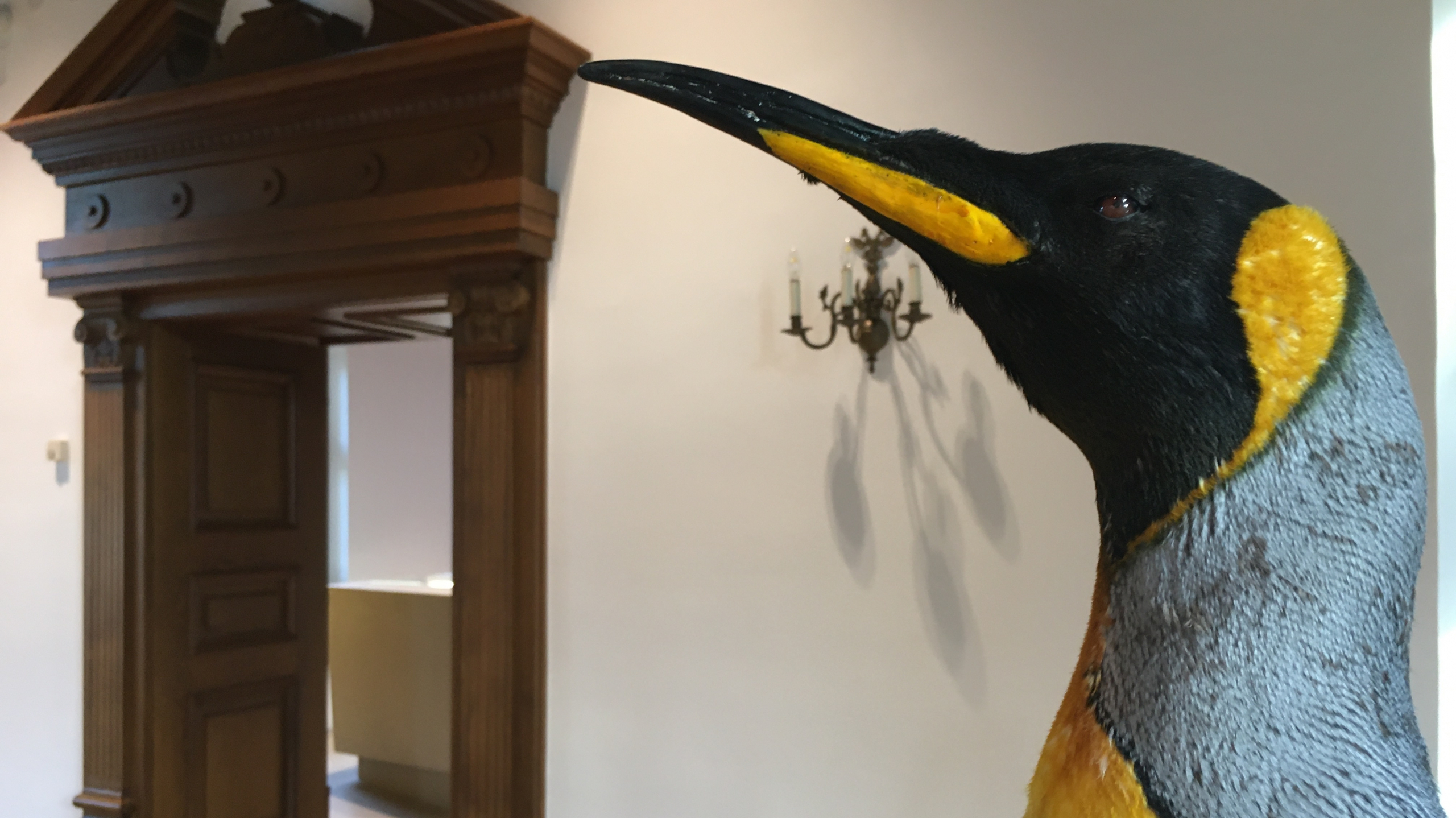
Also on display is an intruder: the emperor penguin. After a moment of disorientation, we are left with the doubt that we were not paying attention in school in biology classes. But upon reading the caption, we are quickly reassured: the penguin does not belong to the alpine fauna. It is on display because an Ischgl hotelier had a plan to "import" it as a tourist attraction. A plan that fortunately did not materialize.
A brown bear to pet at the "Alpine Grenzgänger" exhibition at the Alpenzoo in Innsbruck, Photo © Laura Manfredi
Greetings from the Ischgl emperor penguin ;-), in the "Alpine Grenzgänger" exhibition at the Alpenzoo in Innsbruck, Photo © Laura Manfredi
Useful information
"Alpine Grenzgänger. Über Leben im Extremen"
1.4.2022 - 28.2.2023
Naturkundemuseum Weiherburg / Alpenzoo
Weiherburggasse 37, Innsbruck
Hours
Open daily
In summer from 9 a.m. to 6 p.m
In winter from 9 a.m. to 5 p.m
Tickets
The exhibition can be visited with the Alpenzoo ticket
Full 13 euros, reduced 10 euros
Children 6 to 15 years 6.50 euros, 4 to 5 years 2.50 euros
Free admission for Innsbruck Card holders
Show me the location on the map

A visual artist from Milan who not only works with brushes and canvases but also loves writing about art, culture, music, design and creativity.
Similar articles
The Mieminger Plateau is an extremely impressive, ancient Tyrolean cultural landscape. It stretches along the foot…
It's finally here - spring! Sun, fresh air and special experiences - that's exactly how I like…
Kühtai is one of the most popular ski resorts in the Innsbruck ski community and for good…
For me, tobogganing is as much a part of winter as apple sauce is to Kaiserschmarren. And…