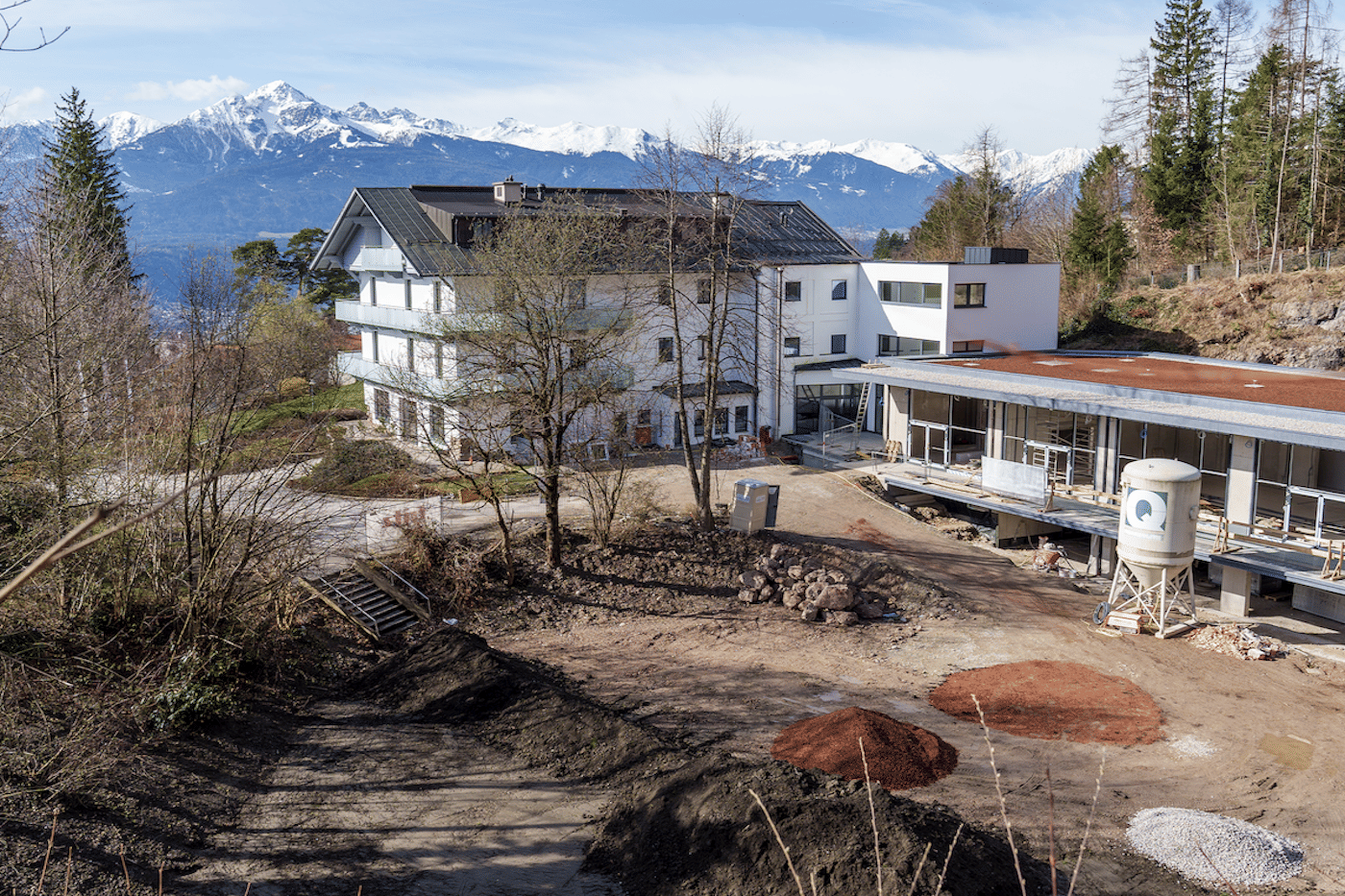
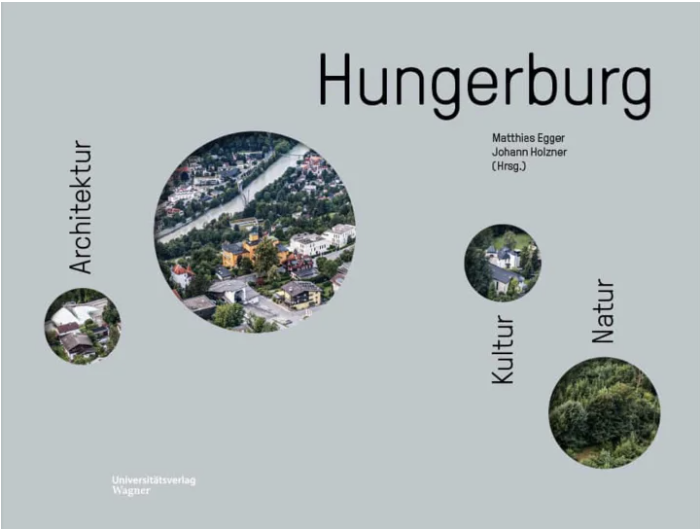
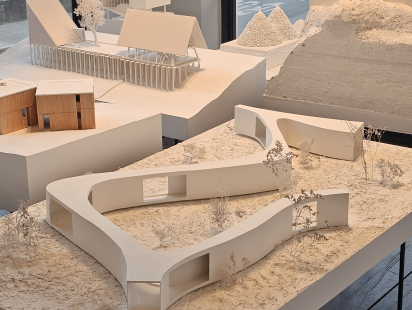
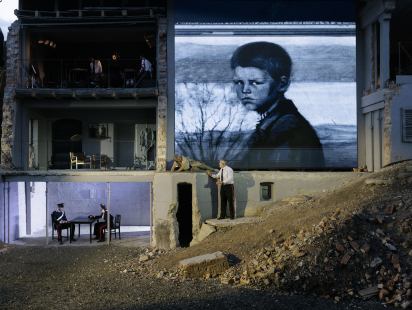
Nobody would seriously claim that there was nothing going on in Hungerburg. On the contrary: the development since the 'founding' of today's district, but especially in the last 120 years, can only be described as exciting and rapid. And anyway: the innovations in the planning and construction of Hungerburg were a kind of blueprint for the development of Tyrolean tourism. A former high pasture was first turned into a 'climatic health resort' with an adjoining villa district and mountain railway connection. After the Second World War, the Hungerburg then developed into a real tourist 'hotspot' and a wonderful local recreation area for the people of Innsbruck. This story is told in a highly entertaining and fact-filled way in a publication by the Innsbruck City Archives: 'Hungerburg - Architecture, Culture, Nature', edited by Matthias Egger and Johann Holzner.
Why Hungerburg in the first place?
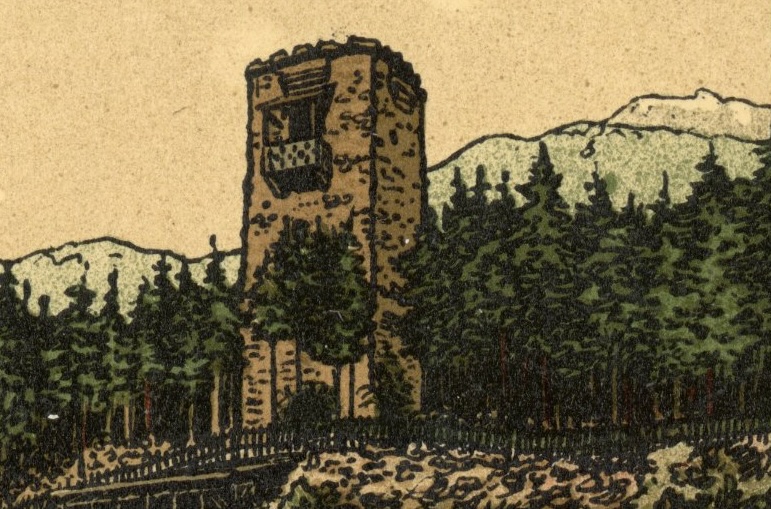
The thing with the castle and the hunger was and still is confusing. I had long assumed that there must have been some kind of wall up there. Where else would the name have come from? Completely wrong, as I now know. There has never been a castle or even a castle-like building on the flat area 250 m above Innsbruck. The name is a free invention, although there is still speculation about its origin. However, a former lookout tower from the 20th century tempts unsuspecting contemporaries to make all kinds of misinterpretations.
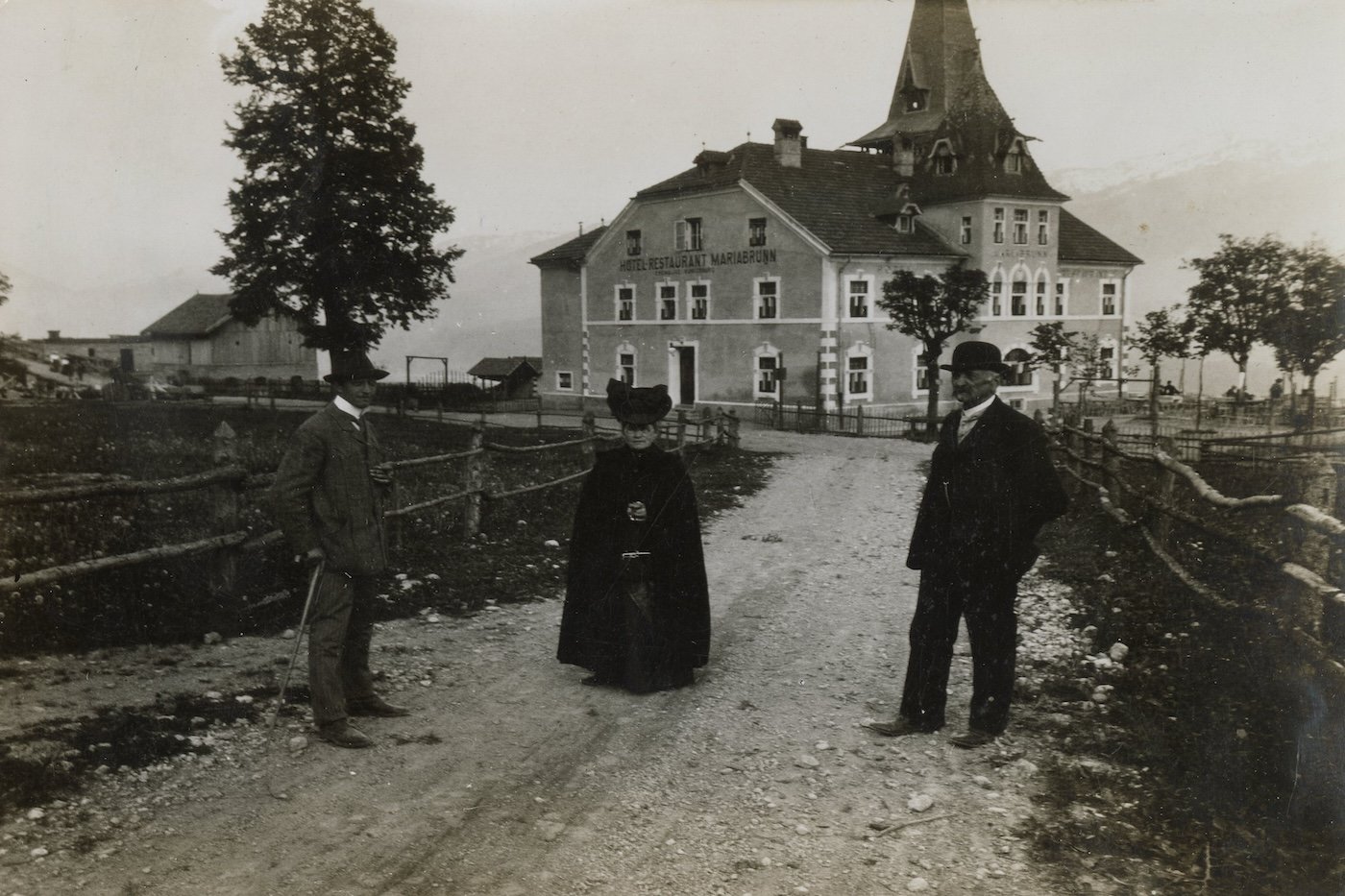
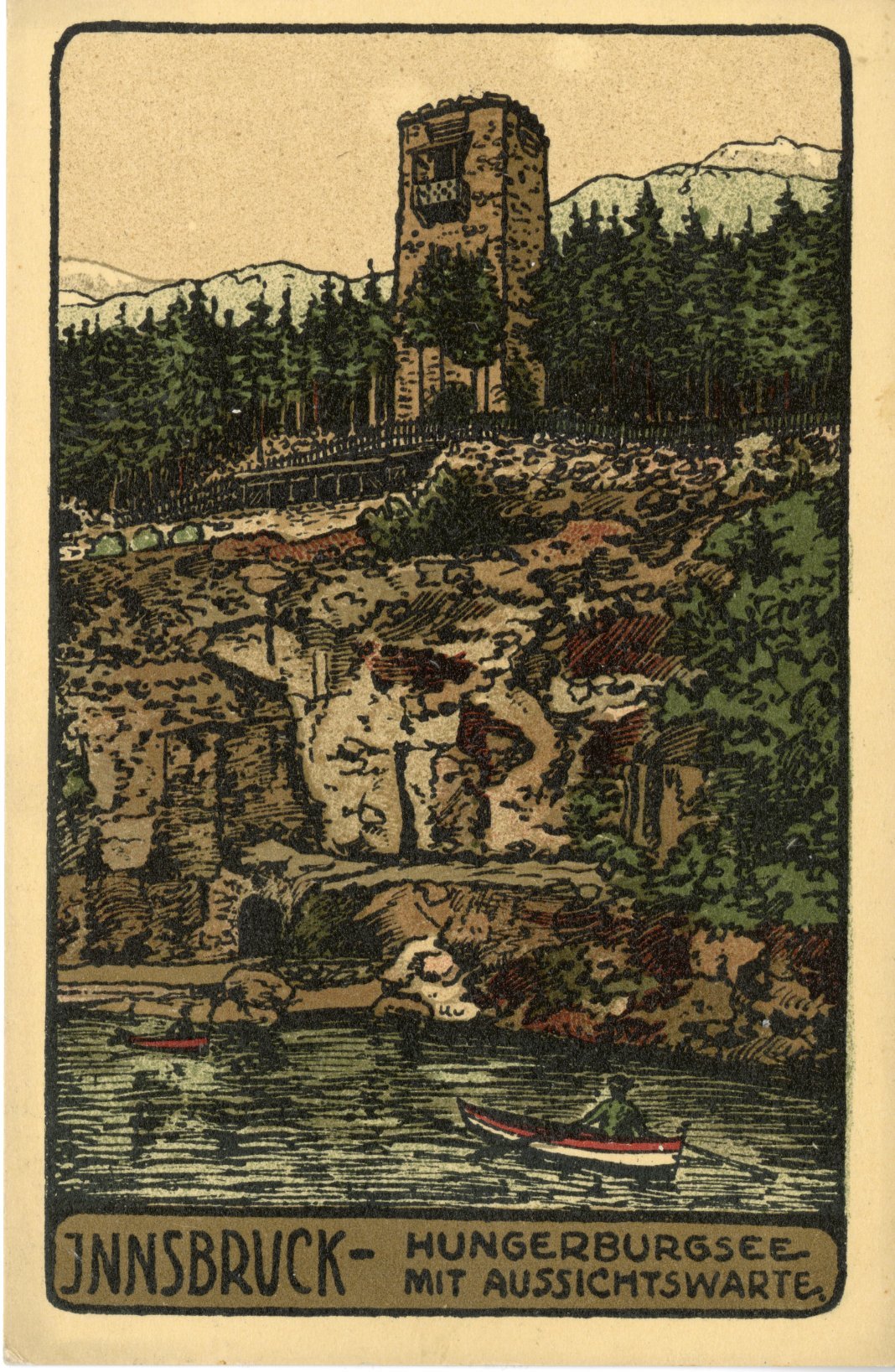
Built in the early years of the 20th century, this grim-looking lookout tower was never a castle but part of the first 'adventure hotel complex'. Picture: Stactarchiv Innsbruck
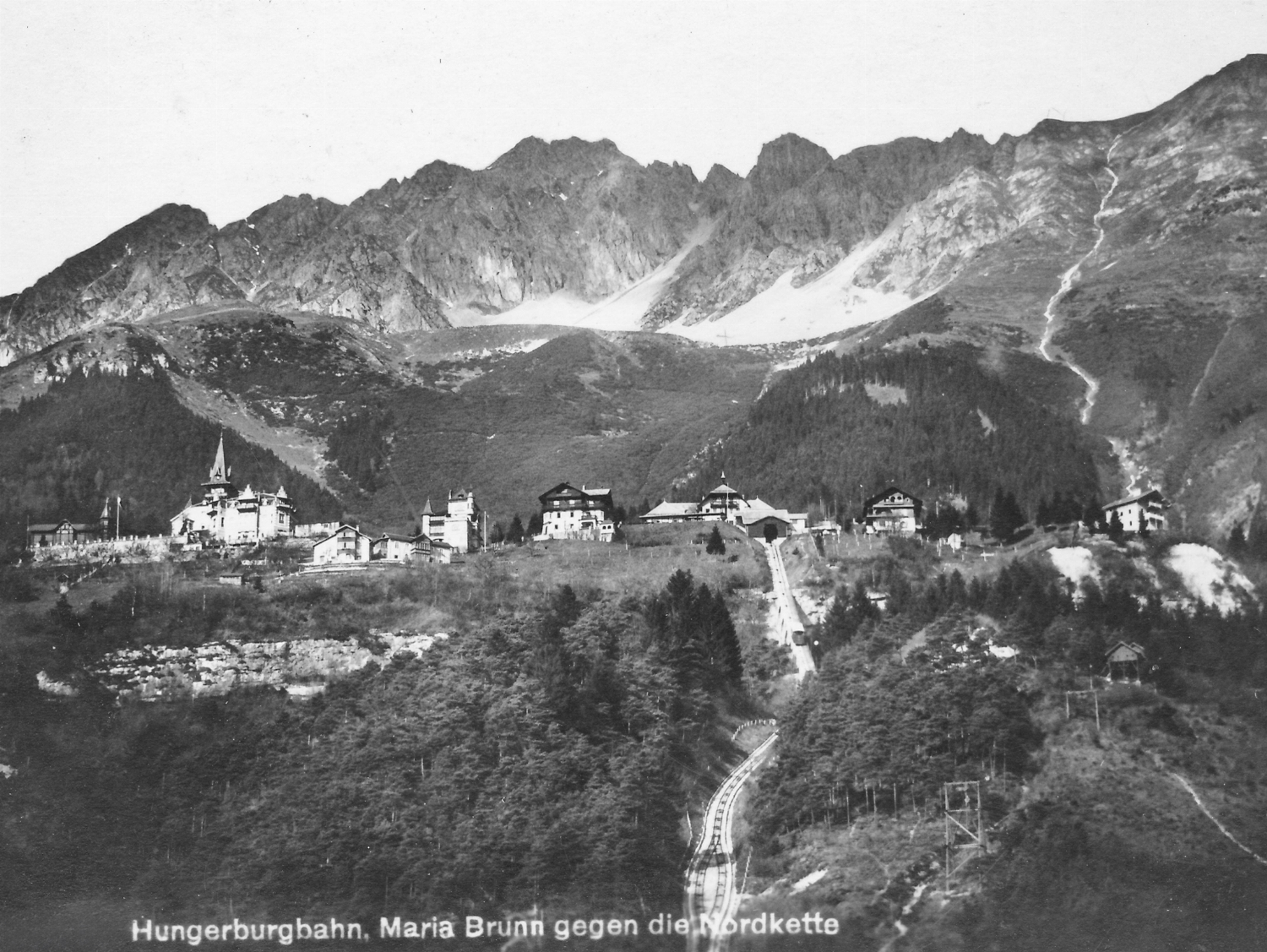
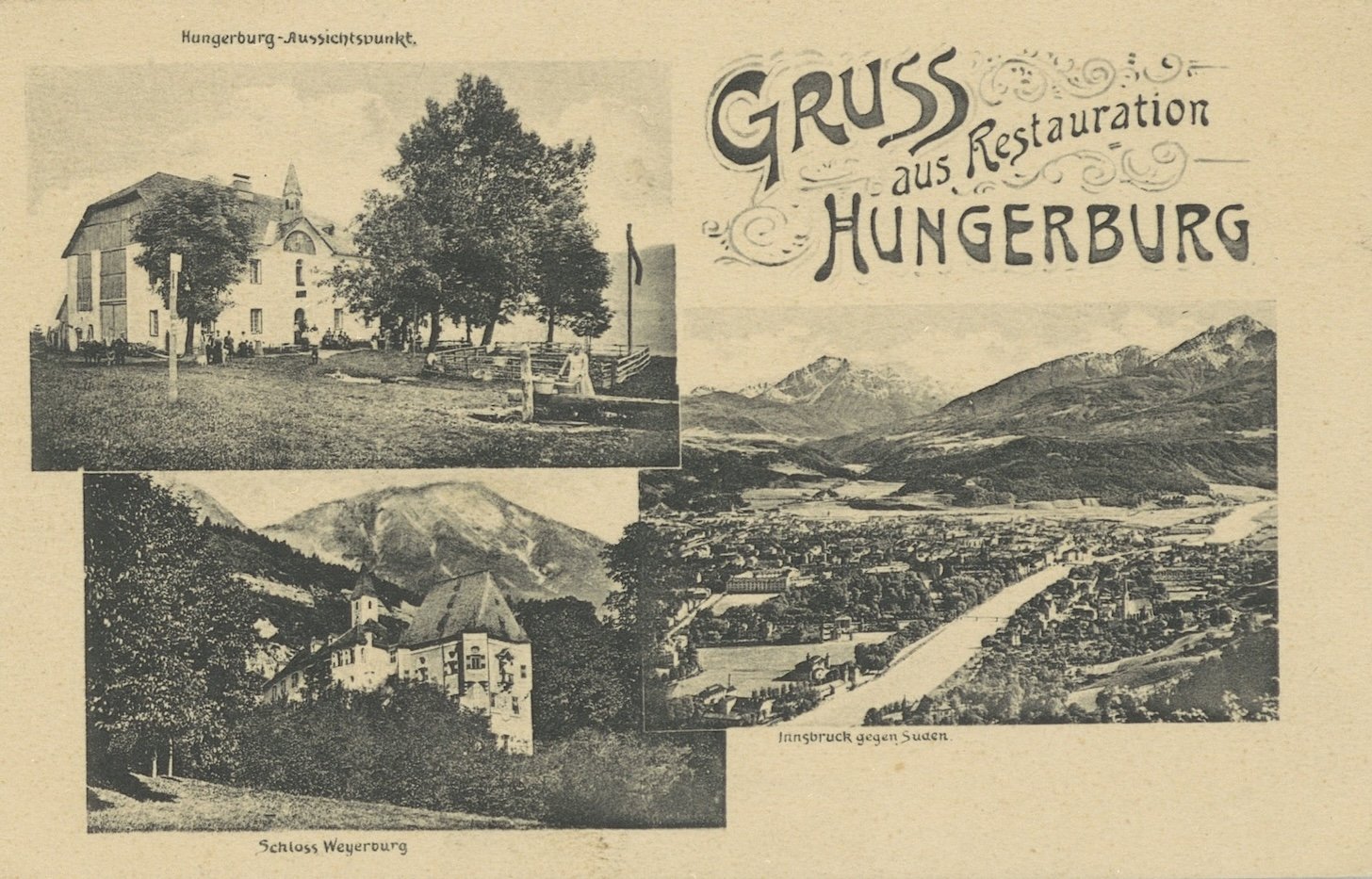
The Mariabrunn Inn (top left in the small picture) alone in the wide open spaces. This is what it looked like on the Hungerburg before the 'great leap forward'. Picture: Innsbruck city archives
Tyrol's most important poet, geologist and naturalist of the 19th century, Adolf Pichler, is strongly suspected of giving the place its name. He is said to have once vented his anger at the meagre food at the former Mariabrunn inn (shown in the photo above) after an exploratory walk. His famous exclamation "dös ischt ja die reinste Hungerburg" would have been the birth of the term, which was anything but popular with the locals at the time. Nevertheless, it has defied the various attempts to replace it over the decades. Even the benevolent neologism 'Hoch-Innsbruck' has long since passed and been forgotten.
The Hungerburg converter
Today's Hungerburg district actually emerged out of 'nothing'. Situated on a wonderful high plateau, it was for a long time a wooded excursion destination for the people of Innsbruck that required a lot of effort and sweat to reach. A northern 'low mountain range', so to speak. Until a restaurateur by the name of Sebastian Kandler hung up his uniform as canteen manager of the Innsbruck monastery barracks and became the 'Hungerburgverwandler'. In 1903, he bought the run-down inn 'Mariabrunn' together with a considerable amount of land belonging to it. It was the beginning of an incomparable metamorphosis of the plateau. Kandler wanted to emulate the example of St. Moritz and create a high-altitude climatic health resort that 'played all the tunes', was accessible by cable car from the districts of Mühlau or Hötting and guaranteed guests luxurious stays. His dream goal was to create a kind of grand hotel with the conversion of the inn that would be internationally renowned. He also had a bold vision for the time, namely to create an artificial 'pond' in which guests could even go boating.
The plans for the Hungerburg were based on the model of St. Moritz. Click to open image. Image: Innsbruck city archives
Arrival of the guests by sleigh
In the section 'Forays through the history of Hungerburg' of the homage to this district, the historian Matthias Egger describes this exciting history of Hungerburg as editor of the book. Starting with the activities of the bustling tourism pioneer Kandler, Egger tells the exciting story of how a rather deserted one-shift area was transformed into an early alpine-urban tourism zone and how Kandler planned the leading role for his hotel 'Mariabrunn'. By January 1905, its renovation had already progressed so far that the restaurant could be opened. The large concert hall, on the other hand, was only inaugurated in February 1906 with a lavish celebration. A side note: a sleigh service was set up between the city and Hungerburg for the 300 or so invited guests. On a road connection that today we would describe as a steep hiking trail.
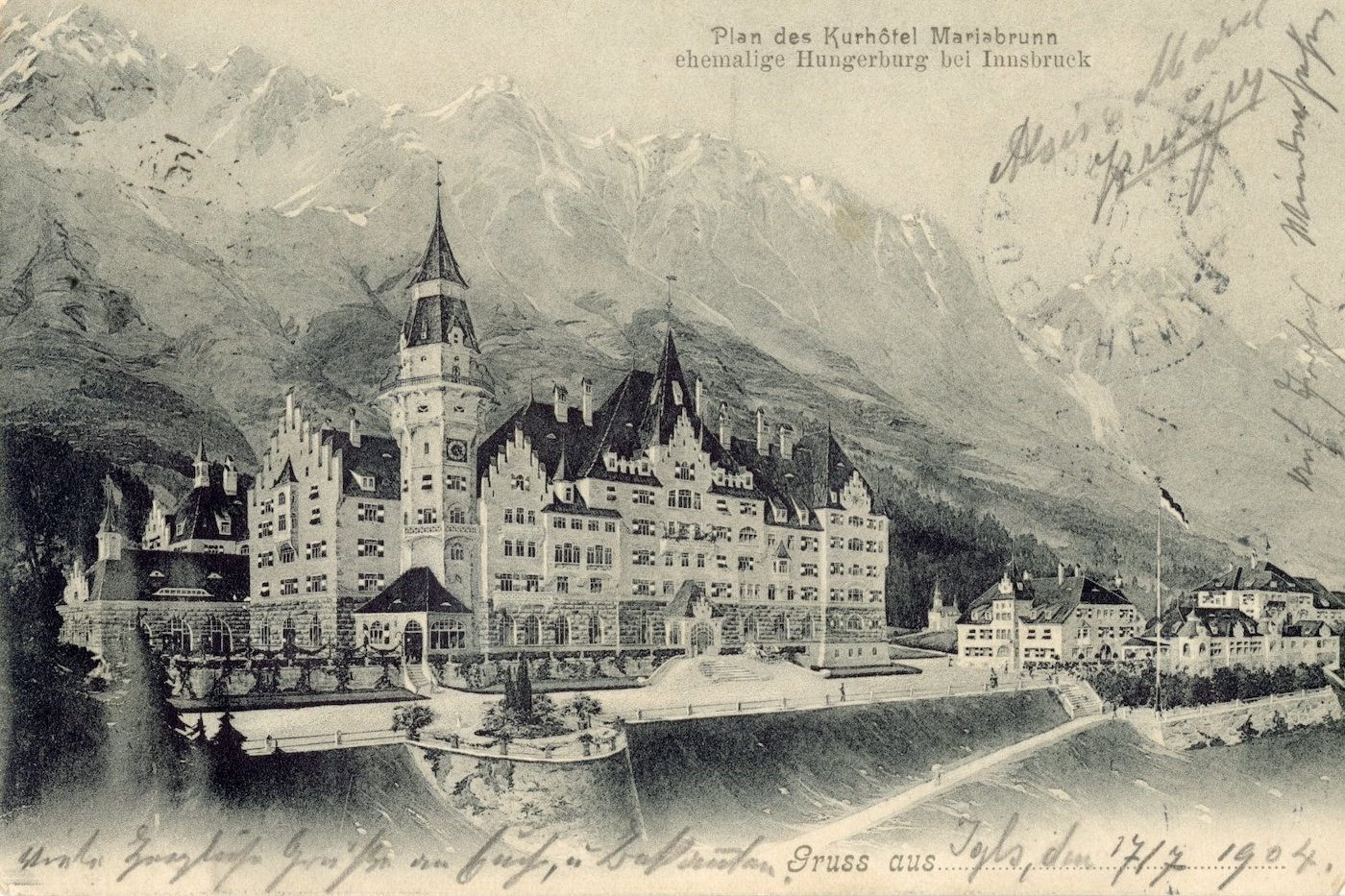
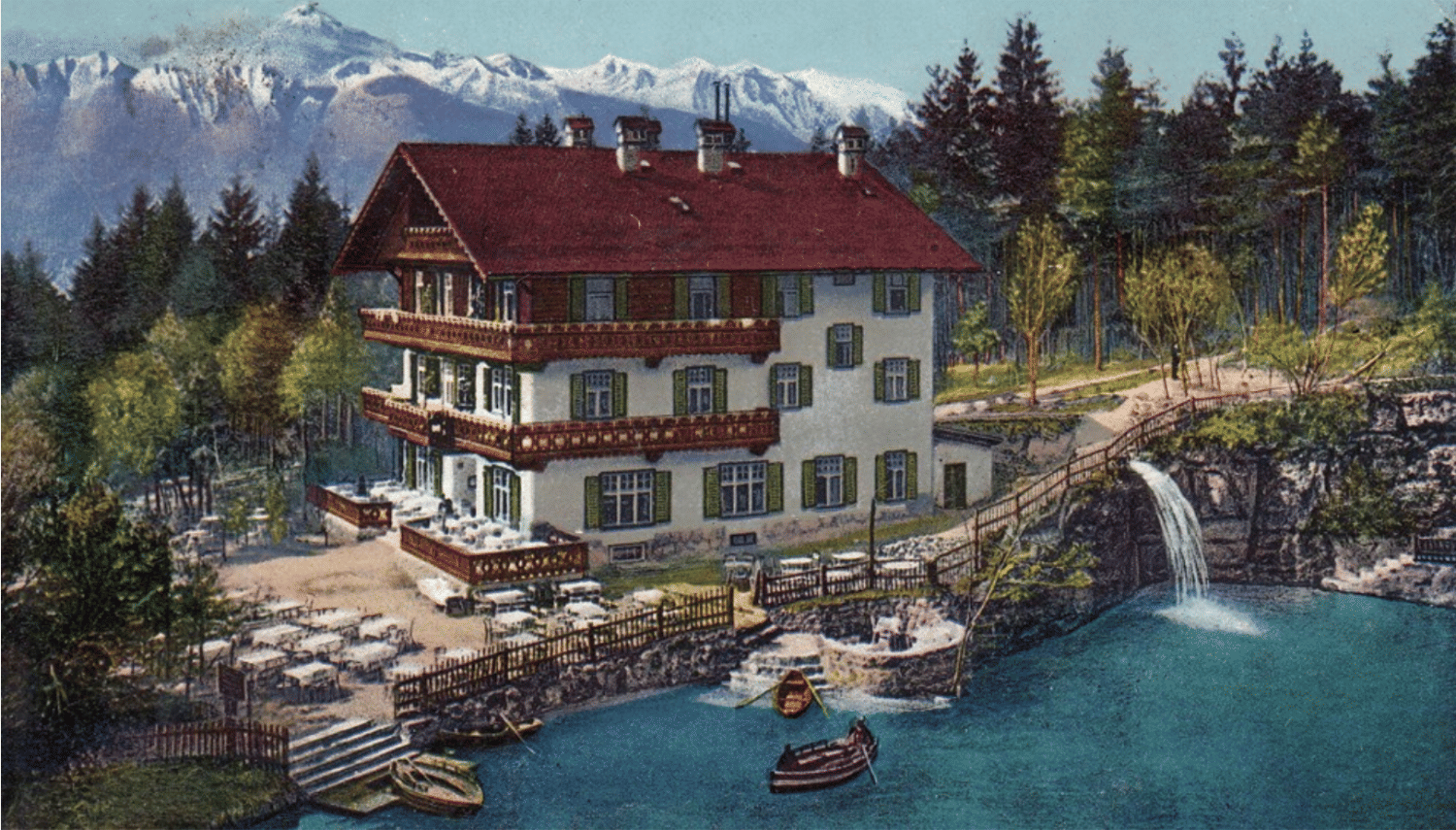
This is how glamorous Mariabrunn, the first large hotel on the Hungerburg, was planned. The magnificent building was advertised on postcards. Picture: Innsbruck city archives
With the Hungerburgbahn to the villa district
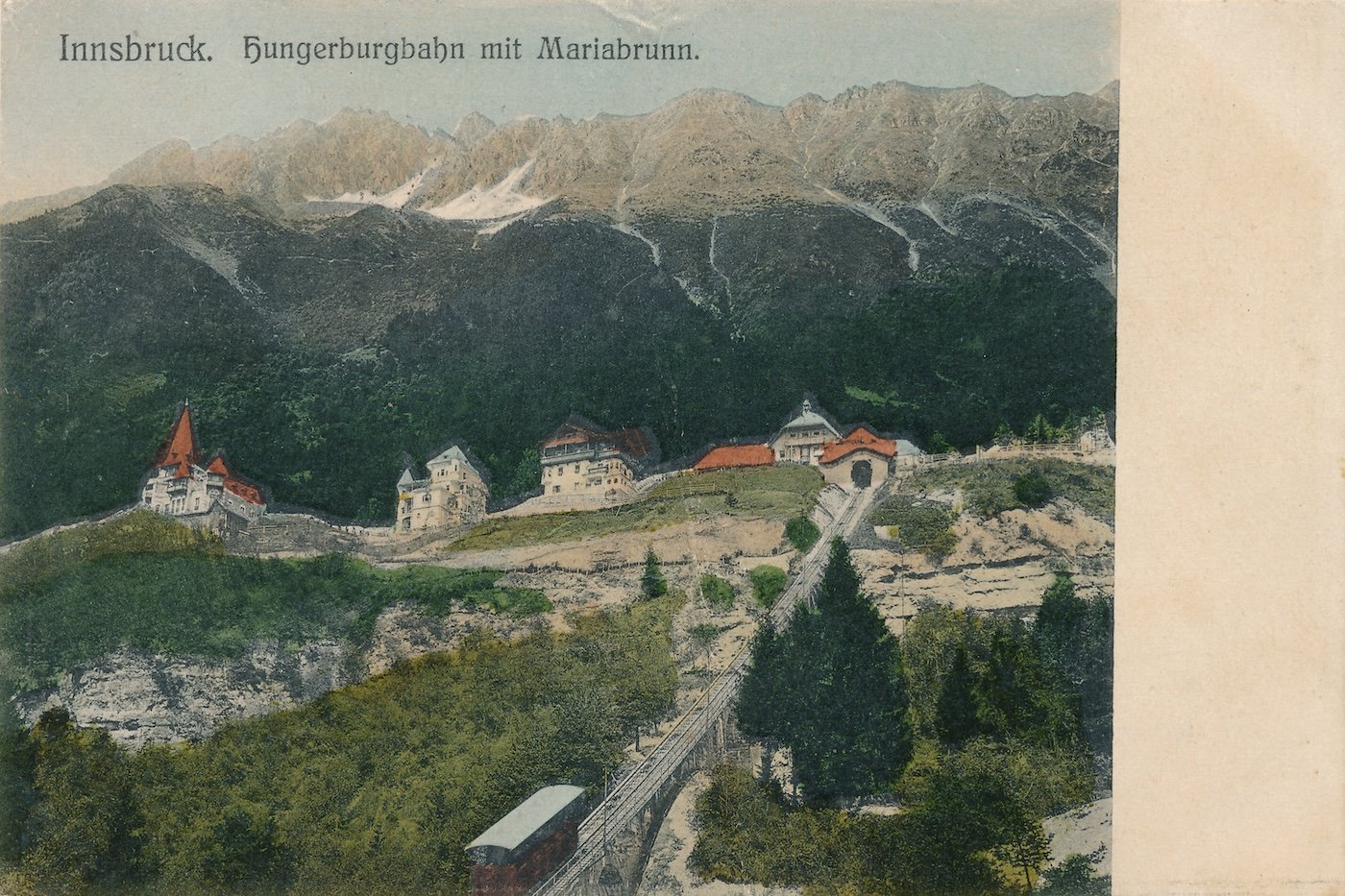
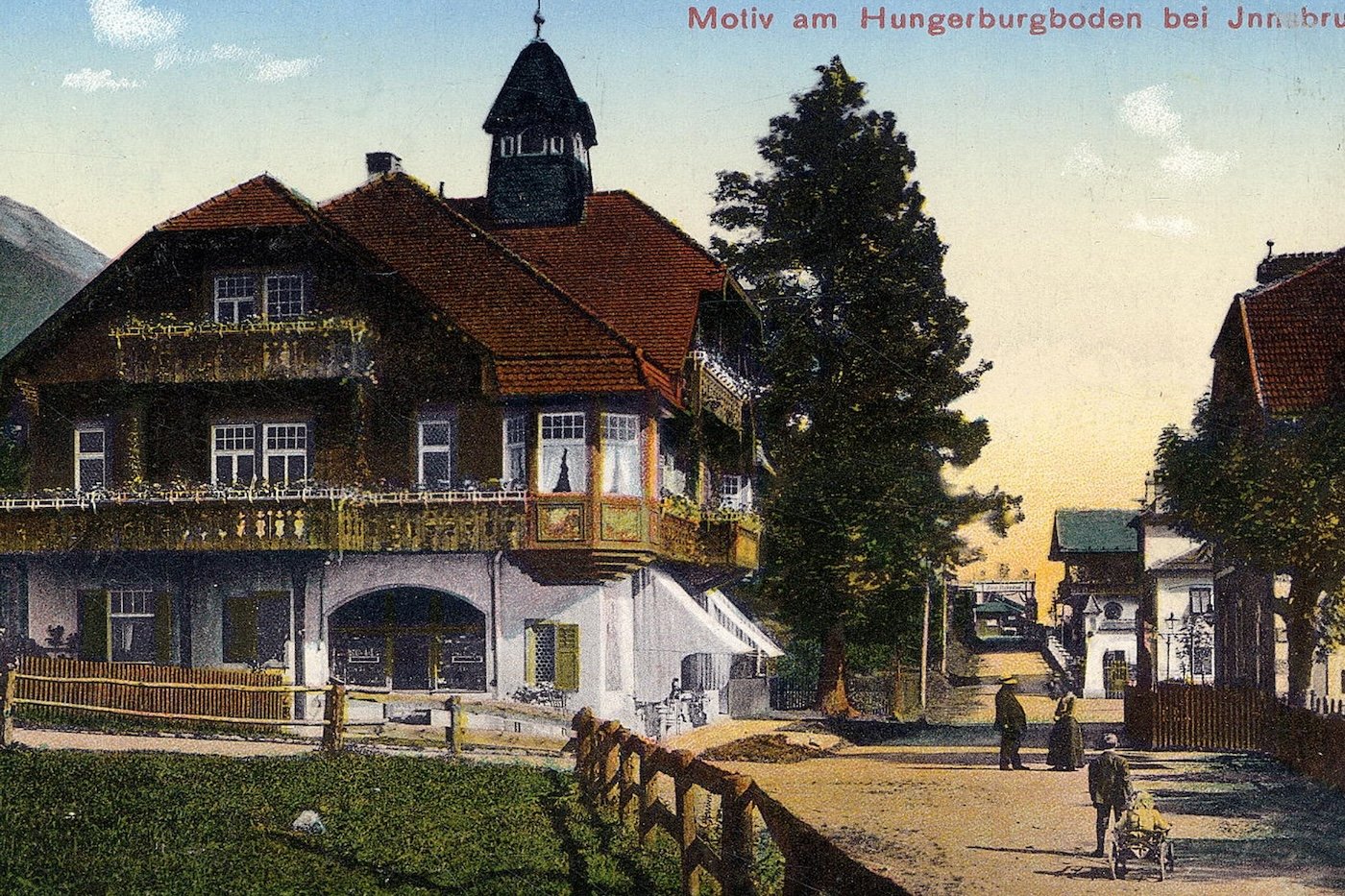
Then things went from strength to strength. With the opening of the already electrically operated Hungerburgbahn funicular by the city of Innsbruck on September 10, 1906, Sebastian Kandler 's biggest problem was solved: the uncomplicated arrival of paying customers from the city. After all, it covered a height difference of 287.7 m with gradients of between 18.5% and 55.5%. The Mariabrunn hotel complex was completed with the construction of the concert veranda and the small viewing tower. In 1908, the restless Kandler added the pavilion-like Karwendelhof, where various entertainments were offered, such as a house ball with Schrammel music. He also built no fewer than three residential buildings between 1904 and 1908, namely the Villa Felsen, Villa Kandlerheim and Villa Karwendel.
The Hotel Mariabrunn did not become the desired fin-de-siècle hotel a la St. Moritz after all. Image: Innsbruck city archives
The Hungerburg after the first 'construction phase' including the inclined elevator on a postcard.image: Stadtarchiv Innsbruck
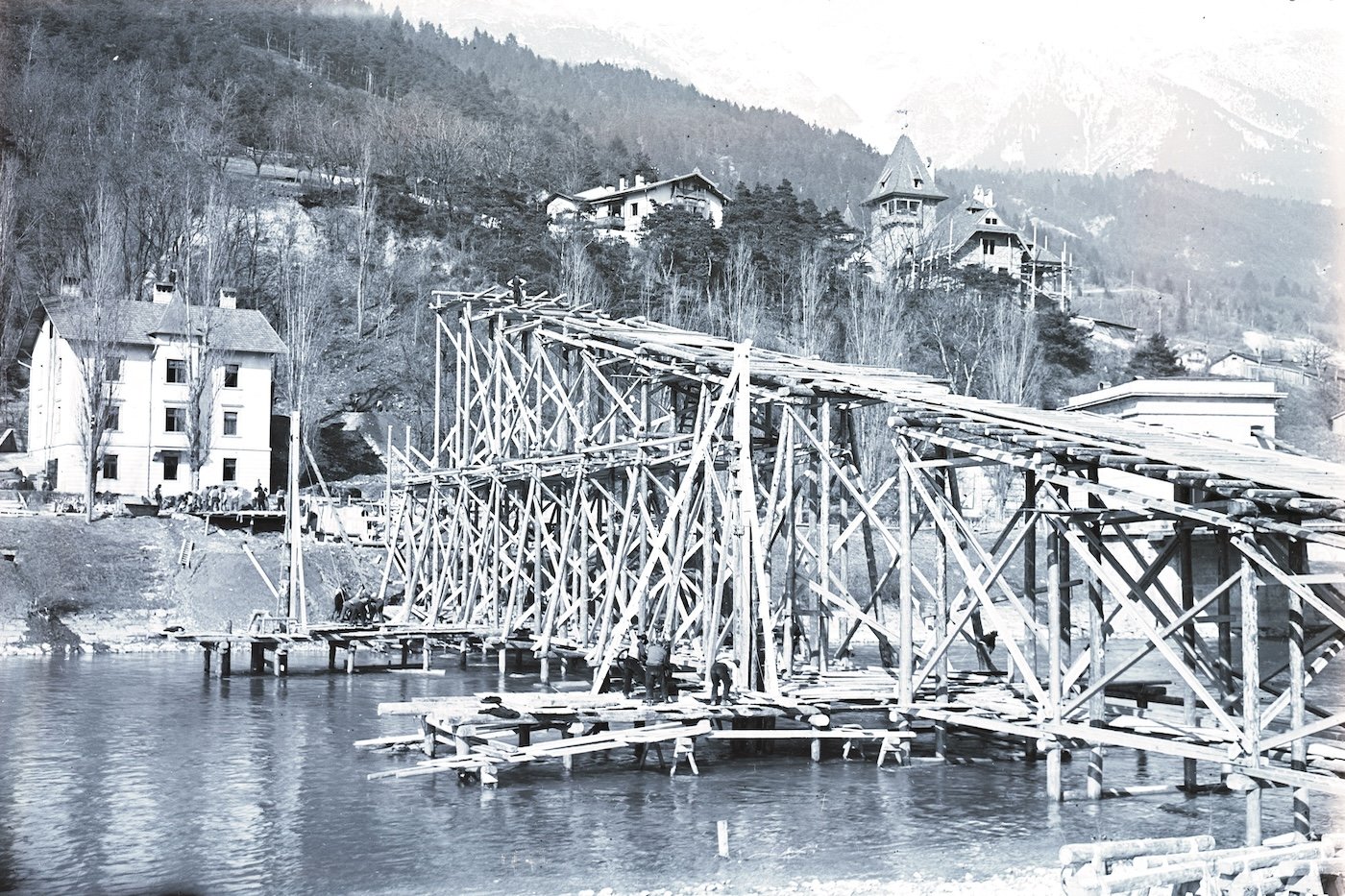
The construction of the funicular by the city of Innsbruck to the Hungerburg was a masterpiece of engineering. Here the construction of the bridge over the Inn at the valley station. Image: Innsbruck city archives
A first tourist experience world
Keyword villas. When the brothers Karl and Franz Schwärzler built the 'Tyrolean House' villa on a plot of land purchased from Kandler, they planned to house an arts and crafts business with the noble-sounding name "First Tyrolean Specialty House". Now art and culture were also moving into the Hungerburg. In their 'art corner', only works by Tyrolean artists were shown, which had been chosen in a strict selection process. This convinced painters such as Franz von Defregger, Mathias Schmid and Anna Steiner-Knittel to exhibit works at the Hungerburg. This quality in turn attracted wealthy collectors.
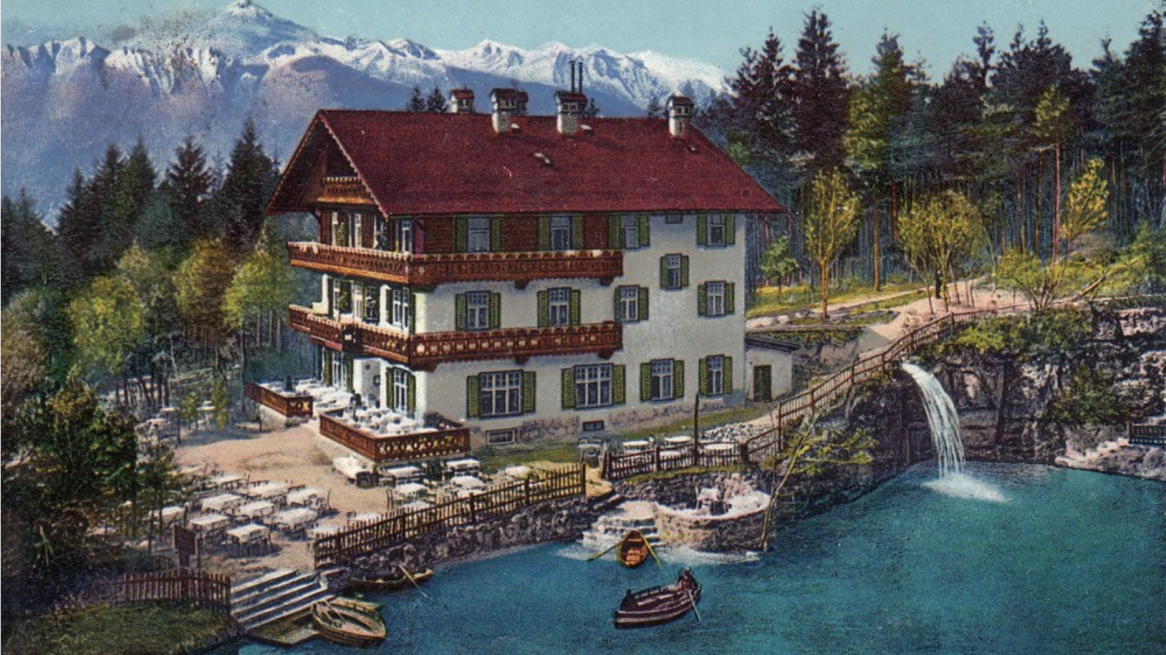
The Schwärzlers turned out to be early tourism investors who could certainly hold a candle to Sebastian Kandler. They took up his idea of a lake 'for boating'. But a bathing lake alone was too bland for them. They needed a Tyrolean-style hotel called Seehof, a Viennese coffee house and a forest tavern. A first hotel experience, so to speak. They also planned a 15-metre-high observation tower with battlements. This was the first time in Tyrol that an idea emerged that would still cause a sensation today. The tower was first to be reached by a gondola ride across the lake. A 10-metre-long illuminated underground access shaft then led - according to the idea - "to a vertical ascent tunnel of a passenger elevator using electric power up to the platform of the tower above." The sensational panoramic view must have had a lasting effect at the time.

The luxurious Hotel Seehof with its former swimming and ice-skating lake is now a seminar house run by the Tyrolean Chamber of Labor. Pictures: Innsbruck city archives
Click on this picture to see the observation tower of the Seehof hotel complex on an early advertising poster. Picture: Innsbruck city archives
An artificial lake on the Hungerburg
An initial attempt to fill the lake with water from the Prantlschrofen springfailed miserably. The water seeped into the ground. It was then lined with a layer of cement. However, it was precisely this lake that made Hungerburg famous far beyond the borders of the Austro-Hungarian Monarchy.
The Hotel Seehof subsequently became a very special, luxurious attraction. The owners were guided by the quality standards of the extremely elegant hotels in the Dolomites. A glance at the drinks menu illustrates the exclusivity of the hotel: no fewer than 25 types of wine and six types of champagne were listed.
International audience
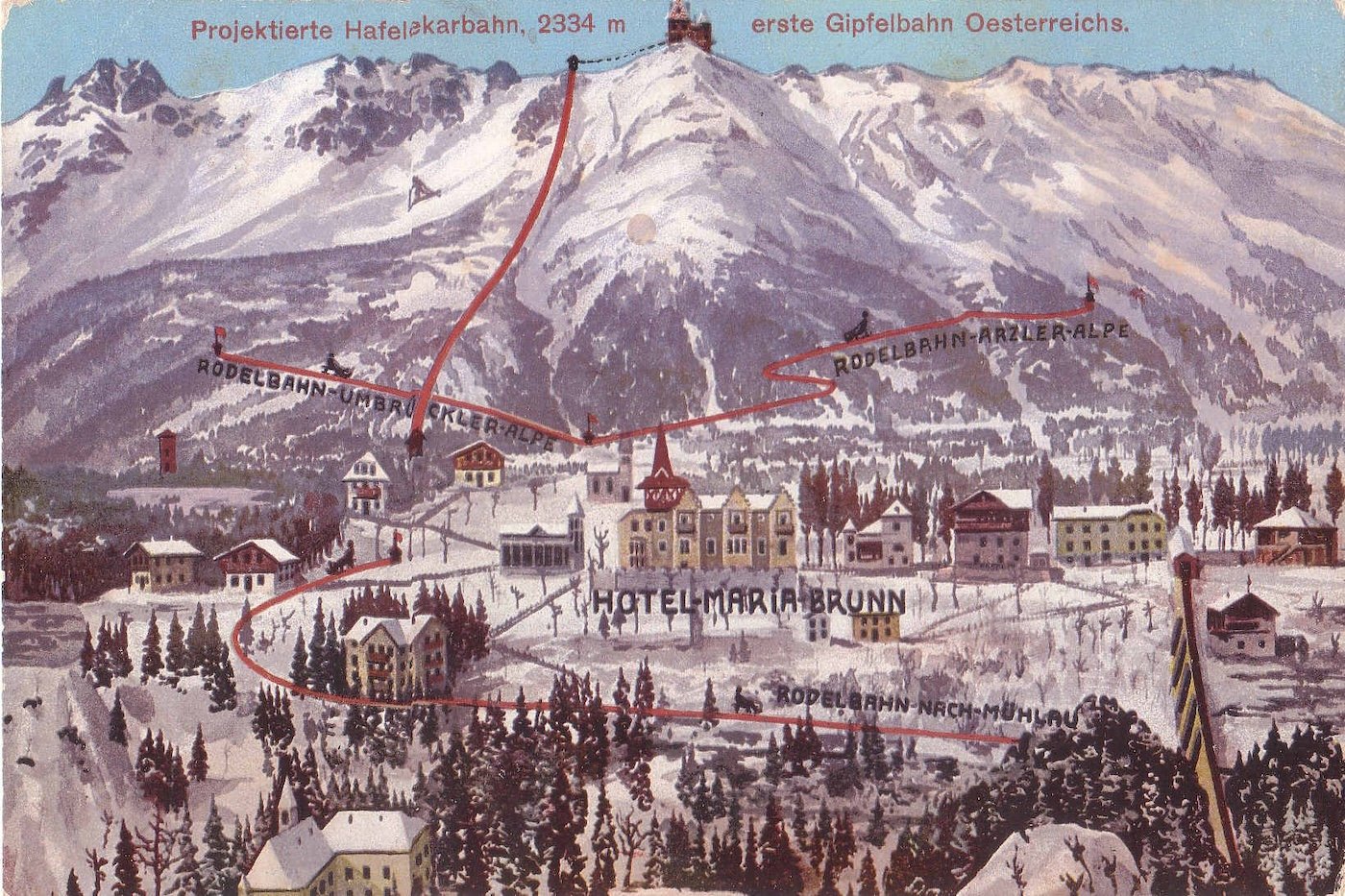
Visitors came from all parts of the monarchy, from Europe and even from overseas to indulge in alpine luxury. They could swim here in summer, ice skate in winter or even ski down to the Mühlau on a groomed toboggan run. The glamorous magic was over after just one year. The outbreak of the First World War put an abrupt end to all the fun.
The Höhenstraße was a long time coming
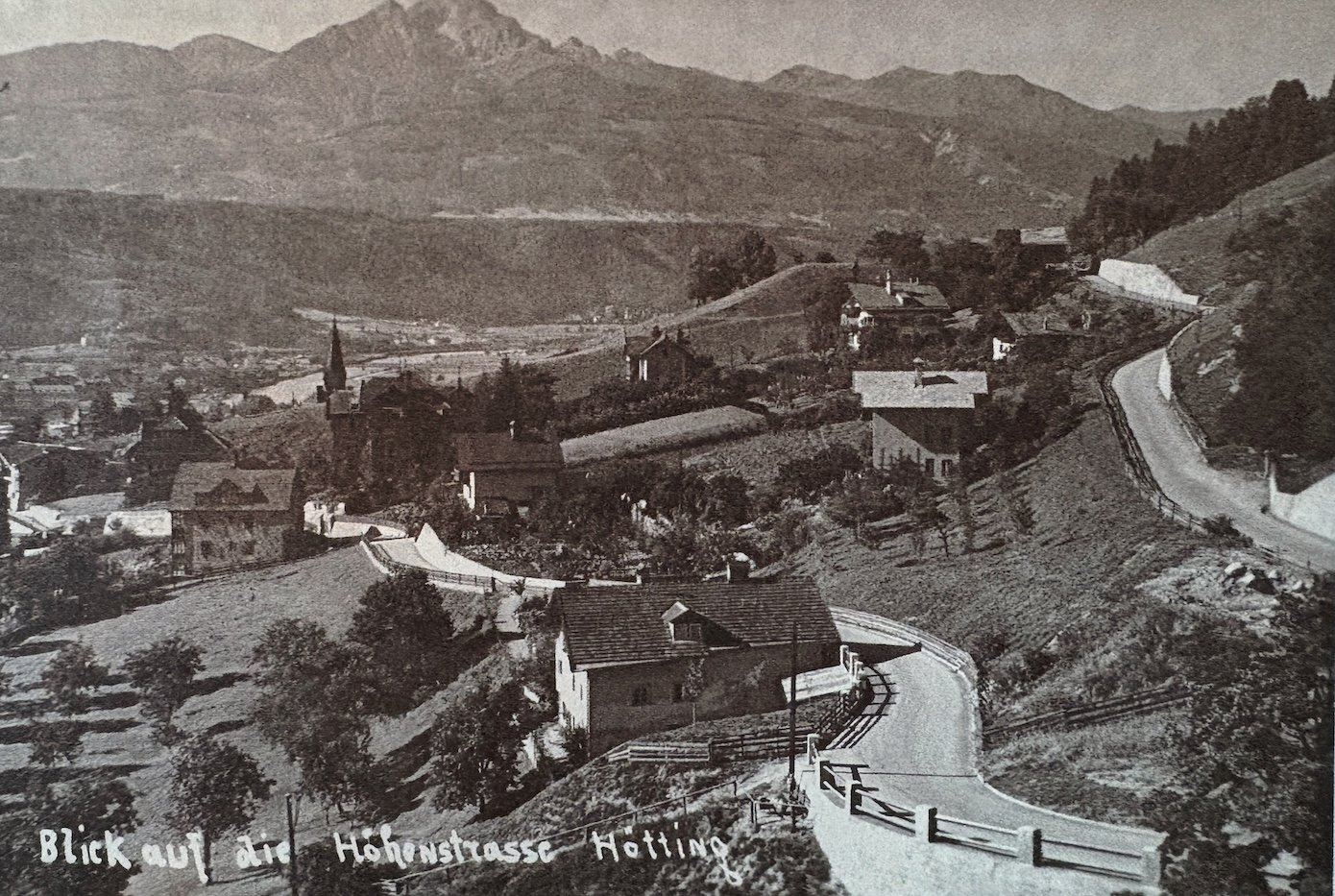
With all the developments, hotel buildings and entertainment facilities, the Hungerburg 's accessibility via a proper access road was a long time coming. A 'road to the Hungerburgboden' was unavoidable, the local press complained for years. Because 'up there a villa colony with the proud name "Hoch-Innsbruck" was developing at a rapid pace'. However, the access roads were in a condition "that made driving a car seem like a risk". This also played into the hands of the Hungerburg Railway: without the high road, 'every kilo of food and drink would be subject to the Hungerburg Railway's import duty'.
It then took until 20 September 1930 before the 3.55 km long high road with a height difference of 255 meters could be opened to traffic.
The high road to the Hungerberg was built relatively late and replaced an old dangerous cart track. Picture: Innsbruck city archives
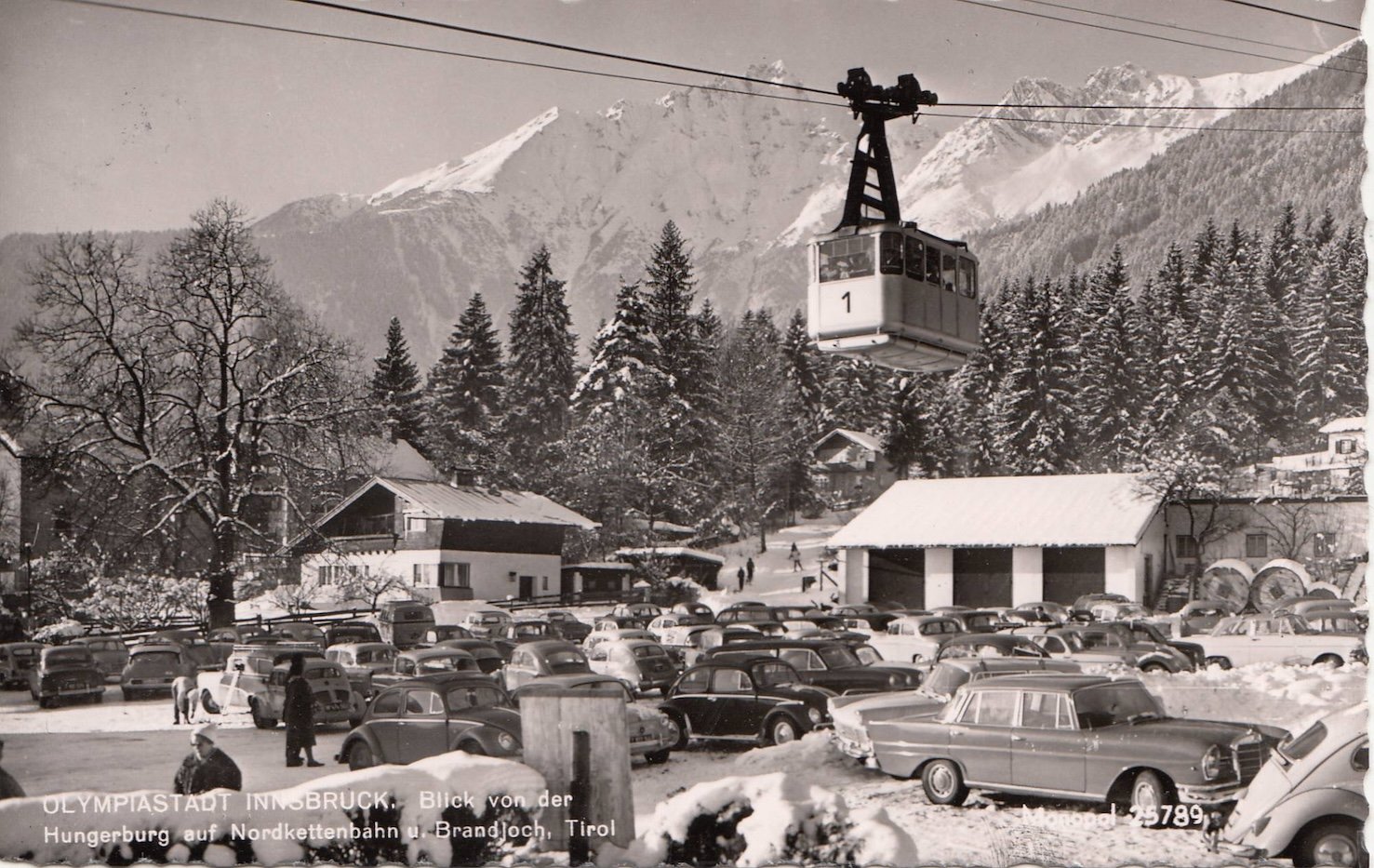
The article by Günter Denoth in the book 'Verkehrswege auf die Hungerburg' sheds light on the transportation development of the plateau. Beginning with the construction of the funicular in 1906, through the technical renovation of the funicular to today's ultra-modern system, he describes the development of this unique facility. The development of the Seegrube and the Hafelekar by cable car is also described in detail.
The chapter 'The Architecture of Hungerburg' by Wilhelm Schlenz is in turn a tribute to the history of architecture. Architects immortalized themselves here with their designs for the magnificent villas or buildings such as the valley station of the Nordkettenbahn and the Seegrube and Hafelekar stations.
The luxurious Hotel Seehof with its former swimming and ice-skating lake is now a seminar house run by the Tyrolean Chamber of Labor. Pictures: Innsbruck city archives
The fact that topics such as 'Die Hungerburg in der Literatur' by Iris Kathan and the " Naturräumlichen Besonderheiten des Stadtteils" by Brigitta Erschbamer are also included rounds off this interesting book project wonderfully.
It is thanks to the staff of the city archive that the importance of the Hungerburg for the development of tourism in the province of Tyrol has been highlighted. Recreation-seekers and, above all, wealthy guests should be shown the magnificent mountain world in a varied and exciting way.
The unique photographic material takes the reader back to a time when words such as 'summer resort' or 'grand hotel' still had meaning and when there were even 'technical marvels'. A book that should not be missing from the personal libraries of lovers of the city of Innsbruck.
Hungerburg Castle
Architecture - Culture - Nature
Facets of a district, framed with numerous photographs. Edited by Matthias Egger and Johann Holzner, 244 pages with many pictures, ISBN 978-3-7030-6629-0, Universitätsverlag Wagner 2024, € 29.90.
Orders can be placed here: https://www.innsbruck.gv.at/shop/publikationen-2026-2011/hungerburg
Show me the location on the map
A volunteer at the "Schule der Alm" alpine farming school, cultural pilgrim, Tyrol aficionado and Innsbruck fan.
Similar articles
The versatility of Tyrol’s capital city is and remains impressive: Within a compact area,…
Spring brings a craving for things to do and be out and about--why not take a tour…
The name of this landscape alone exudes a mysterious magic: St. Moritzen. Located to the west…
the handpan The Handpan - a more generic term for a Swiss invention first known…